

The most evidence-backed nutritional supplements for women are vitamin D3, calcium, omega-3 fatty acids (EPA/DHA), iron and folate (during reproductive years), vitamin B12, magnesium, a quality multivitamin, protein, creatine (for midlife and beyond), probiotics, and collagen. Each one earns its place for a specific reason, and none of them replaces a nutrient-dense diet.
Here is your quick-start map by goal:
- Bone health: Vitamin D3 + calcium, vitamin K2, magnesium
- Energy and iron status: Iron (if ferritin is low), folate, B12
- Heart and brain health: Omega-3s (EPA+DHA), B12, magnesium
- Muscle maintenance: Protein (a moderate to higher intake per body weight), creatine (a moderate daily dose recommended for women over 40)
- Gut and vaginal health: Probiotics (strain-specific)
- Skin, hair, and nails: Collagen peptides, omega-3s, biotin (if deficient)
- Hormonal balance and sleep: Magnesium glycinate, vitamin D, omega-3s
The non-negotiable starting point: food first. Supplements fill documented gaps; they do not substitute for whole foods. Before adding high-dose vitamin D, iron, or B12, get your labs checked. 25-hydroxyvitamin D, ferritin, and serum B12 are the three most useful baseline tests. If you are pregnant, planning to conceive, or managing a chronic condition, consult your OB/GYN or primary care provider before starting anything new. The NIH Office of Dietary Supplements and third-party testing organizations like USP and NSF are your most reliable quality references. Theultimatebeauty-you curates expert-backed wellness resources to help you navigate these choices with confidence.
Table of Contents
- How do your supplement needs change across your life?
- What are the best supplements for women's health, by evidence level?
- What supplements matter most during perimenopause and menopause?
- What safety rules and interactions do you need to know?
- How do you pick a high-quality supplement?
- When should you test nutrient levels, and what should you ask your clinician?
- Key Takeaways
- Your next step toward a supplement plan that actually fits you
- Primary sources and further reading
How do your supplement needs change across your life?
Your body is not static, and neither are its nutritional demands. Hormones, menstrual blood loss, pregnancy, and the gradual decline of estrogen in midlife each shift what you absorb, what you lose, and what you genuinely need more of. Understanding those shifts is what separates a supplement plan that works from a cabinet full of bottles that don't.

Reproductive years (roughly ages 18–40): Menstruation raises iron needs. The NIH recommends approximately 18 mg/day of iron for premenopausal women, compared to 8 mg/day after menopause. Folate (an essential intake level for women who may become pregnant) matters even before a confirmed pregnancy, since neural tube development begins in the first weeks. Vitamin D and calcium lay the groundwork for peak bone density, which you are still building through your early 30s.

Pregnancy and planning: A prenatal multivitamin with methylfolate (or folic acid at 400–800 mcg), iron, iodine, choline, and DHA covers the most critical bases. Avoid high-dose preformed vitamin A (retinol), which is teratogenic above safe thresholds. This is the one life stage where clinician guidance before starting supplements is not optional.
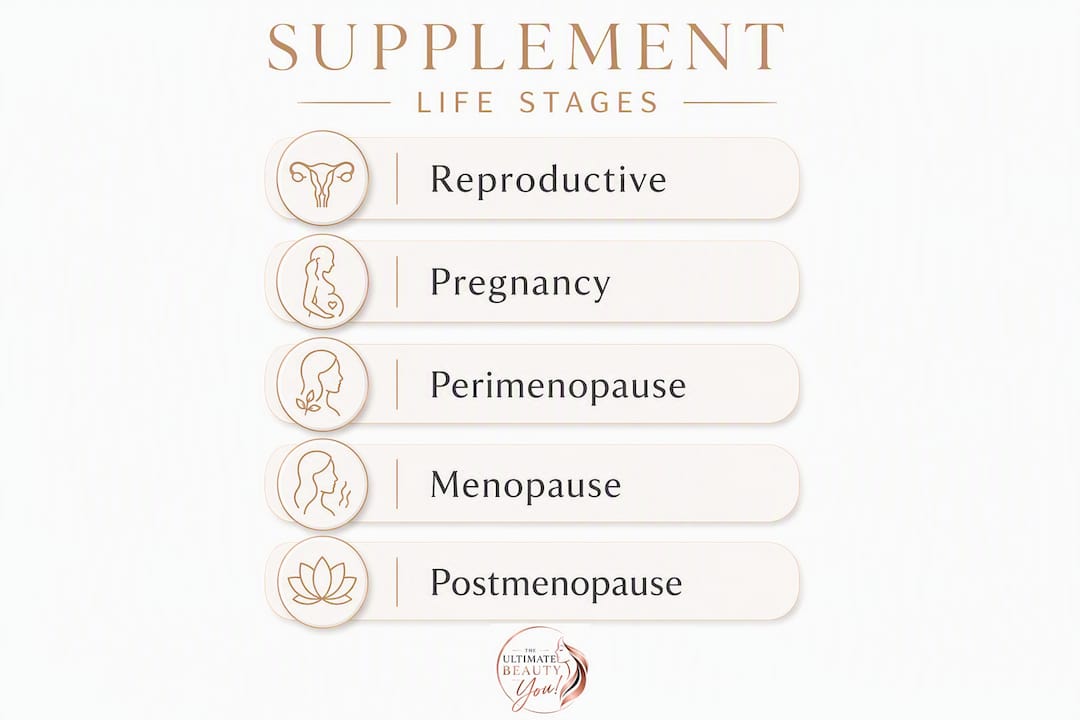
Perimenopause (typically mid-40s to early 50s): Estrogen begins to decline, and with it, calcium absorption efficiency drops. Bone turnover accelerates. Muscle mass starts to slip faster. Vitamin D, calcium, magnesium, protein, and creatine become higher priorities. Sleep disruption and mood shifts make magnesium glycinate worth considering.
Menopause and postmenopause: Bone density maintenance becomes the headline concern. Iron needs drop to 8 mg/day, and multivitamins formulated for older women often reduce or omit iron for good reason. Excess iron after menopause can accumulate and cause harm. Vitamin B12 absorption also tends to decline with age, making supplementation or fortified foods more relevant.
Pro Tip: Ask your clinician for a 25-OH vitamin D, ferritin, and serum B12 at your next annual visit. These three tests cost little and tell you exactly where your real gaps are before you spend money on supplements you may not need.
| Life stage | Top priorities | What to watch |
|---|---|---|
| Reproductive years | Folate, iron, vitamin D, calcium | Iron only if ferritin is low; folate daily if pregnancy is possible |
| Pregnancy/planning | Prenatal multivitamin, DHA, iodine, choline | Avoid excess preformed vitamin A; consult OB/GYN |
| Perimenopause | Vitamin D, calcium, magnesium, protein, creatine | Test 25-OH D before high-dose supplementation |
| Menopause/postmenopause | Vitamin D + calcium, B12, omega-3s, protein | Choose iron-free or low-iron multivitamin formulas |
What are the best supplements for women's health, by evidence level?
Every supplement below is evaluated on four dimensions: who benefits most, the strength of the evidence, practical dosing ranges, and key safety notes. This is not a one-size-fits-all list. It is a framework you use to match your goals to what the research actually supports.
Multivitamin
A quality multivitamin is a practical insurance policy, not a cure. Choose an age-appropriate formulation: women under 50 typically need iron included (around 18 mg); women over 50 are better served by an iron-free or low-iron formula. Look for methylfolate rather than synthetic folic acid if you have an MTHFR gene variant. Formulation matters more than brand prestige.
Vitamin D3
Vitamin D3 (cholecalciferol) is the preferred form for absorption. It supports calcium uptake, bone density, muscle function, and immune resilience. The challenge is that most women do not know their level without testing. Check your 25-hydroxyvitamin D before starting high-dose supplementation; a clinician can then recommend a corrective dose versus a maintenance dose. Typical maintenance ranges vary depending on baseline levels and sun exposure.
Calcium
Food first, always. Dairy, fortified plant milks, leafy greens, and canned fish with bones are your best sources. When diet falls short, calcium citrate is absorbed well with or without food (useful for women with lower stomach acid). Calcium carbonate requires food for absorption. Pair with vitamin D3 and consider vitamin K2 to direct calcium toward bones rather than arteries. Supplemental doses above 500 mg at one time are absorbed less efficiently, so split doses if needed.
Iron and folate
Iron supplementation is appropriate only when ferritin is low or deficiency is confirmed. Ferrous bisglycinate is gentler on the stomach than ferrous sulfate and absorbs well. Folate (as methylfolate or folic acid) is non-negotiable for women who could become pregnant. After menopause, iron needs drop to around 8 mg/day, and supplementing without need raises oxidative stress risk.
Vitamin B12
B12 absorption declines with age, with low stomach acid, and with long-term use of metformin or proton pump inhibitors. Methylcobalamin or cyanocobalamin both work; the methylated form is sometimes preferred for those with absorption concerns. Typical supplemental doses range from 500–1,000 mcg/day for correction, with lower maintenance doses once levels normalize.
Omega-3 fatty acids (EPA/DHA)
Omega-3s reduce inflammation and support cardiovascular and cognitive health. Choose purified fish oil or algal-based omega-3s if you eat limited fatty fish. Algal DHA is the preferred plant-based source and avoids concerns about fish contaminants. Typical combined EPA+DHA doses vary depending on your goal. Women on anticoagulants should discuss higher doses with their clinician before starting.
Magnesium
Magnesium plays roles in muscle relaxation, sleep quality, blood sugar regulation, and mood. Magnesium glycinate is the gentlest and most bioavailable form for most women. Magnesium oxide is cheaper but poorly absorbed. Typical supplemental doses run 200–400 mg/day. Women with kidney disease should not supplement without medical supervision.
Protein
Protein needs rise with age due to anabolic resistance. For active or older women, a target of roughly 1.2–1.6 g/kg of body weight per day supports muscle maintenance and recovery. Many women fall short of this through food alone, making a high-quality protein powder (whey, pea, or rice-pea blend) a practical gap-filler. Pair with resistance training for the best effect.
Creatine
Once dismissed as a bodybuilder's supplement, creatine has strong emerging data for women over 40. Experts recommend 3–5 g/day to support muscle mass, bone density, and possibly cognitive outcomes when combined with resistance training. Creatine monohydrate is the most studied and cost-effective form.
Probiotics
Probiotics are strain-specific. Lactobacillus rhamnosus GG has the strongest evidence for gut health; Lactobacillus reuteri and Lactobacillus crispatus strains are studied for vaginal microbiome support. "Probiotic" on a label means nothing without the strain listed. Evidence for mood and immune benefits is growing but still moderate.
Collagen
Collagen peptides have limited but promising evidence for skin elasticity and joint comfort. They are not a complete protein source. If skin and hair health are your goals, healthy beauty habits built on whole foods, omega-3s, and hydration tend to deliver more consistent results than collagen alone.
Pro Tip: Take fat-soluble vitamins (D, K, A, E) with a meal that contains fat. Water-soluble vitamins (B-complex, C) can be taken any time, but B vitamins with food reduce nausea.
| Supplement | Best for | Evidence level | Typical supplemental dose | Key food sources | Safety notes |
|---|---|---|---|---|---|
| Multivitamin | All women, gap coverage | Moderate | 1 serving/day (age-appropriate) | N/A (covers multiple) | Choose iron-free formula post-menopause |
| Vitamin D3 | Bone, immune, muscle | Strong | Test first; dose varies | Fatty fish, fortified milk | Test 25-OH D before high-dose use |
| Calcium | Bone density | Strong | 500–1,000 mg/day supplemental | Dairy, leafy greens, fortified milks | Split doses; pair with D3 and K2 |
| Iron | Reproductive years, low ferritin | Strong (when indicated) | 18 mg/day (premenopausal) | Red meat, lentils, spinach | Only supplement if ferritin is low |
| Folate | Pregnancy planning, all women | Strong | 400–800 mcg/day | Dark leafy greens, legumes | Methylfolate preferred for MTHFR variants |
| Vitamin B12 | Older women, vegans, metformin users | Strong (when indicated) | 500–1,000 mcg/day (corrective) | Meat, eggs, fortified foods | Check serum B12 before high-dose use |
| Omega-3 (EPA+DHA) | Heart, brain, inflammation | Strong | — | Salmon, sardines, algae | Caution with anticoagulants at higher doses |
| Magnesium | Sleep, muscle, mood | Moderate | 200–400 mg/day | Nuts, seeds, dark chocolate | Avoid in kidney disease without MD guidance |
| Protein | Muscle maintenance, active women | Strong | 1.2–1.6 g/kg/day total intake | Eggs, legumes, Greek yogurt | Whole food sources preferred first |
| Creatine | Women 40+, resistance training | Moderate–strong | 3–5 g/day | Red meat, fish (small amounts) | Well-tolerated; stay hydrated |
| Probiotics | Gut, vaginal health | Moderate (strain-specific) | Strain-dependent | Yogurt, kefir, fermented foods | Choose products listing specific strains |
| Collagen | Skin elasticity, joint comfort | Limited | — | Bone broth, animal proteins | Not a complete protein substitute |
What supplements matter most during perimenopause and menopause?
Midlife is where supplement choices get both more important and more nuanced. As estrogen declines, clinicians often prioritize vitamin D, B vitamins, calcium, and magnesium because absorption efficiency and metabolic demands shift in ways that diet alone may not fully address.
Muscle and bone preservation are the two biggest physical priorities. Creatine monohydrate at 3–5 g/day, combined with resistance training at least two to three times per week, is one of the most evidence-supported strategies for women in this stage. Protein at 1.2–1.6 g/kg/day amplifies those training benefits. Vitamin D3 and calcium together support bone density maintenance, and their effect is meaningfully stronger when paired with weight-bearing exercise than with either alone.
Sleep, mood, and cognitive resilience are where magnesium glycinate earns its place. Many women in perimenopause report improved sleep quality with 200–400 mg taken in the evening. Omega-3s (EPA+DHA) have moderate evidence for mood support and stronger evidence for cardiovascular protection, which becomes more relevant as estrogen's cardioprotective effects diminish after menopause.
For hot flashes and vasomotor symptoms, the picture is more complicated. Soy isoflavones and black cohosh show mixed results; they may help with mild symptoms for some women, but neither approaches the consistent effectiveness of hormone replacement therapy (HRT) for moderate-to-severe symptoms. If hot flashes are disrupting your sleep or quality of life, that is a conversation to have with your clinician about prescription options, not a problem to solve with botanicals alone.
Cognitive health is an area where omega-3s and creatine both show promise, though the evidence is still building. B12 deficiency is a correctable cause of cognitive fog and fatigue, making it worth checking before attributing those symptoms to menopause itself.
Pro Tip: Resistance training is not optional if you are taking creatine or protein for muscle support. The supplement amplifies the training signal. Without the training, you are paying for a benefit you are not triggering.
- Vitamin D3 + calcium: strongest evidence for bone density maintenance
- Creatine (3–5 g/day): emerging strong evidence for muscle and possibly cognition in women 40+
- Protein (a moderate to higher intake per body weight): well-supported for muscle maintenance with resistance training
- Magnesium glycinate: moderate evidence for sleep quality and mood
- Omega-3s: strong for cardiovascular health; moderate for mood
- Soy isoflavones / black cohosh: limited, mixed evidence for vasomotor symptoms
- HRT: more consistently effective than any supplement for moderate-to-severe menopause symptoms
What safety rules and interactions do you need to know?
Supplements are not regulated like prescription drugs. The FDA does not require manufacturers to prove safety or efficacy before a product reaches shelves. That regulatory gap is exactly why consulting a clinician before starting new supplements is the single most protective step you can take, especially if you are on medications or managing a chronic condition.
Core safety rules
- Test before high-dose correction. Starting 5,000 IU/day of vitamin D without knowing your baseline 25-OH D level can push you into toxicity range. The same logic applies to iron.
- Space iron away from levothyroxine. Iron and calcium both reduce thyroid hormone absorption. Take levothyroxine on an empty stomach, and wait at least four hours before iron or calcium supplements.
- Omega-3s and anticoagulants. At doses above 1,000 mg/day, omega-3s can potentiate the effects of warfarin and other blood thinners. Always disclose to your prescriber.
- Botanicals and SSRIs/MAOIs. St. John's Wort interacts with antidepressants, oral contraceptives, and several other medications. Do not combine without clinician review.
- Avoid high-dose preformed vitamin A (retinol) in pregnancy. Doses above the safe upper limit are teratogenic. Beta-carotene (provitamin A) does not carry the same risk.
Pregnancy caution: No supplement is automatically safe during pregnancy. Prenatal-grade products are formulated to avoid excess retinol and to include nutrients at pregnancy-appropriate doses. If you are pregnant or breastfeeding, confirm every supplement with your OB/GYN or midwife before continuing or starting. This includes herbal teas, high-dose vitamin C, and any botanical marketed for hormonal support.
Pro Tip: Bring a complete list of every supplement you take to your next medical appointment. Include the brand, dose, and frequency. Many clinicians do not ask, but interactions with statins, blood pressure medications, and antidepressants are real and worth checking.
How do you pick a high-quality supplement?
The supplement industry is not regulated to pharmaceutical standards. A product can claim almost anything on its label without independent verification. Third-party testing seals from USP, NSF International, or ConsumerLab are the most practical assurance that what is on the label is actually in the bottle, and that the product has been screened for contaminants.
A practical label-reading checklist
- Look for a third-party seal. USP Verified, NSF Certified for Sport, or ConsumerLab Approved. These seals verify label accuracy and contaminant screening. They do not guarantee clinical efficacy, but they confirm you are getting what you paid for.
- Check the ingredient form. D3 (cholecalciferol) absorbs better than D2. Methylfolate is preferable to folic acid for women with MTHFR variants. Ferrous bisglycinate is gentler than ferrous sulfate. Magnesium glycinate outperforms magnesium oxide for bioavailability.
- Read the dose per serving. Some products list impressive totals but spread them across four capsules per day. Others underdose to hit a price point. Match the dose to the clinical ranges in this article.
- Avoid proprietary blends. When a label lists a "blend" without individual ingredient amounts, you cannot verify whether any single ingredient reaches a therapeutic dose.
- Check for allergens and fillers. Gluten, soy, dairy, and artificial dyes appear in more supplements than you would expect. Read the "other ingredients" line.
- Verify the Certificate of Analysis (COA). Reputable brands make batch-level COAs available on their website or upon request. This is the gold standard for transparency.
Signs of poor quality: disease-cure claims ("reverses aging," "detoxifies your liver"), no third-party seal, no listed strain for probiotics, no expiration date, and no contact information for the manufacturer.
Pro Tip: When buying online, search the brand name plus "COA" or "third-party testing" before purchasing. A brand that cannot produce this documentation is one to skip.
When should you test nutrient levels, and what should you ask your clinician?
Testing before supplementing is not overcautious. It is how you avoid spending money on nutrients you do not need while missing the ones you do. Physicians consistently recommend evaluating interactions and necessity based on personal health history before starting new supplements.
Tests worth requesting
- 25-hydroxyvitamin D: The definitive test for vitamin D status. Request it at your annual physical, especially if you live in a northern climate, work indoors, or have darker skin.
- Ferritin and CBC: Ferritin is a more sensitive marker of iron stores than hemoglobin alone. Request it if you experience fatigue, heavy periods, or hair shedding.
- Serum B12: Particularly relevant for vegans, vegetarians, women over 50, and anyone on metformin or long-term proton pump inhibitors.
- TSH (thyroid-stimulating hormone): Thyroid dysfunction is common in women and mimics symptoms of nutrient deficiency. Rule it out before attributing fatigue or weight changes to a supplement gap.
- CMP (comprehensive metabolic panel): Provides kidney and liver baseline, relevant before starting high-dose supplements that are metabolized by those organs.
- Lipid panel: Useful context if you are starting omega-3s for cardiovascular risk reduction.
Questions to ask your clinician
- "Should I test my ferritin before starting iron?"
- "What is my 25-OH D level, and what dose do you recommend based on that?"
- "Do any of my current medications interact with omega-3s, magnesium, or B vitamins?"
- "Is there a supplement form or brand you prefer for my situation?"
- "How long before we retest to see if the supplement is working?"
Retest timing: Ferritin typically reflects correction after 8–12 weeks of iron supplementation. Vitamin D levels usually stabilize after about three months of consistent supplementation. B12 can be rechecked at three to six months.
Pro Tip: If your clinician dismisses your supplement questions, ask specifically: "Can we order a 25-OH D and ferritin at my next blood draw?" Most will agree. Framing it as a lab request rather than a supplement debate usually moves the conversation forward.
- Routine tests (annual): 25-OH D, ferritin, CBC, TSH, CMP
- Symptom-driven tests: B12 (fatigue, cognitive fog, tingling), lipid panel (cardiovascular risk), bone density scan (postmenopause or family history)
- Retest after correction: ferritin at 8–12 weeks, vitamin D at 3 months, B12 at 3–6 months
Key Takeaways
The most effective supplement plan for women starts with food, confirms gaps through lab testing, and matches choices to your life stage and goals rather than trends.
| Point | Details |
|---|---|
| Food first, supplements second | Supplements complement a nutrient-dense diet; they do not replace whole foods or correct a poor diet. |
| Test before high-dose correction | Check 25-OH D, ferritin, and serum B12 before starting corrective doses to avoid toxicity and unnecessary spending. |
| Match supplements to your life stage | Iron and folate matter most in reproductive years; vitamin D, calcium, creatine, and protein become higher priorities in midlife and beyond. |
| Prioritize third-party tested products | USP, NSF, and ConsumerLab seals verify label accuracy and contaminant screening in an unregulated industry. |
| Theultimatebeauty-you for expert guidance | Theultimatebeauty-you curates clinician-backed wellness resources and product recommendations to help you build a supplement plan that fits your stage and goals. |
The supplement conversation we are not having enough
Most supplement advice treats women as a single category. You are not. A 28-year-old training for a marathon, a 46-year-old navigating perimenopause, and a 62-year-old focused on bone density have genuinely different needs, and a generic "women's multivitamin" does not serve all three equally well.
What I find consistently underestimated is the role of resistance training as the non-negotiable partner to supplements like creatine and protein. The data on creatine for women over 40 is genuinely exciting, but it only delivers when paired with the training stimulus. Supplements without lifestyle change are expensive placebos for most goals.
The other thing worth saying plainly: the supplement industry profits from complexity and anxiety. The best supplements for women's health are not the most expensive or the most exotic. They are the ones matched to your documented gaps, your life stage, and your actual goals. Vitamin D, magnesium, omega-3s, and a quality multivitamin cover the vast majority of women's real needs. Everything else is layered on top of that foundation, not instead of it.
Beauty is becoming. And becoming your healthiest self starts with knowing what your body actually needs, not what a label promises.
Your next step toward a supplement plan that actually fits you
You deserve more than a generic supplement list. Theultimatebeauty-you is a women-centered wellness and beauty platform built to connect you with expert-backed resources, curated product recommendations, and a community of women at every life stage. Whether you are building your first supplement routine or refining one that has stopped working, the platform brings together clinician-aligned guidance and trusted brands in one place.

The curated wellness resources at Theultimatebeauty-you are organized around the inside-out, 360-degree approach to health and beauty that this article reflects: food, movement, targeted supplementation, and real community. You can also connect with vetted experts and partners who specialize in women's health at every stage. Visit the platform, explore what fits your goals right now, and take the next step toward a plan built for you.
This article is for general informational purposes only and is not a substitute for professional medical advice. Confirm supplement choices and dosing with your primary care provider or a registered dietitian before making changes, especially during pregnancy or if you are managing a chronic condition.
Primary sources and further reading
The claims, dosing ranges, and safety guidance in this article draw from government, clinical, and peer-reviewed sources. These are the most authoritative references for deeper reading:
- Vitamins and minerals for women (Office on Women's Health, U.S. Department of Health & Human Services)
- Active Women Across the Lifespan: Nutritional Ingredients to Support Health and Wellness (NIH/PMC)
- Advice to Women About Supplements: Use Selectively (Harvard Health)
- Top 6 Supplements for Perimenopause and Menopause (Stanford Lifestyle Medicine)
- The Best Supplements for Women, Reviewed by a Dietitian (Women's Health)
- Healthy beauty habits for every woman (Theultimatebeauty-you)