
Multicultural beauty is defined as the intentional recognition and celebration of diverse ethnicities, skin tones, hair textures, and cultural identities within beauty standards, products, and marketing. The concept rejects the idea that one default ideal applies to everyone. Instead, it expands the definition of beauty to include the full spectrum of human appearance and cultural expression. At Theultimatebeauty-you, we believe this shift is not a trend. It is a permanent, necessary evolution. Understanding what does multicultural beauty mean today requires looking at product formulation, authentic representation, consumer power, and cultural respect all at once.
How does multicultural beauty differ from traditional beauty standards?
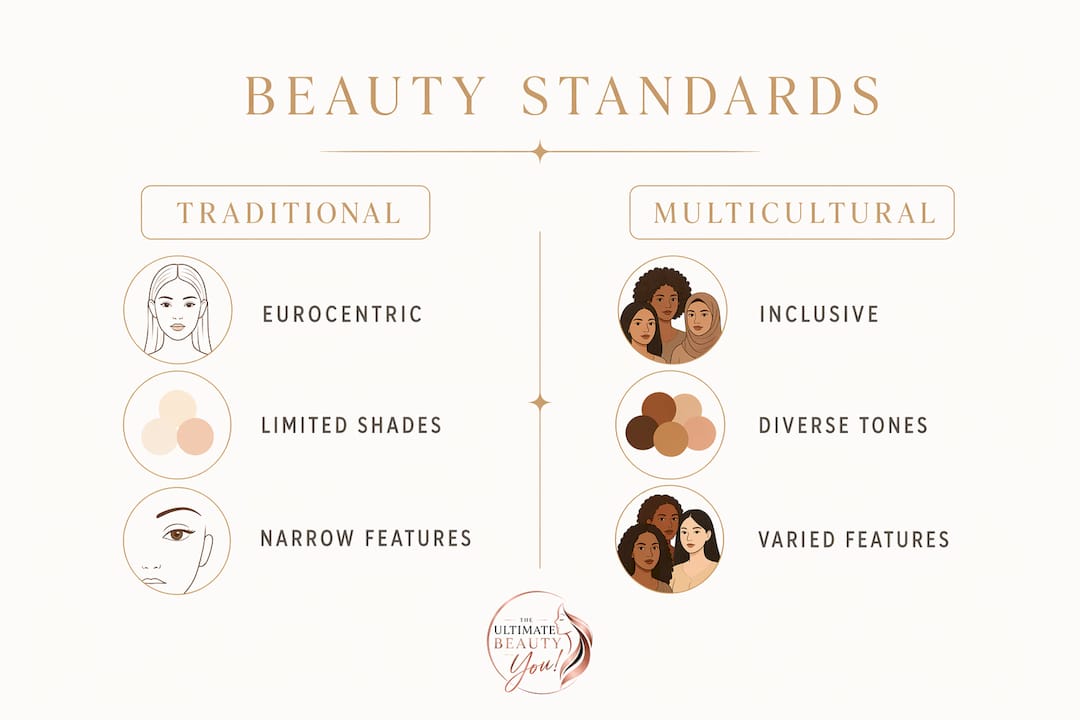
Traditional beauty standards have historically centered narrow ideals rooted in Eurocentric features, including light skin, straight hair, and specific facial proportions. These standards were treated as universal when they were never universal at all. Multicultural beauty directly challenges this by recognizing that beauty is culturally shaped, not biologically fixed.
Research confirms this reality. A 2026 study found that perceptions of facial attractiveness vary by the ethnicity and gender of both the person being assessed and the person doing the assessing. That finding matters because it proves beauty preferences are culturally learned, not objective. What one culture considers ideal, another may not prioritize at all.
The definition of multicultural beauty goes beyond visual diversity. UNESCO defines cultural diversity as critical for intellectual, emotional, moral, and social growth, linking it directly to human dignity and participation. That framing lifts multicultural beauty out of the cosmetics aisle and into the broader conversation about who gets to feel seen and valued.
Here is what multicultural beauty actively challenges:
- The assumption that one skin tone is the "default" for foundation shades or product testing
- The treatment of textured, coily, or natural hair as a problem to be corrected
- The erasure of cultural beauty rituals, such as Ayurvedic hair oiling or West African shea butter traditions, from mainstream beauty conversations
- The use of a single body type or facial feature set as the aspirational standard in advertising
- The absence of women of color in leadership roles within beauty brands
Each of these points represents a place where traditional standards have failed real women. Multicultural beauty fills those gaps with recognition, respect, and real products.
What makes a truly multicultural beauty brand?
Multicultural beauty brands do more than expand their shade range. Truly multicultural brands formulate products tested on diverse phototypes, with actives suited to different skin barriers and hair and scalp needs, and with ethical supply chains behind every ingredient. That is the standard. Anything less is marketing without substance.
Here is what separates a genuine multicultural brand from one that only looks the part:
- Formulation depth. Products are developed and clinically tested across a range of skin tones and types, not just adapted from a single base formula. Melanin-rich skin has different UV response patterns and hydration needs than lighter phototypes.
- Hair and scalp science. Coily and kinky hair textures require different moisture retention strategies and protein balance than fine or straight hair. Brands that address this invest in separate research, not just different packaging.
- Ethical ingredient sourcing. Many ingredients central to multicultural beauty, such as shea butter, argan oil, and baobab, originate in communities of color. Authentic brands source these ethically and transparently.
- Clinical testing diversity. Safety and efficacy testing must include participants across skin tones and ethnicities. Testing only on lighter skin tones and then marketing to everyone is a well-documented gap in the industry.
- Inclusive leadership. Inclusive beauty in 2026 requires representation at every level, including product development teams, executive leadership, and brand partnerships.
Pro Tip: Before purchasing from a brand claiming multicultural values, check whether their clinical studies list diverse participant demographics. If that information is not publicly available, ask the brand directly. Transparency here is a meaningful signal of genuine commitment.
Color perception adds another layer of complexity. Undertone systems and shade naming lack global standardization, which means a brand's "inclusive" shade range may still miss entire communities if the naming and matching systems were built without those women in the room.
Does authentic representation in beauty marketing actually matter?
Authentic representation in beauty marketing builds trust. It is not a nice addition. It is the deciding factor for a growing number of consumers. Multicultural consumers are 60% more likely to choose brands with culturally resonant promotional content. That statistic reflects something deeper than preference. It reflects identity.
Research on multicultural beauty communication found that cultural legitimacy goes far beyond translation or adding diverse faces to a campaign. It requires cultural mediation and emotional co-creation, meaning the community being represented must be genuinely involved in shaping the message. A campaign built without that involvement risks rejection regardless of how visually diverse it appears.
"Brands successful in multicultural markets lead with genuine cultural connection, respecting identities, rituals, and narratives rather than treating inclusion as a marketing checkbox."
The table below shows the real difference between tokenism, representation, and cultural resonance in beauty branding.
| Approach | What it looks like | What it delivers |
|---|---|---|
| Tokenism | One model of color in a campaign | Visibility without belonging |
| Representation | Diverse faces across product lines | Recognition without depth |
| Cultural resonance | Co-created campaigns, community partnerships, culturally specific messaging | Trust, loyalty, and long-term growth |
Brands that treat diversity as a moment rather than a mandate will lose ground. Women notice. They talk. And they vote with their spending.
Successful multicultural campaigns also emphasize specificity within cultural subgroups. Rare Beauty's Natural Matte Foundation campaign, for example, represented nuanced identities rather than collapsing all women of color into a single category. That specificity is what separates meaningful inclusion from homogenization.
What is the economic and social impact of multicultural beauty?
The multicultural beauty movement carries real economic weight. Black consumers' beauty spending grew 9% to $16.2 billion, representing 12.8% of U.S. beauty sales. That growth is driven by demand for representation and products that actually perform for their needs. It signals that the market has been underserving this community for years, and brands that close that gap earn lasting loyalty.
The social impact runs equally deep. When women see themselves reflected in beauty products and campaigns, it affirms their worth. That affirmation is not trivial. It connects directly to confidence, self-acceptance, and cultural pride. UNESCO frames cultural diversity as a foundation for social cohesion and innovation, not simply an aesthetic choice.
The benefits of a genuinely multicultural beauty industry extend across multiple dimensions:
- Economic inclusion: Multicultural consumers gain access to products that actually work for their skin and hair, reducing the tax of buying multiple products that fail before finding one that works.
- Cultural preservation: Beauty rituals tied to specific cultures gain visibility and respect rather than being erased or appropriated without credit.
- Innovation acceleration: Formulating for diverse needs pushes the entire industry to develop better science, better ingredients, and better testing protocols.
- Social dignity: Women who have historically been excluded from mainstream beauty standards gain recognition that their appearance is not a deviation from beauty. It is beauty.
- Community building: Shared beauty rituals and products create connection across generations and geographies within cultural communities.
Notably, 60% of Black consumers say it is important that products and services be customized to their needs. That demand for customization reflects a broader truth: diverse beauty is not about adding more options to a shelf. It is about building products from the ground up with specific women in mind.
Key Takeaways
Multicultural beauty requires product formulation, cultural authenticity, and genuine representation working together, not just a wider shade range.
| Point | Details |
|---|---|
| Definition matters | Multicultural beauty means inclusive recognition of diverse ethnicities, skin tones, hair types, and cultural identities. |
| Products must perform | Authentic brands test formulations on diverse phototypes and address varied skin barriers and hair needs. |
| Cultural resonance drives loyalty | Multicultural consumers are 60% more likely to choose brands with culturally resonant content over tokenistic campaigns. |
| Economic power is real | Black consumers alone account for $16.2 billion in U.S. beauty spending, demanding customized, high-performing products. |
| Representation requires depth | Specificity within cultural subgroups, not broad diversity gestures, builds lasting trust and community. |
Why I think the beauty industry still gets this wrong
The conversation around multicultural beauty has grown louder, but louder does not always mean deeper. What I see repeatedly is brands adding shade ranges or casting diverse models and then calling the work done. That is not inclusion. That is optics.
The harder work is internal. It means hiring women of color into product development roles, not just marketing. It means funding clinical studies that include participants across skin tones from the start, not as an afterthought. It means listening to communities rather than speaking at them. When brands skip that work, women notice. They have always noticed. They just now have platforms to say so publicly.
What gives me genuine hope is the consumer. Women today are more informed, more vocal, and more willing to hold brands accountable than at any point I can remember. They read ingredient lists. They ask about testing protocols. They support brands that tell authentic stories and walk away from those that do not. That accountability is the real engine of change in this industry.
Multicultural beauty also asks something of each of us personally. It asks us to see our own features, our own rituals, our own cultural inheritance as worthy of celebration. Not as something to minimize or correct. That shift in perspective, from self-criticism to self-recognition, is where inner beauty and cultural pride meet. And that intersection is where real confidence grows.
— Ava
Theultimatebeauty-you and the multicultural beauty you deserve
At Theultimatebeauty-you, multicultural beauty is not a campaign. It is the foundation of everything we build.
We believe every woman deserves products, resources, and a community that sees her fully. Our inclusive product range is built with diverse skin tones, hair textures, and cultural beauty needs at the center, not as an add-on. We work with experts and partners who share that commitment. Whether you are looking for products that perform for your specific needs or a community that celebrates your beauty without conditions, Theultimatebeauty-you is where you belong. Join us and become part of a movement that puts every woman at the center of beauty.
FAQ
What does multicultural beauty mean?
Multicultural beauty is the intentional inclusion and celebration of diverse ethnicities, skin tones, hair textures, and cultural identities within beauty standards, products, and marketing. It rejects a single default ideal and recognizes that beauty is culturally shaped.
Why is diversity in beauty important?
Diversity in beauty affirms the dignity and worth of women across all backgrounds. UNESCO links cultural diversity to social cohesion, innovation, and human participation, making inclusion in beauty a social and ethical priority, not just a market trend.
How can you tell if a beauty brand is genuinely multicultural?
A genuinely multicultural brand tests formulations on diverse phototypes, sources ingredients ethically, employs diverse leadership, and creates campaigns through cultural co-creation rather than simply casting diverse models.
How does multicultural beauty affect consumer spending?
Black consumers alone spent $16.2 billion on beauty in the most recent reporting period, representing 12.8% of U.S. beauty sales. That figure reflects years of unmet demand and signals the scale of opportunity for brands that invest in genuine inclusion.
What is the difference between representation and cultural resonance in beauty?
Representation means diverse faces appear in campaigns. Cultural resonance means the brand genuinely understands, respects, and co-creates with the communities it serves. Multicultural consumers are 60% more likely to choose brands that achieve cultural resonance over those that offer representation alone.