
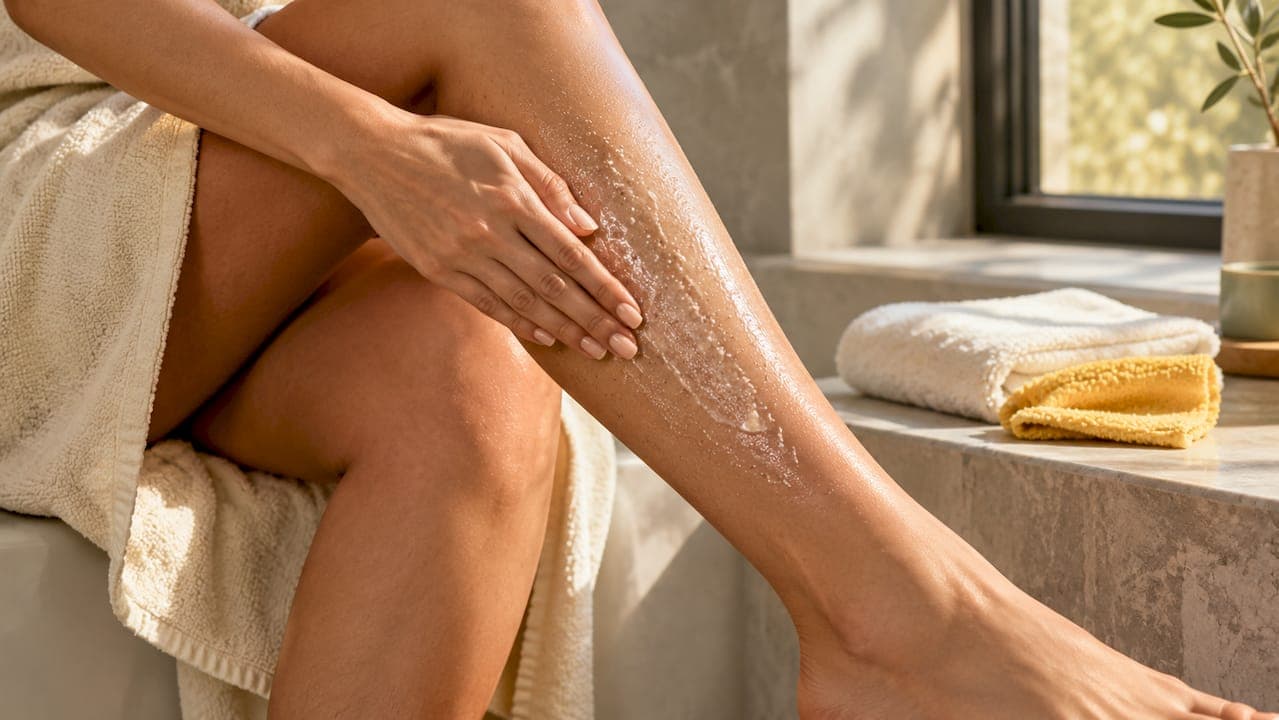
Both gentle mechanical exfoliation and low concentration chemical exfoliation work. The right choice depends on your skin type, not on which product promises the most dramatic results. Start conservatively, follow a simple routine: cleanse, exfoliate gently for about 30 seconds, rinse if needed, moisturize, and protect from the sun when acids are involved. Stop at the first sign of irritation.
TL;DR:
- Gentle chemical exfoliants with low acidity are less likely to cause micro-tears compared to physical scrubs, especially for sensitive skin types.
- Exfoliating twice weekly is usually sufficient, with skin signals like redness or stinging indicating overuse or irritation.
- Patch-testing new products helps prevent adverse reactions, particularly for those with reactive or compromised skin.
- Avoid exfoliating during active sunburns, eczema, psoriasis flares, or infections to prevent worsening skin conditions.
- Consistent moisturizing and daily sun protection are crucial after exfoliation, with sunscreens recommended for up to a week afterward to reduce sun sensitivity risks.
Table of Contents
- Your step-by-step shower routine for body exfoliation
- Mechanical vs chemical exfoliation: what each does
- Choosing the right exfoliant for your skin type and situation
- How often to exfoliate, and how to read your skin's signals
- When to stop exfoliating and what to expect with keratosis pilaris
- Aftercare: moisturize, protect, and follow the label
- How to choose scrubs, gloves, and leave-on acids without the guesswork
- What the evidence backs up, and where to go deeper
- A note on patience over perfection
- Where to find tailored guidance and community support
- Sources
- FAQ
Your step-by-step shower routine for body exfoliation
Beauty is a practice, not a guessing game. This routine gives your skin exactly what it needs, in an order that works.
- Soak in lukewarm water for a minute or two to soften skin and loosen dead cells before you begin.
- Pick one method for the session: a washcloth or loofah, a scrub, or a leave-on acid, never combined.
- Apply with light, circular motions for about 30 seconds, following dermatologist guidance on safe at-home exfoliation.
- Rinse thoroughly if you used a physical scrub; leave-on acids stay on per label directions.
- Pat skin dry, then apply moisturizer while skin is still slightly damp to lock in hydration.
- Wait the recommended time before sun exposure if you used an acid product.
Consistency, not intensity, is what turns this into a habit your skin actually thanks you for.
Mechanical vs chemical exfoliation: what each does
Mechanical exfoliation uses friction: scrubs, brushes, gloves, and loofahs physically lift dead skin cells away. Chemical exfoliation uses acids like AHAs, BHAs, urea, or retinoids to dissolve the bonds holding dead cells together, working at a level that friction cannot reach.
- Mechanical tools give instant smoothness but can cause micro-tears when used too hard or too often.
- Chemical exfoliants often deliver smoother texture with less friction-related barrier damage than harsh scrubs, according to Harvard-affiliated dermatologists.
- Acids carry their own tradeoff: increased sun sensitivity that lingers after use.
- Both methods can irritate skin when overused, regardless of which one you reach for.
Pro Tip: If your skin is reactive or easily irritated, start with a gentle chemical exfoliant before trying a physical scrub.
Neither method is superior across the board. Your skin's tolerance decides the winner.
Choosing the right exfoliant for your skin type and situation
Your skin type sets the rules, not the trends. Here is how to match method to circumstance.
- Sensitive or dry skin: favor mild leave-on acids or urea creams over abrasive scrubs, and always follow with a rich moisturizer.
- Oily or acne-prone skin: BHAs like salicylic acid can help manage clogged pores, but patch-test first and introduce slowly.
- Darker skin tones: gentler exfoliation reduces the risk of post-inflammatory marks, so choose fine-particle scrubs or low-concentration acids.
- Pregnancy: dermatology-informed guidance recommends staying under 10% glycolic acid and avoiding retinoids entirely.
- Medication interactions: anyone using prescription retinoids or benzoyl peroxide should space out exfoliation to avoid compounding irritation.
Patch-test any new product on a small area for a few days before applying it more broadly.
How often to exfoliate, and how to read your skin's signals
Frequency should match method strength, not habit. The American Academy of Dermatology recommends limiting exfoliation to a few times weekly for most gentle methods, with recovery days between sessions.
- Thicker skin areas like elbows and knees tolerate more frequent, slightly firmer exfoliation.
- Thinner skin on the chest, inner arms, and legs needs a lighter hand and less frequency.
- Redness, stinging, tightness, or flaking after a session means you have gone too far.
- When irritation appears, pause exfoliation entirely and let skin recover before trying again.
Treat irritation, not the calendar, as your real stop signal.
When to stop exfoliating and what to expect with keratosis pilaris
Some situations call for a full pause, not a gentler version of the same routine.
- Skip exfoliation on sunburned, broken, or actively inflamed skin.
- Avoid it during eczema or psoriasis flares; AAD guidance recommends a clinician evaluation before self-treating.
- Hold off if skin shows signs of infection, like warmth, swelling, or discharge.
Keratosis pilaris, the small rough bumps many people notice on the upper arms, responds to consistent exfoliation with AHAs, BHAs, urea, or retinoids, but it is not something exfoliation cures. Many people taper down to twice-weekly maintenance once texture improves. A dermatologist can help when bumps persist despite a steady routine.
Aftercare: moisturize, protect, and follow the label
Exfoliation is only half the job. What you do afterward decides whether your skin thrives or reacts.
- Apply a fragrance-free moisturizer immediately after rinsing to support the skin barrier.
- Use sunscreen daily when acids are part of your routine, since irritation and sun sensitivity often travel together.
- Patch-test new BHA products and stop at the first sign of prolonged stinging, per FDA guidance.
The FDA recommends Sun Alert labeling on AHA products because AHA use may increase sun sensitivity during use and for up to one week after stopping. That week-long window is exactly why sunscreen belongs in your routine, not just on your beach days.
How to choose scrubs, gloves, and leave-on acids without the guesswork
Reading a label well matters more than choosing the priciest option on the shelf.
- Check whether a product is "leave-on" or "rinse-off," since the instructions differ and mixing them up defeats the purpose.
- Look for stated AHA or BHA concentrations and any Sun Alert wording on the packaging.
- Choose fine sugar or jojoba particles over jagged shells; skip apricot pit or salt scrubs if your skin is fragile.
- Rinse exfoliating gloves after every use and hang them to dry fully in open air.
- Replace tools when they show odor, discoloration, or fraying, since worn material harbors microbes.
Good hygiene habits protect the results your routine is working to build.
What the evidence backs up, and where to go deeper
The clinical consensus is consistent: gentle methods, modest frequency, and diligent sun protection outperform aggressive routines every time. For the science behind why exfoliation improves texture and absorption, our guide on why exfoliation improves skin goes further, and beauty routines by age group adapts these steps to different life stages.

A note on patience over perfection
Beauty is becoming, not arriving overnight. The skin that responds best is the skin you treat gently and consistently, week after week. Moisturize faithfully, respect irritation when it shows up, and bring in a dermatologist for anything that lingers.
— Ava
Where to find tailored guidance and community support
Great skin care rarely happens in isolation. A platform brings together vetted guides, trusted experts, and a community built for women navigating beauty at every age and stage.

- Explore curated routines and expert-backed advice suited to your skin's real needs.
- Connect with a community that treats beauty as a practice, not a performance.
- Visit The Ultimate Beauty - You! to start exploring guides built around your stage of life.
This article is general information, not a substitute for advice from a qualified doctor. Consult a qualified healthcare professional about your own circumstances before acting on anything here.
Sources
- How to safely exfoliate at home | American Academy of Dermatology
- Have you exfoliated lately? | Harvard Health Blog
- How to use exfoliating gloves | Healthline
FAQ
What is the best way to exfoliate your body?
The safest approach combines a gentle method, either mild mechanical exfoliation or a low-concentration chemical exfoliant, applied for about 30 seconds with light pressure. Follow with a fragrance-free moisturizer and sunscreen if you used an acid product.
What do dermatologists recommend for body exfoliation?
Dermatologists recommend gentle circular motions for roughly 30 seconds, using lukewarm water, and limiting sessions to two or three times weekly. They also advise moisturizing immediately afterward and stopping if irritation develops.
Is exfoliation good for your body?
Exfoliation can smooth texture and support better absorption of moisturizers when done gently and consistently. Overdoing it, however, can damage the skin barrier, so moderation matters more than frequency.
Is full body exfoliation worth it?
Full body exfoliation can improve texture and comfort, particularly for rough patches like keratosis pilaris, though results are gradual and require maintenance rather than a one-time fix. It works best as a steady habit rather than an occasional treatment.
How long should sun protection continue after using acids?
The FDA advises continued sun protection for up to one week after stopping AHA use, since sun sensitivity can persist beyond the days you actively use the product. Daily sunscreen during this window helps prevent irritation and sun damage.