
Systemic or local hormone therapy relieves hot flashes, night sweats, and vaginal dryness more effectively than any other option when your health history allows it. Non-hormonal prescriptions and evidence-based therapies like CBT come close for many women who can't or don't want hormones. Lifestyle shifts and simple self-care tools ease symptoms starting tonight. Talk with a clinician who knows your history before choosing a path.
TL;DR:
- Hormone therapy offers the most effective relief for hot flashes and vaginal dryness, but it requires careful assessment of individual health risks and history.
- Non-hormonal medications like SSRIs, gabapentin, and oxybutynin reduce symptoms by up to half and can be suitable alternatives for women unable or unwilling to use hormones.
- Behavioral therapies such as cognitive behavioral therapy and clinical hypnosis have strong evidence for decreasing hot flash distress and improving sleep, especially for those avoiding medication.
- Lifestyle adjustments including regular exercise, diet modifications, and daily symptom diaries can significantly reduce hot flash severity and help identify personal triggers.
- Combining cooling strategies, sleep hygiene improvements, and stress management techniques offers quick relief and supports overall well-being during perimenopause.
Table of Contents
- Perimenopause Symptoms Relief You Can Start Tonight
- What Medical Treatments Actually Work, and Who Should Consider Them?
- Do Behavioral Therapies Really Reduce Hot Flashes?
- Lifestyle Changes That Actually Move the Needle
- Supplements and Complementary Therapies: An Honest Look
- When Should You See a Clinician About Perimenopause Symptoms?
- Your 4-Week Perimenopause Symptoms Relief Plan
- Why Trust This Guide
- Managing Urinary Symptoms During Perimenopause
- Stress Management Techniques That Help During Perimenopause
- A Personal Note on Tracking What Works
- How Theultimatebeauty-you Supports Your Perimenopause Journey
- Sources
Perimenopause Symptoms Relief You Can Start Tonight
You don't need a prescription to feel better this week. Some of the most reliable tools for perimenopause symptom management are sitting in your bathroom cabinet or your bedroom closet right now, and they start working immediately, even if they won't solve everything on their own.
Cooling down, fast:
- Dress in layers you can shed in seconds. Cotton and moisture-wicking fabrics beat synthetic blends for trapping less heat.
- Keep a small fan at your desk and another on your nightstand.
- Lower your bedroom temperature a few degrees before you turn in. A cooler room reduces the odds a night sweat wakes you at 2 a.m.
- Sip ice water at the first flush of heat instead of waiting it out.
Vaginal dryness has two different fixes, and confusing them wastes money. Lubricants work at the moment of intimacy, easing friction on contact. Moisturizers are for daily or every-other-day use, rebuilding tissue hydration over time the way a facial moisturizer works differently than lip balm applied once. Skip products with glycerin or parabens if you're prone to irritation or yeast infections. Both approaches are genuine over-the-counter perimenopause relief options worth trying before anything more involved.
Sleep hygiene during perimenopause needs a few tweaks beyond the standard advice. Keep your room cold, dark, and device-free, and consider a partner sleep divorce (separate blankets, even separate rooms) if his body heat is compounding your own. A healthier sleep environment matters more now than it did in your thirties.
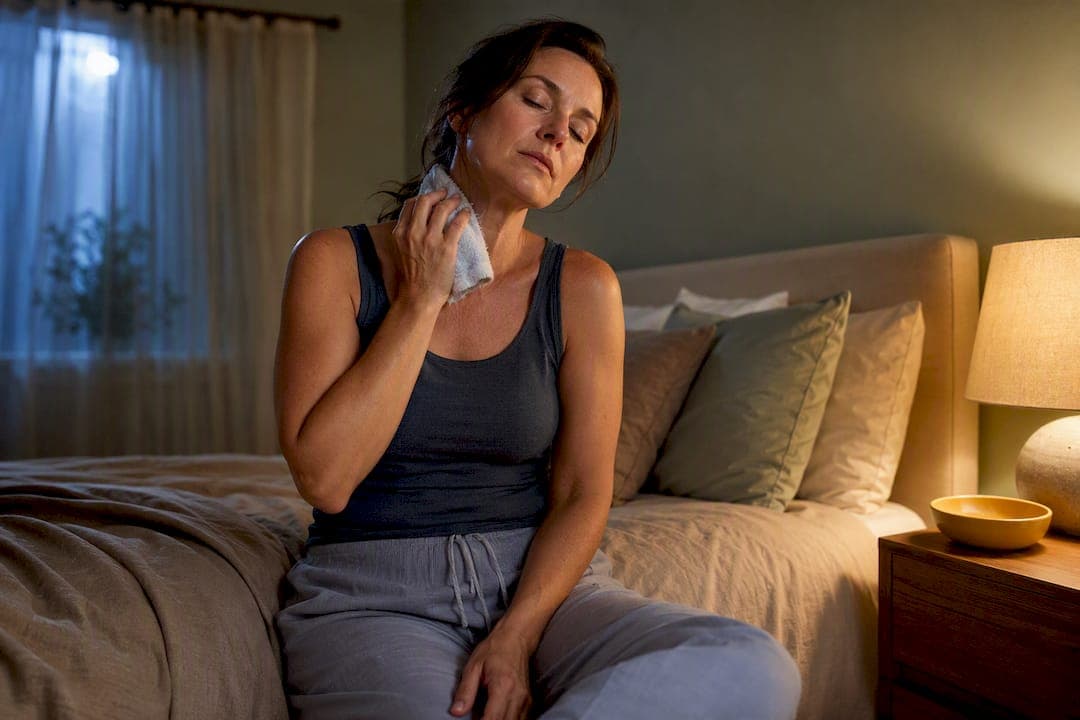
Pro Tip: Keep a washcloth soaked in ice water in a small cooler by your bed. Pressing it to your neck during a night sweat works faster than waiting for a fan to catch up.
Cooling strategies and lubricants deliver relief in minutes. Sleep hygiene changes usually take one to two weeks of consistency before you notice a real difference.
What Medical Treatments Actually Work, and Who Should Consider Them?
Hormone therapy remains the most effective treatment available for hot flashes, night sweats, and the tissue changes behind vaginal dryness, according to Mayo Clinic's clinical guidance. That single fact drives most of the medical decision-making in this stage of life, but it's not the only fact that matters.
Systemic hormone therapy (pills, patches, gels, or sprays) delivers estrogen through the bloodstream, addressing hot flashes, night sweats, and mood swings while also protecting bone density. It carries a risk window that clinicians weigh carefully: starting within the early years after your final period generally offers a better risk profile than starting later. Women with a history of certain cancers, blood clots, or liver disease usually need a different route. The lowest effective dose, used for the shortest necessary duration, remains the standard guidance.
Vaginal estrogen works differently. Delivered as a cream, ring, or tablet directly to vaginal tissue, it treats genitourinary syndrome, dryness, irritation, and painful intercourse, with minimal absorption into the rest of the body. That low systemic exposure makes it a reasonable option even for some women who can't take systemic hormones for other reasons.
Women who can't or won't take hormones still have real options. Non-hormonal prescriptions covered by a BMJ clinical review reduce hot flash frequency and severity for many patients, sometimes by as much as half.
Non-hormonal prescription options include:
- SSRIs and SNRIs (originally antidepressants) at low doses, reducing hot flash frequency and helping mood symptoms simultaneously.
- Gabapentin, especially useful when night sweats are disrupting sleep, since it's sedating at bedtime doses.
- Oxybutynin, an anticholinergic that reduces hot flashes and can also help urinary urgency.
- NK3 receptor antagonists, a newer drug class targeting the brain's temperature-regulation pathway directly rather than working through hormones at all.
One detail catches many women off guard: hormone therapy is not contraception. You can still ovulate during perimenopause, sometimes unpredictably, and pregnancy remains possible until you've gone 12 full months without a period. If you're sexually active and not trying to conceive, you need a separate method.
Whatever route you choose, expect a follow-up conversation with your clinician around 8 to 12 weeks after starting treatment. That's typically how long it takes to know whether a dose or medication is actually working, and adjustments are common and expected.
Do Behavioral Therapies Really Reduce Hot Flashes?
Yes, and the evidence is stronger than most women realize. Cognitive behavioral therapy and clinical hypnosis rank among the most effective non-drug interventions for vasomotor symptoms, according to a clinical review of perimenopause treatments, and both can be delivered without a single prescription.
- CBT for hot flashes and mood teaches you to change how you respond to a rising flush, reducing the distress even when the physical sensation doesn't disappear entirely. It's typically delivered in six to eight sessions, individually or in a group, and measurable improvement often shows up within 8 to 12 weeks.
- CBT-I (CBT for insomnia) targets the sleep disruption piece specifically, retraining your body's association between bed and rest rather than bed and wakefulness. It frequently helps mood and cognitive fog too, since so much of "brain fog" during perimenopause traces back to fragmented sleep.
- Clinical hypnosis, delivered by a trained practitioner over several sessions, has randomized-trial evidence for reducing hot flash frequency, working through a different mechanism than CBT but landing in a similar evidence tier.
- Pelvic floor therapy addresses urinary leakage and painful intercourse through targeted exercises and manual techniques, usually accessed through a physical therapist with pelvic health training, and it pairs well with vaginal estrogen rather than replacing it.
These approaches deserve serious consideration if you have a personal or family history that makes hormone therapy risky, if you simply prefer to avoid medication, or if sleep and mood symptoms feel like the bigger burden than hot flashes themselves.
Lifestyle Changes That Actually Move the Needle
Exercise is the closest thing to a universal recommendation in perimenopause care, and the specifics matter more than "just move more." Aim for regular moderate aerobic activity weekly, such as brisk walking, swimming, or cycling, plus resistance training sessions. Harvard Health's research on perimenopause shows exercise reliably improves mood, sleep, and bone health, even though its effect on hot flash frequency specifically is less consistent across studies. Resistance training in particular protects bone mineral density during a stretch of life when estrogen decline accelerates bone loss.
Diet adjustments worth making:
- Build meals around plants, vegetables, legumes, whole grains, with adequate protein at each meal to support muscle mass.
- Prioritize calcium and vitamin D, through food or a discussed-with-your-doctor supplement, since bone density needs extra support now.
- Cut back on alcohol and caffeine if you notice they trigger flushing or worsen sleep. Many women find both are hot flash triggers, though the pattern varies person to person.
Modest weight loss, even a modest 5 to 10 percent of body weight, has been shown to reduce hot flash severity for women carrying excess weight, though the goal is sustainable change, not a crash diet.
Pro Tip: Start a simple symptom-and-trigger diary. Note the day's alcohol, caffeine, sleep hours, and stress level alongside how many hot flashes you had. Patterns usually surface within two weeks, and they're specific to you.
Supplements and Complementary Therapies: An Honest Look
Soy and isoflavone supplements have the most research behind them of any botanical option, though the evidence is genuinely mixed. Some women see modest reductions in hot flash frequency; others see nothing. It's a reasonable low-risk experiment, not a guaranteed fix.
Black cohosh, dong quai, and wild yam are the three supplements you'll see marketed most aggressively for perimenopause, and they're also the three with the weakest evidence behind them. A review of botanical research found inconsistent or absent benefit for all three in well-designed trials, alongside real safety concerns, particularly for liver health with black cohosh.
Complementary approaches worth a closer look:
- Acupuncture has some supportive data for hot flash reduction, though effect sizes are modest.
- Mindfulness-based stress reduction helps with the emotional distress around symptoms, even when it doesn't change symptom frequency directly.
- Both fit well as one piece of a broader plan rather than a standalone solution.
If you take any prescription medication, have a hormone-sensitive condition, or have liver concerns, run any supplement past your clinician first. "Natural" doesn't mean risk-free, and interactions are more common than the marketing suggests.
When Should You See a Clinician About Perimenopause Symptoms?
Some signs mean it's time to stop experimenting on your own and get an evaluation.
- Symptoms are interfering with daily function. If hot flashes are disrupting work, sleep loss is affecting your driving or decision-making, or mood changes feel unmanageable, that's a conversation, not something to tough out.
- Bleeding has changed dramatically. Heavy bleeding, bleeding between periods, or bleeding after sex warrants prompt evaluation to rule out other causes.
- Mood symptoms feel like depression, not just irritability. Persistent sadness, loss of interest in things you normally enjoy, or thoughts of self-harm need immediate attention, not a wait-and-see approach.
A clinician will typically check thyroid function, since an underactive or overactive thyroid mimics several perimenopause symptoms, and will review your current medications for interactions. Expect a conversation about your personal and family health history to guide hormone therapy decisions, and plan for a follow-up around 8 to 12 weeks after starting any new treatment to assess whether it's working.
Your 4-Week Perimenopause Symptoms Relief Plan
- Week 1: Start cooling strategies and appropriate lubricants or moisturizers immediately. Fix your sleep environment. Begin a daily symptom-and-trigger diary.
- Weeks 2 to 3: Add structured exercise, aiming toward the 150-minute weekly target, and start the diet tweaks that cut alcohol or caffeine if your diary flagged them as triggers.
- Week 4: Review your diary for patterns. Note what improved, what didn't, and write down specific questions for a clinician visit if symptoms are still significant.
Pro Tip: Bring your diary to any clinician appointment. A specific record ("six hot flashes a day, worse after wine") gets you a faster, more targeted conversation than "I've just been feeling off."
Why Trust This Guide
Theultimatebeauty-you draws on clinical guidelines from sources like the Office on Women's Health and Mayo Clinic, along with peer-reviewed treatment reviews, to keep this information grounded and current. This piece was written by Ava as part of our ongoing coverage of women's health at every stage. None of it replaces a personal conversation with your own clinician, who knows your history and your risks better than any article can.
Managing Urinary Symptoms During Perimenopause
Urinary urgency, leakage, and more frequent UTIs often surprise women in perimenopause, partly because nobody warns you that declining estrogen thins the tissue lining the urethra and bladder, not just the vagina. That thinning is part of the same genitourinary syndrome that causes vaginal dryness, and it responds to some of the same treatments.
Vaginal estrogen, discussed earlier for dryness, frequently improves urinary symptoms too, since it restores tissue health throughout the same region. Pelvic floor therapy addresses the muscular side of the equation, strengthening the muscles that control bladder function and reducing stress incontinence, the leakage that happens with a cough, sneeze, or laugh.
Oxybutynin, one of the non-hormonal prescription options covered earlier, treats overactive bladder symptoms directly and does double duty for some women by also reducing hot flashes.
A few habit changes help too:
- Cut back on caffeine and carbonated drinks, both known bladder irritants.
- Practice timed voiding, using the bathroom on a schedule rather than waiting for urgency, which can retrain an overactive bladder.
- Stay hydrated anyway. Cutting fluids to reduce urgency backfires by concentrating urine and increasing irritation.
If frequent UTIs are becoming a pattern, mention it specifically at your next appointment. Recurrent infections in perimenopause often trace back to the tissue changes above, and vaginal estrogen frequently reduces the frequency significantly.
Stress Management Techniques That Help During Perimenopause
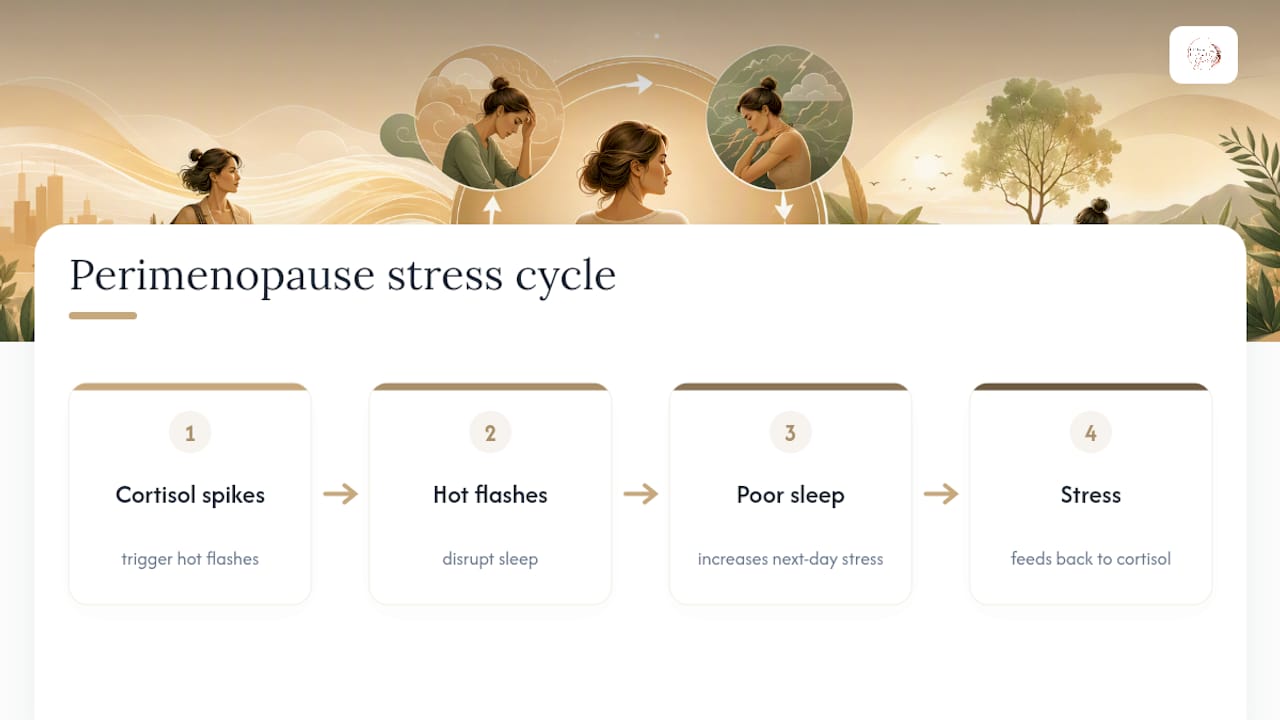
Stress and perimenopause symptoms feed each other in a loop that's worth understanding. Cortisol spikes can trigger hot flashes, hot flashes disrupt sleep, and poor sleep makes you more reactive to stress the next day. Breaking that cycle anywhere helps the whole system.
Mindfulness-based stress reduction, mentioned earlier for its role alongside supplements, deserves a second look here as a standalone tool. A daily practice, even 10 minutes, measurably reduces the subjective distress around hot flashes, according to the research supporting behavioral interventions in this stage of life.
Paced breathing, slow, deep breaths at a rate of about six to eight per minute, has specific evidence for reducing hot flash intensity when practiced at the first sign of a flush. It's free, private, and works anywhere, including in a work meeting where a cooling towel isn't an option.
Movement matters here too, not just for the reasons covered in the lifestyle section. Walking outdoors, yoga, and other rhythmic, low-intensity activity lower cortisol in ways that pure willpower can't match. If stress feels like the dominant symptom in your day, a stress management approach built specifically for women navigating this life stage covers techniques beyond what fits in this section.
Protecting your social connections matters just as much as any technique. Isolation amplifies stress, and perimenopause is exactly the wrong time to withdraw from the people who make hard weeks easier.
A Personal Note on Tracking What Works
Your symptoms will vary week to week, sometimes for no clear reason, and that's normal, not a sign you're doing something wrong. Give yourself permission to experiment without expecting linear progress.
Measure small wins instead of chasing a complete fix: one more hour of sleep, one fewer night sweat, a slightly steadier mood. Write those down. They add up faster than they feel like they do in the moment, and they'll make your next clinician conversation sharper and more useful.
— Ava
How Theultimatebeauty-you Supports Your Perimenopause Journey
Theultimatebeauty-you gives you something most symptom-relief guides can't: a full community of women comparing notes on exactly what you're navigating right now, alongside vetted experts who specialize in this life stage. No single article can answer every question that comes up over months of trial and error, but our platform connects you to ongoing guidance instead of a one-time read.

Our resource library covers the topics that come up again and again during perimenopause, from supplement choices by life stage to mental health habits that build real resilience when mood symptoms are wearing you down. Our Experts & Partners directory helps you find practitioners who specialize in this transition, so you're not starting your search from zero. Visit Theultimatebeauty-you today to explore the full community and see which resources fit where you are right now.
Sources
This article is general information, not a substitute for advice from a qualified doctor. Consult a qualified healthcare professional about your own circumstances before acting on anything here.