
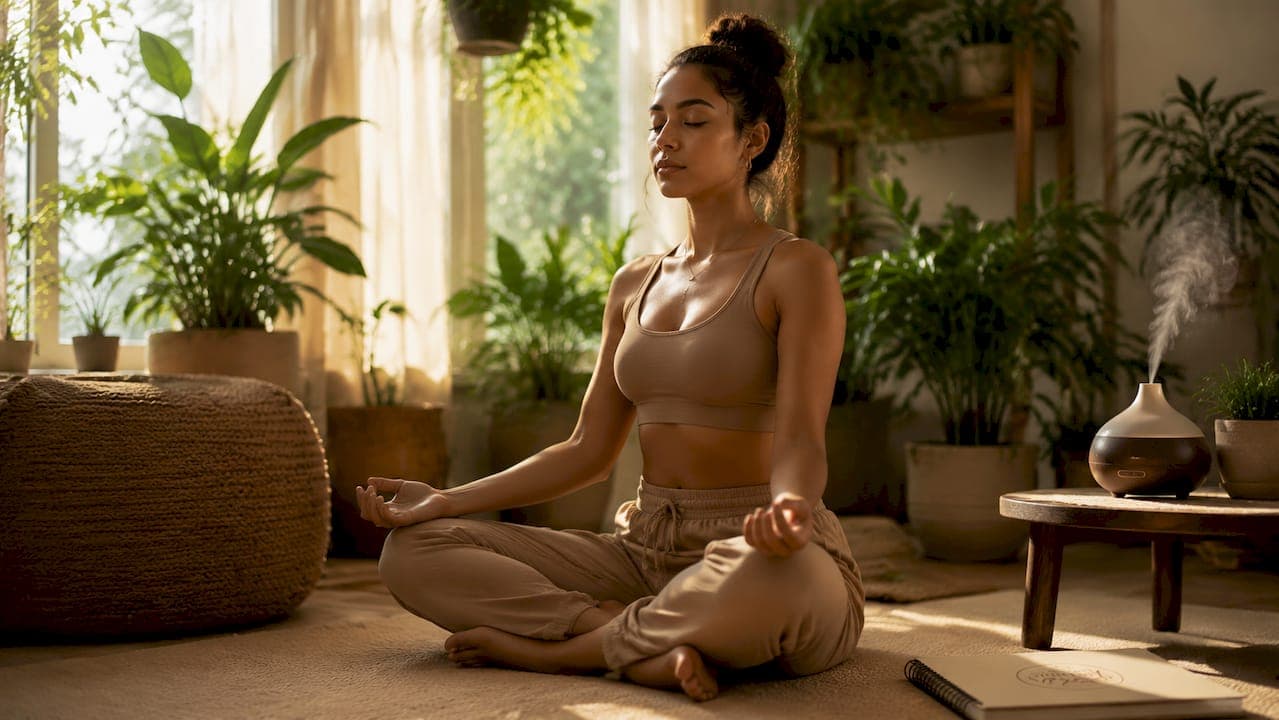
Meditation is one of the most direct paths to true beauty rest. When you quiet your mind, your body shifts into its natural repair mode, lowering cortisol, slowing your heart rate, and activating the parasympathetic nervous system. That biological shift is what makes deep restorative sleep possible, releasing the growth hormone and cytokines your skin needs to regenerate overnight. The role of meditation in beauty rest is not a wellness trend. It is grounded in real physiology, and it works from the inside out.
Here is what consistent meditation practice does for your beauty rest:
- Lowers cortisol, the stress hormone that breaks down collagen and triggers inflammation
- Activates the "rest and digest" mode your body needs to enter deep, restorative sleep
- Supports growth hormone release during deep sleep, fueling cellular repair
- Reduces systemic inflammation that shows up on your skin as redness, breakouts, and dullness
- Builds a mind-body balance that makes both your sleep and your skin more resilient over time
How meditation works on your body and mind
Meditation is a mindful practice that trains your attention and calms your nervous system. The moment you settle into a session, your brain begins to shift away from the high-alert stress response and toward the parasympathetic state, often called "rest and digest." Your heart rate slows. Your blood pressure drops. Brain wave activity moves from fast, anxious beta waves toward the slower alpha and theta patterns associated with deep calm.
A key part of this process is the amygdala, the brain's emotional alarm center. Meditation quiets amygdala activity, which reduces emotional reactivity and makes it far less likely that racing thoughts will keep you awake at night. Dr. Herbert Benson, director emeritus of the Harvard-affiliated Benson-Henry Institute for Mind Body Medicine, coined the term "relaxation response" to describe this deep physiological shift, calling it the body's direct counter to the stress response.
For sustained benefits, experts recommend regular daily practice to effectively condition the nervous system. That said, even shorter sessions build real momentum when practiced consistently.
How meditation improves your sleep quality
Sleep problems and stress feed each other in a cycle that is hard to break without intervention. Meditation interrupts that cycle at the source. By reducing sympathetic nervous system activation, it lowers the physiological arousal that prevents sleep from starting. Fewer racing thoughts, a slower heart rate, and a calmer amygdala all make falling asleep faster and staying asleep longer far more achievable.
Research published in JAMA Internal Medicine found that adults in a mindfulness awareness program experienced less insomnia and fatigue compared with those in a sleep education class after a several-week period. A systematic review and meta-analysis of randomized controlled trials published in PMC found that mindfulness meditation significantly improved sleep quality compared with nonspecific active controls, with effects that held at a 5–12 month follow-up.
Statistic spotlight: That same meta-analysis, covering many participants across multiple trials, found a moderate effect size in favor of mindfulness meditation over attention-matched controls at both post-intervention and follow-up, suggesting the benefits are not simply a placebo response.
Meditation also optimizes recovery during rest periods even without increasing total sleep time, meaning your body gets more out of the hours you already have. Better non-rapid eye movement sleep, the deep stage where your skin and brain do their heaviest repair work, is one of the clearest payoffs.
What meditation does for your skin health
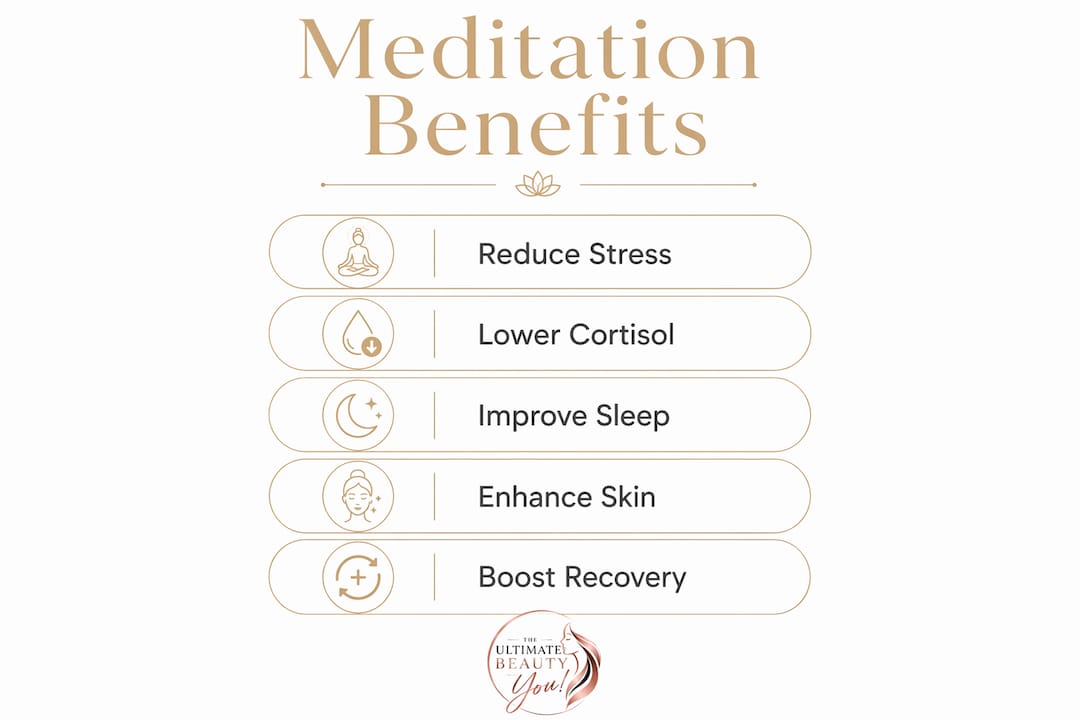
Your skin reflects what is happening inside your body, and cortisol is one of the most visible culprits. Elevated stress hormones break down elastin and collagen, trigger inflammatory responses, and make your skin more reactive and prone to breakouts. Meditation addresses all of that at the root. By lowering systemic inflammation and reducing stress hormone damage to skin's structural proteins, regular practice supports a visibly younger, clearer complexion over time.

The skin benefits of meditation come from its internal effects, not from anything applied topically. Meditation creates an internal environment that reduces oxidative stress and inflammation, which is what allows your skin to hold onto collagen longer and repair itself more efficiently during sleep.
Here is what that looks like in practice:
- Cortisol reduction means less skin sensitivity, fewer breakouts, and reduced redness
- Better sleep supports the collagen production your skin relies on for firmness and elasticity
- Improved circulation from deep relaxation delivers more oxygen and nutrients to skin cells
- Lower inflammation helps skin recover faster from environmental stressors like sun and pollution
- Meditation complements your topical skincare routine rather than replacing it
Pairing meditation with the right nighttime skincare ingredients can amplify your results, since your skin is most receptive to active ingredients during the repair window that deep sleep opens.
How to meditate for better beauty rest
The best meditation practice is the one you will actually do. Start with what fits your life, and build from there.
Choose a style that suits you:
- Mindfulness meditation: Focus on your breath and present-moment awareness without judgment. This is one of the most studied approaches for sleep improvement.
- Guided meditation: Listen to an audio recording that walks you through breathing, body awareness, or visualization. Particularly useful for beginners who find silence frustrating.
- Mantra meditation: Repeat a calming word or phrase silently, such as "peace" or "I am calm." The repetition gently anchors a wandering mind.
- Body scan: Move your attention slowly from your feet to your head, consciously releasing tension in each area. Excellent as a pre-sleep ritual.
- 4-7-8 breathing: Inhale for 4 counts, hold for 7, exhale for 8. The counting sequence focuses the mind and slows the nervous system.
Duration and frequency:
Consistent daily meditation of 20 minutes is recommended by experts to effectively condition the relaxation response, especially during times of stress or before bedtime. Even sessions as short as 5 minutes daily build real momentum, so it's better to practice briefly every day than to postpone waiting for a longer period.
Timing matters more than most people realize:
Daytime meditation, practiced sitting up, trains your brain to access the relaxation response more easily. That conditioning is what makes your pre-bed practice actually work. Without it, meditating only at bedtime can feel forced and frustrating.
Common beginner mistakes:
- Trying to force your mind to go blank (this increases arousal, not calm)
- Judging yourself for mind-wandering (it is normal and expected)
- Skipping daytime sessions and relying only on bedtime practice
- Expecting immediate results after one or two sessions
Pro Tip: Think of meditation as tuning a radio, not forcing a signal. You are not trying to control your thoughts. You are gently returning your attention each time it drifts. Research shows that effortless, non-forced attention reduces amygdala activity more effectively than trying to suppress thoughts.
Beauty is becoming: the mind-body connection in your self-care
At Theultimatebeauty-you, we believe beauty is not a destination. It is a practice. It is becoming. And meditation sits at the center of that becoming, because it connects your inner state directly to your outer glow.
"The relaxation response is a deep physiological shift in the body that's the opposite of the stress response. It can help ease many stress-related ailments, including depression, pain, and high blood pressure." — Dr. Herbert Benson, director emeritus, Benson-Henry Institute for Mind Body Medicine at Harvard
The mind-body connection is not abstract. When you feel calmer, you sleep better. When you sleep better, your skin repairs itself. When your skin looks healthier, your confidence grows. That cycle is real, and meditation is what starts it.
Building a consistent practice means weaving meditation into your existing beauty routine, not treating it as a separate task. Here is how that integration looks in daily life:
- Practice 10–20 minutes of seated meditation during the day to condition your relaxation response
- Add a 5-minute body scan or breathing exercise as part of your nighttime skincare ritual
- Pair your meditation habit with mindful beauty practices that reinforce presence and self-care
- Track your sleep quality and skin changes over 4–6 weeks to see your own evidence
- Treat consistency as the goal, not perfection. Five minutes done daily beats 30 minutes done once a week
Beauty and mental wellness are not separate conversations. They are the same conversation. When you invest in your inner calm, your outer self reflects it.
Theultimatebeauty-you is your partner in that journey. Explore our beauty and wellness collection to find tools and resources that support your self-care practice from the inside out.

Key Takeaways
Meditation improves beauty rest by activating the body's relaxation response, which lowers cortisol, deepens sleep, and creates the internal conditions your skin needs to repair and glow.
| Point | Details |
|---|---|
| Cortisol is the skin's enemy | Meditation lowers cortisol, reducing collagen breakdown, inflammation, and stress-triggered breakouts. |
| Daytime practice powers nighttime results | Daily seated meditation conditions the relaxation response, making pre-bed sessions far more effective. |
| Even 5 minutes daily builds resilience | Consistent short sessions outperform sporadic longer ones for stress reduction and sleep quality. |
| Deep sleep is where skin repairs | Meditation supports non-rapid eye movement sleep, the stage when growth hormone and cellular repair peak. |
| Mind-body balance is visible | Lower physiological arousal from meditation translates directly into calmer skin and more restorative rest. |