
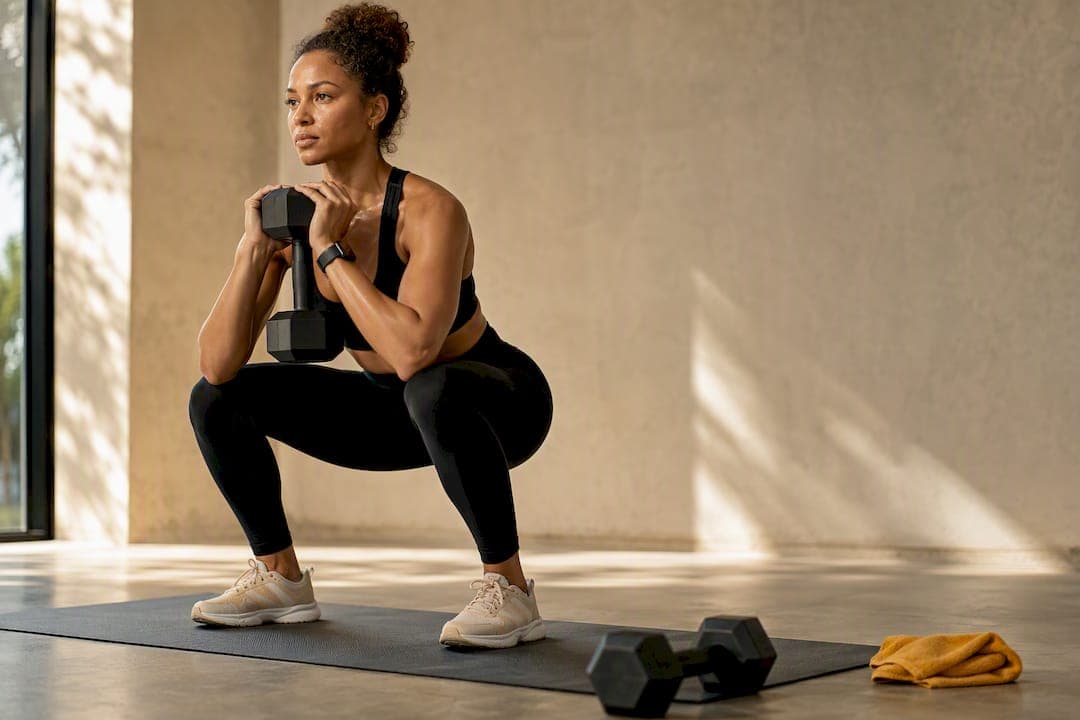
Yes, strength training is safe and one of the most effective ways women can build lasting health, bone strength, and functional fitness. Start with two to three sessions a week built around compound movements like squats, hinges, pushes, and pulls. You'll feel measurable strength gains in 2 to 4 weeks, and visible changes follow within 6 to 12 weeks of consistent effort.
TL;DR:
- Women typically need 2 to 3 weekly strength sessions focusing on compound movements to see measurable results within weeks, with visible changes in 6 to 12 weeks.
- Resistance training helps prevent muscle and bone loss after age 30, especially postmenopause, and supports balance, posture, insulin sensitivity, and mood.
- Progression relies on increasing weight or repetitions once two consecutive sessions show consistent improvement, using a 2-for-2 rule and tracking effort with RPE.
- Beginners should prioritize compound lifts like squats and deadlifts, perform 8 to 12 reps per set, and adjust weekly volume over an 8 to 12-week cycle.
- Women are unlikely to become bulky from strength training due to hormonal differences, so there is no need to worry about excessive muscle gain from regular progressive lifting.
Table of Contents
- Why Strength Training Matters for Women's Health
- How Does Strength Training Actually Work?
- How Often Should You Train Each Week?
- Two Beginner Workouts You Can Start This Week
- When Should You Increase Your Weights?
- Adapting Strength Training After 50
- What Equipment Do You Actually Need?
- Nutrition and Recovery That Actually Support Progress
- Common Mistakes That Slow Your Progress
- Why Trust This Guide on Strength Training
- Your First Week Starts Now
- Where Theultimatebeauty-you Fits Into Your Strength Journey
- Sources
- FAQ
Why Strength Training Matters for Women's Health
Muscle isn't just about how you look. It's the tissue that keeps you upright, steady on stairs, and able to carry your own groceries at 75, the same way you did at 35. Starting around age 30, adults can lose roughly 3 to 8% of their muscle mass per decade if they don't actively work against it. That decline accelerates after menopause, when shifting hormones speed up bone and muscle loss together.
Resistance training pushes back on both fronts. It builds bone density, which matters enormously for women, who face a much higher lifetime risk of osteoporosis than men. It also improves balance, posture, and insulin sensitivity, and a growing body of research ties regular strength work to better mood and reduced anxiety.
Despite all this, most women aren't doing it.
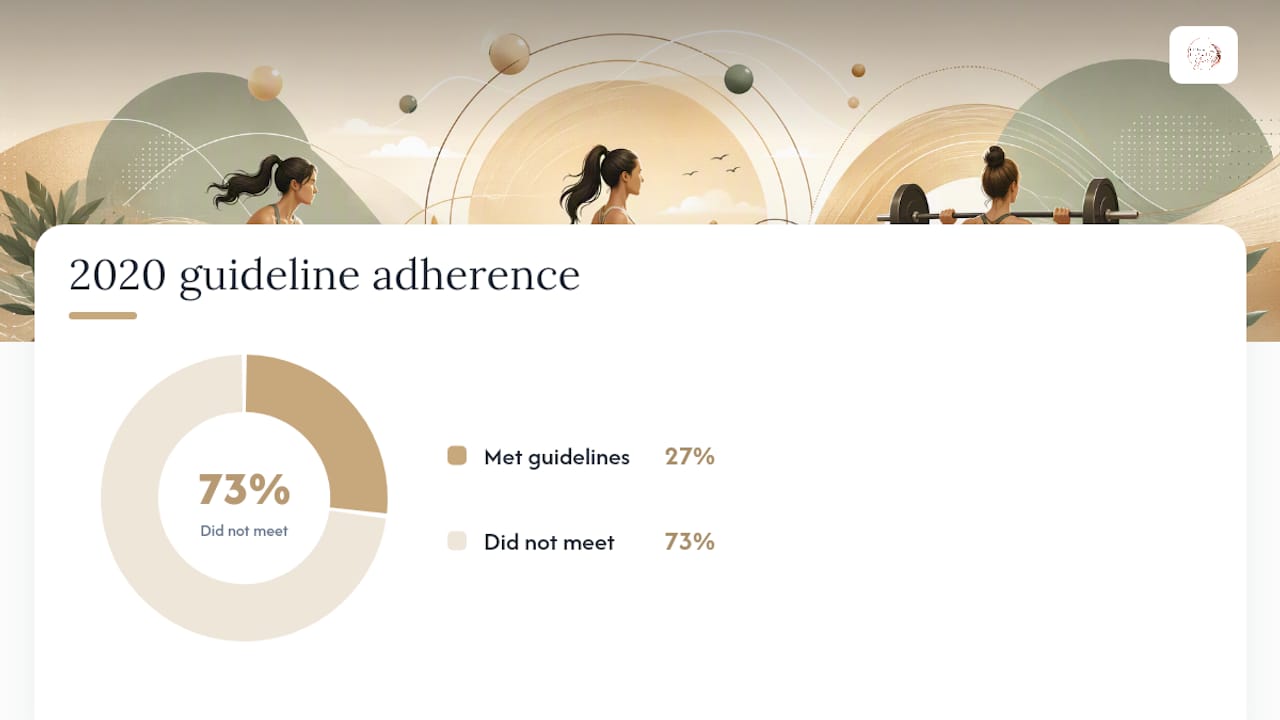
By the numbers: Only about 27% of adult women in the United States met federal muscle-strengthening guidelines in 2020. That's roughly three out of four women missing out on one of the few interventions that protects strength, bone, and metabolism all at once.
Strength training also supports:
- Joint stability, which reduces injury risk during everyday movement and other workouts
- Resting metabolic rate, since muscle tissue burns more energy than fat at rest
- Functional independence later in life, from carrying luggage to getting off the floor with ease
- Confidence and body image, often independent of any change on the scale
The CDC recommends muscle-strengthening activity on two or more days per week for all adults. That's the floor, not the ceiling, and it's a target almost anyone can hit.
How Does Strength Training Actually Work?
Muscles adapt to a specific kind of stress and then stop adapting once that stress feels routine. That's the entire premise behind progressive overload: gradually increasing weight, reps, or difficulty so your muscles keep having a reason to grow stronger. Without it, you plateau. Mayo Clinic points to progressive overload and consistent form as the two pillars of safe, effective training.
Two categories of exercise do the heavy lifting:
- Compound movements work multiple muscle groups and joints at once, think squats, deadlifts, rows, and presses. They deliver the most result for your time invested.
- Isolation movements target a single muscle, like a bicep curl or calf raise. They're useful for addressing weak points but shouldn't anchor a beginner program.
For beginners, aim for 2 to 3 sets of 8 to 12 reps per exercise, resting 60 to 90 seconds between sets. Use RPE (Rate of Perceived Exertion, a 1 to 10 scale for how hard a set feels) to gauge intensity. Early on, target an RPE of 6 to 7, meaning you could do 3 to 4 more reps if you had to. Some research on sex differences in resistance training suggests women may need slightly higher rep ranges to reach true fatigue at a given weight, which is one reason RPE matters more than any fixed number on a chart.
How Often Should You Train Each Week?
Two to three sessions a week is the sweet spot for most beginners. It's frequent enough to build momentum and drive adaptation, but it leaves 48 to 72 hours between sessions for muscles to actually repair and grow stronger, which is when the real gains happen, not during the workout itself.
A simple 3-day full-body split covers every major muscle group without overwhelming your schedule:
- Day 1: Squat pattern, horizontal push, horizontal pull, core
- Day 2 (rest or light cardio): Walking, mobility work, or a rest day
- Day 3: Hinge pattern (deadlift variation), vertical push, vertical pull, core
- Day 4 (rest or light cardio): Active recovery
- Day 5: Repeat Day 1 with slightly heavier weight or an added rep
- Days 6 and 7: Rest or light activity like walking or yoga
Here's how to structure an individual session and progress it over 8 to 12 weeks:
| Training Week | Sets per Exercise | Rep Range | Progression Focus |
|---|---|---|---|
| Weeks 1 to 2 | 2 | 10 to 12 | Learn form, moderate weight |
| Weeks 3 to 4 | 3 | 8 to 12 | Add small load increases |
| Weeks 5 to 8 | 3 to 4 | 6 to 10 | Increase weight, tighten form |
| Weeks 9 to 12 | 4 | 6 to 8 | Heavier loads, longer rest |
Progress by adding one variable at a time, such as increasing weight when repetitions and form allow. If your form breaks down before you hit the target reps, hold the weight steady and focus on technique instead.
Two Beginner Workouts You Can Start This Week
You don't need a gym membership to start. Both versions below hit the same movement patterns.
Gym-based workout (3 sets of 8 to 12 reps each):
- Goblet squat or barbell back squat
- Dumbbell bench press or push-up
- Seated cable row or lat pulldown
- Romanian deadlift
- Plank, 30 to 45 seconds, 3 rounds
Form cues that matter: brace your core before every rep, push through your heels on squats, and keep your shoulder blades pulled back during rows to avoid letting your upper back round forward.
Home or no-equipment workout (3 sets of 10 to 15 reps each):
- Bodyweight squat or resistance band squat
- Push-up (knee or full, whichever keeps your form clean)
- Resistance band row (anchor to a door)
- Glute bridge or single-leg hip thrust
- Side plank, 20 to 30 seconds per side
If a push-up feels too demanding, do it against a wall or counter first and lower the incline over a few weeks. If a squat bothers your knees, try a box squat where you sit back to a chair before standing back up. Substitutions like these keep you training instead of sidelined.
When Should You Increase Your Weights?
Progress stalls when you keep doing the same workout the same way indefinitely. The 2-for-2 rule gives you a clear trigger: if you can complete two extra reps beyond your target on two consecutive workouts, it's time to add weight.
Tracking doesn't need to be complicated. A simple note on your phone with weight, reps, and sets per exercise (for example, "Squat: 40 lbs x 10 x 3") tells you everything you need to know about whether you're actually improving. RPE adds a second layer: if a set that used to feel like a 7 now feels like a 5, your body is telling you it's ready for more.
Testing a heavier load doesn't require a max-effort lift. A safer approach is testing a submax number, like finding the heaviest weight you can lift for 5 clean reps, then building back up in your normal rep range from there.
- Log every session, even briefly
- Apply the 2-for-2 rule consistently rather than guessing
- Retest strength every 4 to 6 weeks, not every session
Pro Tip: Many beginners stop a set the moment it feels hard, but research on training to near failure shows the last 2 to 3 reps of a set are exactly the reps that drive strength gains. Push a little closer to that edge and progress speeds up.
Adapting Strength Training After 50
Age is not a reason to avoid lifting weights. It's one of the strongest reasons to start. Stanford Lifestyle Medicine points to strength training as a direct way to preserve bone density, functional performance, and independence in older women, all of which decline faster without resistance work.
That said, the approach shifts slightly:
- Keep RPE closer to 5 to 6 in the first several weeks, especially with low bone density or joint issues
- Prioritize hip, leg, and balance work, since falls are a leading cause of injury and lost independence in older women
- Allow an extra rest day between sessions if recovery feels slower than it used to
- Get medical clearance before starting if you have osteoporosis, heart disease, recent surgery, or joint replacements, and tell your clinician specifically what movements you plan to do
None of this means going lighter forever. It means building the same strength more gradually, with form and joint health taking priority over speed of progress.
What Equipment Do You Actually Need?
A resistance band and a set of adjustable dumbbells cover most of what a beginner needs for months of progress. Bands are inexpensive, portable, and let you adjust resistance instantly. Adjustable dumbbells save space and money compared to a full rack of fixed weights.
If you're starting from zero, household items work as real substitutes: a loaded backpack for weighted squats, filled water jugs for rows, or a sturdy chair for step-ups and tricep dips. None of it is a compromise, since your muscles respond to tension and effort, not brand names.
- Start with a resistance band set (light, medium, heavy)
- Add a pair of adjustable dumbbells once bodyweight work feels too easy
- Upgrade to a heavier adjustable set only once you're consistently hitting the top of your rep ranges
- Consider a yoga mat for floor work and comfort during core exercises
Nutrition and Recovery That Actually Support Progress
Training breaks muscle down. Nutrition and sleep are what rebuild it stronger. A practical protein target is 0.7 to 1 gram per pound of bodyweight daily, spread across meals rather than loaded into one sitting. For a 150-pound woman, that's roughly 105 to 150 grams a day, achievable with a source like eggs, Greek yogurt, chicken, tofu, or a protein shake at each meal.

Sleep is not optional recovery, it's when the actual muscle repair happens. Aim for 7 to 9 hours, since consistent short sleep undermines strength gains and increases injury risk, according to consistent findings in exercise physiology.
Some considerations are specific to women:
- Iron needs run higher for women who menstruate, and fatigue paired with poor training recovery can signal it's worth checking
- Missed or irregular periods alongside intense training can indicate low energy availability, worth discussing with a doctor or dietitian
- Hydration affects strength output more than most people realize, aim for pale yellow urine as a rough marker
Common Mistakes That Slow Your Progress
Most beginner setbacks trace back to a handful of fixable habits, not bad genetics or bad luck.
- Training too light for too long: if every set feels easy, you're not creating enough stimulus to change
- Skipping compound lifts for isolation work: curls and leg extensions have a place, but they shouldn't replace squats, hinges, and presses
- Rushing form to lift heavier: a squat that looks like a stumble isn't building strength, it's building compensation patterns
- Under-recovering: training the same muscles daily without rest blunts progress and raises injury risk
Normal soreness fades within 48 to 72 hours and doesn't limit daily movement. Real overtraining looks different: persistent fatigue, disrupted sleep, irritability, or a performance decline over several weeks despite consistent effort. Sharp joint pain, dizziness, chest pain, or swelling during or after a workout are red flags that warrant a call to a clinician, not a workaround. Women on GLP-1 medications for weight loss should also pay attention to preserving muscle mass during treatment, since rapid weight loss can pull from lean tissue without adequate resistance training and protein intake.
Why Trust This Guide on Strength Training
This guide draws on established public health and clinical sources, including CDC physical activity guidelines, Harvard Health research on muscle preservation, Mayo Clinic safety guidance, and Stanford Lifestyle Medicine's work on strength training for women over 50, alongside peer-reviewed research on training adaptation timelines. Theultimatebeauty-you exists to translate this kind of evidence into guidance women can actually use, without the noise of conflicting fitness trends or fear-based marketing.
Your First Week Starts Now
Pick three days this week. Do the workout above. Aim for a protein source at each meal and protect your sleep like it's part of the program, because it is. You will not get bulky. That myth ignores basic hormonal biology, and it has kept too many women away from a tool that genuinely changes how they move through the world. Progress in week one looks like showing up, not lifting heavy. A community like this can offer support for exactly this stage, so you don't have to figure it out alone.
— Ava
Where Theultimatebeauty-you Fits Into Your Strength Journey
A generic workout plan tells you what to do. It doesn't tell you why a rep feels different on your body, what to eat before a 6 a.m. session, or how to stay motivated when week three feels harder than week one. This platform aims to be an alternative to piecing advice together from a dozen disconnected apps and influencers, offering one inside-out, head-to-toe ecosystem where fitness, nutrition, and confidence-building live together instead of in separate tabs.

Through Theultimatebeauty-you, you get access to expert-vetted content, guided programs, and a community of women at every stage of their own strength journey, from total beginners to those returning after injury or pregnancy. If you're ready for structured plans and tracking tools beyond this article, browse the available programs or connect with a vetted expert who can tailor guidance to your specific goals. Your next step is simple: pick a program, commit to the first week, and let the platform support the rest.
This article is general information, not a substitute for advice from a qualified doctor. Consult a qualified healthcare professional about your own circumstances before acting on anything here.
Sources
- Preserve your muscle mass — Harvard Health
- Physical Activity Guidelines for Americans — CDC
- Strength Training for Women 50+ — Stanford Lifestyle Medicine
- PMC article on exercise adaptation timelines
FAQ
What Is the 3-3-3 Rule at the Gym?
The 3-3-3 rule is an informal beginner guideline suggesting 3 exercises, 3 sets each, and 3 minutes of rest between sets, though definitions vary across fitness communities and it isn't a clinical standard. Most beginners get better results following the CDC's evidence-based frequency guidance and RPE-based progression instead.
How Often Should a Woman Strength Train?
Two to three sessions per week hits the CDC's recommended minimum of muscle-strengthening activity on 2 or more days weekly while leaving adequate recovery time between sessions.
What Are the Top 5 Strength Exercises for Women?
Squats, deadlifts (or hip hinges), push-ups or presses, rows, and planks cover the major movement patterns your body relies on daily and form the foundation of most effective programs.
How Long Does It Take to See Results From Strength Training?
Measurable strength gains typically appear within 2 to 4 weeks as your nervous system adapts, while visible changes in muscle tone and body composition usually show up between 6 and 12 weeks of consistent training.
Will Strength Training Make Women Bulky?
No. Women have far lower baseline testosterone than men, which makes extreme muscle growth from typical progressive training physiologically unlikely for the vast majority of women, even with consistent heavy lifting.