
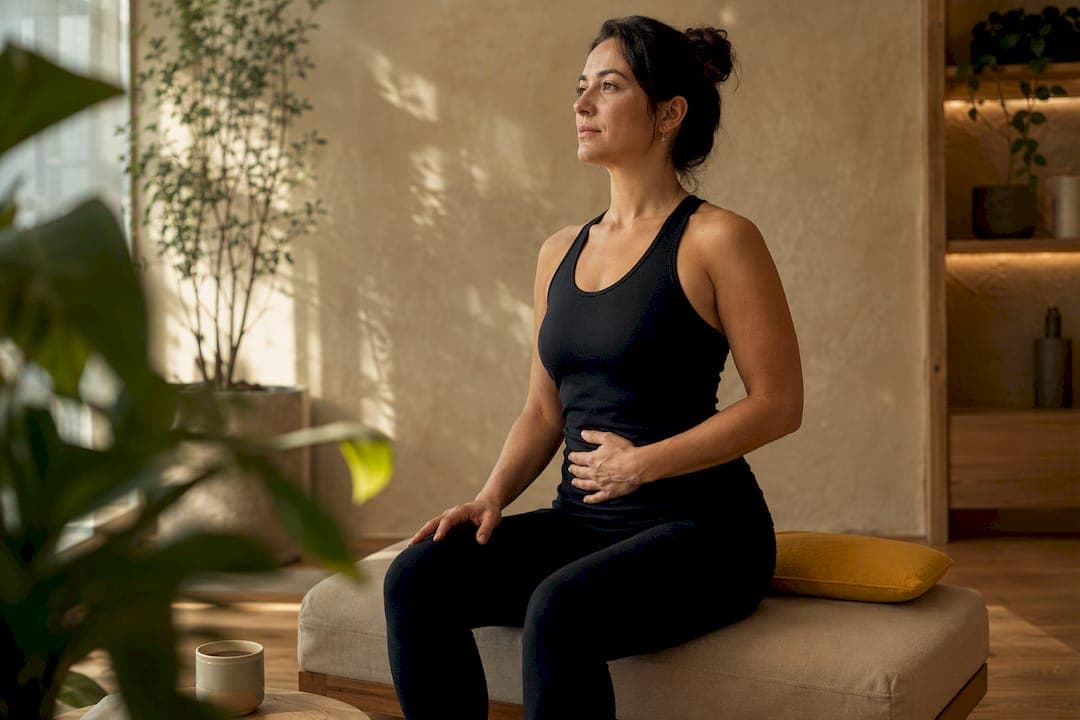
Pelvic floor exercises strengthen the muscles supporting your bladder, bowel, and pelvic organs, and most people who practice consistently notice real improvement within four to eight weeks. They can reduce leakage, support recovery after childbirth, and improve sexual function for both women and men. Not everyone needs strengthening, though. Some people need relaxation work instead, which is why a quick self-check or professional assessment matters before you commit to a routine.
TL;DR:
- Most people see improvements in pelvic floor strength and bladder control within four to eight weeks of consistent practice.
- Proper muscle activation requires initial assessment, as incorrect technique can lead to ineffective workouts or strain.
- A routine of two to three sets daily, gradually increasing repetitions and hold durations, is optimal for building strength safely.
- Common errors include bearing down, holding breath, or engaging other muscles, which reduce the exercises' effectiveness and may cause discomfort.
- Functional movements like bridges and squats can enhance pelvic floor strength when executed with proper focus and low volume.
Table of Contents
- How Do You Find and Correctly Do Pelvic Floor Exercises?
- What's a Good Pelvic Floor Workout Routine and How Do You Progress?
- What Mistakes Ruin Pelvic Floor Strengthening, and What Actually Helps?
- How Do Bridges and Squats Support Pelvic Floor Strength?
- When Should You See a Pelvic Floor Physical Therapist?
- Who's Behind This Guide?
- A Personal Note on Building the Habit
- Ready for More Support Beyond the Basics?
- Sources
How Do You Find and Correctly Do Pelvic Floor Exercises?
Before you can strengthen anything, you need to feel the right muscles working. Most people guess wrong the first few tries, which is exactly why a physical check matters more than intuition here.
Try these three ways to locate your pelvic floor:
- The gas test. Imagine you need to stop passing gas. The muscles you tighten around your anus are part of your pelvic floor.
- The midstream check, done once. The next time you urinate, try pausing the flow for a second. Use this only as a one-time diagnostic. Making it a habit can raise your risk of urinary tract infections and isn't a real exercise.
- Self-palpation. If you have a vagina, insert a clean finger and gently squeeze around it. You should feel a subtle lift and tightening, not a push.
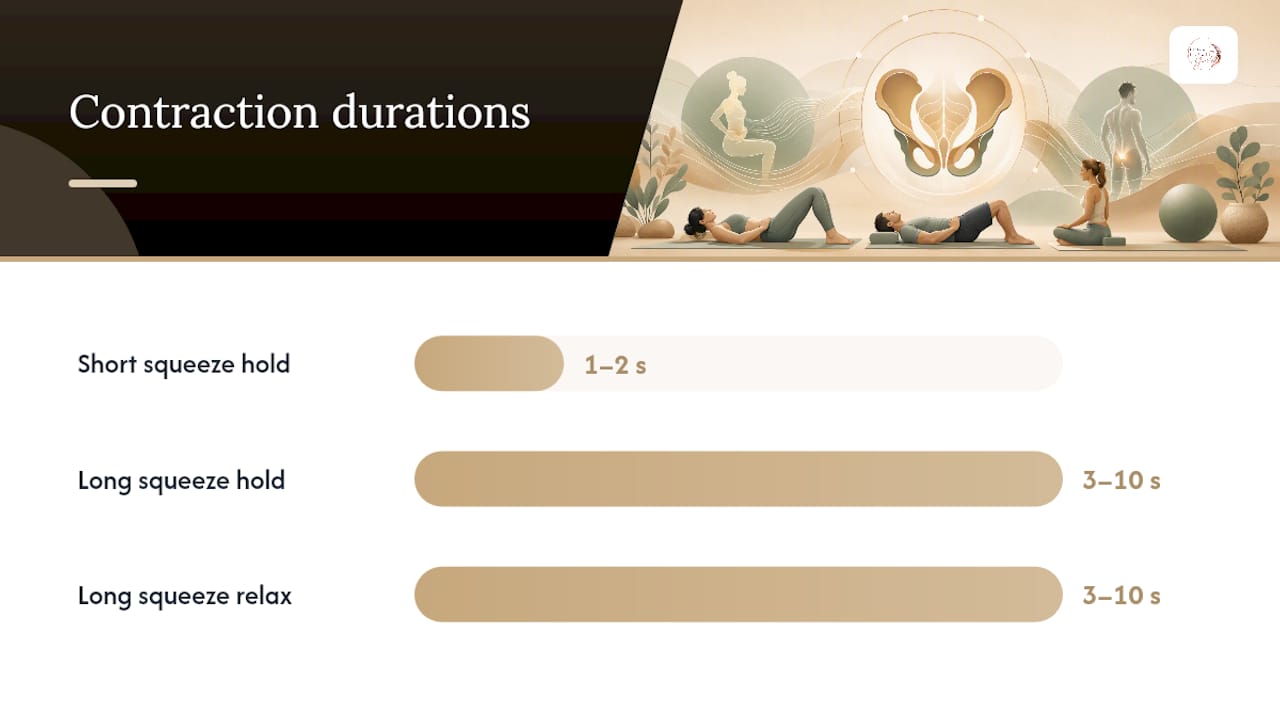
Once you've found the muscles, Cleveland Clinic recommends practicing two types of contractions:
- Short squeezes: Lift and tighten quickly, hold for one to two seconds, then release fully.
- Long squeezes: Lift and hold for three to ten seconds, then relax for an equal count before repeating.
Start lying down, since gravity works against you the least in this position. As it gets easier, move to sitting, then standing, and finally try squeezing during everyday movements like standing up from a chair.
Breathe normally throughout. Holding your breath signals you're straining rather than isolating the right muscles. A properly done contraction is invisible from the outside. If you notice your glutes, thighs, or abs tightening, or your hips rocking, you're recruiting the wrong muscles, according to Harvard Health's step-by-step guide. Place a hand on your stomach and glutes while you practice; if you feel them clench, ease off and reset.
What's a Good Pelvic Floor Workout Routine and How Do You Progress?
Consistency beats intensity here. A pelvic floor workout routine that starts too aggressive usually backfires into fatigue or poor form, so build up in stages.
Getting started:
- 2 to 3 sets per day
- 5 to 10 repetitions per set
- Hold each squeeze for 3 to 5 seconds, then relax for the same count
Where to build toward:
- 3 sets per day
- 10 to 15 repetitions per set
- Holds of 5 to 10 seconds, based on the ranges MedlinePlus outlines for pelvic floor muscle training
Once seated and standing contractions feel solid, add pelvic floor squeezes into functional movement, like bracing gently while lifting groceries or before a cough.
By the numbers: Most people practicing consistently see early gains in 4 to 8 weeks, with more noticeable changes in strength and bladder control by around the three-month mark.
Watch for warning signs of overdoing it, including pelvic ache, increased urgency, or a heavy, dragging sensation. Those symptoms mean it's time to cut back volume, not push harder.
What Mistakes Ruin Pelvic Floor Strengthening, and What Actually Helps?
The biggest technique errors are bearing down instead of lifting, holding your breath, and squeezing your glutes, abs, or inner thighs instead of the target muscles. All three either weaken the contraction or, over time, contribute to pain.
Avoid using stopping urine midstream as a regular practice tool. It's a fine one-time diagnostic, but doing it often can disrupt healthy bladder emptying, per MedlinePlus.
Two habits separate people who see results from people who give up:
- Learn "the knack": squeeze right before you cough, sneeze, or lift something heavy, which braces the pelvic floor against sudden pressure.
- Anchor sets to daily cues, like every red light or every time you brush your teeth, instead of relying on memory alone.
Pro Tip: Pair short micro squeezes throughout your day with your longer dedicated sets. Ten seconds while waiting for coffee to brew adds up fast and keeps the muscles engaged between formal sessions.
How Do Bridges and Squats Support Pelvic Floor Strength?
Isolated squeezes build the foundation, but pelvic floor strengthening holds up better in daily life when it's trained alongside bigger, functional movements. Harvard Health notes that moves like bridges and squats can reinforce pelvic floor engagement when done with intention.
Try these once you've mastered the isolated contraction on its own:
- Bridge with a squeeze. Lie on your back, knees bent, feet flat. Lift your hips while squeezing your pelvic floor at the top, hold for three seconds, then lower and release.
- Squats with a timed hold. Lower into a squat, and as you rise, contract your pelvic floor and hold through the movement.
- Pelvic tilts. Lying down, flatten your lower back into the floor while gently lifting the pelvic floor, hold briefly, then release.
- Cat-cow with breath. On hands and knees, exhale and lift the pelvic floor as you round your spine, then inhale and release as you arch.
Keep volume low, around 8 to 10 reps, two to three times a week. If you're postpartum or managing diastasis recti, check with a provider before adding bridges or squats, since some positions add more intra-abdominal pressure than others. For more on recovery timelines, postpartum beauty and healing covers what's realistic in those early months.
When Should You See a Pelvic Floor Physical Therapist?
Home exercises aren't right for everyone, and pushing through certain symptoms can make things worse. Talk to a provider if you notice any of the following:
- New or worsening pelvic pain
- A bulging or heavy sensation suggesting prolapse
- Leakage that's getting worse despite consistent practice
- Difficulty relaxing the pelvic floor at all, a sign of a hypertonic pelvic floor rather than a weak one
A pelvic floor physical therapist can confirm you're using the right muscles through manual exams, biofeedback devices that show contraction strength on a screen, or electrical stimulation for muscles that are hard to isolate on your own. If you're dealing with ongoing pelvic pain, understanding when cramping needs evaluation can help you decide when it's time to get checked rather than wait it out. When requesting a referral, ask whether the therapist specializes in pelvic health specifically, since general physical therapists don't always have this training.
Who's Behind This Guide?
This guide was written by Ava,, for Theultimatebeauty-you. Every technique here reflects clinical guidance from MedlinePlus, Cleveland Clinic, Harvard Health, and Mayo Clinic. Pelvic floor exercises benefit men and women alike, and individualized care always beats a generic routine when symptoms are involved.

A Personal Note on Building the Habit
Building any habit works better when it's boring in the best way, tied to something you already do daily rather than something you have to remember. Progress with pelvic floor strengthening looks the same. Small, consistent squeezes, paired with sleep, hydration, and stress management, tend to outperform sporadic effort every time.
— Ava
Ready for More Support Beyond the Basics?
Our platform offers vetted experts and structured guidance in one place, instead of piecing advice together from a dozen tabs. Our platform connects you with wellness professionals, practical guides, and a growing community of women figuring out the same things you are, from postpartum recovery to midlife shifts.

If pelvic health is part of a bigger picture for you, our perimenopause symptom relief plan walks through related changes many women face in their 40s and beyond. Browse our experts and partners to find a specialist suited to your situation, or visit Theultimatebeauty-you to see what's available now and what's coming soon with our app. Take a look at our current product offerings to find the resource that fits where you are today.
This article is general information, not a substitute for advice from a qualified doctor. Consult a qualified healthcare professional about your own circumstances before acting on anything here.
Sources
- Kegel Exercises: Benefits, How To & Results - Cleveland Clinic
- Kegel exercises: A how-to guide for women - Mayo Clinic