
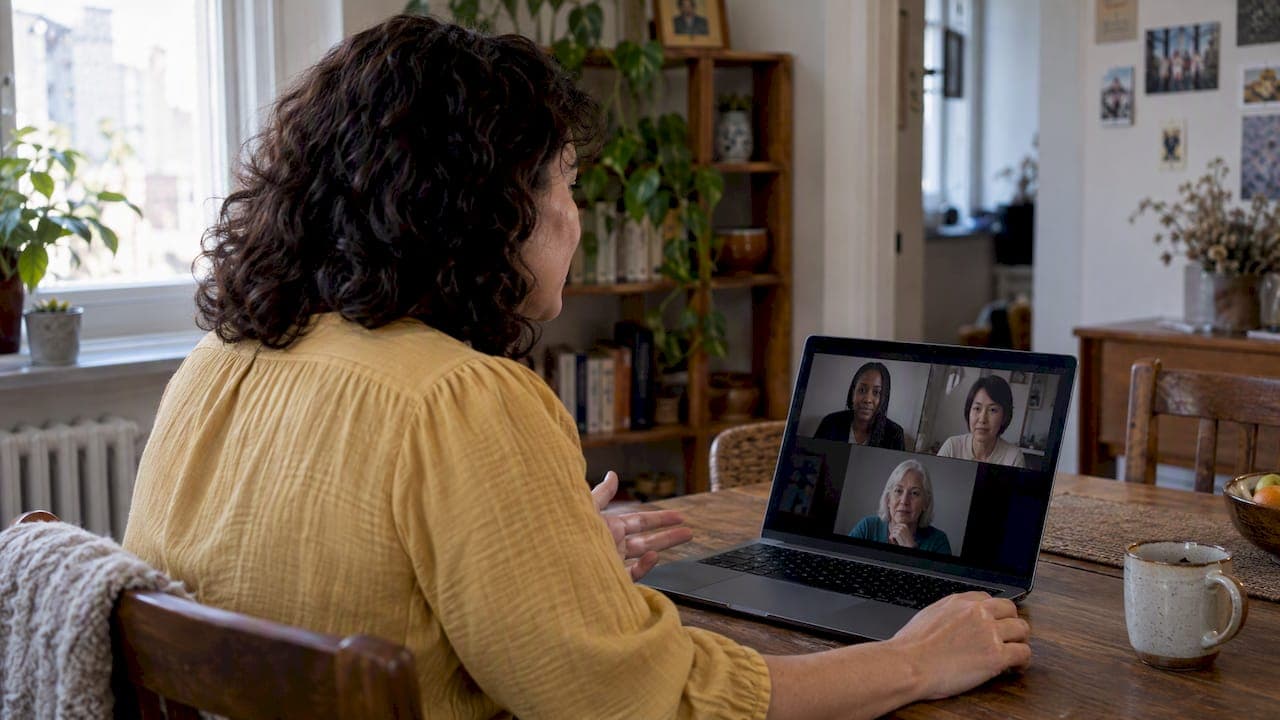
Structured networking mixers, cohort-based workshops, and focused virtual conferences deliver the most reliable career and connection outcomes for women because they pair a defined audience with structured interaction and built-in follow-up. Generic webinars rarely produce either. Pick the format that matches your goal, networking, skill building, or visibility, then scan the breakdown below before you register for anything.
TL;DR:
- For introductions or referrals, choose capped mixers lasting 60 to 90 minutes; reserve multi day conferences for visibility and learning.
- All women cohorts outperformed mixed groups by 7 percentage points in timely completion, 5 in certification, and 12 in field employment within a year.
- Follow up within 24 to 48 hours, reference your conversation, and track each contact, discussion, and agreed next step to assess results.
- Virtual and hybrid conferences may increase women’s participation slightly, but attendance alone does not improve networking without searchable directories or guided interaction.
Table of Contents
- 1. Which event types match your goal
- 2. How do you pick the right event in three minutes?
- 3. Turning an event into a real connection, step by step
- 4. What research says actually improves outcomes for women
- 5. Making women-centered events genuinely inclusive
- 6. Picking a platform that supports real connection
- 7. Fitting virtual events around a full life
- 8. Curated communities versus big conferences: an honest take
- 9. Where to find curated events and community right now
- FAQ
- Sources
1. Which event types match your goal
Every virtual event promises connection, but the format determines whether you actually get it. Here is how the main types break down by what they deliver and where to find them.
Structured networking mixers work best when you want quick, intentional introductions or a referral. The strongest ones cap attendance, run 60 to 90 minutes, and use breakout rooms or facilitated rotations instead of open chat. Look for these through professional associations, alumni networks, or dedicated event platforms that list attendee counts and agendas in advance.
Topic-focused virtual conferences suit visibility, learning, and larger-scale networking, provided the organizer publishes a detailed session list and attendee breakdown ahead of time. These tend to run multiple days with keynotes, breakout tracks, and a searchable attendee directory. Industry associations and membership communities are the usual hosts.
Cohort-based workshops and bootcamps combine skill building with deeper peer ties, since the same small group meets repeatedly over weeks. Research from Tuck School of Business found that women placed in all-women cohorts built stronger identity-based trust and exchanged more practical resources than mixed-gender groups, a dynamic that carries over to any recurring program. These programs are typically run by training providers, coding schools, or women-focused leadership academies.
Peer mentoring circles and mastermind cohorts fit ongoing support and accountability rather than a single event. They work through small, consistent groups meeting on a schedule, often organized through membership communities or mentoring programs.
Webinars with facilitated Q&A and virtual career fairs serve a narrower purpose: a specific tactical resource or a hiring lead. These show up most often through employer recruiting pages, industry publications, and professional organizations.
- Structured mixers: quick introductions, referrals, capped size, 60 to 90 minutes.
- Topic conferences: visibility and learning, multi-day, published session lists.
- Cohort workshops: skills plus peer trust, recurring small groups.
- Mentoring circles: accountability and ongoing support, membership-based.
- Webinars and career fairs: specific resources or hiring leads, one-time format.
2. How do you pick the right event in three minutes?
Start by naming one outcome you want to walk away with: a referral, a skill, a mentor, or a job lead. That single decision filters out most of the noise.
- Check the attendee profile: does the organizer state who typically attends, by role, industry, or career stage?
- Read the agenda for structured networking features, not just a speaker list; look for breakout rooms, speed rounds, or curated matching.
- Look for a capped or curated attendee list rather than an open-ended "everyone welcome" invite.
- Confirm the size fits your goal: smaller for introductions, larger for visibility and learning.
- Research organizer credibility: past events, testimonials, or a visible track record.
- Review pricing and refund policy before committing, especially for paid cohorts or conferences.
- Confirm accessibility: time zone fit, captioning, recording availability, and platform requirements.
Ask the organizer directly: "How many attendees typically join, and how is networking structured?" A vague answer, or one that only describes the speaker lineup, is a red flag. So is an event with no stated audience or outcome.
Pro Tip: Reserve a spot in small, capped events when your goal is introductions or referrals. Large conferences are better for visibility, not quiet, targeted connection.
3. Turning an event into a real connection, step by step
Attendance alone rarely produces results. The difference comes from what you do before, during, and after.
Before the event, update your bio or profile with a specific, current focus rather than a generic title. Set one outcome for the event and identify three people you want to meet, by name if the attendee list allows it. Prepare one or two conversation prompts or a small value offer, like a useful resource or introduction you can give in return.
During the event, use a short, specific introduction: your name, what you do, and one concrete thing you are working on or looking for. Breakout rooms and chat are where connections actually form, so contribute early rather than staying silent. When a conversation clicks, move it toward a next step before the room changes: a LinkedIn connection, a calendar link, or a direct follow-up request.
After the event, follow up within 24 to 48 hours with a short, specific message referencing your conversation. Keep a simple tracking system, even a spreadsheet, listing who you met, what you discussed, and the agreed next step. Schedule the actual follow-through: a coffee chat, a shared project, or a referral conversation.
- Track contacts made, follow-ups sent, meetings scheduled, and opportunities created.
- Review these numbers after each event to see which formats actually produce results for you.
4. What research says actually improves outcomes for women
Evidence backs up the idea that design, not just attendance, determines whether women benefit from an event. Women placed in all-women virtual training cohorts were 7 percentage points more likely to complete training on time, 5 points more likely to earn certification, and 12 points more likely to secure in-field employment within a year, compared with women in mixed-gender groups. That gap traces back to stronger trust and more open resource sharing within the cohort.

Separate experimental research in the IT sector found that small design interventions mattered just as much at single events. A "search" intervention, making contacts easier to find, raised women's new contacts and conversation time substantially, while a "social" intervention that structured help-seeking also increased conversation time.
Scientometrics research on conference virtualization adds a caution: virtual and hybrid formats are linked to a small increase in women's participation, but more attendance does not automatically mean better networking quality.
Ask organizers whether they build in:
- A clear invitation stating who the event is for and what attendees should bring.
- A defined outcome, not just a topic.
- Structured interaction, like breakouts or guided prompts, instead of open chat.
- Pre-event priming so attendees know what to expect from each other.
5. Making women-centered events genuinely inclusive
A "women's event" is not automatically inclusive. The strongest ones actively consider age, career stage, race, disability, caregiving status, and income when designing the experience, rather than assuming a single shared identity covers everyone in the room.
Look for organizers who offer multiple time slots across time zones, live captioning, and recordings for anyone who cannot attend live. Sliding-scale or free tickets matter too, since cost alone can quietly exclude women earlier in their careers or between jobs.
Representation among speakers and small-group facilitators also shapes who feels comfortable participating. An all-women event that features only one career stage, industry, or background will naturally produce narrower conversations and fewer unexpected connections. The best programs mix seniority levels deliberately, pairing newer professionals with mentors inside the same breakout group.
Ground rules matter as much as the guest list. Clear community guidelines around respectful conduct, confidentiality for sensitive topics, and inclusive language set the tone before anyone logs in. Our guide to building women's online communities covers how these norms translate into sustained, trusted spaces rather than one-off events that fade after the closing remarks.

6. Picking a platform that supports real connection
The platform shapes whether networking features actually work. Video conferencing tools with dedicated breakout rooms, like those built into most major webinar and conference platforms, matter more than flashy production value.
Look for a platform with a searchable attendee directory, since the MISQ research above found that simply making contacts easier to find increased women's conversation time significantly. Matching features, where attendees get paired by shared goals or interests, replicate the structured interaction that drives better outcomes.
Chat and Q&A tools should support threaded conversations rather than one long scrolling feed, which gets noisy fast in larger events. For cohort-based programs, a platform that supports recurring small groups, shared documents, and asynchronous messaging between live sessions helps relationships deepen between calls rather than resetting every time.
Accessibility features are not optional extras: captioning, recording, and mobile compatibility determine who can actually show up. A polished event with no captions or no recording option quietly excludes attendees juggling caregiving, disabilities, or inconvenient time zones.
7. Fitting virtual events around a full life
Virtual events save commute time, but they still compete with work deadlines, caregiving, and the dozen other things already on your calendar. Treat registration as a real commitment, not a passive tab you will half-watch.
Block the time on your calendar the same way you would an important meeting, including the 10 minutes before and after for setup and notes. If an event runs during family or caregiving hours, look for one offering a recording or an asynchronous cohort option instead.
Batch your event attendance rather than scattering one-off sessions across every week. A single focused conference or workshop series tends to produce better follow-through than attending five disconnected webinars with no time left to actually follow up.
Give yourself permission to leave early or skip sessions that are not delivering your target outcome. The goal is the three people you meet or the one skill you build, not perfect attendance.
8. Curated communities versus big conferences: an honest take
Large conferences are useful for visibility and a wide first look at an industry. But the deepest, most durable connections I have seen come from smaller, curated gatherings, the kind where the organizer actually decided who belongs in the room and why.
Membership and cohort experiences fit best when you already know your goal: a specific skill, a mentor, or a tight peer group you will actually stay in touch with. Big public conferences fit better for early-stage exploration, when you are still figuring out what you need.
A standing community complements both. It gives the relationships from a single event somewhere to keep growing instead of fading after the closing session.
— Ava
9. Where to find curated events and community right now
We built our platform around the idea that beauty, confidence, and career growth work best inside a trusted, curated community rather than a scattered pile of one-off events; explore our Skincare Essentials: Masks & Gua Sha Tools for self-care inspiration to complement your event experiences. Our platform connects women with workshops, events, and ongoing community connections designed to support the whole person, not just a single session.

Visit our events and offerings to see what is currently open, or start at our main platform to explore the broader community.
FAQ
What is the best virtual event format for networking?
Structured networking mixers with capped attendance and breakout rooms tend to produce the most introductions and referrals. Research on networking interventions found that making contacts easier to find and structuring social interaction significantly increased women's conversation time and new contacts.
Are all-women cohorts actually more effective than mixed groups?
In at least one randomized study, yes: women in all-women training cohorts showed higher completion rates, higher certification rates, and higher job placement within a year compared with mixed-gender groups. The effect is tied to stronger trust and more open resource sharing within the group, not to the topic itself.
Does attending more virtual events guarantee better networking?
No. Scientometrics research on conference virtualization found that virtual formats are linked to a small increase in women's participation, but higher attendance does not automatically translate into higher-quality networking without deliberate structure.
How do I find women's networking groups that fit my specific goals?
Start with professional associations in your field, membership communities, and mentoring programs that publish clear attendee profiles and outcomes. Our guide to women's networking groups breaks down how to match a group to a career or personal goal before you commit.
What should I look for in a virtual career development cohort?
Look for a defined outcome, a capped and curated attendee list, and recurring sessions rather than a single call. Programs that build in structured interaction and peer accountability consistently outperform one-off webinars for skill building and career movement.
Sources
- The Hidden Advantage of All-Women Training Groups | Tuck School of Business
- Interventions for Improving Professional Networking for Women: Experimental Evidence From the IT Sector
- The impact of the virtualization of scholarly conferences on the gender structure of conference contributors | Scientometrics