
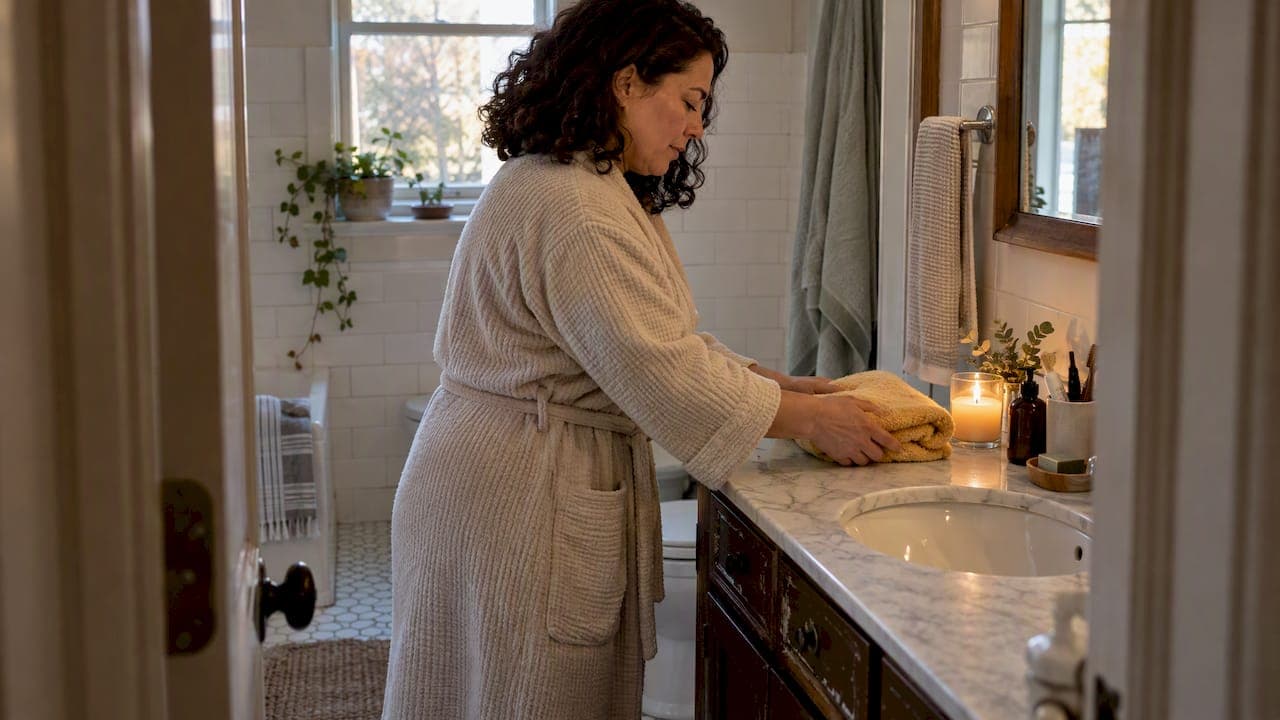
An at-home spa day delivers real, visible results: lower stress, softer skin, and a reset you can feel by the end of one session. We built this routine with dermatologist-backed guidance from the American Academy of Dermatology and the FDA so you pamper yourself safely, not just luxuriously. Your first move: gather the checklist below.
TL;DR:
- Use a gentle cleanser, moisturizer, and sun safety protocols, especially after chemical exfoliation, to protect skin from irritation and UV damage.
- Limit exfoliation to 30 seconds with a gentle pressure, and avoid harsh or coarse ingredients to prevent tearing delicate skin.
- Incorporate aromatherapy with proper dilution, using lavender or chamomile, and avoid direct undiluted application or diffusion around pets and asthma sufferers.
- Conduct patch tests on a small skin area for 7 to 10 days before using any new product, particularly after exfoliation or with actives like AHAs.
- Establish a weekly routine combining short express and longer rituals, ensuring a consistent, mindful approach to self-care to improve skin and mood over time.
Table of Contents
- Quick Spa-Day Checklist You Can Grab Right Now
- The Step-by-Step At-Home Spa Routine
- DIY Treatments That Cost Almost Nothing
- Aromatherapy: What Actually Helps You Relax
- Protecting Your Skin: Patch Tests and Sun Safety
- Setting a Room That Actually Feels Like a Retreat
- Making Spa Days a Habit, Not a One-Time Splurge
- Keep Your Relaxation Going With The Ultimate Beauty - You
- FAQ
- Sources
Quick Spa-Day Checklist You Can Grab Right Now
Beauty is becoming, and it starts with a few simple supplies within reach. Before you light a single candle, pull together what you need so nothing interrupts your flow once you begin.
- Towels and a robe, warmed in the dryer for a few minutes if you want that plush, five-star feeling
- Gentle cleanser and moisturizer suited to your skin type
- A face mask (store-bought or homemade) and an exfoliant or kitchen substitute
- Carrier oil like jojoba or sweet almond for massage
- A diffuser or candle, plus water and light snacks nearby
- Your phone on silent, tucked out of sight
Two timing templates work for almost any schedule. The 30 to 45 minute express routine covers cleanse, mask, and moisturize. The 60 to 90 minute full ritual adds exfoliation, a footbath, and massage. No budget for extras? Brown sugar substitutes for a body scrub and plain oatmeal stands in for a soothing mask.
The Step-by-Step At-Home Spa Routine
This sequence moves your body from tense to unwound, one deliberate step at a time. Follow the order below and you will not overdo any single step.
- Set the scene. Dim the lights, pour a glass of water, and wash your hands before touching your face.
- Cleanse. Use a gentle, fragrance-free cleanser matched to your skin type, working it in with lukewarm water.
- Exfoliate. Whether you choose a mechanical scrub or a chemical exfoliant, apply with light circular motions for about 30 seconds, then rinse with lukewarm water and moisturize immediately, following AAD exfoliation guidance. If you use an AHA product, the FDA notes that safe formulations typically sit at or below a 10% concentration with a pH of 3.5 or higher, and sun sensitivity increases afterward, so sunscreen is not optional the next day.
- Steam or mask. Hold your face eight to twelve inches from a bowl of warm (not scalding) water for five minutes, or apply a mask and let it sit per the label, usually 10 to 15 minutes.
- Body scrub and footbath. Scrub rough patches like elbows and heels, then soak feet in warm water, not hot, for 10 to 15 minutes.
- Massage. Warm a small amount of diluted carrier oil between your palms and use slow, upward strokes on your face and scalp.
- Finish. Apply moisturizer, dab on eye cream, and give yourself 10 to 20 quiet minutes before returning to your day. For a deeper dive into safe technique, our guide to 30-second body exfoliation walks through dermatologist-backed steps.
Pro Tip: Keep your exfoliation brief and your moisturizer close. Thirty seconds of gentle pressure beats three minutes of scrubbing, every time.
DIY Treatments That Cost Almost Nothing
Pampering yourself does not require a shopping spree. These three recipes use ingredients most kitchens already have.
- Sugar or salt body scrub: Mix one cup fine sugar with half a cup carrier oil (coconut or olive oil work well). Use once or twice a week, never daily, since skin needs recovery time between exfoliation sessions.
- Oatmeal-honey face mask: Combine two tablespoons finely ground oats with one tablespoon raw honey and a splash of warm water. Apply for 10 minutes, then rinse with lukewarm water.
- Simple footbath: Fill a basin with warm water and, if you like, a teaspoon of Epsom salt. Add essential oils only when properly diluted with a carrier oil or emulsifier first, never dropped straight into the water.
Skip undiluted citrus juice and raw acids like straight lemon or vinegar. They sit outside the pH range your skin tolerates and can cause burns or irritation rather than the glow you're after. Fine, finely ground ingredients are safer than coarse ones, too: large shell fragments or seed particles in a scrub can tear delicate skin.
Aromatherapy: What Actually Helps You Relax

Scent can shift your mood, but how you use it matters as much as which oil you choose. For diffusion, most machines call for three to five drops per use, following general guidance from the Cleveland Clinic's overview of essential oils. For massage or skin contact, dilute to roughly 1% in a carrier oil, and never add essential oils undiluted directly into bathwater, since they float and concentrate on contact points with skin.
A small randomized study found that a footbath using Lindera umbellata (Lu) essential oil increased parasympathetic nervous system activity and reduced certain negative mood states, according to research published in PMC, suggesting a measurable calming effect beyond a plain warm soak.
- Lavender and chamomile are common starting points for relaxation blends.
- Keep diffusers out of rooms shared with pets, since many oils are unsafe for them.
- Skip strong diffusion around anyone with asthma, migraine history, or during pregnancy without a doctor's input.
Protecting Your Skin: Patch Tests and Sun Safety
Every new product deserves a trial run before it touches your whole face. Apply it to a quarter-sized patch of skin, twice daily, for 7 to 10 days, and watch for redness, itching, or swelling, a protocol the AAD recommends for catching reactions before they spread.
- After any AHA exfoliation, apply sunscreen the next day since your skin's sun sensitivity rises temporarily.
- Tweens and teens generally do best with a gentle cleanser, a fragrance-free moisturizer, and daily sunscreen, saving stronger actives for when a dermatologist advises them.
- If irritation lasts more than a few days or worsens, stop the product and check in with a dermatologist rather than guessing your way through it.
Setting a Room That Actually Feels Like a Retreat
Your environment does half the work before a single product touches your skin. Clear the counter of mail, dishes, and anything that reminds you of chores waiting outside this room.
Dim overhead lights in favor of a candle or warm lamp, and warm your towels if you can. A playlist of 45 to 60 minutes matches most full rituals without forcing you to pause and change tracks. Move slower than feels natural. Spa mode works best when nothing rushes you, including yourself.

Making Spa Days a Habit, Not a One-Time Splurge
The real win isn't one perfect evening. It's building a rhythm you'll actually keep. I recommend a weekly 30-minute express version paired with one longer 90-minute ritual each month, scaled to whatever your week allows.
Beauty is a verb: it's something you do, repeatedly, not something you achieve once and file away. For more on turning self-care into routine rather than reward, our piece on mindful beauty explores how small, intentional rituals compound.
— Ava
Keep Your Relaxation Going With The Ultimate Beauty - You
We built The Ultimate Beauty - You! as a women-centered home for expert-backed routines, confidence-building resources, and a community that understands self-care is ongoing work, not a single evening.

Your at-home spa day is one piece of a bigger approach to feeling good inside and out. If you want curated aromatherapy sets and ritual kits to round out your setup, Well In Spirit offers diffuser-friendly oils and themed wellness collections worth exploring. For your next quiet wind-down after the glow fades, our guide on meditation and beauty rest picks up right where this routine leaves off.
- Explore more step-by-step routines on our blog
- Connect with vetted experts and partners for personalized guidance
- Visit For Women to see how our community supports every stage of your routine
FAQ
What are the must-haves for a spa day at home?
The essentials are a gentle cleanser, moisturizer, towels, a face mask or exfoliant, and a calm setting with dim lighting. Carrier oil for massage and a diffuser or candle round out a complete setup, though you can start a session with just the basics.
What are some ideas for a spa day at home on a budget?
Brown sugar mixed with oil makes an effective body scrub, and plain oatmeal with honey works as a soothing face mask, both using ingredients most kitchens already stock. A warm footbath with Epsom salt costs little and still delivers a measurable calming effect according to small clinical research.
What are some DIY spa ideas for home?
Try a sugar or salt scrub, an oatmeal-honey mask, and a simple warm footbath as your three core DIY treatments. Keep particle sizes fine in any scrub and always patch-test new mixtures on a small area for 7 to 10 days before applying them broadly, per AAD guidance.
What are some ideas for a spa night at home?
An evening ritual works well with warm towels, a dimmed room, a diffuser with diluted lavender or chamomile oil, and a face mask followed by a gentle massage. Close with 10 to 20 minutes of quiet before bed to let the relaxation settle in rather than rushing straight to sleep.
Sources
- FDA: Alpha hydroxy acids (AHAs) guidance
- Essential oils 101 — Cleveland Clinic
- Psychological and Antibacterial Effects of Footbath Using the Lindera umbellata Essential Oil
- How to safely exfoliate at home — AAD