
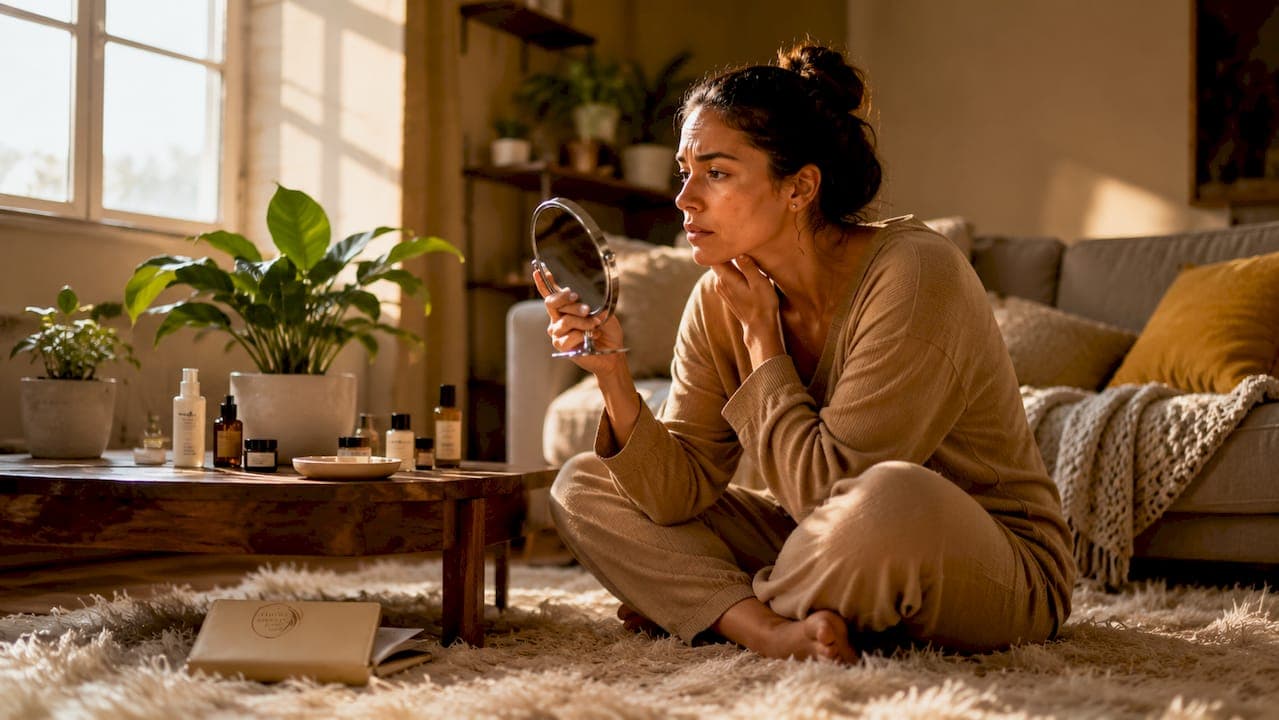
Beauty anxiety is defined as a persistent, excessive preoccupation with perceived flaws in your appearance that causes real distress and disrupts daily life. This is not the same as wanting to look your best. When worry about how you look takes over your thoughts, changes your behavior, or pulls you away from the people and activities you love, it has crossed into something clinically significant. Understanding beauty anxiety, its causes, and how to manage it is the first step toward reclaiming your confidence and mental well-being. At Theultimatebeauty-you, we believe beauty is a verb, not a verdict. You deserve to feel free in your own skin.
What is beauty anxiety explained in plain terms?
Beauty anxiety is an ongoing, excessive worry about one's appearance that goes well beyond normal self-consciousness. The clinical threshold is clear: spending over one hour daily on checking behaviors or appearance-related preoccupation signals a concern that warrants professional attention. That one-hour marker matters because it separates everyday insecurity from a pattern that genuinely impairs your quality of life.
At its most severe, beauty anxiety sits on a spectrum that includes Body Dysmorphic Disorder, or BDD. The DSM-5 defines BDD as a preoccupation with one or more perceived defects in physical appearance that are not observable or appear slight to others. The condition causes significant distress or impairment in social, occupational, or other areas of functioning. Recognizing where you fall on this spectrum is not about labeling yourself. It is about understanding what kind of support will actually help.
The mental health and beauty connection runs deeper than most people realize. Beauty anxiety affects self-esteem, relationships, and how freely you move through the world. Naming it accurately is not vanity. It is self-awareness.
What are common symptoms and behaviors of beauty anxiety?
Beauty anxiety shows up in specific, recognizable patterns. The most common symptoms include:
- Mirror checking: Repeatedly examining your face or body, often for extended periods
- Mirror avoidance: The opposite response, refusing to look at yourself at all
- Reassurance-seeking: Asking others repeatedly whether you look okay
- Compulsive grooming: Spending excessive time on makeup, hair, or skincare routines
- Photo avoidance: Refusing to be photographed or deleting photos obsessively
- Social withdrawal: Skipping events, dates, or work because of appearance fears
- Camouflaging: Using clothing, makeup, or posture to hide perceived flaws
The difference between mild appearance concern and clinical anxiety lies in impairment. Mild concern does not stop you from living your life. Clinical anxiety does. Appearance anxiety impacts social activities, work, and relationships in measurable ways, often pushing people into isolation.
Social comparison makes symptoms worse. When you constantly measure your appearance against others, especially curated images online, the gap between "real you" and "ideal you" feels unbridgeable. This is sometimes called social physique anxiety, a specific fear of being negatively evaluated based on your body or appearance. The fear is not really about a flaw. The core fear is negative social evaluation, and that distinction matters enormously for how you address it.
Pro Tip: If you notice yourself spending more than an hour a day checking, fixing, or worrying about your appearance, write it down for one week. Tracking the behavior is the first step toward changing it.
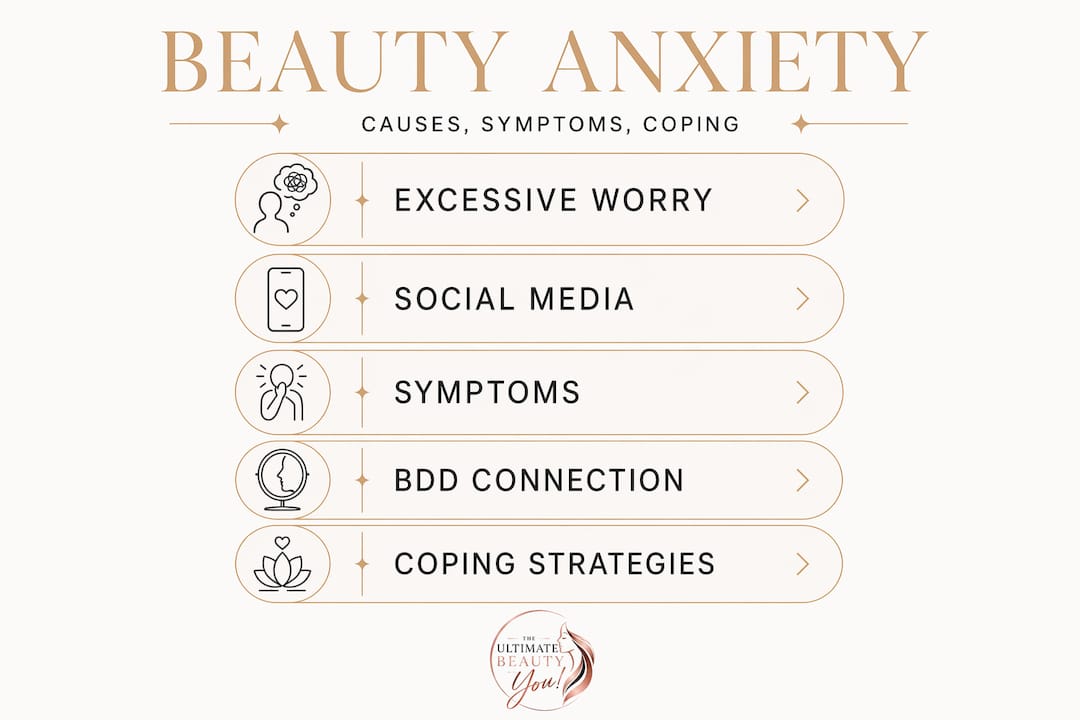
What causes beauty anxiety and how does social media influence it?
Beauty anxiety does not arise from weakness or vanity. It grows from a combination of psychological, social, and cultural pressures that compound over time. Fear of judgment, perfectionism, and past criticism from peers, family members, or partners all plant seeds of appearance-related worry. Life transitions, such as puberty, pregnancy, aging, or illness, can intensify those seeds into full anxiety.
Social media accelerates the process significantly. Idealized beauty standards mediate anxiety through compulsive social comparison, meaning the platform itself is not the only problem. The problem is the internal comparison engine it activates. When you scroll through filtered, professionally lit images of bodies and faces, your brain registers a gap between what you see and what you look like. That gap, repeated hundreds of times a day, trains the brain to fixate.
"The ideal beauty standard acts as a mediating variable between social media exposure and appearance anxiety. The more a person internalizes that ideal, the stronger the link between scrolling and distress."
Research published in the journal Personality and Individual Differences, 2026
Skin anxiety is one of the most common forms this takes. Persistent worry about skin appearance, driven by media pressure and acne stigma, affects social confidence and self-esteem in ways that go far beyond a bad skin day. The beauty industry trends shaping 2026 show a growing awareness of this connection, with more brands and professionals acknowledging the psychological weight of appearance culture.
Past criticism also leaves a lasting mark. A comment from a parent about your weight, a cruel remark from a classmate about your skin, or a partner's offhand observation about your looks can become an internalized voice that replays for years. That voice is not truth. It is a learned pattern, and learned patterns can be unlearned.
How does beauty anxiety relate to Body Dysmorphic Disorder?
Body Dysmorphic Disorder is the clinical extreme of beauty anxiety. BDD involves intrusive, intense thoughts about a perceived flaw that others either cannot see or consider minor. The DSM-5 criteria require that these thoughts cause significant distress or impairment and that the person performs repetitive behaviors, such as mirror checking, skin picking, or reassurance-seeking, in response.
The one-hour rule is the clearest clinical dividing line. Professional evaluation is indicated when preoccupation exceeds one hour daily or causes significant social or occupational impairment. Below that threshold, self-help strategies and lifestyle changes can make a real difference. Above it, professional support is not optional. It is necessary.
| Feature | General beauty anxiety | Body Dysmorphic Disorder |
|---|---|---|
| Thought intensity | Occasional, manageable | Intrusive, persistent, hard to control |
| Daily time spent | Less than one hour | More than one hour |
| Life impairment | Mild to moderate | Significant, often severe |
| Insight | Usually aware thoughts are exaggerated | May believe flaws are real and obvious |
| Treatment | Self-help, therapy if needed | CBT, ERP, often medication |
BDD frequently coexists with OCD, social anxiety disorder, and depression. CBT and Exposure and Response Prevention are the primary evidence-based treatments for BDD. CBT helps you identify and challenge distorted thinking patterns. ERP gradually reduces the compulsive behaviors that reinforce anxiety.
One critical point: cosmetic procedures rarely resolve beauty anxiety or BDD. Distress is rooted in brain perception, not in an actual physical flaw. Changing the flaw does not change the perception. People with BDD who undergo cosmetic surgery often shift their focus to a different perceived flaw afterward.
Pro Tip: If you are considering a cosmetic procedure primarily to relieve anxiety or distress, speak with a mental health professional first. A therapist can help you determine whether the procedure addresses the real source of your discomfort.
What practical strategies help you manage beauty anxiety?
Managing beauty anxiety is a process, not a single fix. These steps build on each other and work best when practiced consistently.
- Reduce mirror time deliberately. Set a specific, limited window for grooming each day. Outside that window, avoid checking. This breaks the reinforcement cycle that keeps anxiety alive.
- Limit social media exposure. Audit the accounts you follow. Unfollow any account that consistently triggers comparison or self-criticism. Replace them with accounts that reflect real, diverse beauty.
- Practice cognitive reframing. When a critical thought appears, ask: "Would I say this to someone I love?" If not, rewrite the thought in a kinder, more accurate form.
- Build a mindfulness practice. Even five minutes of focused breathing daily reduces the brain's tendency to fixate. Apps like Headspace or Calm offer guided sessions specifically for anxiety.
- Reduce reassurance-seeking gradually. Reassurance-seeking provides short-term relief but reinforces obsessive neural pathways over time. Practice tolerating uncertainty in small doses.
- Seek professional support early. Therapy is not a last resort. A CBT-trained therapist can help you identify the specific thought patterns driving your anxiety and build targeted skills to address them.
- Embrace realistic beauty expectations. Beauty is not a fixed standard. It is a living, evolving expression of who you are. Reading about embracing natural beauty at every age can shift your frame of reference from comparison to self-acceptance.
Self-compassion is not a soft strategy. Research consistently shows it reduces anxiety, increases resilience, and improves long-term mental health outcomes. Treat yourself with the same patience you would offer a close friend.
Key Takeaways
Beauty anxiety is a real, treatable condition rooted in brain perception, not vanity, and the most effective path forward combines self-compassion, behavioral change, and professional support when needed.
| Point | Details |
|---|---|
| Clinical threshold | Spending more than one hour daily on appearance preoccupation signals a need for professional evaluation. |
| Social media's role | Internalizing idealized beauty standards mediates the link between social media exposure and anxiety. |
| BDD distinction | BDD involves intrusive, impairment-causing thoughts and requires CBT or ERP, not cosmetic procedures. |
| Reassurance backfires | Seeking repeated reassurance provides short relief but reinforces obsessive neural pathways over time. |
| Self-compassion works | Recognizing anxiety as a brain processing issue, not a character flaw, is the foundation of recovery. |
Beauty anxiety is not about being vain. Here is what I have learned.
The women I have spoken with who struggle most with beauty anxiety are not self-absorbed. They are often the most self-aware, sensitive, and perceptive people in the room. That sensitivity gets turned inward, and the brain latches onto perceived flaws with the same intensity it would give a genuine threat. That is not weakness. That is a nervous system doing what nervous systems do.
What I have found genuinely surprising is how much shame surrounds the checking behaviors. Women feel embarrassed about spending forty minutes examining their skin or asking their partner for the fifth time whether their outfit looks okay. But these behaviors are understandable coping attempts. They are the brain's way of trying to manage uncertainty. Therapy does not shame you out of them. It helps you understand them and, gradually, need them less.
The hardest part is accepting that anxiety reflects brain fixation, not reality. The flaw your brain insists is obvious is almost never what others see. That gap between internal experience and external reality is where healing begins. It takes patience. It takes practice. And it takes being willing to extend to yourself the same grace you would give anyone else.
Beauty is not perfection. Beauty is becoming. And becoming takes time.
— Ava
Confidence and wellness resources at Theultimatebeauty-you
Theultimatebeauty-you is built for women who are ready to feel good from the inside out. We know that confidence is not just about what you put on your face. It is about how you feel in your own skin, at every age and every stage.

Our platform connects you with trusted experts and partners who understand the real relationship between beauty, mental wellness, and self-esteem. From educational content to curated beauty and wellness products, everything we offer is designed to support your growth, not fuel your anxiety. You are not here to chase a standard. You are here to become more fully yourself. We are here to support that.
FAQ
What is beauty anxiety?
Beauty anxiety is excessive, persistent worry about perceived appearance flaws that causes distress and disrupts daily life. It differs from normal self-consciousness by its intensity and the degree to which it impairs functioning.
What are the main symptoms of beauty anxiety?
Common symptoms include mirror checking or avoidance, reassurance-seeking, compulsive grooming, photo avoidance, and social withdrawal. When these behaviors consume more than one hour daily, professional evaluation is recommended.
How does social media cause beauty anxiety?
Social media amplifies beauty anxiety by exposing people to idealized, filtered images that trigger compulsive social comparison. Internalizing those beauty ideals mediates the link between scrolling and increased appearance-related distress.
What is the difference between beauty anxiety and BDD?
Beauty anxiety is a broad term for appearance-related worry, while Body Dysmorphic Disorder is a clinical diagnosis involving intrusive, uncontrollable thoughts and significant life impairment. BDD requires evidence-based treatment such as CBT and ERP.
Can cosmetic procedures cure beauty anxiety?
Cosmetic procedures rarely resolve beauty anxiety because the distress is rooted in brain perception, not an actual physical flaw. Without addressing the underlying thought patterns, anxiety typically shifts to a different perceived flaw after a procedure.