
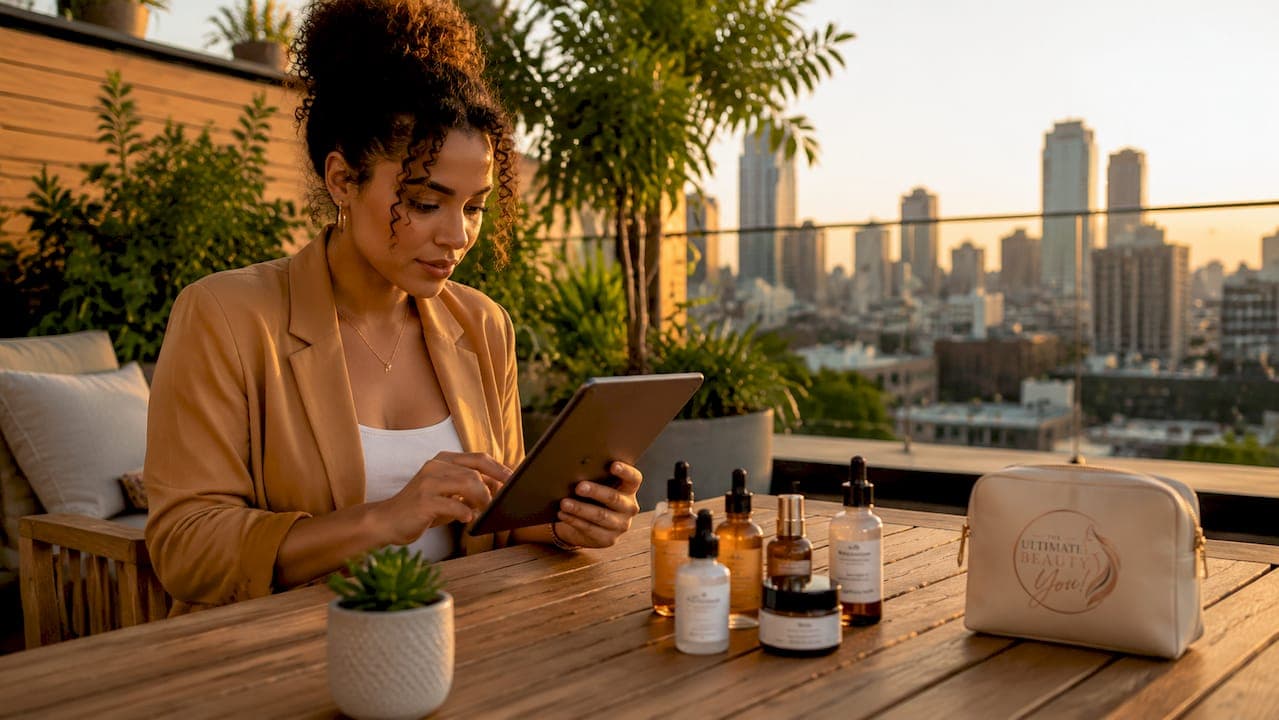
The beauty industry in 2026 is defined by a convergence of AI-powered commerce, regulatory breakthroughs, and a consumer base that demands both performance and purpose. The global beauty market grew 10% year over year, with e-commerce expanding six times faster than in-store sales. That single data point tells you where the growth is. For professionals tracking beauty industry trends 2026, the signals are clear: digital-first strategy, science-backed formulation, and values-aligned branding are no longer optional. They are the baseline.
1. How AI and e-commerce are reshaping beauty discovery
The biggest shift in 2026 is not simply more online sales. It is AI-influenced discovery happening earlier in the purchase journey, before a consumer ever reaches a product page. Brands that optimize for that pre-shelf moment win. Those that do not are invisible.
NielsenIQ reports that 49% of consumers now receive AI-based beauty recommendations, and more than 50% actively explore AI-enabled shopping tools. That means roughly half your audience is being guided by an algorithm before they read a single product description. Brands that feed those systems with rich, structured content convert at a measurably higher rate.
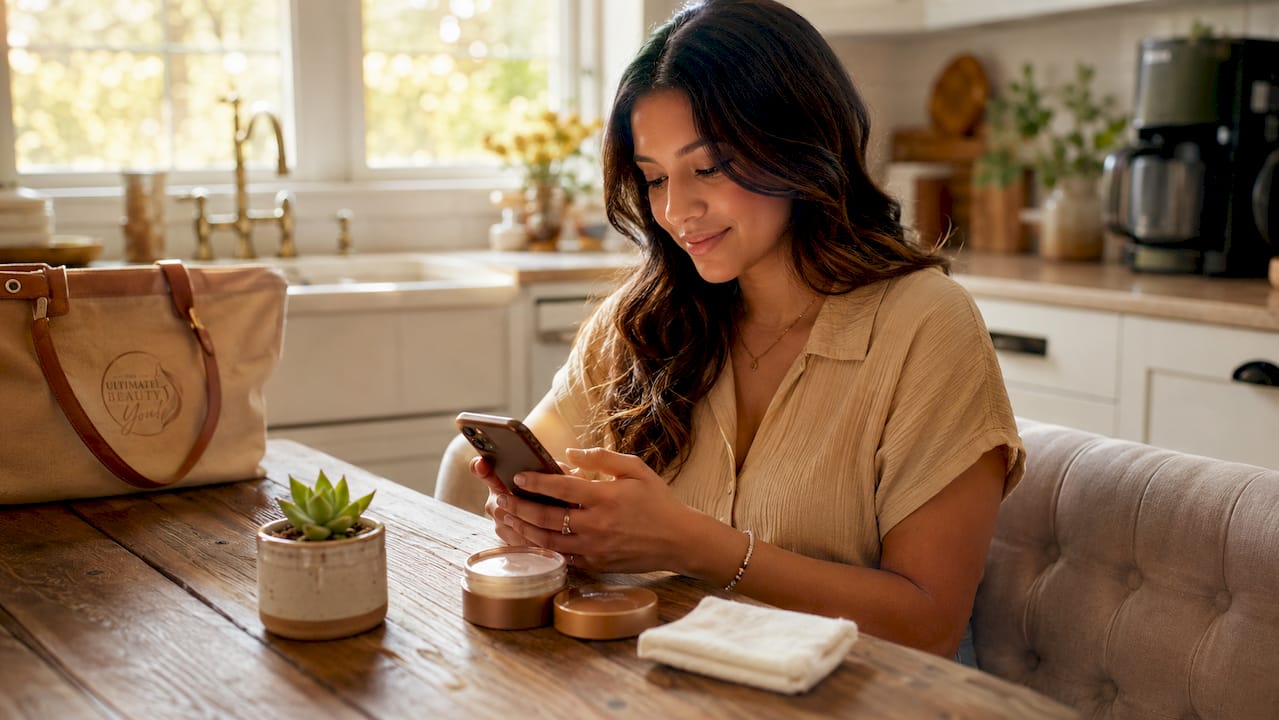
Social commerce has become a primary sales channel, not a supplementary one. 53% of consumers now buy beauty products directly through social platforms. TikTok Shop, launched in late 2023, already represents 10% of total beauty e-commerce sales in the U.S. in 2026, with beauty accounting for 20% of TikTok Shop's total dollar spending. That is a channel that went from zero to dominant in under three years.
L'Oréal's 2026 VivaTech showcase made this explicit. The company's "Beauty Odyssey" strategy centers on combining science, AI, and data as the core of future product development and consumer engagement. L'Oréal is not experimenting. It is committing.
- AI recommendation engines now influence purchase decisions before brand websites do
- TikTok Shop captures 22% of beauty buyers on the platform
- Social commerce requires content built for algorithm discovery, not just human browsing
- Skincare e-commerce accounts for nearly half of prestige beauty dollars in 2026
Pro Tip: Audit your product content for AI-readiness. Structured ingredient data, benefit-specific language, and high-resolution imagery all improve how AI recommendation tools surface your products to the right consumers.
2. Formulation and product innovation trends for 2026
The FDA's addition of bemotrizinol (BEMT) as a new sunscreen active ingredient is the most significant regulatory event in U.S. cosmetic formulation in over 20 years. BEMT is permitted at concentrations up to 6% and approved under the streamlined OTC monograph process enabled by the CARES Act. Formulators can now develop compliant sunscreen prototypes without filing a full New Drug Application.
This matters beyond sunscreen. The OTC monograph amendment M020 signals a regulatory posture that favors faster innovation cycles. Brands that align formulation pipelines with these frameworks reach market faster than competitors still navigating older approval pathways. Regulatory fluency is now a competitive advantage.
Key product categories driving growth in 2026:
- Facial skincare with clinical, science-backed positioning leads prestige sales growth
- Hair treatments including scalp health and bond-repair formulas show strong category momentum
- Body care and personal care products with functional ingredient stories outperform basic moisturizers
- Sunscreen and SPF-hybrid products benefit directly from BEMT's approval, enabling new textures and formulations
- Fragrance continues to grow across both prestige and mass channels
Clinical positioning is the differentiator in prestige skincare. Consumers are reading ingredient lists, watching dermatologist content on social platforms, and choosing products that can demonstrate efficacy. Brands that lead with science win shelf space and screen space.
Pro Tip: Formulators should map new active ingredient development against the current OTC monograph conditions before investing in full clinical trials. Compliance-first development cuts time to market significantly.
3. Sustainability and consumer values shaping upcoming beauty market shifts
Sustainability in 2026 is not a marketing layer. It is a purchase driver. 49% of consumers say they will pay more for local and authentic products. That willingness to pay a premium for values alignment is one of the clearest signals in the current market. Brands that treat sustainability as an afterthought are leaving revenue on the table.
Mental wellness has entered the beauty routine in a meaningful way. 63% of consumers now prioritize mental wellness as part of their beauty practice. This is not a niche preference. It reflects a broad redefinition of what beauty products are supposed to do, moving from appearance-only to appearance-plus-wellbeing. Brands that speak to both dimensions connect more deeply.
Sustainability trend highlights for 2026:
- Clean ingredient transparency is a baseline expectation, not a premium feature
- Local sourcing and regional authenticity command price premiums across multiple consumer segments
- Packaging reduction and refillable formats are growing in both mass and prestige channels
- Wellness-integrated formulations, such as adaptogens and stress-response actives, are expanding beyond niche into mainstream
- Efficacy plus affordability is the winning combination across all price tiers, not just mass market
The clean beauty movement has matured past its early "free-from" phase. Consumers now want proof of what a product does, not just what it avoids. Brands that combine clean credentials with clinical evidence are capturing the most growth. That combination is the new standard for sustainable beauty trends in 2026.
4. Prestige vs. mass retail: How the 2026 beauty market compares
For the first time in five years, prestige and mass retail are growing at nearly the same rate. Circana's Q1 2026 data shows prestige beauty sales up 6% to $8.1 billion, while mass retail grew 7% to $18.1 billion. The convergence signals a market where consumers are spending selectively across tiers rather than staying loyal to one price point.
Dollar growth is outpacing unit growth in both channels. That pattern reflects premiumization: consumers are buying fewer products but spending more per item. It also means that value is being defined by performance and experience, not just price. A mass consumer trading up to a $28 serum is making the same calculation as a prestige consumer choosing a $95 moisturizer.
| Channel | Q1 2026 Sales | Growth Rate | Key Categories |
|---|---|---|---|
| Prestige retail | $8.1 billion | +6% | Skincare, fragrance, clinical brands |
| Mass retail | $18.1 billion | +7% | Haircare, body care, personal care |
| E-commerce (prestige) | Nearly 50% of prestige dollars | Outpacing brick-and-mortar | Skincare, treatment products |
| TikTok Shop | 10% of U.S. beauty e-commerce | Rapid growth since 2023 launch | Beauty across categories |
Online sales outperform brick-and-mortar across every major category. Clinical and science-backed products lead growth in the prestige segment. Fragrance is a standout performer in both channels, reflecting a broader consumer appetite for sensory and emotional product experiences. For analysts building 2026 beauty brand strategy, the channel and category data should be read as two separate demand maps requiring distinct approaches.
Key takeaways
The defining force behind beauty industry trends 2026 is the convergence of AI-driven discovery, regulatory acceleration, and a consumer base that rewards brands combining performance, transparency, and values alignment.
| Point | Details |
|---|---|
| AI shapes discovery before purchase | 49% of consumers receive AI-based recommendations; optimize product content for algorithm visibility. |
| FDA opens new formulation pathways | Bemotrizinol approval under OTC monograph M020 enables faster sunscreen innovation without a full NDA. |
| Sustainability drives willingness to pay | 49% of consumers pay more for local and authentic products; clean plus clinical is the new standard. |
| Prestige and mass are converging | Both channels grew at near-parity in Q1 2026; efficacy plus affordability wins across all price tiers. |
| Social commerce is a primary channel | TikTok Shop holds 10% of U.S. beauty e-commerce; social-first content strategy is now non-negotiable. |
What the 2026 data is really telling us
By Ava
After spending years watching beauty brands chase trends, what strikes me most about 2026 is how much the data rewards brands that commit early. The AI commerce shift is not coming. It is already here, and the brands still treating social platforms as awareness tools are watching competitors convert at the point of discovery.
The FDA's bemotrizinol approval is the detail most brands are underreacting to. Regulatory change is slow until it is not. The OTC monograph framework now gives formulators a faster lane. The brands that move on this in the next 12 months will have a meaningful head start in SPF-hybrid and sun-care innovation.
What I find most interesting is the convergence of prestige and mass growth rates. It tells me that consumers have stopped thinking in tiers. They are thinking in outcomes. A woman buying a $14 drugstore retinol and a $90 peptide serum in the same week is not confused. She is deliberate. Brands that understand this and build across the efficacy spectrum will grow. Brands that rely on price-tier loyalty will not.
The sustainability signal is real, but it requires specificity. Vague "clean" claims no longer move consumers. Proof does. Pair your clean credentials with clinical data, and you have a story worth telling across every channel.
— Ava
What Theultimatebeauty-you offers for 2026 beauty trends
Theultimatebeauty-you is built for women who take their beauty practice seriously, and that means staying ahead of what the market is actually doing.
The platform's curated product selection reflects exactly the trends reshaping 2026: science-backed formulations, sustainability-forward brands, and products that deliver real results across every life stage. Whether you are a professional sourcing for clients or a beauty enthusiast building a routine that works, Theultimatebeauty-you connects you with products and expert perspectives grounded in where the market is going. Beauty is becoming. Make sure what you reach for is keeping pace.
FAQ
What is driving beauty industry growth in 2026?
The global beauty market grew 10% year over year in 2026, driven by e-commerce expanding six times faster than in-store sales and AI-powered discovery reshaping how consumers find and buy products.
What is bemotrizinol and why does it matter for beauty brands?
Bemotrizinol (BEMT) is the first new FDA-approved sunscreen active ingredient in over 20 years, permitted at up to 6% concentration under the streamlined OTC monograph process. It allows brands to develop new sunscreen formulations without filing a full New Drug Application, significantly speeding up time to market.
How is social commerce changing beauty retail in 2026?
TikTok Shop now represents 10% of total U.S. beauty e-commerce sales and captures 20% of the platform's total beauty dollar spending. Social commerce has shifted from a discovery tool to a direct purchase channel.
Are prestige and mass beauty growing at the same rate?
Yes. For the first time in five years, prestige beauty grew 6% and mass retail grew 7% in Q1 2026, signaling that consumers are choosing based on efficacy and value rather than price-tier loyalty.
How important is sustainability to beauty consumers in 2026?
Sustainability is a purchase driver. 49% of consumers will pay more for local and authentic products, and 63% now incorporate mental wellness into their beauty routines, reflecting a broader shift toward values-aligned buying.