

Burnout in women is chronic, role-linked exhaustion that shows up emotionally, cognitively, and physically. If several of these symptoms have lasted more than a few weeks, the first move is recognition, not another to-do list. Start with the checklist below, apply the evidence-backed recovery steps in this guide, and reach out for professional support if daily functioning feels out of reach.
TL;DR:
- Burnout affects women more severely due to unpaid labor, workplace inequalities, hormonal changes, and socioeconomic stress, especially among mothers and women of color.
- It is often hidden internally, with high-achieving women experiencing "silent burnout" despite appearing successful, leading many not to seek help until it becomes unmanageable.
- Recovery involves a combination of structural changes, like setting boundaries and improving sleep, along with evidence-based practices such as CBT or mindfulness meditation.
- Acting early is crucial; if symptoms persist beyond a few weeks and impair daily functioning, professional support should be sought through healthcare providers or employer programs.
- Self-care routines, including micro-rests and evening wind-downs, are helpful only if integrated consistently and paired with larger boundary and support efforts.
Table of Contents
- What Does Burnout Feel Like for a Woman?
- Why Are Women More Vulnerable to Burnout?
- How Is Burnout Different From Depression?
- What Are Evidence-Based Ways to Recover From Burnout?
- What Self-Care Routines Actually Help With Burnout?
- When Should You Seek Professional Help for Burnout?
- An Editorial Take on Recovering From Burnout
- Where to Learn More About Burnout Recovery
- Sources
- FAQ
What Does Burnout Feel Like for a Woman?
Burnout rarely announces itself. It builds in layers, and by the time most women name it, they have been running on empty for months. The World Health Organization classifies burnout as an occupational phenomenon tied to chronic, unmanaged workplace stress, not a personal failing or a diagnosable illness on its own.
The signs fall into four clusters, and they rarely show up alone.
- Emotional: persistent exhaustion that sleep doesn't fix, emotional detachment from work or family, irritability over small things, and a creeping sense that nothing you do matters anymore.
- Cognitive: brain fog, forgetting appointments or names mid-sentence, and decision fatigue so severe that picking dinner feels like a major project.
- Physical: disrupted sleep, tension headaches, appetite swings, and getting sick more often because your immune system is running on fumes.
- Behavioral: pulling away from friends, sliding performance at work, and reaching for wine, scrolling, or food more than usual to cope.
Early-stage burnout looks like Sunday-night dread and a short fuse. Left unaddressed for months, it turns into the kind of exhaustion that doesn't lift after a weekend off. Mental Health America lists exhaustion, cynicism, and reduced performance as the three core markers clinicians watch for, and recommends naming the problem early as the first real step toward recovery.
One pattern deserves special mention: high-achieving women often experience what's called "silent burnout", performing well outwardly while unraveling internally. That gap between appearance and reality is exactly why so many women don't seek help until the exhaustion becomes impossible to hide.
Why Are Women More Vulnerable to Burnout?
The gap isn't in your head. A 2025 Women in the Workplace report found a majority of senior-level women report frequent burnout, with rates higher for women newer to leadership roles. Several forces stack on top of each other to create this gap.
- Unequal unpaid labor. Full-time employed women spend an average of 8.5 more hours per week on childcare and household tasks than men do, hours that would otherwise go toward rest or recovery.
- Workplace inequities. Pay gaps, limited scheduling flexibility, and the invisible weight of emotional labor (smoothing conflict, managing team morale) add a second, unpaid job on top of the first.
- Life-stage and hormonal factors. Pregnancy, postpartum recovery, and menopause all interact with chronic stress in ways that intensify fatigue and mood symptoms.
- Socioeconomic strain. Younger and financially stretched women face compounded risk, and one study found that about a significant share of women showed high burnout, with financial strain, sick-leave history, and existing health conditions among the strongest predictors.
Motherhood adds another layer entirely. A Maven Clinic and Great Place to Work study found that mothers in paid employment are more likely to burn out than fathers, with millions of working mothers in the U.S. affected since the pandemic began. Women of color, LGBTQ+ women, and disabled women often carry an added burden of navigating workplace bias or accessibility gaps on top of these baseline pressures, which stretches recovery time even further.
How Is Burnout Different From Depression?
Burnout is situational. It's tied to a specific role, most often work or caregiving, and tends to ease when that pressure lifts, even briefly. Depression follows you everywhere. It colors work, relationships, and rest alike, regardless of what's causing the stress.
The two share real overlap: fatigue, low motivation, trouble concentrating. But depression carries markers burnout doesn't, including persistent hopelessness, feelings of worthlessness, and in serious cases, suicidal thoughts.
- If exhaustion lifts noticeably during time off, that points toward burnout.
- If low mood, hopelessness, or loss of interest persists no matter the setting, that's a signal worth screening for depression.
- If you notice thoughts of self-harm or a sense that things won't get better, that is not burnout. Treat it as urgent and reach out for professional support immediately.
A short conversation with a primary care doctor or therapist can sort out which pattern fits. Standard depression screening tools take a few minutes and can point you toward the right kind of help.
What Are Evidence-Based Ways to Recover From Burnout?
Recovery works best when it combines structural change (fewer demands, better boundaries) with practices that retrain how your body handles stress. Two approaches have the strongest evidence behind them.
Cognitive Behavioral Therapy (CBT) helps identify and reframe the thought patterns that keep you stuck in overcommitment or self-criticism. It works well when burnout is tangled up with perfectionism or anxiety about falling behind.
Mindfulness-Based Stress Reduction (MBSR) trains attention and body awareness through structured meditation and breathing practice. It tends to help most when the primary problem is a nervous system stuck in overdrive. Experts note that while newer digital tools and hormone-aware therapies are expanding treatment options, CBT and MBSR remain the two approaches with the most consistent evidence for reducing perceived stress.
Beyond therapy, a few concrete moves make a measurable difference:
- Set one boundary this week. Try a script as simple as, "I can take this on next sprint, not this one." Practice it out loud before you need it.
- Fix your sleep window first. Cognitive behavioral therapy for insomnia (CBT-I) techniques, like a fixed wake time and no screens in bed, outperform most sleep aids for chronic disruption.
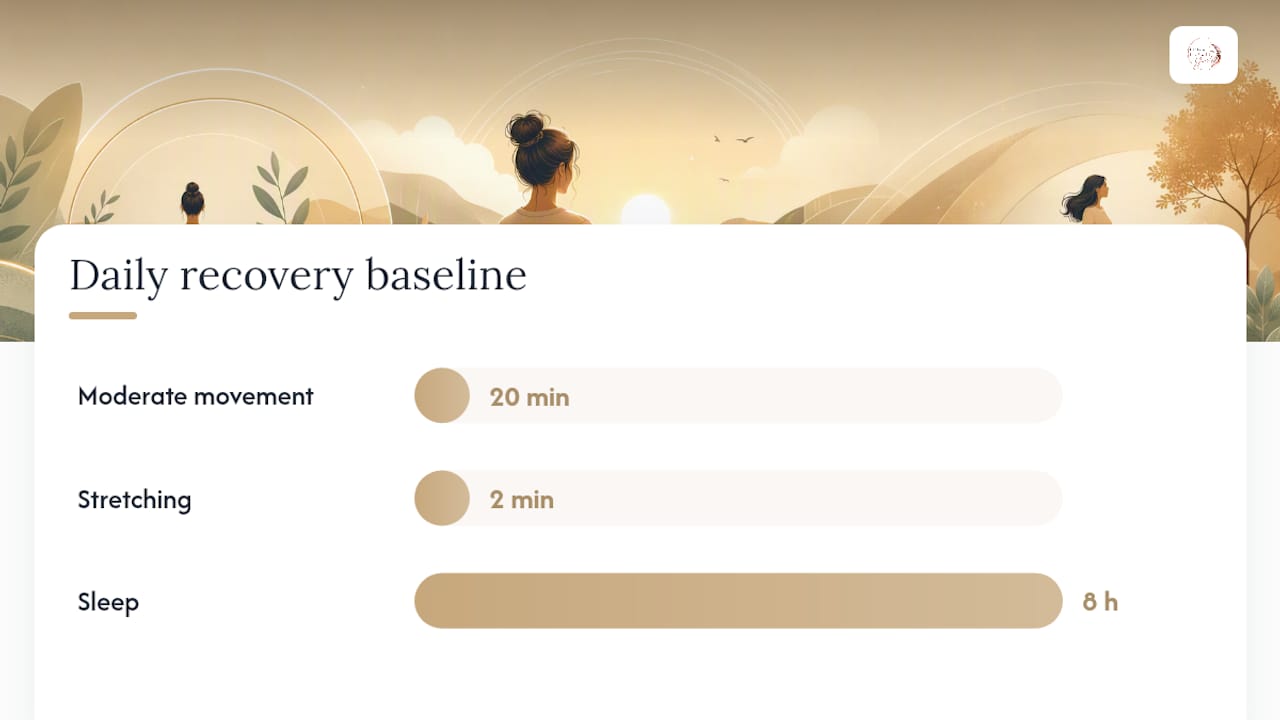
- Use the 20-2-8 rule. Johns Hopkins Medicine recommends roughly 20 minutes of moderate movement, 2 minutes of stretching, and 8 hours of sleep as a daily baseline for stress recovery and heart health.
- Build a 6-week micro-plan. Week 1: track your baseline and add short micro-rests. Week 2: fix sleep hygiene and add 10 minutes of daily mindfulness. Week 3: experiment with one workplace boundary. Weeks 4 through 6: combine what's working and reassess.
Pro Tip: Pick one boundary and one sleep change to start, not five. Burnout recovery fails most often when the recovery plan itself becomes another overwhelming project.
For a deeper breakdown of stress physiology and longer-term coping strategies, this guide to stress management for women walks through the science in more depth.
What Self-Care Routines Actually Help With Burnout?
Recovery doesn't require an hour you don't have. It requires consistency in the minutes you already own.
- Five-minute resets: four-count box breathing, a quick grounding exercise (name five things you see, four you hear), or a two-minute skin ritual that forces you to pause and touch your face with intention.
- Twenty-minute resets: a short walk without your phone, a warm shower paired with a guided breathing track, or stretching while a podcast plays instead of scrolling.
- Evening wind-down: cut screens 30 minutes before bed, swap them for a calming skincare routine, and let a warm shower or moisturizing ritual double as a signal to your body that the day is done.
Protecting these pockets of time matters more than finding a big block of free time that never arrives. Put micro-rests on your calendar the same way you'd book a meeting. This roundup of mindful beauty practices offers more ideas for pairing self-care with genuine stress relief, and a quick sensory reset, like trying a refreshing fragrance for the workday, can anchor a transition between roles without adding another task to your list.
When Should You Seek Professional Help for Burnout?
If exhaustion, detachment, or physical symptoms have lasted more than a few weeks and are affecting your work, relationships, or ability to function day to day, that's the threshold for professional support, not more self-management.
- Start with your primary care doctor to rule out physical causes like thyroid issues or anemia that mimic burnout symptoms.
- Check your employer's Employee Assistance Program (EAP), which often includes free therapy sessions.
- Use a therapist directory through your insurance provider or a platform like Psychology Today to find a CBT or MBSR-trained clinician near you.
- If you're in crisis or having thoughts of self-harm, call or text 988 to reach the 988 Suicide and Crisis Lifeline any time, day or night.
Stress left unmanaged over the long term raises the risk of depression, anxiety, and physical problems including headaches and digestive issues, according to the Office on Women's Health. Waiting it out rarely makes it smaller.
An Editorial Take on Recovering From Burnout
Most burnout advice tells women to meditate more and complain less, as if the problem lives entirely in your response to stress rather than in the stress itself. That framing lets workplaces and households off the hook. They're structural patterns.
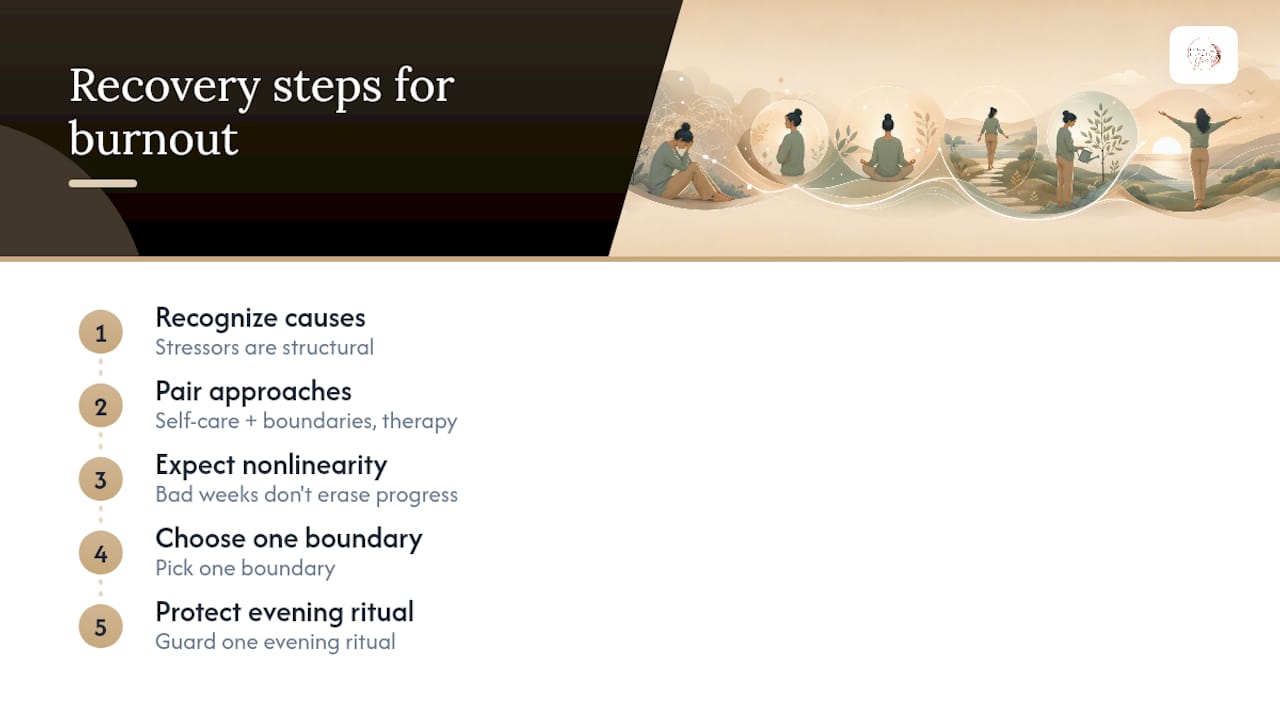
That doesn't mean self-care is pointless. It means self-care works best as one half of the equation, paired with boundaries, therapy, and honest conversations about who carries what. Recovery isn't linear, and a bad week doesn't erase three good ones.
Theultimatebeauty-you exists because women deserve resources built around real lives, not idealized ones. If this article gave you language for what you're feeling, that's the first real step. The next one is smaller than you think: pick one boundary, protect one evening ritual, and build from there. Explore more tools and community support built for women navigating exactly this on Theultimatebeauty-you.
— Ava
Where to Learn More About Burnout Recovery
For readers who want to go deeper, the WHO's official burnout classification is the clearest clinical starting point. Mental Health America offers practical recovery guidance, and the 988 Suicide and Crisis Lifeline is available anytime you need immediate support.
This article is general information, not a substitute for advice from a qualified doctor. Consult a qualified healthcare professional about your own circumstances before acting on anything here.
Sources
- Peer-reviewed study on gendered domestic labor
- WHO: Burn-out an occupational phenomenon (2019)
- Mental Health America: Burnout: Signs, causes, and how to recover
FAQ
What Does Burnout Feel Like for a Woman?
It typically feels like exhaustion that doesn't lift after rest, emotional detachment from things you used to care about, and a mental fog that makes simple decisions feel exhausting.
How Can I Recover From Burnout?
Recovery combines therapy approaches like CBT or MBSR with concrete changes: setting one boundary at a time, fixing sleep hygiene, and using a gradual 6-week plan rather than an overnight overhaul.
What Are the Common Symptoms of Burnout?
The core signs are persistent exhaustion, emotional detachment or cynicism, and reduced performance, alongside physical symptoms like headaches, sleep disruption, and getting sick more often.