

The fastest way to find a beauty expert is to book through a vetted platform with verified appointments and real portfolio photos, walk into a brand counter for a quick consult, or search a specialist directory in your area. Book the appointment that matches the goal: skin concerns that involve pain, prescriptions, or diagnosis belong with a dermatologist, while makeup, hair, and surface skincare belong with an esthetician or specialist.
TL;DR:
- Verified bookings and real portfolio photos are stronger indicators of quality than star ratings or review volume alone.
- In-person consultations are essential for hands-on assessment, but virtual visits work for initial advice and follow-up planning.
- Distinguishing between dermatologists and estheticians is crucial; only dermatologists can diagnose medical conditions requiring prescriptions.
- Prepare thoroughly for consultations by bringing photos, listing all products used, and clarifying goals and budget beforehand.
- Use multiple channels—marketplaces, salons, and vetted platforms—to find qualified professionals tailored to your specific skincare or beauty needs.
Table of Contents
- Where to Find a Beauty Expert Near You
- How Do You Choose the Right Beauty Expert?
- What Actually Happens During a Beauty Consultation?
- How to Prepare for Your Beauty Consultation
- Why Personalized Consultations Beat Generic Advice
- What the Research Actually Tells You to Prioritize
- Find and Book a Vetted Beauty Expert With Confidence
- Where to Verify Credentials and Start Booking
- Sources
Where to Find a Beauty Expert Near You
Every woman's beauty journey looks different, so the right place to start depends on what you need today, not what worked for your best friend last month. Four channels cover almost every situation, and each one earns its place for a different reason.
- In-store brand counters. Department store counters like Nordstrom's beauty services offer free mini-makeovers and quick product tutorials from brand specialists. They're great for testing a new look before an event, but they're built to sell product, not to diagnose a skin condition.
- Booking marketplaces and specialist platforms. Sites like Appearancer and BeautyFindr list verified, bookable profiles with portfolio photos and upfront pricing. These work well when you need a specific service fast, from a bridal trial to a first facial with someone new.
- Local salons, spas, and independent specialists. This is where ongoing relationships form. If you're chasing a long-term skincare goal or want the same colorist every six weeks, this is the channel built for repetition and trust.
- Virtual consultations. A video call is convenient for product advice or a first-pass assessment, but it can't replace hands-on treatment. Save it for the initial conversation, not the actual procedure.
Most women end up using two or three of these at once: a marketplace to find someone qualified, then a local relationship once you know they're a good fit.
How Do You Choose the Right Beauty Expert?
Choosing well isn't about finding the most popular name. It's about matching credentials, transparency, and communication style to what you actually need.
Run through this checklist before you book anything:
- Licensing and credentials. Confirm the professional holds a current state license or, for medical concerns, board certification.
- Verified reviews tied to real appointments. Platforms that only allow reviews after a completed, paid visit cut down sharply on fake testimonials compared to what you'll find in a social media comment section, according to Zenoti's analysis of booking apps.
- Transparent, listed pricing. If you have to call and ask "how much" with no ballpark answer, treat that as a caution flag, not a quirk.
- A visible portfolio of real work. Before-and-after photos from actual clients tell you more than any bio paragraph.
- Clear sanitation and safety practices. A professional worth your time will describe these without hesitation.
Before you book, ask directly: "Have you worked with my skin type or hair texture before?" "What does follow-up care look like?" "Which product lines do you use, and can I see ingredient lists?" "What's your cancellation policy?" Vague or defensive answers to any of these are a reason to keep looking.
Pro Tip: If a specialist pushes a specific product line the moment you walk in, before assessing your skin or asking a single question, that's a sales pitch wearing a consultation's clothes.
The medical versus cosmetic line matters here too. Estheticians handle surface treatments, facials, and aesthetic maintenance. Dermatologists are licensed physicians who diagnose conditions and prescribe medication, according to Healthline's comparison of the two roles. If a mole has changed shape, if a rash won't clear, or if you need a prescription retinoid, that's a dermatologist's job, not an esthetician's.
What Actually Happens During a Beauty Consultation?
A well-run consultation follows a fairly consistent arc, whether it happens in a chair or over video.
- Intake and history. Expect questions about your routine, allergies, past treatments, and goals before anyone touches your skin or hair.
- Assessment. In person, this means hands-on examination under good lighting. Virtually, it means a careful look at the photos you send in advance.
- Recommended plan. A good expert lays out options, not just one path, along with realistic timelines.
- Cost and scheduling. You should leave knowing exactly what today's visit costs and what a follow-up plan looks like.
- Referral, when needed. Combining a dermatologist for diagnosis with an esthetician for ongoing maintenance is a common, effective approach for persistent skin issues, according to InStyle's breakdown of when to see each.
The in-person versus virtual gap is mostly about touch. A virtual consult can assess tone, texture from photos, and product compatibility, but it can't feel skin thickness or check for something that only shows up under direct light.
How to Prepare for Your Beauty Consultation
A rushed consultation wastes everyone's time. A prepared one gets you a plan you'll actually use.
- Bring photos. Include a recent bare-face shot and, if relevant, photos from a few weeks or months back to show change over time.
- List every product and medication you use, including anything applied only occasionally, like a retinoid or acne treatment.
- Note recent procedures and allergies, especially anything within the last six months.
- Write down your actual goals and budget before you walk in. "Clearer skin" is vague; "reduce redness around my nose within three months" gives your consultant something to work with.
- Check the cancellation and refund policy before booking, not after you need to use it.
For virtual visits, add three more steps: sit near a window or use even, front-facing light, take close-up shots from multiple angles, and send everything ahead of time so the consult itself focuses on the plan, not the logistics. A look at healthy beauty habits worth building into your routine can help you describe your current routine accurately, which matters more than most people expect.
Why Personalized Consultations Beat Generic Advice
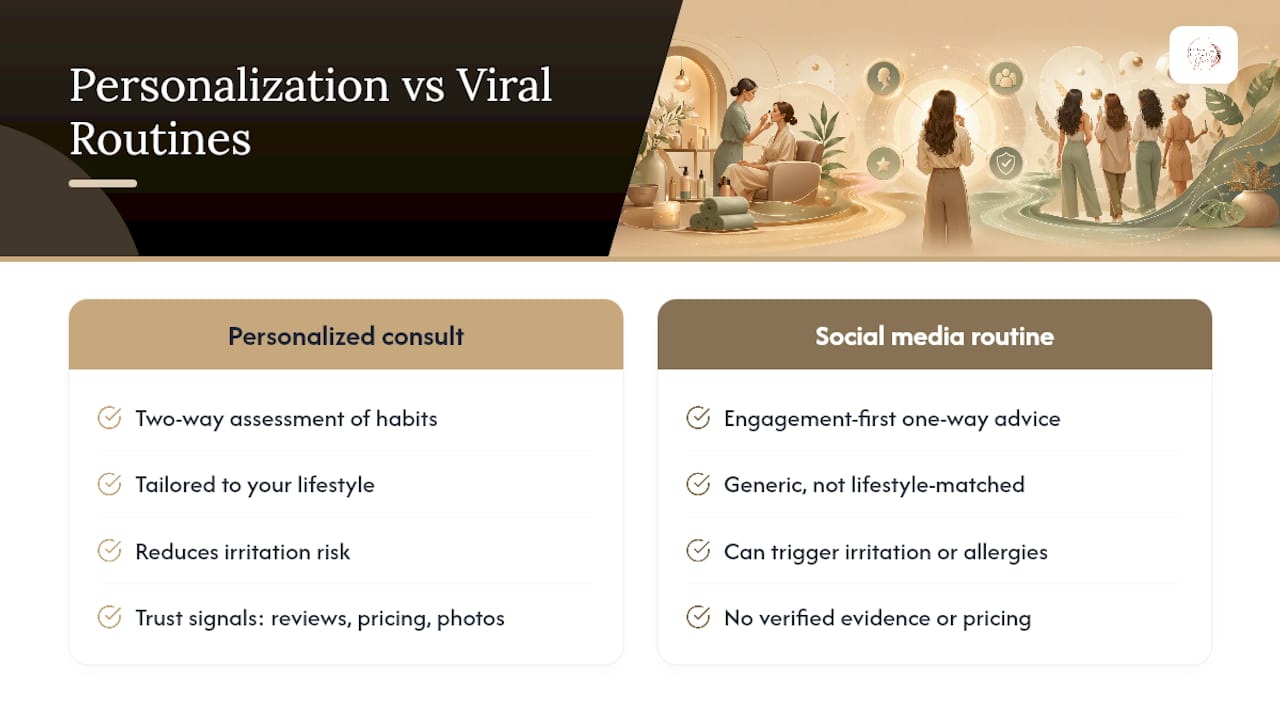
Skincare and beauty routines pulled from social media are built for engagement, not for your skin. Personalized assessments that account for your actual lifestyle and existing habits consistently outperform copycat routines lifted from a video, according to Harvard Health's analysis of personalized skincare. Viral trends can backfire outright: Healthline has reported that some viral social media beauty routines have triggered irritation and allergic reactions in people who never checked whether the routine suited their skin type.
That's part of why experienced professionals treat a consultation as a two-way conversation. They ask about your home routine and daily habits because in-office treatment only works if it's compatible with what you're already doing every night.
Personalization isn't a luxury add-on to a beauty consultation. It's the difference between a plan built for your skin and a routine built for someone else's engagement metrics.
This is exactly the gap a vetted platform is built to close. Verified reviews, listed pricing, and real portfolio photos aren't decoration. They're the trust signals that replace guesswork with evidence, which is the foundation Ava and the team at Theultimatebeauty-you built this platform around. Understanding how specialists develop niche expertise also helps you match the right specialist to your specific goal instead of booking whoever ranks first in a search.
What the Research Actually Tells You to Prioritize
Most advice on finding a beauty expert focuses on where to look. That's the easy part. The harder, more useful question is what to check once you've found a name, and most guides skip it.
Conventional wisdom leans hard on star ratings. Star ratings alone tell you almost nothing, because a five-star average built from unverified reviews is worth less than a 4.6 built entirely from completed, paid appointments. Prioritize verification over volume. A specialist with forty verified bookings and honest before-and-after photos beats one with three hundred anonymous five-star comments and no visible work.
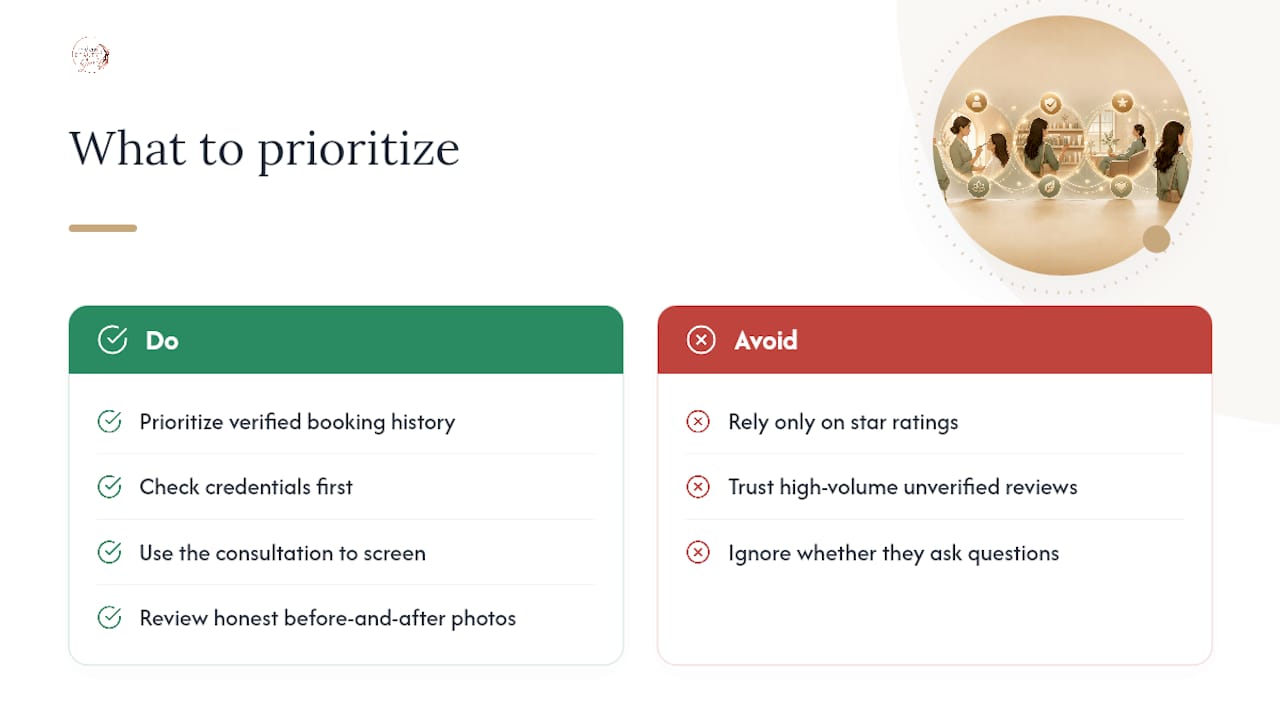
The second thing readers underestimate: the consultation itself is a screening tool, not just a formality. If a professional doesn't ask about your routine, your history, or your goals before recommending anything, that's information. It tells you they're selling a service, not solving your problem.
Start with credentials and verified booking history first. Everything else, price, convenience, even chemistry, matters less if those two pieces aren't solid.
— Ava
Find and Book a Vetted Beauty Expert With Confidence
A vetted platform is a more direct path to a trustworthy consultation than sorting through anonymous listings and hoping the reviews are real. Every part of what you just read, verified bookings, transparent pricing, real portfolios, is part of the standards experts typically meet on vetted platforms.
Such platforms often bring together women-centered beauty, wellness, and confidence resources with experts vetted against criteria like credentials, transparent pricing, and honest work samples instead of empty promises. Community members get access to trusted guidance instead of another algorithm-driven recommendation, and experts join through a process built to keep that trust intact, which you can read about on the experts and partners page. If you're ready to stop guessing and start with someone qualified, visit the Theultimatebeauty-you platform to see current listings and book your first consultation.
Where to Verify Credentials and Start Booking
For a deeper look at the medical versus cosmetic distinction, Healthline's esthetician versus dermatologist guide is a solid starting point, alongside Harvard Health's piece on why personalized skincare matters. To search verified profiles directly, check Appearancer or browse specialists in body art through Henna for Fun's guide to booking artists. Confirm state licensing through your state's cosmetology or medical board before your first visit.
Sources
- Appearancer — Book a beauty pro near you
- Esthetician vs. dermatologist: What they treat and how to choose — Healthline
- Best booking apps for beauty professionals — Zenoti (The Check-In)