
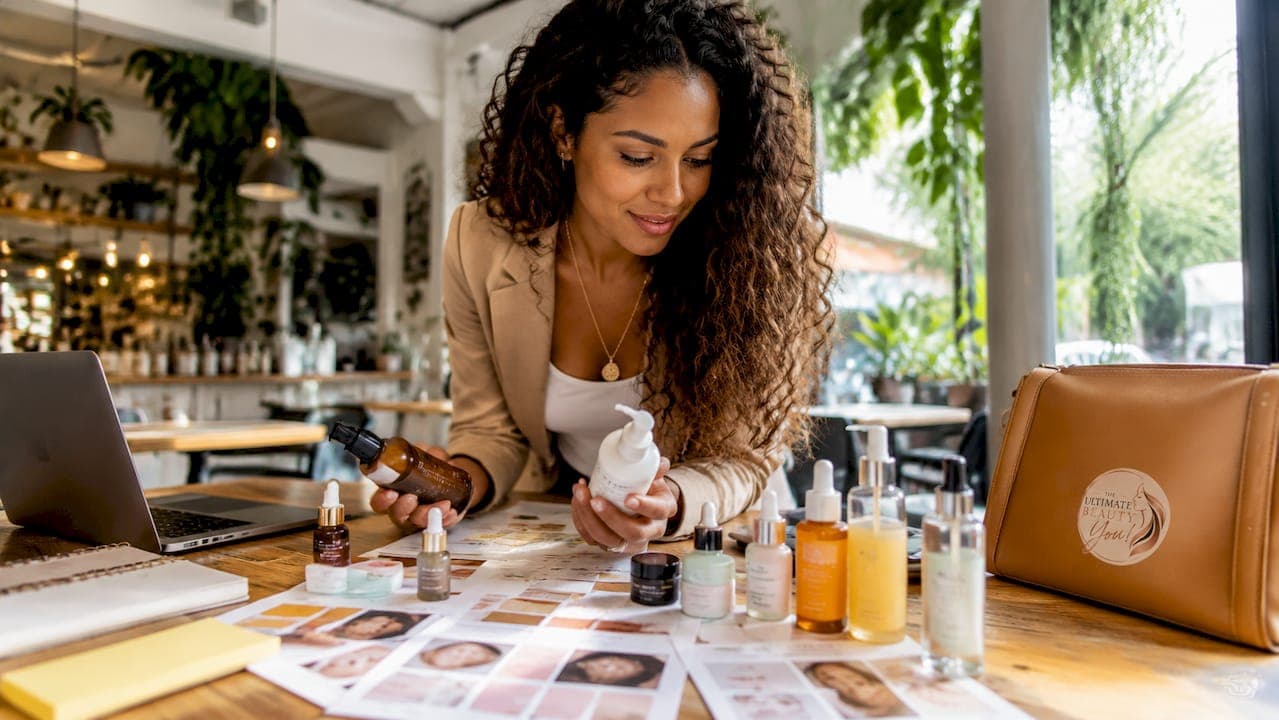
Niche targeting in beauty is defined as the practice of focusing a brand's products, messaging, and marketing on a precisely defined consumer segment with a shared problem, value, or identity. The role of niche targeting in beauty has never been more consequential. About 6% of US adults, roughly 15 million consumers, spend around $3,000 annually on beauty products. These "optimizer" consumers reward brands that speak directly to their specific concerns. Beauty consumers increasingly define themselves by problems and values rather than broad demographics, which means brands with sharp, problem-focused authority win loyalty that mass-market players simply cannot buy.
What is the role of niche targeting in beauty brand positioning?
Niche targeting shapes every layer of brand positioning, from the formula in the bottle to the words on the label. The most effective beauty brands own a specific problem or outcome rather than making broad claims. A brand that says "we fix dry skin" competes with thousands. A brand that says "we restore the moisture barrier for women over 50 with rosacea-prone skin" owns a room.
Single-category skincare brands focused on clear problems reduce decision fatigue, build trust, and simplify operations. That simplicity drives better conversion and loyalty because the consumer never has to wonder whether this brand truly understands her. Focused brands also carry cleaner operational profiles, with fewer SKUs to manage, fewer raw materials to source, and tighter quality control.
Pricing and margin strategy follow naturally from niche clarity. When a brand owns a specific outcome, it can price on value rather than competing on volume. Retailers respond to this clarity too. Retail chains like Sephora see annual assortment turnover near 22%, which means buyers are constantly replacing underperformers. A brand with a focused hero product and a clear consumer problem gets a far stronger pitch meeting than a brand with ten products and a vague lifestyle story.
- Own one problem. Define the skin concern, hair challenge, or wellness gap your brand solves better than anyone else.
- Build a hero SKU. One product should anchor your brand identity and carry the majority of your revenue.
- Price on outcome, not ingredients. Consumers pay more for a solution they believe in than for a long ingredient list.
- Simplify your line. Fewer products mean faster inventory turns, lower overhead, and a cleaner brand story.
- Align your narrative with the niche. Every word on your packaging, website, and social feed should reinforce the same specific promise.
Pro Tip: Retailers prefer brands whose hero product sells a specific belief or outcome. Before pitching any buyer, confirm that your hero SKU communicates one clear result in five words or fewer.
How do you market effectively to niche beauty segments?
Effective marketing to niche beauty segments requires precision, not volume. The tactics that work for mass-market brands, celebrity endorsements, broad awareness campaigns, and generic seasonal promotions, actively underperform in niche contexts.
- Lead with micro-influencers. Micro-influencers with 1,000–100,000 followers consistently achieve higher engagement rates than celebrities. Their audiences trust them because they feel like peers, not spokespeople. For a niche brand targeting women with hyperpigmentation or postpartum hair loss, a micro-influencer who shares that experience is worth more than any celebrity contract.
- Use AI for personalized recommendations. Consumers increasingly seek tailor-made beauty products addressing unique skin types and concerns. AI-powered quiz funnels, skin analysis tools, and recommendation engines let brands deliver that personalization at scale without a massive customer service team.
- Build trust through transparency. Share your formulation philosophy, your sourcing decisions, and your founder's story. Niche consumers are sophisticated. They research ingredients, read reviews, and compare claims. Authenticity is not a soft value here. It is a conversion driver.
- Listen before you broadcast. Monitor community forums, Reddit threads, and product reviews in your niche. Customer language is your best copywriting resource. When women describe their skin concerns in their own words, those words belong in your ads.
- Adapt messaging by generation without abandoning your core. Successful brands maintain a consistent core narrative while adapting messaging and influencer choices to the media habits of different generations. A Gen Z consumer and a Gen X consumer may share the same skin concern but discover solutions in completely different places.
Pro Tip: Treat social platforms like TikTok as top-of-funnel discovery tools, not direct sales channels. Route conversions through your owned website or retail partners to protect margins and build long-term loyalty.
How do you find and validate a niche in the beauty industry?
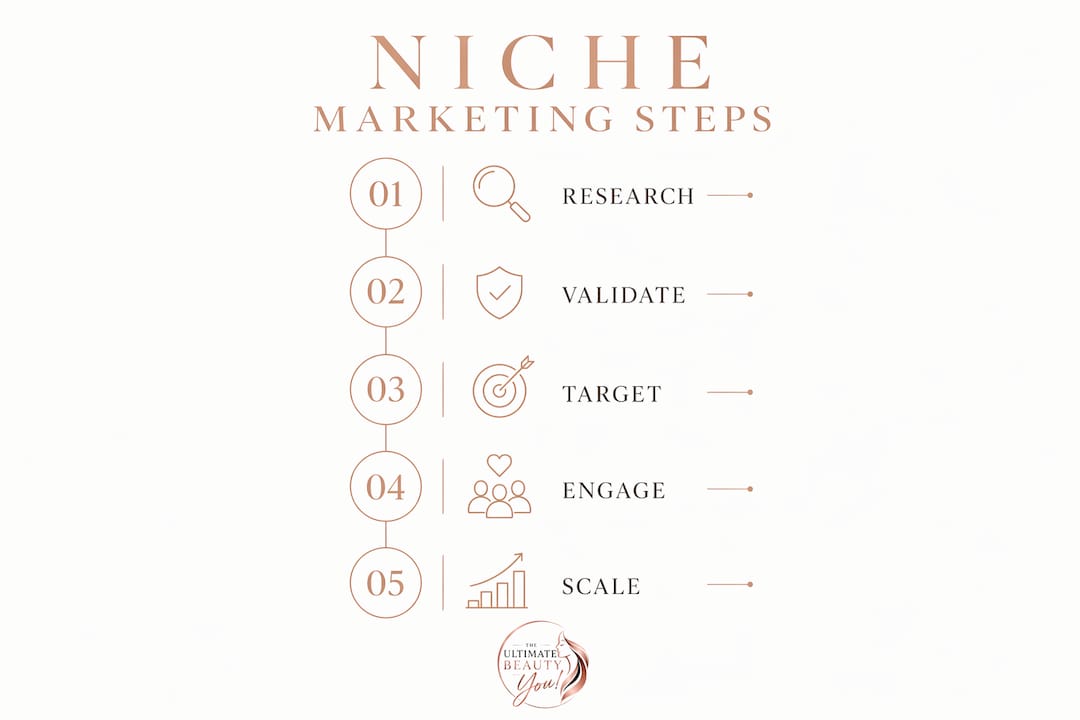
Finding a viable niche requires research, not guesswork. The process starts with identifying unmet consumer needs and ends with data that proves real demand exists before you invest in production.

Research unmet needs first. Search Amazon reviews, Reddit communities like r/SkincareAddiction, and beauty forums for recurring complaints that existing products fail to solve. Pain points that appear repeatedly across multiple platforms signal genuine market gaps.
Analyze the competitive field for whitespace. Map the brands already serving your potential niche. Look for gaps in price points, ingredient philosophies, skin tones represented, or life stages addressed. A gap is only valuable if it is large enough to sustain a business and small enough that mass-market brands have ignored it.
Build personas beyond demographics. Age and income are starting points, not destinations. The most useful personas describe a consumer's specific problem, her daily routine, her values, and the language she uses to talk about her concerns. A 42-year-old woman managing perimenopause-related skin changes has very different needs from a 42-year-old woman focused on athletic recovery skincare, even though they share the same demographic profile.
| Validation Signal | What to Measure | Why It Matters |
|---|---|---|
| Search volume | Monthly searches for the problem, not the product | Confirms consumers are actively seeking a solution |
| Community size | Active members in niche forums or social groups | Indicates an engaged audience ready to buy |
| Repeat purchase rate | Percentage of customers who reorder within 90 days | Proves the product solves the problem reliably |
| Contribution margin | Revenue minus variable costs per unit | Confirms the niche can sustain a profitable business |
| Retail assortment gaps | Categories underrepresented in major retail chains | Identifies whitespace with proven shelf demand |
Evaluate niche size honestly. A niche that is too small cannot generate enough revenue to cover product development and marketing costs. A niche that is too broad loses the precision that makes niche targeting work. The sweet spot is a segment large enough to grow into but specific enough that your brand can own the conversation.
What channel strategy works best for scaling niche beauty brands?
The most defensible path for scaling a niche beauty brand starts with direct-to-consumer and moves selectively into retail only after proving demand. A hybrid channel mix that begins with DTC and expands into retail after establishing a loyal customer base gives brands the data and credibility they need to negotiate from strength.
DTC channels give you direct access to customer behavior. You see what they buy, when they reorder, and what they say in reviews. That data is your most valuable asset when approaching a retail buyer. Entering retail too early, before your hero SKU has proven repeat purchase rates and strong margins, is one of the most common and costly mistakes in indie beauty.
Retail success depends on having a hero SKU responsible for at least 40% of revenue and contribution margins above 70%, with clean data to prove demand before scaling distribution. Retailers do not take risks on unproven products. They take calculated bets on brands that have already done the hard work of building consumer demand.
Operational discipline matters as much as creative storytelling when scaling. Successful brands monitor metrics like cash conversion cycles and repeat purchase rates quarterly. Over-diversifying your product line while scaling retail is equally dangerous. Every new SKU adds complexity, cost, and the risk of diluting the focused brand identity that made your niche work in the first place. Your brand visual identity must stay consistent across every channel as you grow.
Key Takeaways
Niche targeting in beauty works because focused brands solve specific problems, earn deeper consumer trust, and build the operational clarity needed to scale profitably.
| Point | Details |
|---|---|
| Own a specific problem | Define one clear consumer concern and build every product and message around solving it. |
| Hero SKU drives growth | One flagship product should anchor brand identity and generate the majority of revenue. |
| Micro-influencers outperform celebrities | Smaller creators with engaged niche audiences deliver higher conversion than broad celebrity deals. |
| Validate before scaling | Prove repeat purchase rates and strong margins in DTC before entering retail distribution. |
| Adapt messaging, not your core | Maintain one brand narrative while tailoring content to the media habits of different consumer generations. |
Why niche discipline is the hardest and most rewarding choice in beauty
I have watched too many promising beauty brands collapse under the weight of their own ambition. They find a niche that works, build a loyal following, and then immediately try to be everything to everyone. They add SKUs, broaden their messaging, and chase every trend. Within 18 months, they have lost the very clarity that made them special.
The brands I respect most are the ones that resist that pull. They stay in their lane not because they lack vision, but because they understand that depth beats breadth in a fragmented market. The beauty industry trends shaping 2026 confirm this. Consumers are more sophisticated than ever. They can detect inauthenticity in seconds, and they reward brands that genuinely understand their specific lives.
The future of beauty marketing belongs to brands that combine creative storytelling with financial discipline. Knowing your contribution margin is not less important than knowing your brand voice. Both are non-negotiable. The most exciting niche opportunities right now sit at the intersection of emerging technology and underserved life stages: perimenopause skincare, adaptive beauty for women with disabilities, and wellness-integrated color cosmetics. These are not small markets. They are large markets that mass brands have been too cautious to serve well.
My honest advice: pick your niche with courage, build your hero product with obsession, and measure everything that matters. Beauty is becoming. So is your brand.
— Ava
Niche-focused beauty products at Theultimatebeauty-you
Theultimatebeauty-you was built on the belief that every woman deserves beauty solutions that actually speak to her life, her concerns, and her stage of becoming.
The product catalog at Theultimatebeauty-you brings together niche-focused beauty selections curated around specific concerns, from skin wellness to confidence-building self-care. Each product is chosen because it solves a real problem for real women, not because it fits a trend cycle. Whether you are a beauty marketer looking for inspiration or a woman ready to find what actually works for her, Theultimatebeauty-you connects you with trusted experts and partners who understand the power of precision in beauty.
FAQ
What is niche targeting in the beauty industry?
Niche targeting in beauty is the practice of focusing a brand's products and marketing on a specific consumer segment defined by a shared problem, value, or identity. It allows brands to build deeper trust and loyalty than broad-market approaches can achieve.
Why do niche beauty brands outperform mass-market brands in loyalty?
Niche brands solve specific problems with focused products, which builds consumer confidence and drives repeat purchases. Consumers who feel genuinely understood by a brand are far more likely to reorder and recommend it.
How do micro-influencers support niche beauty marketing?
Micro-influencers with 1,000–100,000 followers achieve higher engagement rates than celebrities because their audiences trust them as peers. For niche beauty brands, that trust translates directly into credibility and conversion.
When should a niche beauty brand enter retail distribution?
A brand should enter retail only after its hero SKU has proven strong repeat purchase rates and contribution margins above 70% through DTC channels. Entering retail too early, before demand is proven, is one of the most common causes of indie brand failure.
How do you validate a beauty niche before launching a product?
Validate a niche by measuring search volume for the consumer problem, analyzing community size in relevant forums, and tracking repeat purchase intent through pre-launch waitlists or pilot sales. Real demand shows up in behavior, not just survey responses.