

Why social media marketing is essential for beauty professionals in 2026
Social media is the most powerful growth tool available to beauty professionals right now. Not because it's trendy, but because it's where your clients live, discover, and decide. Instagram, TikTok, and Facebook have become the primary visual stages for showcasing artistry, building trust, and turning followers into loyal, repeat clients.
The numbers make the case clearly. Beauty is the dominant category on TikTok Shop, representing about 22.5% of all global Gross Merchandise Value on the platform as of mid-2026. And 67% of shoppers report discovering beauty products through influencer marketing. That's not a niche behavior. That's the mainstream path to purchase.
For beauty professionals and salon owners, the opportunity is real and specific:
- Instagram drives visual discovery and bookings through Reels, Stories, and a highly engaged beauty community.
- TikTok builds brand personality fast, especially with younger audiences hungry for tutorials and authentic voices.
- Facebook remains vital for community building, local advertising, and converting search traffic into appointments.
- Authentic brand voice separates professionals who grow from those who post without purpose.
- Diverse content formats including education, behind-the-scenes, and client stories outperform single-format feeds.
Social media for beauty experts isn't just about visibility. It's about connection. It's about showing up consistently, speaking directly to the people you want to serve, and letting your work speak with confidence.
How social media is reshaping the beauty industry
The beauty industry has shifted from window displays to digital feeds. Clients no longer walk past a salon and decide to book. They scroll, save, share, and then book. Social media has fundamentally changed how beauty trends are born, how products are discovered, and how professionals build careers.
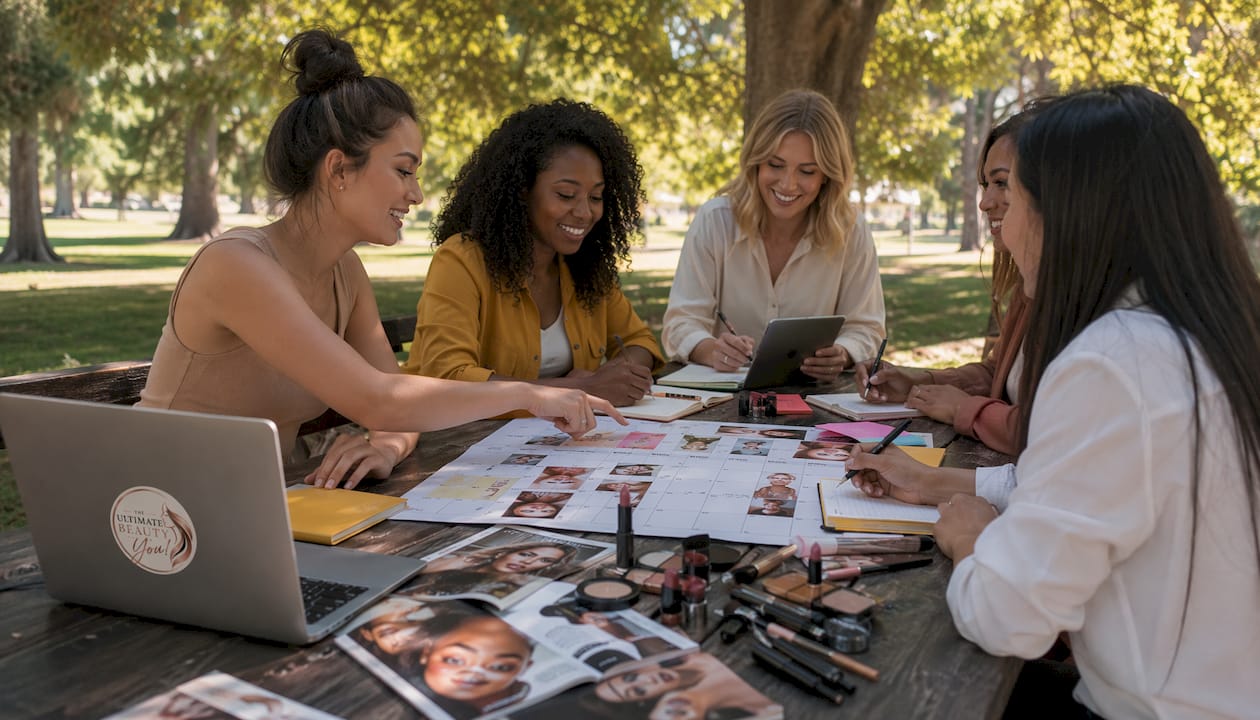
Platforms like Instagram and TikTok now function as living trend incubators. A single viral video can launch a hair color technique into mainstream demand overnight. Young Americans increasingly rely on social media posts to explore makeup trends and make informed purchase decisions, making your feed a direct line to future clients.
The rise of influencer marketing has accelerated this shift dramatically:
- Influencers have replaced traditional advertising as the primary trust signal for beauty consumers.
- Educational content, tutorials, and myth-busting posts consistently outperform purely promotional material.
- User-generated content from real clients carries more credibility than polished brand campaigns.
- Social commerce on TikTok Shop is now influencing brick-and-mortar retail decisions, with category buyers using trend data to inform shelf placement.
The consumer has changed, too. She wants to understand the "why" behind a product or technique, not just see the result. She trusts the professional who teaches her something over the one who simply sells to her. That shift is your opportunity.
How to lay the foundation for your social media strategy
Before you post a single photo, you need clarity. The beauty professionals who grow fastest on social media aren't the ones who post the most. They're the ones who post with purpose.
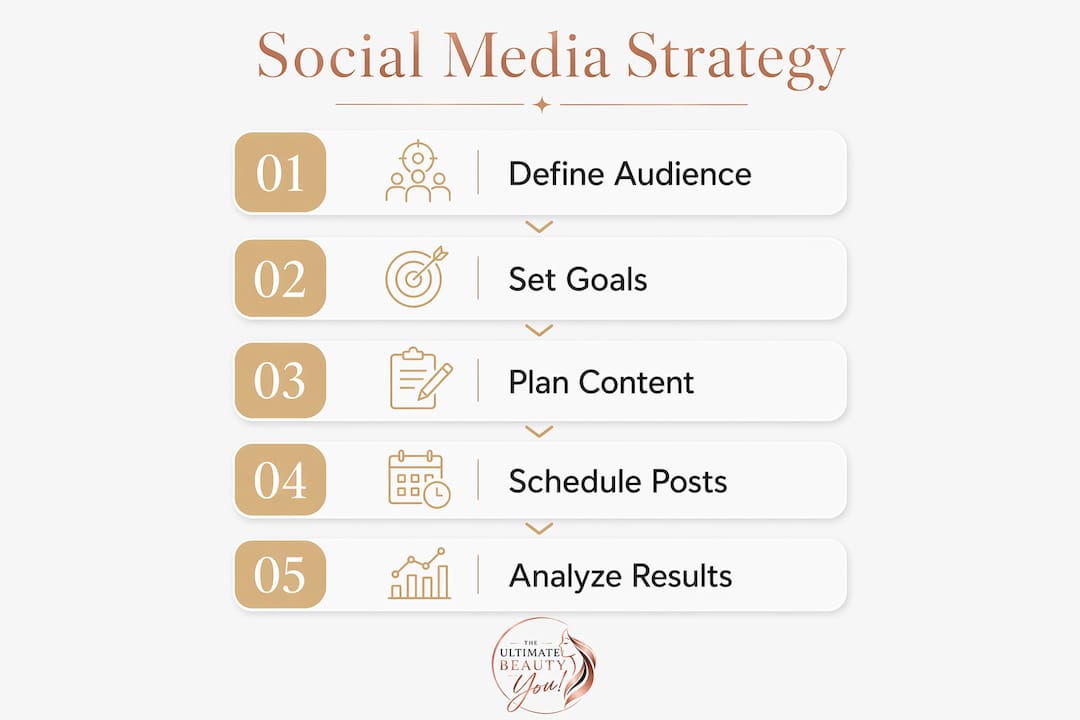
Start with your ideal client. Who are you trying to reach? A bridal specialist attracts a very different audience than a colorist known for bold, fashion-forward transformations. Define her age range, her lifestyle, her beauty concerns, and the platforms she uses most. That profile shapes every content decision you make.
Build a brand voice that feels like you. Your tone, your aesthetic, and your values should be consistent across every post. Whether you're warm and nurturing or edgy and direct, that personality is what makes people follow you and, more importantly, trust you. Tools like Canva help you establish a visual identity with consistent color palettes and typography that carry across platforms.
Here's a practical foundation checklist:
- Define your niche specialty (color, textured hair, skincare, bridal, etc.) and commit to it.
- Choose 2–3 platforms based on where your ideal client spends time, not where you feel most comfortable.
- Set measurable goals: bookings per month, follower growth rate, or engagement rate per post.
- Build a content calendar at least two weeks ahead to maintain consistency without burnout.
- Align your profile photo, bio, and link-in-bio across all platforms for a cohesive first impression.
Pro Tip: Post at the same times each week for at least 30 days before evaluating performance. Algorithms reward consistency, and your audience will begin to anticipate your content. Pair that with a visual identity that signals professionalism at a glance.
Instagram and TikTok remain the key visual platforms for beauty professionals, while Facebook and Google Business Profiles are vital for community building and converting local search traffic into bookings. Know which platform serves which goal, and plan accordingly.
What content actually engages and attracts clients
Before-and-after photos are a starting point, not a strategy. The beauty professionals building real audiences in 2026 are creating content that teaches, entertains, and connects, not just showcases.
Educational content that shares professional knowledge builds trust and turns your social profiles into effective booking machines. Think product breakdowns, technique explanations, myth-busting posts about common hair or skin misconceptions, and honest answers to the questions your clients ask in the chair every day.
Short-form video is the engine of growth right now. Instagram Reels and TikTok videos that show your process, your personality, and your expertise consistently outperform static images. Consistent posting across Instagram, TikTok, and YouTube, aligned with each platform's unique features, is critical to staying relevant and growing engagement.
Content types that perform well for beauty professionals:
- Process videos: Time-lapse transformations, step-by-step technique breakdowns, and product application tutorials.
- Behind-the-scenes content: Your setup, your tools, your prep routine. Clients love seeing the human side of your work.
- Myth-busting posts: "No, bleach doesn't always damage your hair if done correctly." These drive shares and saves.
- Client stories: With permission, share the story behind a transformation. The emotional context makes the visual more powerful.
- Educational carousels: Multi-image posts that teach a concept perform well on Instagram because they encourage multiple taps and saves.
Pro Tip: Mix content lengths deliberately. A 7-second Reel showing a color reveal, a 60-second tutorial, and a 3-minute YouTube deep-dive each serve a different purpose and reach a different moment in the client's decision journey. Variety keeps your feed alive.
Beauty storytelling is what separates a scroll-stopper from a scroll-past. Your brand narrative is the thread that connects every post. When clients feel like they know you, booking feels like a natural next step, not a transaction.
How to build and sustain an active online community
Followers are a number. Community is a relationship. The beauty professionals who sustain long-term growth understand that difference deeply.
Engagement is the currency of social media. Comments, shares, direct messages, and user-generated content signal to algorithms that your content matters. But more than that, they signal to real people that you're worth their attention. User-generated content and interactive features on platforms foster vibrant communities, which lead to loyalty and higher bookings.
Build participation into your content deliberately:
- Use Instagram Stories polls and question boxes to invite opinions on new services or product recommendations.
- Host live Q&A sessions where clients can ask about techniques, aftercare, or booking options in real time.
- Create a branded hashtag and encourage clients to use it when they share their results.
- Respond to every comment in the first hour after posting. That window matters most for algorithmic reach.
- Repost client content with genuine gratitude. It shows you value their voice.
Handling negative feedback professionally is part of community leadership. When a client leaves a critical comment or review, respond calmly, acknowledge their experience, and offer to resolve it privately. A graceful public response often builds more trust than a perfect review ever could.
Pro Tip: Read your DMs and comments not just for engagement, but for insight. Your community is constantly telling you what they want more of, what confuses them, and what they wish you offered. That's free market research.
The 5-5-5 social media rule offers a simple daily practice: spend 5 minutes liking 5 posts, commenting on 5 posts, and engaging with 5 people. Done consistently, it builds genuine visibility and reciprocal relationships within your beauty community.
Why partnering with influencers and local collaborators works
You don't have to build your audience alone. The right partnerships accelerate trust in ways that solo posting simply can't replicate.
Local micro-influencers resonate more authentically and drive actual foot traffic compared to macro-influencers with massive but diffuse followings. A local lifestyle creator with 8,000 engaged followers in your city is often more valuable than a national beauty account with 500,000 followers who live nowhere near your salon.
Understanding the influencer landscape helps you choose wisely:
- Macro-influencers (100,000+ followers) offer broad reach but lower engagement rates and higher costs. Best for brand awareness campaigns.
- Micro-influencers (1,000–100,000 followers) deliver higher engagement and more targeted audiences. Ideal for local salons and specialty services.
- Local collaborators (neighboring businesses, fitness studios, bridal boutiques) offer cross-promotion without the influencer fee structure.
Collaboration formats that work well for beauty professionals:
- Giveaways: Partner with a complementary local brand to offer a combined prize. Both audiences see both brands.
- Co-created content: Invite a micro-influencer for a complimentary service and document the experience together. Authentic, not scripted.
- Event participation: Pop-up styling events, wellness fairs, or bridal expos generate content and direct client contact simultaneously.
- Affiliate or referral arrangements: Offer a trackable discount code so you can measure the actual bookings each partnership drives.
Choose partners whose values align with yours. An influencer who promotes wellness and self-care is a natural fit for a salon that emphasizes the same. Misaligned partnerships feel forced to audiences, and they notice. For a deeper look at how micro-influencers shape beauty marketing, the dynamics are worth understanding before you pitch your first collaboration.
Key trends shaping social media in beauty for 2026 and beyond
The beauty marketing world is moving fast. The professionals who stay ahead aren't just watching trends. They're building strategies that can adapt to them.
AI-powered discovery is changing how clients find you. Tools like ChatGPT and Perplexity have become primary discovery tools for beauty products and services, making citation-rich, expert-validated content essential for visibility. If your content isn't structured to be cited by AI search engines, you're invisible to a growing segment of beauty consumers.
"Dermfluencers" are redefining authority. Certified dermatologists, trichologists, and licensed estheticians with large followings are reshaping what credibility looks like in beauty marketing. These science-backed voices build trust through efficacy and compliance, not just aesthetics. Aligning your content with that standard of expertise positions you ahead of the curve.
Trends every beauty professional should watch:
- Shift from vanity metrics to meaningful signals: Shares, saves, and reach matter more than follower counts and likes.
- Content saturation on TikTok: Generic short-form videos are losing ground. Longer, brand-aligned, entertaining content is gaining traction.
- Social commerce integration: TikTok Shop's influence on retail decisions is growing, with trend data now shaping in-store shelf placement.
- Compliance and transparency: The FTC's disclosure requirements for sponsored content and affiliate relationships are being enforced more actively. Clear "#ad" or "#sponsored" labels aren't optional.
- Legal considerations: Copyright applies to music used in Reels and TikToks. Use platform-licensed audio libraries to avoid takedowns that erase your content.
Beauty marketing has evolved into what the 1,000-Creator Playbook for Beauty 2026 describes as an operating system combining creator scale, expert-led authority, retail data, and compliance. That's the standard you're competing against, and the standard worth building toward. For a broader view of where the industry is heading, the beauty industry trends for 2026 offer essential context.
Moving beyond vanity metrics to engagement that actually matters
Follower count is the most seductive and least useful number in your analytics dashboard. A salon account with 2,000 deeply engaged local followers will book more appointments than one with 50,000 passive ones. The metric that matters is connection, not scale.
Shares and saves are the clearest signals of emotional resonance. When someone saves your post, they're telling the algorithm and themselves that your content has value worth returning to. When they share it, they're vouching for you to their own network. Those actions drive reach and bookings in ways that likes simply don't.
Platform analytics tools give you the data to act on this. Instagram Insights, TikTok Analytics, and Facebook's built-in reporting all surface which content types earn the most saves, shares, and profile visits. Review these weekly, not monthly. Patterns emerge quickly when you look consistently.
Pro Tip: Run a 30-day content audit. Pull your top 5 posts by saves and your top 5 by likes. They're rarely the same posts. Build your next month's content calendar around what earned saves, not what earned hearts.
Long-term success for beauty brands hinges on integrating creator scale, expert validation, and retail data within a data-driven marketing framework. That sounds complex, but for a salon owner it translates simply: know your numbers, create content that earns trust, and let the data tell you what to do more of. Communities built on genuine engagement generate advocacy and repeat bookings at a rate that no paid ad campaign can replicate on its own.
Key Takeaways
Social media success for beauty professionals in 2026 depends on authentic connection, consistent strategy, and content that earns trust, not just attention.
| Point | Details |
|---|---|
| Platform selection matters | Instagram and TikTok drive visual discovery; Facebook converts local search into bookings. |
| Content depth beats volume | Educational, behind-the-scenes, and storytelling posts outperform pure before-and-after feeds. |
| Engagement quality wins | Shares and saves signal real connection; follower count alone does not predict bookings. |
| Community drives growth | Interactive features, UGC, and consistent responses build loyalty that paid ads cannot replicate. |
| Trends require adaptation | AI-powered discovery, dermfluencer authority, and compliance standards are reshaping beauty marketing now. |
Beauty Is Becoming: our perspective at Theultimatebeauty-you
Here's what most social media guides for beauty professionals get wrong. They treat your feed as a portfolio when it's actually a relationship. The professionals who grow the fastest aren't the ones with the most polished content. They're the ones who show up with honesty, consistency, and a clear point of view about who they are and who they serve.
The obsession with follower counts is a distraction from the work that actually builds a business. A stylist with 1,200 followers who responds to every comment, posts educational content twice a week, and collaborates with two local micro-influencers per quarter will outbook a stylist with 40,000 passive followers every single time. The data on shares and saves confirms this, but so does common sense. People book people they trust, not accounts they admire from a distance.
What we believe at Theultimatebeauty-you is that beauty is a verb. It's active, evolving, and deeply personal. That philosophy applies directly to how beauty professionals should approach social media. Your presence online should reflect growth, not perfection. It should invite women into your world, not just impress them with your results. When your content says "I see you, I understand what you need, and I can help," that's when the bookings follow.
The compliance piece deserves more attention than most guides give it. FTC disclosure rules, copyright on music, and the growing scrutiny around efficacy claims in skincare and hair care are real considerations, not fine print. Getting this right protects your reputation and your business. It also signals professionalism to the clients who are paying attention.
Build your social media presence the way you build a client relationship: with patience, authenticity, and a genuine commitment to showing up. That's the strategy that compounds over time.
Ready to grow your beauty brand with confidence? Theultimatebeauty-you is built for women like you: professionals, creators, and community leaders who believe beauty is becoming. Explore expert resources, connect with a community that lifts you up, and find everything you need to show up fully at The Ultimate Beauty - You!. Your next chapter starts here.