
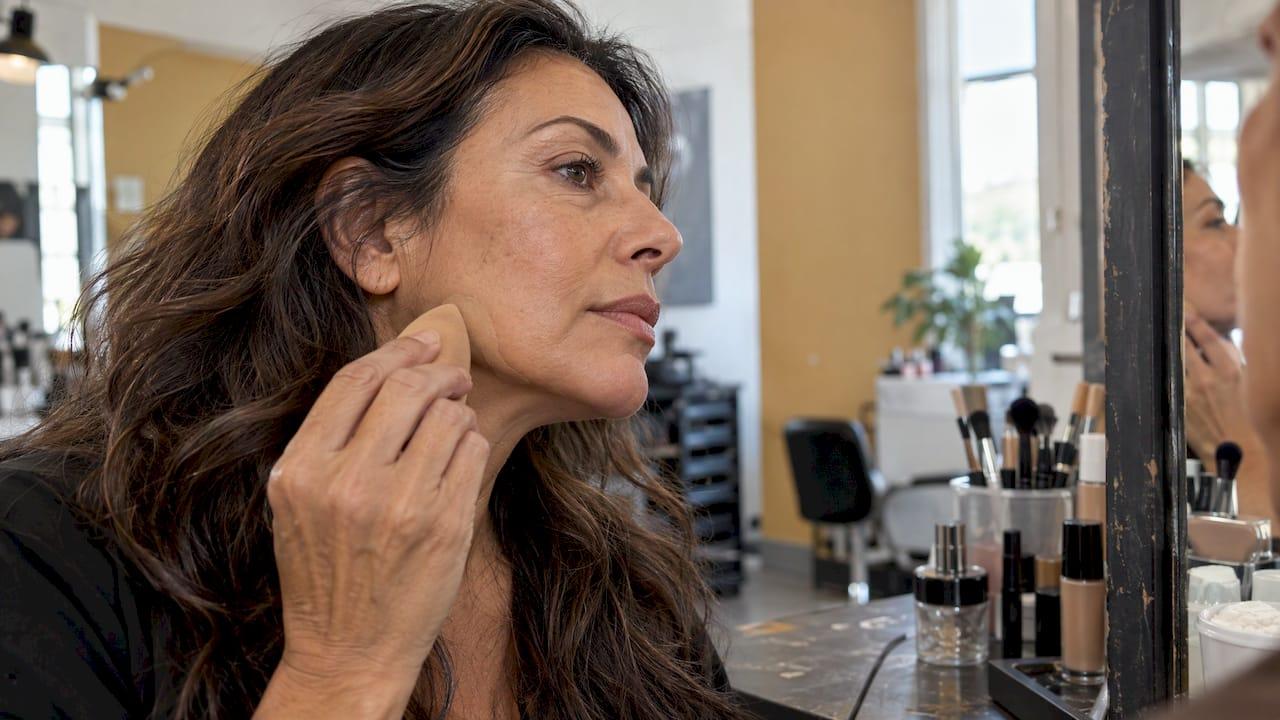
Olive undertone makeup comes down to one idea: choose products that balance the green-gold cast in your skin instead of fighting it. In practice, that means neutral-to-warm foundation with enough depth, golden or copper bronzer, peach, coral or rose blush, and no icy, chalky colors. Below, you will find how to confirm your undertone, how to match a base, and a full palette by product.
Beauty Is Not Perfection. Beauty Is a Verb. Beauty Is Becoming. Makeup is one of the ways you act on that, so let's make it work for your skin.
TL;DR
- Olive is an undertone, not a depth. Olive skin can be fair, medium, tan or deep.
- Foundations that pull too pink or too yellow are the most common problem. Start with neutral-to-warm bases and test in person.
- Warm gold, copper and brown bronzers, plus peach, coral and rose blush, tend to flatter.
- Icy blue, pale pink and stark white-based colors can wash olive skin out.
- Vein color and jewelry tests are not reliable on their own. Judge by how a foundation actually behaves on your skin.
Table of Contents
- What an olive undertone actually is
- How to tell if you have an olive undertone
- Choosing foundation for olive skin
- The olive skin color palette, product by product
- A five-step routine for olive undertone makeup
- Common mistakes to skip
- Our perspective
- Find your people and your products
- FAQ
- Sources
What an olive undertone actually is
Skin tone and undertone are two different things. Skin tone is the visible color of your skin, from light to medium to dark, and it is driven mainly by the amount and distribution of melanin. Undertone is the apparent temperature of the skin under light. According to ALS Global, undertone depends on structural and physiological factors such as skin thickness, tissue depth, blood vessel visibility and concentration, and the proportion of pigments like melanin, bilirubin and carotenoids.
Olive is one way those factors show up. Makeup artists often describe it as a greenish or grayish cast layered over a warm, cool or neutral base. That is why olive skin does not sit neatly in the "warm or cool" boxes most shade charts use.
The practical takeaway: depth and undertone are separate decisions. The same logic applies beyond makeup. If you want to see how it works with another beauty category, this guide to nail colors by undertone and depth walks through choosing by both.
How to tell if you have an olive undertone
No single test settles it. Combine several observations and then let real product behavior confirm them.
Look at the signs together:
- Foundations often look too pink, too yellow or oddly gray on you.
- Your skin tans easily and rarely looks flushed pink.
- Gold and silver jewelry both seem to work, which can feel confusing.
- Your skin has a muted, slightly greenish or earthy look in natural daylight, especially without makeup.
Use caution with the classic shortcuts. A clinical-oriented source points out that vein color and jewelry preference are not validated diagnostic tests, and recommends pairing them with several visual observations and with how a foundation behaves once it is on. Olive skin can make veins look greenish-blue, which muddies the vein test further.
A simple daylight check
- Wash your face and wait a few minutes with no product on.
- Stand near a window in indirect daylight.
- Hold a plain white sheet of paper beside your jaw, then a cream-colored one.
- Notice whether your skin looks pink, yellow, or muted and greenish-gray against each.
If pink and yellow both look slightly off and your skin reads muted or earthy, olive is a strong possibility. Then confirm with swatches, which is the test that counts.
Choosing foundation for olive skin
This is where most readers get stuck, and it is the question behind "best foundation for olive skin." The honest answer is a method, not a single product.
Start neutral to warm
Olive-toned skin often finds foundation pulling too pink or too yellow. Makeup artist Kiley Smith recommends neutral-to-warm bases with enough depth to neutralize the green cast. A base that is too pink can look ashy or mask-like. One that is too yellow can turn sallow.

Neutral shades are a useful starting point, not a rule. Mented's guide notes that olive skin varies enough that direct testing overrides any universal undertone formula.
Swatch three shades
The same guide suggests testing three shades, applied from the cheek to below the chin, and looking for the one that blends seamlessly. Do it like this:
- Pick one neutral, one slightly warmer and one slightly deeper shade.
- Draw a stripe of each from cheek to jaw and onto the neck.
- Check them in daylight, not store lighting.
- Choose the stripe that disappears.
- Wait and look again. Some formulas shift as they settle.
For a longer walkthrough, including a timed jawline test, read our guide to foundation shade matching with tech.
Pay attention to the range, not just the shade
Olive skin lives across every depth, and it is often the in-between shades that get skipped. A line with many neutral and olive-leaning options in each depth gives you real choices. We unpack what to look for in shade range diversity.
Foundation quick guide
| Problem you notice | What it usually means | What to try |
|---|---|---|
| Looks pink or ashy | Base is too cool | Move to a neutral or warm-neutral shade |
| Looks yellow or sallow | Base is too golden | Try a neutral shade with a touch more depth |
| Looks gray at the jaw | Shade is too light or too cool | Go slightly deeper and test onto the neck |
| Matches face, not neck | Shade is a compromise | Blend down and add bronzer to bridge the gap |
The olive skin color palette, product by product
Color works best when it echoes the warmth and richness in your skin. Think gold, copper, peach, coral, rose, olive green, and deep earthy tones. Here is how that plays out face by face.
Bronzer
EMANI advises bronzers with warm gold, copper or brown tones for olive skin, and says to avoid ones that read too red or overly orange. Apply along the high points where sun would naturally hit: forehead, cheekbones and the bridge of the nose.

Blush
Warm peach, coral and rose shades give a natural flush. If a pastel blush disappears on you, go one step deeper. Olive skin generally needs more saturation than the swatch on the pan suggests.
Highlighter
Golden and bronze tones emphasize the olive glow. Pearly champagne is a gentle option if you like a softer finish.
Eyeshadow
Olive skin is a natural match for earthy shades: warm browns, bronze, copper, olive green, plum and deep teal. Gold shimmer on the lid makes eyes look brighter. Brown and green eyes in particular tend to pop with these.
Brows
A soft brown or taupe that sits close to your natural hair color looks the most natural. Avoid very red or very ashy brow products, since both can read as an obvious color against olive skin.
Lipstick
Try warm berry, brick, terracotta, rosewood, coral and rich nudes with a hint of warmth. Choose a nude that is a shade or two deeper than your skin rather than a pale one.
Colors to approach carefully
Per EMANI, icy blue, pale pink and stark white-based colors in blush, lipstick or eyeshadow can drain the color from olive skin and make it look washed out or sickly. If you love a cool shade, balance it with a warm blush and a bit of bronzer.
Palette at a glance
| Product | Flattering families | Approach with care |
|---|---|---|
| Bronzer | Gold, copper, warm brown | Very red or very orange |
| Blush | Peach, coral, rose | Pale pink, icy pastels |
| Highlighter | Golden, bronze, champagne | Stark white or icy silver |
| Eyeshadow | Bronze, copper, olive, plum, brown | Icy blue, chalky white |
| Lipstick | Brick, terracotta, warm berry, warm nude | Pale pink, white-based shades |
A five-step routine for olive undertone makeup
- Prep. Moisturize and, in the daytime, wear sunscreen. If dark spots are a concern, our guide to skincare for women of color can help you build a routine.
- Base. Apply your tested foundation or tint, blending down the neck.
- Warmth. Sweep a golden or copper bronzer over the high points of the face.
- Color. Add peach, coral or rose blush on the apples and slightly up the cheekbones.
- Finish. Use a golden highlight and a warm lip, then check your look in daylight.
Common mistakes to skip
- Buying by the label alone. "Neutral" and "olive" mean different things from line to line. Swatch first.
- Matching only the face. Check your neck and chest so the base blends.
- Chasing orange for warmth. Bronzer should look like a glow, not a tan line.
- Going too pale on lips and cheeks. A little more pigment keeps your skin looking alive.
- Trusting a myth. Plenty of beauty rules about undertone are oversimplified. Our look at common beauty myths and what science says is a good reset.
Our perspective
Olive skin is one of the most overlooked complexions in beauty. It does not fit the neat warm-or-cool chart, so it is often told to settle for whatever is closest. We do not agree.
At The Ultimate Beauty - You!, we believe beauty is a verb. It is something you do, learn and grow into, not a shade you are assigned. Our inside-out, head-to-toe, 360-degree approach means your makeup choices sit alongside your skincare, your confidence and your community.
That is why we bring trusted experts, brands and resources together in one place. When advice is scattered, women are left guessing. When it is unified, you can test, swap notes and find what truly suits you at every age and stage.
Your undertone is not a problem to fix. It is a starting point to celebrate.
Ava
Find your people and your products
Finding your shade is easier when you are not doing it alone. The Ultimate Beauty - You! is a women-centered platform that brings together beauty, wellness and confidence resources, expert advice, brand recommendations and a community of women at every age and stage. An app is also on the way.

Explore the platform at The Ultimate Beauty - You! and join us in becoming.
FAQ
Is olive skin warm or cool?
Olive undertone is not distinctly warm or cool. It is usually described as a greenish or grayish cast that can sit over a warm, cool or neutral base. That is why neutral-to-warm foundations are a common starting point, while your own swatch tests make the final call.
What foundation undertone is best for olive skin?
Many makeup artists begin with neutral-to-warm shades that have enough depth to balance the green cast. Mented's guide stresses there is no universal rule, so test three shades from cheek to below the chin and pick the one that blends away.
What colors should olive skin avoid?
Icy blue, pale pink and stark white-based shades can wash out olive skin. Overly red or orange bronzers can also look harsh. You can still wear them, but pair them with warm blush and a touch of bronzer to keep your complexion glowing.
Can I have olive skin if I am very fair?
Yes. Skin tone is the visible depth of your skin, while undertone is how it appears under light, so olive can show up in fair, medium, tan or deep skin. If fair shades look pink or yellow on you, look for lighter neutral options and swatch in daylight.
Does vein color tell me my undertone?
Not reliably. Vein color and jewelry preference are not validated tests on their own. Combine several visual observations with how a foundation behaves on your skin.
Sources
- ALS Global: Color matching and skin undertone
- Understanding olive skin tone: clinical characteristics
- Kiley Smith: How to choose makeup for your skin type
- Mented: A guide to the best foundation for olive skin
- EMANI: What is olive skin tone and makeup for olive-toned skin