
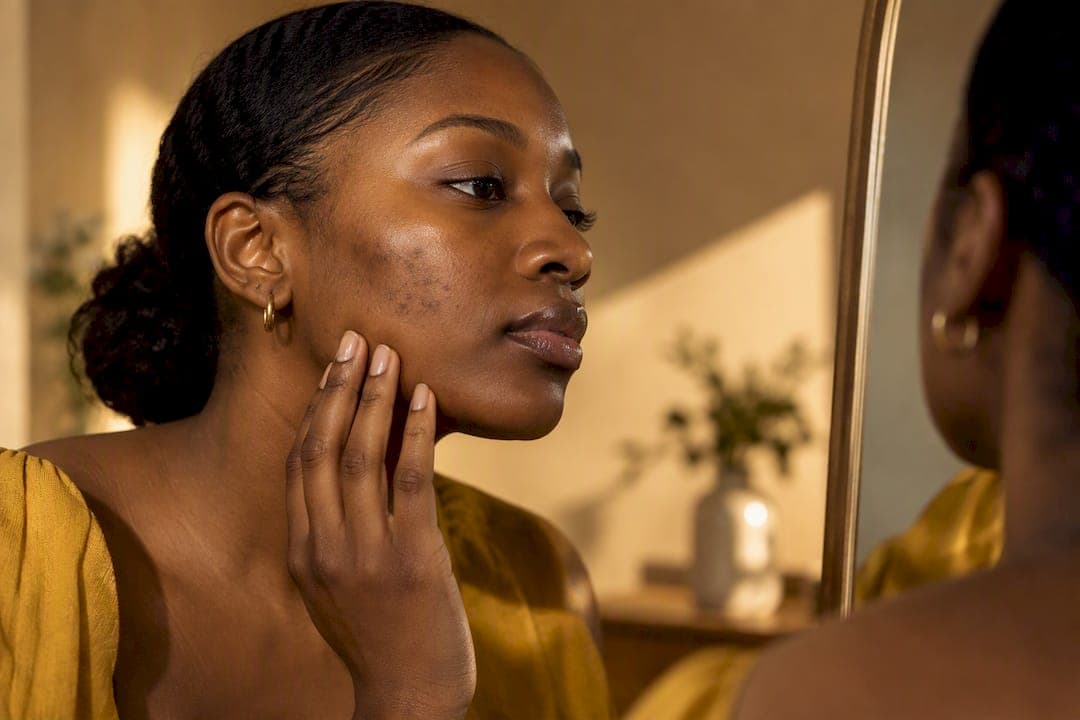
Prioritize inflammation control, daily photoprotection that accounts for visible light, and barrier repair first. Once inflammation is calm, layer in pigment-directed actives like azelaic acid or niacinamide with realistic timelines of 8 to 12 weeks for visible change. This order matters more than any single product. Trusted dermatology guidance and peer-reviewed research all point to the same sequence: calm first, correct second.
TL;DR:
- Controlling inflammation before using pigment-targeting actives like azelaic acid or niacinamide is essential, with visible results typically taking 8 to 12 weeks.
- For melanin-rich skin, broad-spectrum sunscreens with iron oxides are most effective against visible-light-induced pigmentation, and they should be reapplied regularly.
- Gentle, low and slow introduction of active ingredients minimizes the risk of irritation and darkening, especially when managing acne or hyperpigmentation.
- Conservative, staged treatments with a focus on skin barrier strengthening reduce the risk of post-inflammatory hyperpigmentation following procedures.
- Emphasizing consistent routines, patience, and dermatologist support leads to better long-term results than aggressive or shortcut approaches.
Table of Contents
- Daily AM and PM routine essentials for melanin-rich skin
- Managing hyperpigmentation and discoloration realistically
- Sun protection and visible light for melanin-rich skin
- Managing acne without trading breakouts for dark marks
- Professional treatments: what to know before you book
- How The Ultimate Beauty - You! approaches inclusive skincare
- Understanding your skin type and undertone
- Ingredients worth caution in your routine
- Why hydration works differently for melanin-rich skin
- Keloids, dermatitis, and other concerns worth naming
- Diet, sleep, and the habits that show up on your skin
- The traditions behind modern skincare habits
- A personal note on patience and partnership
- Where to find curated routines and expert support
- Sources
- FAQ
Daily AM and PM routine essentials for melanin-rich skin
Your skin is not a blank canvas for trends. It is reactive, resilient, and prone to marking every irritation with pigment that can linger for months. That is why the order and pace of your routine matter as much as the products themselves.
In the morning, keep it simple. Cleanse gently, apply an antioxidant like vitamin C if your skin tolerates it, follow with a moisturizer that pairs humectants (glycerin, hyaluronic acid) with ceramides to support the skin barrier, then finish with broad-spectrum sunscreen. If you wear makeup, let sunscreen absorb for a few minutes before layering foundation so it doesn't pill.
At night, the goal shifts to repair. Double cleanse if you wore sunscreen or makeup during the day, since a single cleanse often leaves residue that clogs pores. Then introduce your treatment actives, and finish with a barrier-repairing moisturizer to lock in hydration overnight.
- Morning: gentle cleanser, optional vitamin C, moisturizer, broad-spectrum sunscreen.
- Evening: double cleanse if needed, one targeted active (azelaic acid, niacinamide, or a retinoid), barrier moisturizer.
- New actives: start two to three nights a week, patch test on your inner arm first, and increase frequency only if your skin shows no redness or flaking after a week.
Introduce one active at a time. If you add a retinoid and an exfoliating acid in the same week, you won't know which one caused the irritation when your skin reacts, and reactive skin is exactly what triggers the pigment you're trying to avoid. Sensitive or acne-prone skin often does better starting with azelaic acid or niacinamide before ever touching a retinoid.
Pro Tip: Apply new actives at night, and give your skin a full week before judging whether it's working or working against you.
Managing hyperpigmentation and discoloration realistically
Post-inflammatory hyperpigmentation and melasma look similar but behave differently. PIH follows an injury: a pimple, a cut, a harsh peel. Melasma is driven more by hormones and chronic sun exposure and tends to be more stubborn. Both respond better when you treat the underlying inflammation before chasing the pigment itself, since continued inflammation can keep generating new dark marks even as you treat old ones.
Several topical actives have real evidence behind them for skin of color:
- Azelaic acid calms inflammation while gently inhibiting the enzyme that produces excess pigment.
- Kojic acid and alpha-arbutin are tyrosinase inhibitors commonly recommended as first-line topical treatment for hyperpigmentation.
- Niacinamide supports barrier function and can reduce the transfer of pigment within skin cells.
- Topical retinoids speed cell turnover, helping fade existing marks over time.
- Hydroquinone is effective but works best under a dermatologist's supervision due to irritation and rebound-pigment risks with long-term unsupervised use.
Post-inflammatory hyperpigmentation is one of the common reasons darker-skinned patients seek dermatologic care, and topical therapy is typically the first-line approach, with progress assessed over an 8 to 12 week window rather than days or weeks.
If you see little improvement after three months of consistent use, or if the marks are deep, widespread, or scarring, that's the point to loop in a dermatologist. Combination regimens, prescription-strength options, or in-office procedures may be appropriate, but they carry their own risks in richer skin tones, which we'll cover next.
Sun protection and visible light for melanin-rich skin
Sunscreen is non-negotiable, but for melanin-rich skin, the story doesn't stop at UV rays. High-energy visible light, the light your phone screen and the sun both emit, can trigger and worsen pigmentation in ways that plain UV filters don't fully address.
Tinted sunscreens containing iron oxides are the best-evidenced strategy for blocking visible-light-driven pigmentation, because iron oxide physically scatters that portion of the light spectrum in a way clear sunscreens generally cannot.
- Choose a broad-spectrum sunscreen with strong UVA1 performance, not just a high SPF number.
- Look for iron oxides or pigmentary titanium dioxide on the ingredient list if pigmentation is a primary concern.
- Expect some products to leave a warm tint. This is often the tradeoff for real visible-light protection.
- Reapply through the day, and pair sunscreen with a wide-brim hat or shade during peak sun hours.
If a tinted formula never matches your skin tone or feels too heavy, you're not out of options. Combining a cosmetically elegant, high UVA1 sunscreen with pigment-modulating actives such as thiamidol or 2-MNG has shown reductions in visible-light-induced pigmentation in controlled trials, offering a real alternative lane when tint isn't tolerable. For practical, dermatologist-backed picks that skip the chalky finish, our guide to SPF without white cast walks through several options worth trying.
Managing acne without trading breakouts for dark marks
Acne itself is frustrating. The dark mark it leaves behind can be worse, and it often outlasts the pimple by months. That's the core challenge in treating acne in melanin-rich skin: an aggressive regimen that clears breakouts fast can also inflame the skin enough to guarantee new pigmentation.
The better approach is low and slow. Introduce actives gradually, and favor formulations that fight bacteria and oil without stripping the skin raw.
- Azelaic acid treats both active acne and existing discoloration at once, making it a practical dual-purpose option.
- Lower-strength retinoids (start around 0.025 to 0.03%) reduce clogged pores with less irritation than higher concentrations.
- Benzoyl peroxide works, but use it sparingly and as a spot treatment rather than an all-over wash if your skin tends toward dryness or reactivity.
- Hydrocolloid patches on active pimples reduce the temptation to pick, which is one of the most common causes of self-inflicted PIH.
Severe, cystic, or scarring acne, or acne that keeps leaving marks despite a gentle routine, calls for a dermatologist. Prescription options exist that a store shelf simply can't match.
Pro Tip: Resist picking. A patch left alone heals faster and darker marks fade sooner than the ones you touch.
Professional treatments: what to know before you book
Chemical peels, lasers, and microneedling can address stubborn pigment and texture, but they carry a meaningfully higher risk of post-inflammatory hyperpigmentation in Fitzpatrick skin types III through VI compared with lighter skin. That doesn't mean these treatments are off the table. It means the approach has to be more conservative.
Before booking any procedure, ask the provider a few direct questions:
- Do you have specific experience treating skin of color, and can you show examples?
- What pre-procedure priming do you recommend, and for how long?
- What settings will you use, and why are they conservative for my skin tone?
- What does aftercare look like, and how do we monitor for PIH afterward?
Priming the skin beforehand with topical depigmenting agents, along with strict sunscreen use in the weeks surrounding treatment, meaningfully lowers the odds of a bad outcome. A systematic review of prevention strategies found that sunscreen, used alone or alongside other measures, was the single most consistently successful way to prevent PIH after a procedure. Slower, staged treatment plans tend to outperform aggressive single sessions in darker skin.
How The Ultimate Beauty - You! approaches inclusive skincare
We built The Ultimate Beauty - You! around a 360-degree, inside-out approach to beauty, because skin health for women of color has never fit into a one-size-fits-all routine. Our curated routines are organized by age and life stage, recognizing that what your skin needs at 25 looks nothing like what it needs at 45.
If you're building out your own plan, our routines by age group resource and our menopause skincare guide are practical starting points. We are an educational and community platform, not a substitute for medical care. Persistent or severe skin concerns still belong with a dermatologist.
Understanding your skin type and undertone
Women of color are not one skin type, and treating your skin like everyone else's on your side of the color spectrum is a fast way to pick the wrong products. Skin can run oily, dry, combination, or sensitive regardless of melanin level, and your undertone (warm, cool, or neutral) matters more for makeup matching than for treatment choices.
What does matter clinically is your Fitzpatrick skin type, a scale from I to VI describing how skin responds to UV exposure and how likely it is to pigment after injury. Higher Fitzpatrick types (IV through VI) tend to scar and pigment more readily after inflammation, which is exactly why the inflammation-first approach carries so much weight in this guide.

Pay attention to how your own skin behaves rather than assuming it matches a friend's routine. Someone with oily, acne-prone skin and Fitzpatrick V coloring needs a different balance of actives than someone with dry, sensitive skin and Fitzpatrick III coloring, even if both identify as women of color. Track what triggers breakouts, what leaves marks, and how long those marks take to fade. That personal pattern is more useful than any generic skin-type label.
Ingredients worth caution in your routine
Not every popular ingredient plays well with melanin-rich skin. Some cause more harm than good when used without care.
High-concentration alcohol-based toners and harsh sulfate cleansers strip the barrier fast, and a compromised barrier is an open invitation for irritation and the pigment that follows it. Physical scrubs with rough exfoliating beads can create microtears that heal into dark spots, so chemical exfoliants at gentle concentrations are usually the safer route.
Unregulated skin-lightening creams, especially those bought without ingredient transparency, sometimes contain high-dose steroids or mercury compounds banned in many markets. These can cause thinning skin, stretch marks, and rebound darkening far worse than the original concern. Fragrance and essential oils, while natural, are common irritants that can trigger the exact inflammation this guide is built around avoiding.
That doesn't mean every strong active is off-limits. Retinoids, acids, and even hydroquinone have real evidence behind them. The caution is about concentration, frequency, and supervision, not avoidance altogether. Start low, go slow, and read full ingredient lists rather than trusting marketing claims on the front of the bottle.
Why hydration works differently for melanin-rich skin
Melanin-rich skin tends to have a naturally more compact stratum corneum and, in some cases, higher innate lipid content, which can make it look resilient while still losing water through a compromised barrier. Dryness in darker skin often shows up as ashiness or a grayish cast rather than obvious flaking, which means it can go unnoticed until the barrier is already stressed.
Ceramides matter here. They are the lipids that hold skin cells together and keep moisture from escaping, and a barrier low on ceramides lets in more irritants, which raises the odds of the inflammation that leads to dark marks. Pair ceramide-rich moisturizers with humectants like glycerin or hyaluronic acid, which pull water into the skin, and you get both immediate softness and longer-term resilience.
Layering matters too. Apply humectants to slightly damp skin so they have water to draw in, then seal with a moisturizer containing ceramides or fatty acids. In colder or drier climates, a heavier occlusive like petrolatum or shea butter at night can prevent the tightness and flaking that often show up as ashy patches by morning. Well-hydrated skin also simply heals faster, which shortens how long any post-inflammatory mark sticks around.

Keloids, dermatitis, and other concerns worth naming
Some skin concerns show up more often, or more severely, in women of color, and they deserve direct attention rather than a footnote.
Keloid scarring, where scar tissue grows beyond the original wound, occurs more frequently in darker skin tones. This matters for anything that breaks the skin: piercings, cystic acne, even minor cuts. If you notice a scar thickening or spreading rather than flattening over months, that's worth a dermatology visit before it grows further.
Atopic dermatitis and eczema can present differently too, often showing as darker or ashy patches rather than the classic red rash seen in lighter skin, which sometimes delays diagnosis. Traction alopecia, tied to tight hairstyles and certain styling practices, is another concern that intersects with skincare at the hairline, where product buildup and friction can worsen irritation.
None of these conditions mean your skin is more fragile. They mean the visual cues clinicians are trained to look for don't always show up the way textbooks describe, so paying close attention to your own skin's normal baseline, and speaking up when something looks off, matters more than relying on generic descriptions of what a rash or scar "should" look like.
Diet, sleep, and the habits that show up on your skin
Skincare products only do part of the job. What you eat, how you sleep, and how you manage stress all show up on your skin eventually, sometimes as breakouts, sometimes as dullness, sometimes as slower healing.
Diets heavy in refined sugar and processed foods are commonly linked to increased inflammation throughout the body, and inflammation is the trigger this entire guide is built around minimizing. Leaning toward whole foods, plenty of water, and foods rich in antioxidants (berries, leafy greens, fatty fish) supports skin from the inside in a way no serum can replace.
Sleep is when skin repairs itself. Consistently short sleep shows up as a duller complexion and slower recovery from blemishes or irritation. Stress works similarly, since elevated stress hormones can worsen inflammatory skin conditions like acne and eczema. None of this replaces a good routine, but it explains why two people using identical products can see different results. Skin doesn't operate in isolation from the rest of your health.
The traditions behind modern skincare habits
Skincare for women of color didn't start with serums and product labels. Many practices passed down through generations, shea butter for dryness, oils for scalp and skin nourishment, natural exfoliants from kitchen staples, reflect generations of practical knowledge built long before dermatology had language for skin of color specifically.
Those traditions carry real value, and some have held up well under modern scrutiny: shea butter's fatty acid content genuinely supports barrier function, for instance. Others deserve a more careful eye, since "natural" doesn't automatically mean gentle, and some traditional remedies can be as irritating as any harsh synthetic ingredient.
The most useful approach blends the two. Respect the practical wisdom that shaped skincare in communities long underserved by mainstream dermatology, while pairing it with the evidence base that has only recently begun to include skin of color in clinical research at meaningful scale. Neither tradition nor modern science has all the answers alone, and your routine can hold both without contradiction.
A personal note on patience and partnership
Pigment doesn't fade on your timeline. It fades on skin's timeline, which is slower and less linear than any product label promises. Give consistency more credit than intensity.
Small, steady changes, a barrier-supporting moisturizer, daily sunscreen, one well-chosen active, tend to outperform aggressive routines that trade short-term results for long-term irritation. When something persists past a few months, a dermatologist isn't a last resort. It's a partner.
— Ava
Where to find curated routines and expert support
Building the right routine takes trial, patience, and sometimes a second opinion, and you don't have to piece it together alone. The Ultimate Beauty - You! exists for exactly that: a place where beauty, wellness, and self-care advice for women of every age comes together instead of scattering across a dozen unreliable sources.

- Curated routines organized by age and skin concern, built around the inside-out, head-to-toe philosophy that shapes everything on the platform.
- A growing directory of experts and partners for readers who want a professional consult beyond what a blog post can offer.
- Guided product bundles through our curated packs for readers who want a starting point without guesswork.
For deeper reading on gentle, barrier-first approaches, the K-beauty barrier repair routine offers a practical AM and PM structure worth comparing against your own. If you're ready to explore a low-strength retinoid, CeraVe's retinol serum is a commonly tolerated starting option. None of this replaces a dermatologist for complex or persistent concerns, but it's a place to start building a routine that actually fits your skin. Visit The Ultimate Beauty - You! to explore curated routines built for your stage of life.
Sources
- Postinflammatory hyperpigmentation: a review of the epidemiology, clinical features, and treatment options in skin of color.
- Prevention of post-inflammatory hyperpigmentation in skin of colour: a systematic review.
FAQ
What is the best skincare line for African American skin?
There is no single best line, since skin type, concerns, and sensitivity vary widely among Black women. Look for products with ceramides, humectants, and evidence-backed actives like azelaic acid or niacinamide rather than a specific brand marketed by skin tone alone.
What works best for Black skin overall?
A consistent routine built around gentle cleansing, daily broad-spectrum sunscreen, and barrier-supporting moisturizer works best as a foundation. Pigment-directed actives like azelaic acid or topical retinoids help once any active inflammation, like acne or irritation, is under control.
Is there a well-known home remedy for dark skin from Jamaica?
Definitions and traditions vary widely across the Caribbean, and no single verified "trick" is documented in dermatology literature. Shea butter and coconut oil are commonly used across many Black communities for hydration, and they do support barrier function, but they are not treatments for pigmentation disorders.
Which cream works best for women with darker skin?
The most effective option is a moisturizer combining ceramides with humectants like glycerin or hyaluronic acid to support the skin barrier. For pigmentation concerns specifically, creams containing azelaic acid, niacinamide, or alpha-arbutin have supporting evidence when used consistently over 8 to 12 weeks.