

Postpartum beauty is defined as the evolving practice of self-care, skin and hair maintenance, and emotional confidence that women experience after childbirth, grounded in healing rather than conventional appearance standards. This is not a marketing phrase. Dermatologists and cultural researchers use the term to describe a distinct phase of physical and emotional recalibration that begins the moment a baby is born. Hormonal shifts reshape skin texture, trigger hair shedding, and alter how a woman sees herself in the mirror. Understanding what postpartum beauty means gives you a framework for navigating those changes with patience, self-respect, and real knowledge. At Theultimatebeauty-you, we believe beauty is a verb. It is becoming. And the postpartum chapter is one of the most powerful expressions of that truth.
What does postpartum beauty mean for your skin and hair?
The postpartum period triggers some of the most significant biological changes a woman's body will ever experience. Estrogen levels drop sharply after delivery, and that single hormonal shift drives most of what you see in the mirror during the first year.
Hair shedding: what is normal and when it stops
Postpartum hair shedding is caused by a condition called telogen effluvium, triggered by the estrogen drop after birth. Shedding typically starts 3–6 months postpartum, peaks around weeks 12–16, and resolves by 6–12 months. That timeline matters because many women panic and reach for aggressive treatments when patience is the actual prescription. The hair follicles are not damaged. They are resting.
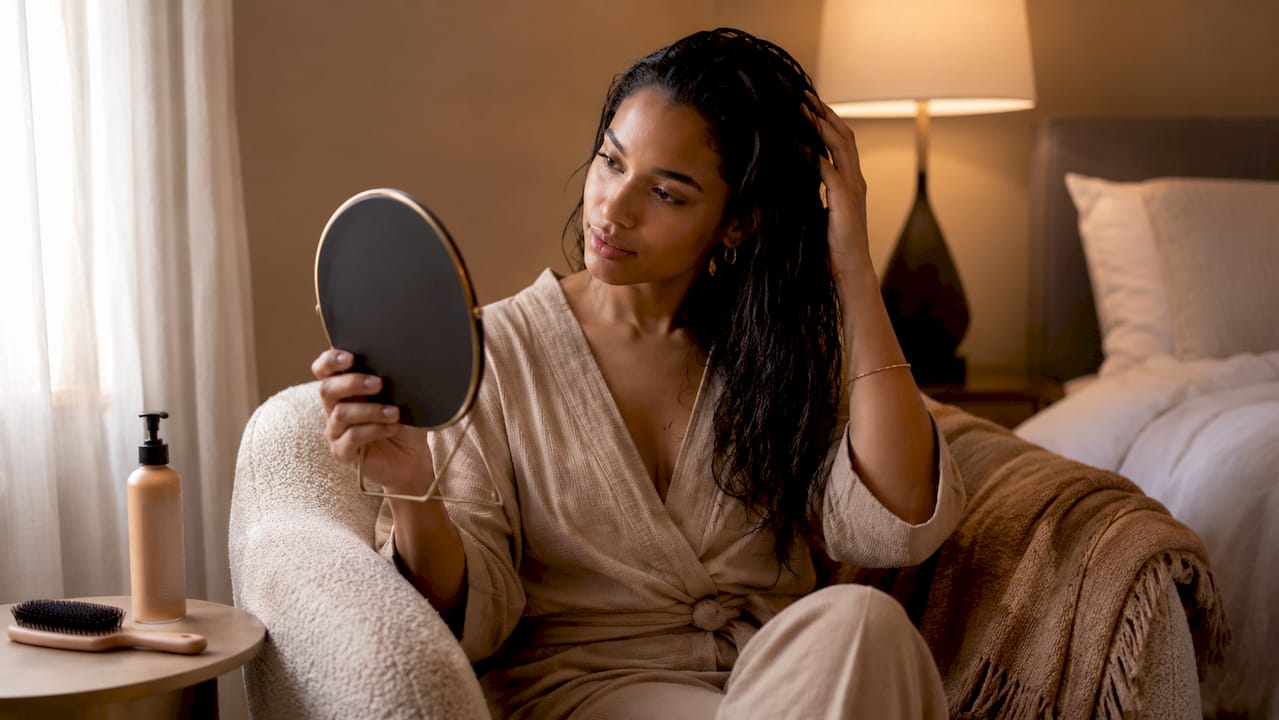
Common postpartum skin changes
Skin changes are equally real and equally misunderstood. The most frequent issues include:
- Dryness and dehydration: Reduced estrogen lowers skin moisture levels and weakens the skin barrier.
- Hormonal acne: Androgen activity rises as estrogen falls, triggering breakouts along the jawline and chin.
- Hyperpigmentation: Melasma that developed during pregnancy may persist for months after delivery.
- Heightened sensitivity: The skin barrier is compromised, making reactions to products more likely.
Many postpartum skin issues, including acne, pigmentation, and dryness, often resolve within 6–12 months with gentle care. That means aggressive chemical peels, laser treatments, and high-concentration actives are rarely the right first move. Patience and barrier support are the most effective strategies in this phase.
Safe ingredients and what to avoid
Ingredient safety matters more postpartum than at almost any other life stage, especially for women who are breastfeeding. Retinols are contraindicated while breastfeeding. Safer alternatives for postpartum acne include benzoyl peroxide, salicylic acid, and azelaic acid. Hormonal effects on tissue integrity also mean that surgical interventions like tummy tucks are discouraged immediately postpartum. The body needs time to stabilize before any invasive procedure is appropriate.
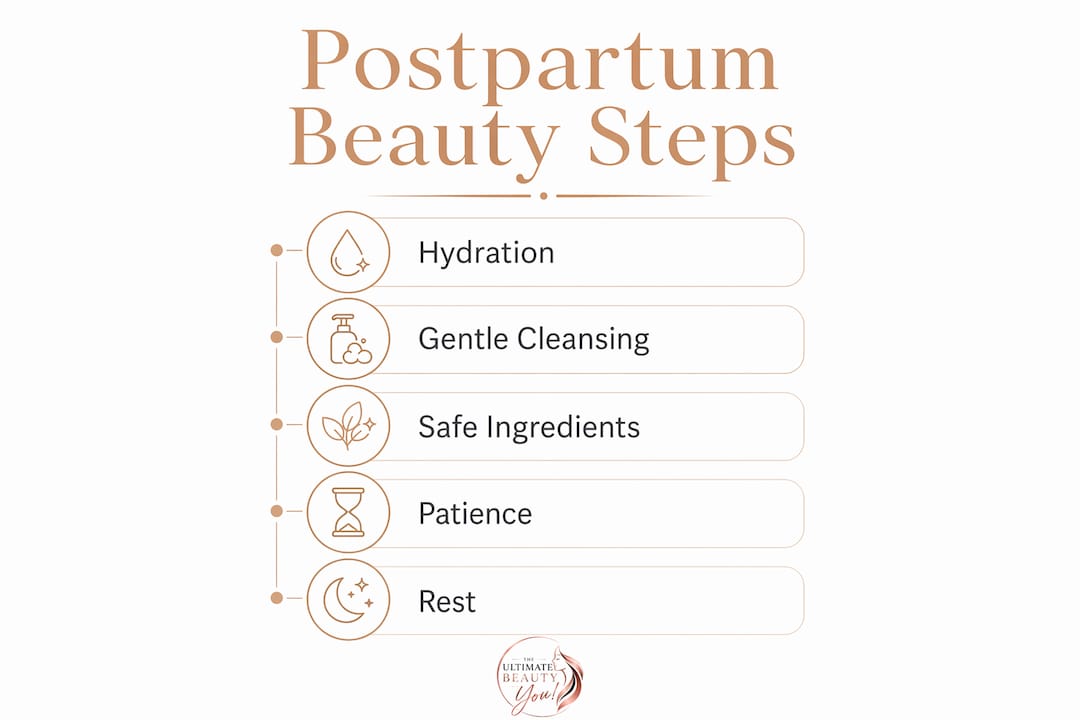
Pro Tip: The first 12 postpartum weeks are a critical hormonal recalibration phase. Overusing actives too early can damage the skin barrier further. If you are not breastfeeding, reintroduce retinoids gently after 6–8 weeks, starting with the lowest concentration available.
How is postpartum beauty shifting away from "bounce back" culture?
The cultural pressure to "snap back" after childbirth is one of the most damaging myths in modern beauty. It frames the postpartum body as a problem to be fixed rather than a body that just did something extraordinary.
Postpartum beauty is shifting from "bounce back" narratives toward what skincare professionals now call "gentle aesthetics." This philosophy prioritizes barrier repair, emotional comfort, and resilience over instant visible changes. Skincare formulator Deepti Kulkarni describes this shift as a move toward emotional nourishment rather than aesthetic transformation. That reframe is not just philosophical. It has real implications for which products you choose and how you treat yourself on hard days.
"For Black mothers, postpartum beauty is a radical act of self-preservation in a medically inequitable system. Prioritizing rest and self-care is not indulgence. It is reclaiming worth."
Redefining Postpartum Beauty: How Black Moms Navigate Self-Care
This perspective, documented in the Black maternal wellness community, reframes rest and self-care as acts of defiance against systemic pressure. Every woman deserves that same permission. The meaning of postpartum beauty, at its core, is the right to heal on your own timeline. Beauty routines that support mental health and confidence are not luxuries. They are part of recovery.
The connection between mental well-being and confidence is well established. When a simple skincare ritual gives you five minutes of calm in a chaotic day, that is not vanity. That is self-advocacy.
Practical postpartum beauty routines that support healing
Building a postpartum beauty routine does not require a full bathroom overhaul. It requires choosing the right things and doing them consistently.
A gentle skincare routine for postpartum skin
Follow these steps to protect and rebuild your skin barrier:
- Cleanse gently. Use a fragrance-free, low-pH cleanser morning and night. Avoid foaming cleansers with sulfates, which strip the barrier.
- Hydrate immediately. Apply a moisturizer with glycerin or ceramides within 60 seconds of washing. Board-certified dermatologist Dr. Chan confirms that conventional ingredients like glycerin are highly effective and safe for postpartum skin, often outperforming products labeled "clean" or "natural."
- Apply SPF daily. Postpartum hyperpigmentation worsens with UV exposure. A mineral SPF 30 or higher is the single most effective tool against melasma.
- Treat acne carefully. Use azelaic acid or a low-concentration benzoyl peroxide spot treatment. Avoid retinoids if breastfeeding.
- Reintroduce actives slowly. After the first 6–8 weeks, and only if not breastfeeding, you can layer in a gentle vitamin C serum for brightening.
Haircare during postpartum shedding
Managing postpartum hair loss is about protection, not stimulation. Avoid tight hairstyles that add tension to already-stressed follicles. Use a wide-tooth comb on wet hair. Choose sulfate-free shampoos and add a weekly deep conditioning treatment. Scalp massages with lightweight oils like jojoba or rosehip can improve circulation without clogging follicles. The goal is to create the best environment for regrowth, not to force it.
Simple wellness habits that count
| Habit | Why it helps |
|---|---|
| Drink water consistently | Dehydration worsens skin dryness and slows cellular repair |
| Apply thick moisturizer before bed | Locks in hydration during the body's overnight repair cycle |
| Wear cotton gloves after hand cream | Dry, cracked hands from frequent washing heal faster with overnight occlusion |
| Prioritize sleep in short blocks | Even fragmented sleep supports hormone regulation and skin recovery |
| Eat protein at every meal | Protein supports collagen production and hair regrowth |
Pro Tip: Skip the "clean beauty" aisle if it adds stress. Dr. Chan's research shows that fear-based clean beauty marketing often pushes women toward products with more irritants, not fewer. Read the ingredient list, not the label.
How does motherhood reshape your sense of beauty and identity?
Postpartum beauty is not only about skin and hair. It is about the woman looking back at you in the mirror and deciding what she thinks of herself.
The postpartum period reshapes identity in ways that no one fully prepares you for. Your body looks different. Your priorities have shifted. The face you knew before pregnancy may feel unfamiliar. That disorientation is normal, and it deserves acknowledgment rather than a quick fix.
Reconnecting with yourself through beauty rituals, even small ones, is a form of self-advocacy. Choosing a lipstick you love, taking five minutes for a face mask, or simply washing your face before bed sends a signal to your nervous system: you still matter. Understanding beauty self-advocacy means making choices that serve your well-being, not external expectations.
The emotional aspects of postpartum beauty include:
- Releasing the "before" body: Your body carried and delivered a human being. It is not a before-and-after photo.
- Redefining your personal standards: What made you feel beautiful before may not be what works now. That is growth, not loss.
- Accepting imperfection as part of becoming: Stretch marks, changed skin tone, and new hair texture are part of your story.
- Seeking support without shame: Postpartum depression and anxiety affect a significant portion of new mothers. Beauty routines can support mood, but they are not a substitute for mental health care.
Beauty at every stage of life, including the postpartum stage, is an active process. It is not a destination. Theultimatebeauty-you was built on exactly that belief: beauty is becoming, and becoming never stops.
Key Takeaways
Postpartum beauty is defined by healing, patience, and self-care, not by how quickly a woman returns to her pre-pregnancy appearance.
| Point | Details |
|---|---|
| Postpartum beauty defined | It is the practice of self-care, skin repair, and emotional confidence after childbirth, not a return to pre-pregnancy looks. |
| Hair shedding is temporary | Telogen effluvium peaks at weeks 12–16 and resolves by 6–12 months; no aggressive treatment is needed. |
| Gentle skincare wins | Barrier repair with glycerin and ceramides outperforms aggressive actives during the postpartum healing phase. |
| "Bounce back" is a myth | Gentle aesthetics, prioritizing emotional comfort and resilience, is the evidence-backed alternative to snap-back culture. |
| Identity is part of beauty | Reconnecting with yourself through small rituals supports confidence and mental well-being during the postpartum transition. |
What I have learned about postpartum beauty that most articles miss
The conversation around postpartum beauty tends to fall into two camps. One camp sells you a 12-step routine. The other tells you to "love yourself" without giving you anything practical to work with. Neither is enough.
What I have seen, again and again, is that the women who navigate this phase with the most grace are not the ones with the most products. They are the ones who gave themselves permission to be in process. They stopped measuring their recovery against a timeline set by someone else.
The most underrated postpartum beauty practice is rest. Not a face mask. Not a new serum. Rest. When you sleep, your skin repairs. Your hormones regulate. Your mood stabilizes. Every other beauty habit works better when rest is the foundation.
I also think we need to be more honest about the "clean beauty" trap. Reaching for products labeled "natural" because you are worried about your baby's safety is completely understandable. But fear is not a reliable guide to good skincare. A well-formulated product with glycerin and ceramides will do more for your postpartum skin than an expensive "clean" cream with a dozen botanical extracts that your sensitized skin cannot handle right now.
Redefine beauty on your own terms. Not the internet's terms. Not the terms of whoever posted a six-week postpartum photo that made you feel behind. Your terms. That is what postpartum beauty actually means. And you are already doing it.
— Ava
Your postpartum beauty starts here
New motherhood changes everything, including what your skin needs and what self-care looks like. Theultimatebeauty-you is built for exactly this moment.

Our postpartum-friendly products focus on hydration, barrier repair, and formulations gentle enough for sensitive postpartum skin. Every product is selected with real women in mind, including new mothers navigating hormonal skin changes, hair shedding, and the search for routines that actually fit into a life with a newborn. For a broader look at what we offer, visit Theultimatebeauty-you and find the support, community, and resources you deserve at every stage of becoming.
FAQ
What does postpartum beauty mean exactly?
Postpartum beauty is defined as the self-care, skin and hair practices, and emotional confidence women develop after childbirth, focused on healing rather than returning to a pre-pregnancy appearance.
When does postpartum hair loss stop?
Postpartum hair shedding caused by telogen effluvium typically peaks around weeks 12–16 and resolves by 6–12 months after delivery without aggressive treatment.
Are retinoids safe to use postpartum?
Retinoids are not recommended while breastfeeding. Safe alternatives for postpartum acne include azelaic acid, benzoyl peroxide, and salicylic acid, all of which are considered appropriate for nursing mothers.
What is the "gentle aesthetics" approach to postpartum skincare?
Gentle aesthetics is a skincare philosophy that prioritizes barrier repair, emotional comfort, and patience over quick visible results, replacing the pressure of "bounce back" culture with supportive, healing-focused care.
How does postpartum beauty affect mental health?
Postpartum beauty routines, when approached with self-compassion, support mood stability and confidence. They are not a substitute for mental health care, but small daily rituals can reinforce a sense of self during a period of significant identity change.