
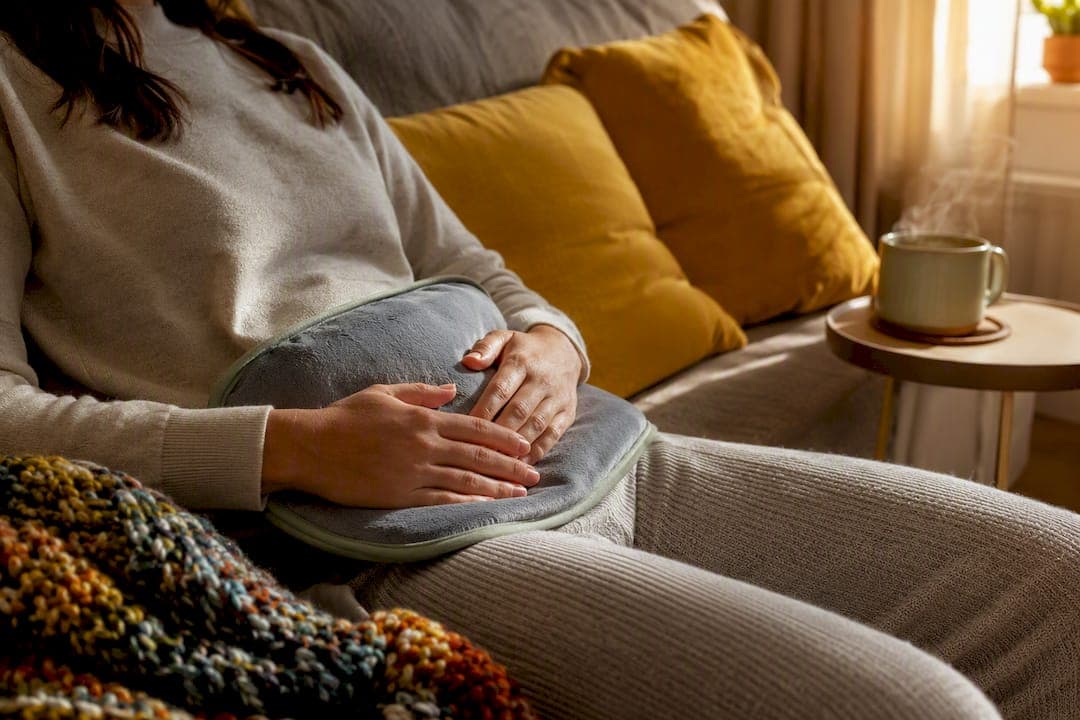
The fastest way to ease period pain is to combine heat therapy with an appropriately timed NSAID and gentle movement, a trio MedlinePlus and clinical guidance both back as first-line care. A heating pad on the lower abdomen, ibuprofen taken at the first twinge, and a short walk or stretch can work together within the hour. TENS units and topical patches help too. If pain suddenly worsens, spikes with fever, or blocks daily life, that calls for urgent evaluation, not another dose of medicine.
TL;DR:
- Using heat therapy and NSAIDs proactively at the first sign of cramps significantly reduces pain within the first hour, especially when combined with gentle movement.
- Vitamin B1 has the strongest evidence supporting its effectiveness for reducing menstrual pain, with several studies indicating it can be a low-risk supplement worth trying.
- Building long-term habits like regular exercise, stress reduction, and an anti-inflammatory diet can decrease the severity and frequency of cramps over time.
- Symptoms such as heavy bleeding, pain lasting beyond your cycle, or symptoms unresponsive to usual treatments suggest underlying conditions requiring medical evaluation.
- Combining physical care with medical treatment offers the most effective relief, emphasizing an integrated approach over reliance on medication alone.
Table of Contents
- Getting Period Pain Relief in the First Minutes to Hours
- Do Natural Remedies for Period Pain Actually Work?
- What Lifestyle Changes Reduce Cramps Over Time?
- When Is Period Pain Not Normal?
- What Does the Clinical Evidence Actually Say?
- Why Combining Physical and Medical Care Works Best
- Building a Routine With Theultimatebeauty-you
- Sources
Getting Period Pain Relief in the First Minutes to Hours
Cramps rarely wait for a convenient moment, so your response should be layered: something you do immediately, something you take, and something you move through.
Start with heat. A reusable heating pad, a stick-on patch under your clothes, or a warm bath all work by relaxing the uterine muscle and improving blood flow to the area. Place it directly over your lower abdomen or lower back, wherever the cramping concentrates, and keep it warm rather than scalding. Fifteen to twenty minutes at a time is plenty. A 2018 review found heat performed comparably to NSAIDs for short-term pain relief in some studies, with none of the stomach risk.
Speaking of NSAIDs, timing changes everything. Ibuprofen and naproxen work by blocking prostaglandins, the compounds that trigger uterine contractions, and they work best when they get ahead of the pain rather than chase it. The Merck Manual recommends starting at the very first sign of symptoms, or even a day or two before your period is expected, rather than waiting until cramps peak. Typical adult dosing follows the label instructions for over-the-counter ibuprofen or naproxen. Skip NSAIDs if you have a history of ulcers, kidney issues, or you're on blood thinners, and check with a clinician first if you're pregnant or unsure.
Movement feels counterintuitive when you're curled up, but it helps. Try these, in order of how little energy they require:
- Child's pose or knees-to-chest for two to three minutes to release lower back tension.
- A slow ten-minute walk, which increases circulation and can blunt cramp intensity.
- Cat-cow stretches, moving with your breath for one to two minutes.
- Gentle pelvic tilts lying down, ten to fifteen repetitions.
Other aids worth trying: a TENS unit delivers mild electrical pulses that interrupt pain signals, topical menthol or diclofenac gels numb the area locally, and a warm drink like ginger tea adds gentle heat from the inside. Orgasm also triggers a release of endorphins and uterine muscle relaxation for some women, worth knowing even if it's rarely mentioned in mainstream advice.
Pro Tip: Set a reminder on your phone for the day before your period is due. Taking that first NSAID dose proactively, rather than reactively, is the single biggest lever most people aren't using.
Do Natural Remedies for Period Pain Actually Work?
Some do, with real trial data behind them, and some are popular without much evidence to match. Here's how the most-discussed options actually stack up.
- Vitamin B1 (thiamine) has the strongest single-study backing of any supplement in this space. One large randomized controlled trial found a daily dose of vitamin B1 showed effectiveness in reducing dysmenorrhea pain compared to placebo, according to a systematic review of dietary therapies for dysmenorrhea. It's inexpensive and low-risk, which makes it worth a conversation with your clinician.
- Magnesium shows consistent promise across smaller trials, though researchers haven't settled on one optimal dose or schedule. Most studies use supplemental ranges rather than a single fixed number, so this is one to discuss with a provider rather than self-prescribe long-term.
- Omega-3 fatty acids and ginger both have positive small-trial evidence, with ginger often studied in capsule form taken during the days surrounding menstruation, according to a review of complementary approaches to menstrual pain.
- Fennel, cinnamon, and pycnogenol show mixed results, and because herbal supplements aren't regulated the way medications are, quality and potency vary widely between brands.
Before adding anything, check for third-party testing seals like USP or NSF, confirm there's no interaction with blood thinners, and flag anything you're taking if you're pregnant or trying to conceive. Our guide to supplements for women's health breaks down how to evaluate a product label before you buy.
What Lifestyle Changes Reduce Cramps Over Time?
The habits you build between cycles often matter more than anything you reach for during one.
Regular aerobic exercise, even 20 to 30 minutes three to four times a week, appears to lower prostaglandin-driven inflammation over months rather than minutes. Yoga poses like reclined butterfly and supported bridge, held for several breaths, build flexibility in the pelvic region that seems to ease tension during your period.
- Move your body most days. Aim for a mix of walking, strength work, and one or two yoga sessions weekly.
- Eat toward an anti-inflammatory pattern. Prioritize fiber, leafy greens, fatty fish, and consistent hydration, which supports healthy estrogen metabolism.
- Protect your sleep. Seven to nine hours matters more during the luteal phase, when hormonal shifts already disrupt rest.
- Build a stress-reduction habit. Even five minutes of daily breathing practice appears to lower pain perception over time. Our stress management guide for women has routines you can start this week.
- Consider pelvic-floor physical therapy if cramps come with tightness or pain during intimacy. A specialized therapist can address muscle patterns that OTC medication never touches.
None of this replaces medication when you need it. It just means you need less of it, less often.
When Is Period Pain Not Normal?
Pain that keeps expanding past what used to be typical for you deserves a closer look, not just a stronger dose.
- Cramps that start well before your period or continue after it ends
- Bleeding heavy enough to soak through protection hourly
- Pain that doesn't budge with NSAIDs or heat
- Cramping that stops you from working, sleeping, or leaving the house
These patterns can point to secondary dysmenorrhea from endometriosis, fibroids, or pelvic inflammatory disease, conditions a pelvic exam, ultrasound, or occasionally laparoscopy can confirm. If conservative care fails, clinicians often turn to hormonal birth control, a hormonal IUD, or prescription-strength pain management. Bring a log of your pain, its timing, and what you've already tried. That detail speeds up diagnosis considerably.
What Does the Clinical Evidence Actually Say?
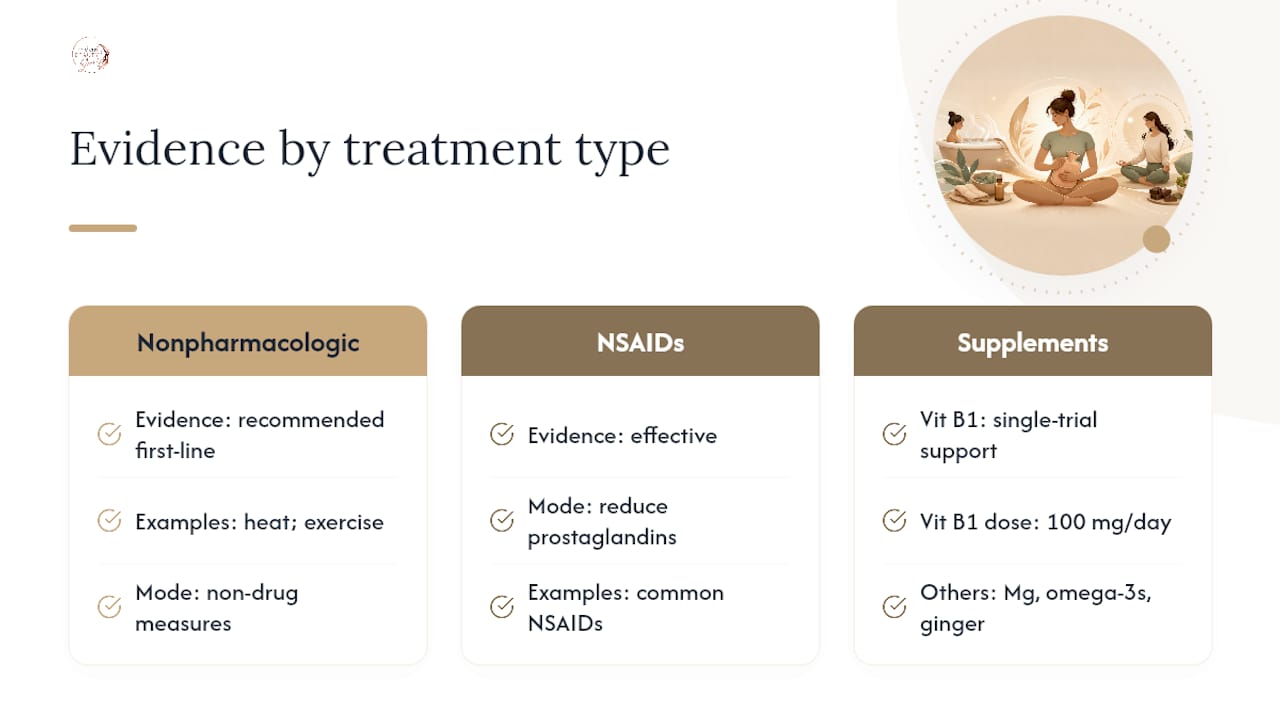
Clinical consensus is consistent: heat and exercise are the recommended first-line nonpharmacologic measures, and NSAIDs work by directly reducing the prostaglandins that cause uterine contractions. Among supplements, vitamin B1 has the most convincing single-trial support at 100 mg daily, while magnesium, omega-3s, and ginger show encouraging but less standardized results across smaller trials, per a review supporting nonpharmacologic and dietary approaches. Supplement regulation varies by product, so checking for interactions and pregnancy safety before starting anything new isn't optional.
Why Combining Physical and Medical Care Works Best
Cramps respond best to a layered approach, not a single fix. Heat, movement, and NSAIDs address the physical mechanism, but chronic stress amplifies how pain gets processed in the body, which is why breathing and mindfulness practices belong in the same toolkit as ibuprofen. Our guide to mindfulness practices for women pairs well with the physical steps above. Evidence-based self-care and medical guidance were never meant to compete.
— Ava
Building a Routine With Theultimatebeauty-you
Theultimatebeauty-you gives you what a single article can't: a full library of vetted expert guidance on stress, mindfulness, and supplement safety, built specifically for women navigating their bodies at every stage.

You've got the fast fixes for cramp days. What you might be missing is the routine that makes those days less frequent, and that's where our community and resource hub come in. Explore practical guidance on heating devices and cramp relief tools from our partners, browse expert-reviewed wellness content, and connect with practitioners through our experts and partners directory when you need guidance beyond what a search engine can offer. Theultimatebeauty-you isn't a substitute for your clinician, but it's the resource you check before, between, and after those appointments. Visit Theultimatebeauty-you to see what fits your next cycle.
This article is general information, not a substitute for advice from a qualified doctor. Consult a qualified healthcare professional about your own circumstances before acting on anything here.
Sources
- Period pain – dysmenorrhoea | MedlinePlus
- Systematic review of herbal and dietary therapies for dysmenorrhea (PubMed entry)
- Review supporting nonpharmacologic treatments including heat (PMC)
- Menstrual cramps - Merck Manual Consumer Version