
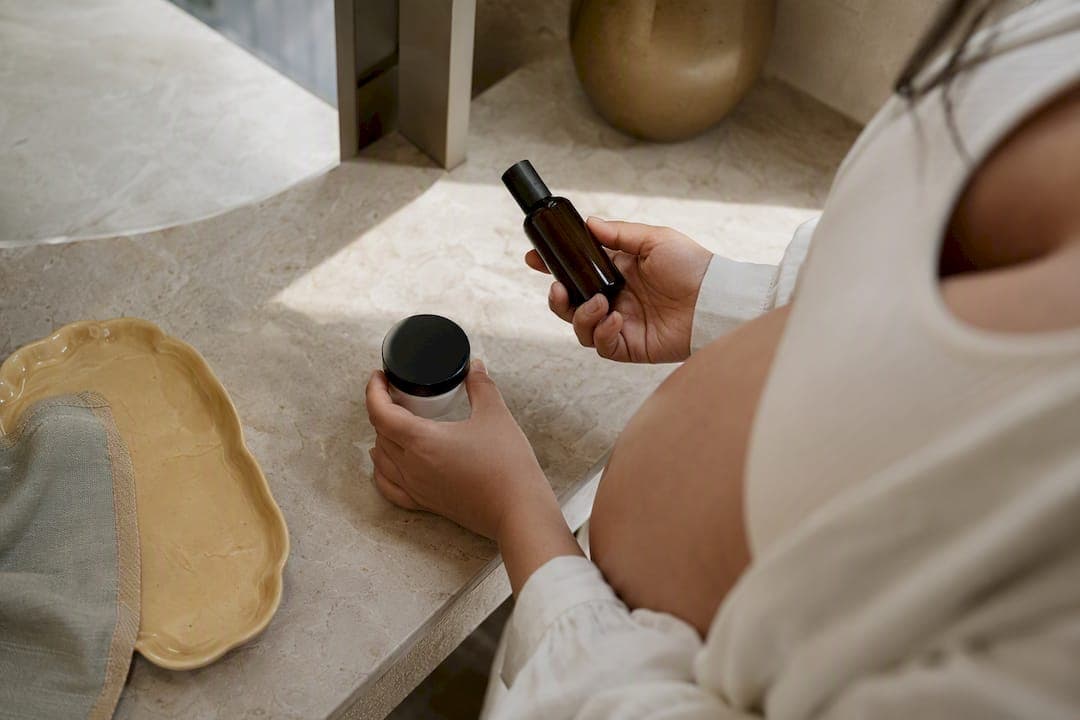
Stop the topical retinoids, oral isotretinoin, hydroquinone, and high-strength salicylic acid peels. Keep a gentle cleanser, a fragrance-free moisturizer, and daily mineral SPF. That's the core of pregnancy safe skincare, and it holds true whether you're in week six or week thirty-six. When you're unsure about anything else on your shelf, bring the box to your next prenatal visit and ask.
TL;DR:
- Topical retinoids, hydroquinone, and strong salicylic acid peels should be avoided during pregnancy due to potential risks of birth defects, systemic absorption, and skin irritation.
- Use a daily mineral SPF 30+ sunscreen for sun protection, reapplying every two hours outdoors, with mineral formulas preferred for safety.
- Safe active ingredients during pregnancy include azelaic acid, niacinamide, vitamin C, hyaluronic acid, and low-strength glycolic or lactic acids.
- Pregnancy-related skin changes like melasma, stretch marks, and varicose veins require supportive, gentle skincare and lifestyle measures, not aggressive treatments.
- Always verify ingredient lists and formulations before reusing products, and consult a healthcare provider for any rash, irritation, or new skin symptoms.
Table of Contents
- Why Pregnancy Changes Your Skin (and Your Skincare Choices)
- Ingredients and Products to Avoid During Pregnancy
- Safe Ingredients That Actually Work During Pregnancy
- Sunscreen and Melasma: Your Daily Non-Negotiable
- In-Office Treatments to Delay or Modify
- How to Audit Any Skincare Product Before You Use It
- What the Medical Guidance Actually Says
- Stretch Marks, Varicose Veins, and Other Pregnancy Skin Changes
- Adjusting Your Routine Trimester by Trimester and After Birth
- Why Simple Beats Trendy Right Now
- Where The Ultimate Beauty - You! Fits Into Your Pregnancy Skincare Plan
- Sources
Why Pregnancy Changes Your Skin (and Your Skincare Choices)
Your skin is not behaving the way it did a year ago, and that's not in your head. Rising progesterone and estrogen ramp up oil production for many women, which is why breakouts often show up for the first time in the second trimester even in people who never dealt with acne as teenagers. Melasma, the blotchy brown patches that show up on the cheeks and forehead, affects a large share of pregnant women and is driven by the same hormonal shift plus sun exposure.
Skin also gets more reactive. Barrier function shifts during pregnancy, so products you tolerated fine before can now sting, redden, or trigger a rash. That heightened sensitivity matters for more than comfort. Irritated, inflamed skin heals differently while you're pregnant, and post-inflammatory hyperpigmentation, dark marks left behind after a blemish or a peel, tends to be more stubborn and more visible.
A few signs mean it's time to loop in a dermatologist or your OB rather than self-treating:
- Acne that suddenly worsens or doesn't respond to gentle over-the-counter options
- Melasma patches spreading rapidly or darkening despite sun protection
- Any rash accompanied by swelling, blistering, or fever
- Persistent itching, especially on palms and soles, which can signal a liver-related condition worth flagging immediately
Dermatologists consistently recommend simplifying your routine during pregnancy, favoring fragrance-free formulas that lower your irritation risk while your skin recalibrates.
Ingredients and Products to Avoid During Pregnancy
Not every risky ingredient carries the same weight. Some are absolute no's; others are more about caution and context. Here's the priority order dermatologists and OB's actually use when they talk to patients:
- Topical retinoids and oral isotretinoin. Tretinoin, adapalene, retinol, and tazarotene fall into this group, and oral isotretinoin is the most serious offender. Major health authorities, including ACOG, advise avoiding these entirely during pregnancy because of documented links to birth defects.
- Hydroquinone. This skin-lightening ingredient shows unusually high percutaneous absorption, with some research citing figures in the 35 to 45 percent range for systemic uptake through the skin. That's a meaningfully higher absorption rate than most topical actives, which is exactly why dermatology guidance treats it as a clear pause during pregnancy rather than a maybe.
- High-strength or occluded salicylic acid peels. In-office peels and leave-on treatments with concentrated salicylic acid are best avoided. Low-dose salicylic acid in a rinse-off cleanser is a different story. Exposure time and occlusion change the risk profile significantly, so a face wash you rinse in thirty seconds carries far less concern than a leave-on treatment sitting on skin overnight.
- Oxybenzone and certain chemical sunscreen filters. These absorb more readily into the bloodstream than mineral filters do. You don't need to panic if you've worn a chemical sunscreen unknowingly, but switching to mineral formulas going forward is the more cautious move.
- Formaldehyde-releasing preservatives, phthalates, and unregulated herbal supplements. Formaldehyde is flagged as a reproductive hazard by occupational health authorities, and it shows up in some nail products and hair treatments under names like DMDM hydantoin. Herbal supplements deserve their own caution: MotherToBaby and NIH guidance notes that these products often lack pregnancy safety data and can carry contaminants, so run any supplement by your provider before you start it.
Pro Tip: Reformulations happen constantly. A product you used safely a year ago might have a new ingredient list today, so read the box every time you repurchase, not just the first time.
Safe Ingredients That Actually Work During Pregnancy
You don't have to abandon an active skincare routine for nine months. You just have to swap the heavy hitters for options with a better safety track record.
Azelaic acid is the standout here. It treats both acne and pigmentation, and clinical guidance from Sanford Health lists it among the preferred alternatives to prescription acne treatments that aren't recommended in pregnancy. Peer-reviewed reviews back this up, noting azelaic acid is well tolerated with low systemic absorption even at typical over-the-counter strengths.
Beyond azelaic acid, a handful of ingredients consistently get the green light:
- Niacinamide calms redness, evens tone, and pairs well with almost everything else in your routine
- Vitamin C brightens skin and offers some antioxidant sun protection support, though it won't replace SPF
- Hyaluronic acid hydrates without clogging pores, useful if pregnancy hormones have shifted your skin toward drier or more sensitive
- Low-strength glycolic or lactic acid (think 5 to 10 percent, used a few times a week rather than nightly) can keep gentle exfoliation going without the intensity of a stronger peel
Layer actives under sunscreen, not instead of it, since several of these ingredients (vitamin C especially) work better alongside daily SPF. When you're shopping, prioritize fragrance-free products with short ingredient lists. A ten-ingredient moisturizer is easier to vet than one with forty, and it's easier to identify the culprit if something irritates your skin.
Pro Tip: If a product markets itself as "natural," that word alone tells you nothing about pregnancy safety. Read the actual ingredient panel, not the front-of-bottle claims.
Sunscreen and Melasma: Your Daily Non-Negotiable
Sunscreen isn't a nice extra during pregnancy. It's the single most effective tool you have against melasma, since UV exposure is the trigger that turns hormonal pigment changes into visible dark patches. Broad-spectrum SPF 30 or higher, applied daily, is the baseline dermatologists recommend regardless of skin tone or season.
Mineral sunscreens built on zinc oxide or titanium dioxide are the preferred choice in pregnancy. These filters sit on the surface of the skin rather than absorbing into it, which sidesteps the systemic absorption questions that come up with some chemical filters. If a chemical formula is genuinely the only one you'll wear every single day, consistency still beats perfection. A sunscreen sitting unused in your bathroom cabinet protects no one.
A few habits make sunscreen actually work:
- Apply it as the last skincare step, before makeup, and use a full teaspoon-sized amount for your face and neck
- Reapply every two hours if you're outdoors, and don't skip reapplication just because you're wearing a tinted moisturizer with SPF
- Look for a tinted mineral formula if you want melasma coverage and sun protection in one step
- A quick primer on chemical versus mineral sunscreen can help you compare formulas before you buy
In-Office Treatments to Delay or Modify
Elective cosmetic procedures deserve a pause during pregnancy, even the ones that felt routine before you conceived. Injectables like Botox and dermal fillers, laser treatments, radiofrequency microneedling, and strong chemical peels all fall into the "wait" category. The data on how these interact with pregnancy is thin, and the reward rarely outweighs an unknown risk.
Skin also heals differently while you're pregnant. Increased blood flow and hormonal shifts change how tissue responds to controlled injury, which is exactly what a laser or a peel creates. That altered healing response raises the odds of post-treatment hyperpigmentation, the same dark-mark risk that makes melasma harder to manage.
A short list of lower-intervention options is often considered reasonable, though you should always confirm with your provider first:
- LED light therapy, generally viewed as non-invasive with minimal systemic effect
- Gentle hydrating facials that skip strong acids, heat, or extraction
- Basic manual extractions performed by a licensed esthetician aware of your pregnancy
None of these substitute for a conversation with your dermatologist about your specific skin history.
How to Audit Any Skincare Product Before You Use It
Checking a product doesn't require a chemistry degree. It requires three steps and a few minutes.
- Scan the ingredient list for red flags. Look for retinoid synonyms (retinyl palmitate, retinaldehyde), hydroquinone, oxybenzone, and the word "fragrance," which can hide dozens of undisclosed compounds. The FDA's own consumer guidance points out that cosmetics aren't tested specifically for pregnancy safety, so the burden of checking falls on you and your clinician together.
- Note the concentration and format. A leave-on serum with an active ingredient carries more exposure than a rinse-off cleanser with the same ingredient at a lower percentage.
- Bring the packaging to your prenatal visit. Clinicians frequently recommend bringing the actual box or full ingredient list, since reformulations happen often and label claims alone don't tell the whole story.
Stop using anything immediately and call your provider if you notice swelling, blistering, or a rash that spreads quickly.
What the Medical Guidance Actually Says
Strip away the marketing noise and the guidance from major health bodies is remarkably consistent. ACOG's position on topical and oral retinoids is unambiguous, backed by peer-reviewed evidence linking retinoid exposure to birth defect risk. Dermatology organizations point toward mineral sunscreens and azelaic acid as the two safest workhorses for the two biggest pregnancy skin concerns: sun damage and acne or pigmentation.
Herbal products and supplements often carry the least evidence of all, not because they're inherently dangerous, but because they simply haven't been studied in pregnancy the way pharmaceutical ingredients have. That gap is reason enough to talk to your provider before starting anything new.
A short, evidence-based checklist distilled from these sources:
- Retinoids and oral isotretinoin: avoid completely
- Sunscreen: mineral, SPF 30+, daily, no exceptions
- Acne and pigmentation: azelaic acid first, topical antibiotics if prescribed
- Supplements: run them by your OB before you start, per MotherToBaby and NIH guidance
Stretch Marks, Varicose Veins, and Other Pregnancy Skin Changes
Acne and melasma get most of the attention, but they're not the only skin changes worth planning for. Stretch marks form when skin stretches faster than collagen and elastin can keep up, most often across the belly, hips, and chest as pregnancy progresses. No cream fully prevents them since genetics plays a large role, but keeping skin well hydrated with a fragrance-free body moisturizer supports comfort and elasticity as your shape-shifts.
Varicose veins show up more often in pregnancy because blood volume increases and hormones relax vein walls, while a growing uterus adds pressure on the pelvic veins that drain your legs. Compression stockings, elevating your legs when you rest, and staying active with walking or swimming all help manage symptoms. Topical treatments won't reverse existing varicose veins, so this is more about symptom management than a skincare fix.

Other common changes include spider veins on the face and legs, skin tags in areas of friction, and a darkening line down the abdomen called the linea nigra. Most of these fade or resolve after delivery without intervention. If a mole changes shape, color, or size during pregnancy, that's worth a dermatologist visit regardless of your pregnancy status. Pregnancy doesn't change the rules for monitoring your skin for anything that looks genuinely abnormal.
Adjusting Your Routine Trimester by Trimester and After Birth
Your skin doesn't stay static for nine months, so your routine shouldn't either. First trimester nausea and heightened smell sensitivity often make fragrance-free products essential just for comfort, not only for safety. Second trimester is typically when oiliness and melasma become most noticeable, which is when azelaic acid and consistent sunscreen use start earning their keep. Third trimester often brings dryness and itching as skin stretches, so a richer, fragrance-free moisturizer and staying hydrated matter more.
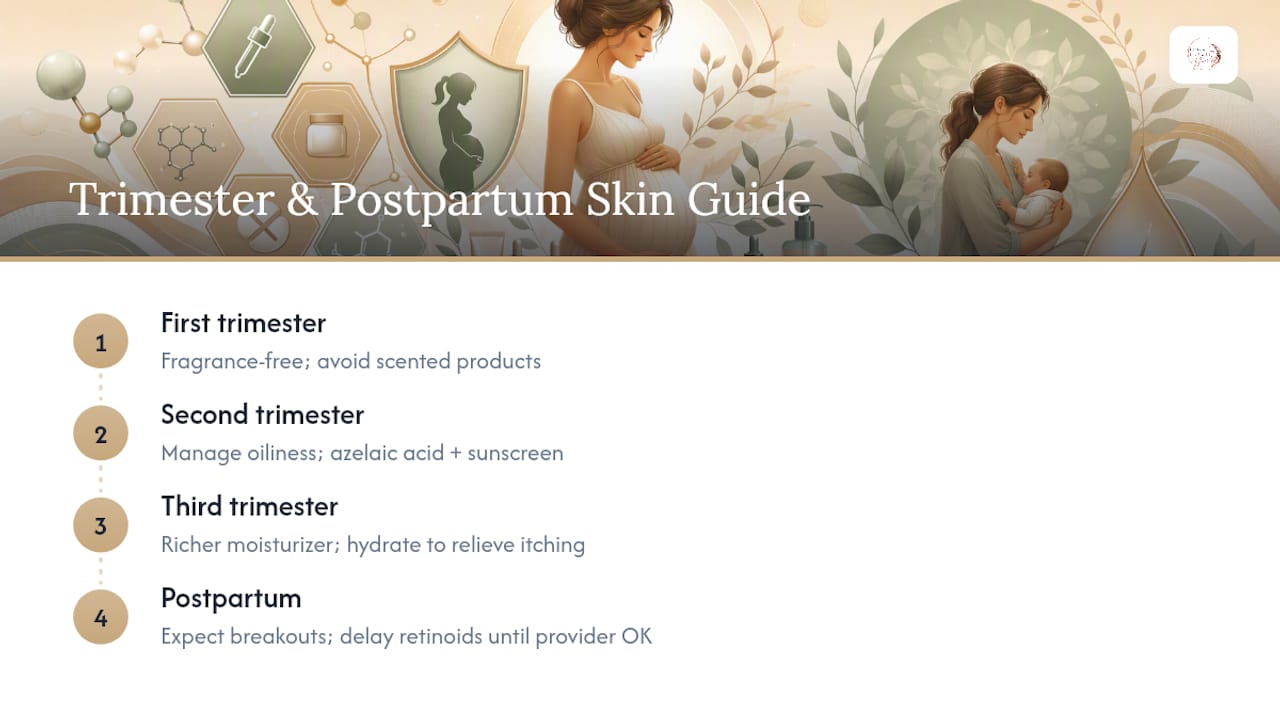
Postpartum brings its own shift. Hormone levels drop quickly after delivery, which can trigger a second wave of breakouts, hair changes, and sometimes a rebound in melasma before it fades. If you're breastfeeding, many of the same pregnancy precautions still apply, since some topical ingredients pass into breast milk in small amounts. This is the point where many women safely reintroduce retinoids and stronger actives, but that timeline should be a conversation with your provider, not a guess. A postpartum-focused skincare approach can help you map out what to add back and when, rather than reaching for everything at once and overwhelming already-sensitive skin.
Why Simple Beats Trendy Right Now
Here's what nobody tells you before you start researching pregnancy skincare: the volume of conflicting advice online is its own risk. Every ingredient gets debated somewhere, every brand claims to be "pregnancy-safe," and the anxiety of trying to parse it all can push women toward either extreme, either abandoning skincare entirely out of fear or ignoring the guidance because it feels excessive.
Neither extreme serves you. The evidence points to a middle path: a short list of ingredients to genuinely avoid, a slightly longer list of effective substitutes, and daily consistency with the basics. That's not a compromise. It's what actually works, backed by the same dermatology guidance that shapes clinical practice.
Skincare during pregnancy isn't about doing less because you're scared. It's about doing what's proven, and letting that free up the mental space for everything else pregnancy already demands from you. Small, sustainable swaps, an azelaic acid serum here, a mineral sunscreen there, add up to real protection without turning your bathroom cabinet into a source of stress.
— Ava
Where The Ultimate Beauty - You! Fits Into Your Pregnancy Skincare Plan
Theultimatebeauty-you gives you a way to vet products and connect with real experts instead of parsing ingredient panels alone at 11 p.m. with a search engine and a growing sense of panic.

The platform brings together beauty myth-debunking resources, practical routine guides, and a growing directory of vetted experts and partners who can answer the questions this article can't fully cover for your specific situation. Clinical decisions, anything about a rash that worries you, a supplement you're considering, a procedure you want to schedule after delivery, still belong with your OB or dermatologist. Theultimatebeauty-you's role is to help you walk into that conversation informed, with the right questions already in hand.
If you're ready to build a pregnancy-safe routine around products and habits that actually hold up to scrutiny, start with the full platform and explore the resources built for exactly this stage of life.
This article is general information, not a substitute for advice from a qualified doctor. Consult a qualified healthcare professional about your own circumstances before acting on anything here.
Sources
- Isotretinoin and pregnancy risk / PubMed Central
- Dermatologist-approved pregnancy skin care — American Academy of Dermatology
- Herbal products in pregnancy — MotherToBaby / NIH
- Skin care during pregnancy: what to do and not to do — Sanford Health