

Beauty subscription models are defined as recurring services that deliver curated or replenishment products directly to consumers on a scheduled basis. The role of subscription models in beauty has grown from a niche novelty into a mainstream purchasing channel, with the beauty subscription market reaching $2.3 billion in 2026. Skincare alone holds over 40% of that market share, driven by high repeat-purchase rates and consumer demand for convenience. Whether you are new to beauty boxes or looking to get more from your current subscription, understanding how these models work puts you in control of your beauty routine and your budget.
What are the main types of beauty subscription models?
Three core subscription categories define the market: discovery boxes, replenishment subscriptions, and membership or access models. Each serves a different consumer need, and choosing the wrong one is the most common reason subscribers cancel.
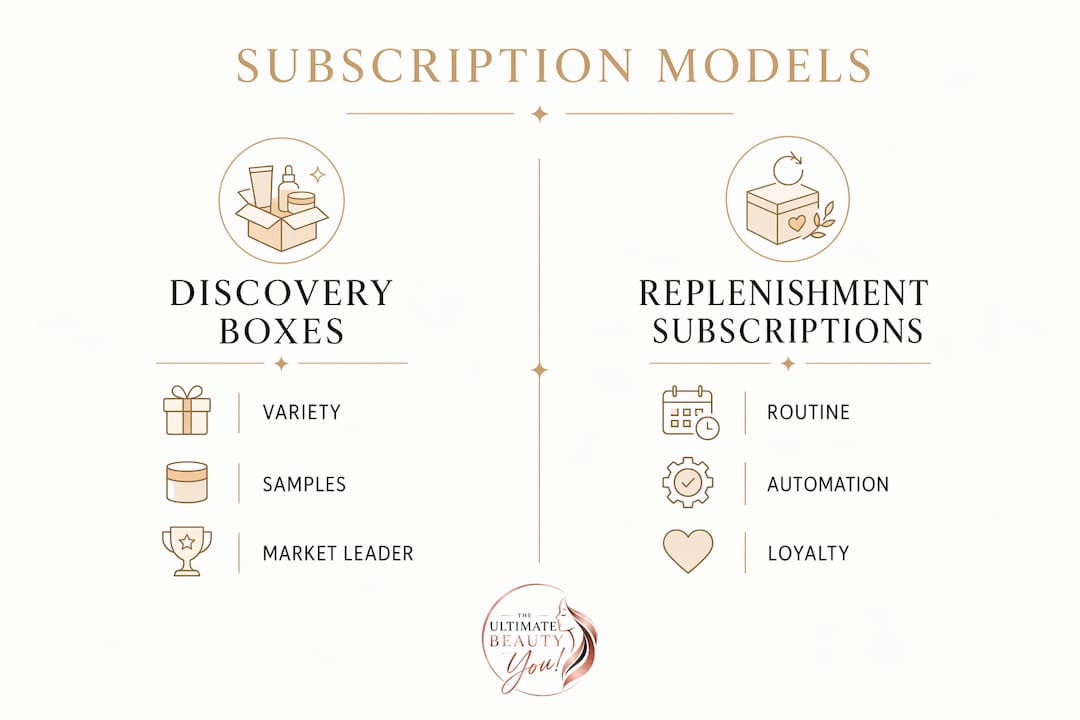
Discovery boxes are the most popular format. They hold 65% of market share and typically include 5–8 sample or full-size products monthly. The appeal is variety. You receive products you would not have chosen yourself, which makes discovery boxes feel like a treat rather than a chore. Brands use this format as a marketing channel, often discounting products at 85–90% off retail price to gain exposure and reviews. That means the value you see on the box is real in terms of product access, even if the economics behind the scenes are more complex.
Replenishment subscriptions work differently. They automate the refill of products you already use and love, such as a daily moisturizer, SPF, or shampoo. The psychological driver here is utility, not novelty. You never run out of your staples, and you often pay less per unit than buying one-off. This model shows lower cancelation rates than discovery boxes because it solves a practical problem rather than satisfying curiosity.

Membership or access models charge a flat fee for benefits like discounts, early product access, or exclusive services. Think of it as a loyalty program with a monthly price tag. These models increase switching costs because members feel they would lose accumulated benefits by leaving.
| Model type | Primary appeal | Churn risk | Personalization need |
|---|---|---|---|
| Discovery box | Variety and surprise | Moderate to high | High |
| Replenishment | Convenience and savings | Low | Low |
| Membership/access | Exclusive benefits | Low | Moderate |
Pro Tip: If you love trying new products, start with a discovery box. If you already know what works for your skin and hair, a replenishment subscription saves you money and mental energy.
What benefits do beauty subscriptions offer consumers and brands?
Beauty subscriptions shift the relationship between you and your products from one-time purchases to an ongoing connection. That shift delivers real advantages on both sides of the transaction.
For consumers, the benefits are concrete:
- Convenience. Products arrive on schedule without repeat shopping trips or forgotten reorders.
- Affordable product trial. Discovery boxes let you test premium products at a fraction of full retail cost.
- Personalization. Most services use onboarding surveys to match products to your skin type, tone, and preferences.
- Budget predictability. A fixed monthly cost replaces unpredictable splurges at the beauty counter.
For brands, the math is equally compelling. Subscription models shift consumers from unpredictable one-time buyers to reliable recurring revenue sources. That predictability lets brands plan inventory, marketing, and product development with far more confidence.
The numbers behind subscriber value are striking. The median lifetime value for beauty box subscribers ranges from $180 to $350. Subscribers in the top quartile reach $400 to $700 or more. Annual plans yield 30–50% higher lifetime value than month-to-month plans. That gap exists because annual subscribers commit longer and tend to engage more deeply with the service.
Brands also benefit from the marketing exposure that comes with every box. When a subscriber shares an unboxing on social media, the brand reaches an audience it did not pay to acquire directly. That organic reach is one reason brands accept thin margins on individual boxes. The long-term relationship and brand awareness justify the short-term cost.
Skincare subscriptions are projected to grow from $2.1 billion in 2024 to $6.5 billion by 2033 at a 14.5% compound annual growth rate. That trajectory reflects how deeply subscriptions have embedded themselves in the way women shop for beauty. Personalized beauty is not a trend. It is the new standard.
What challenges affect beauty subscription services?
Subscription models are not without friction. Understanding the common pitfalls helps you avoid them and helps you recognize when a service is not working for you.
Churn after the novelty fades is the most documented challenge. Churn spikes after 3–6 months when curation stops feeling fresh or personalized. If a service sends you the same product categories repeatedly or ignores your feedback, canceling feels like the logical next step. The best services counter this with ongoing preference updates and machine-learning-driven curation that evolves with your needs.
Subscription fatigue is real, but it affects discovery boxes far more than replenishment services. Replenishment subscriptions grow despite rising overall fatigue because they solve a genuine logistical need. Discovery boxes, by contrast, depend on sustained excitement. When that excitement fades, so does the perceived value.
Mixing model types creates frustration. Forcing replenishment and discovery together into one box confuses the consumer experience. You signed up for surprises but received your everyday cleanser. Or you wanted your staples restocked but got five samples you will never use. Services that blur these lines consistently see higher dissatisfaction.
Common warning signs that a subscription is not serving you:
- Products do not match your skin type or tone despite completing an onboarding survey
- You receive the same brands or product categories three months in a row
- The service offers no way to skip a month or update your preferences
- The stated retail value feels inflated compared to what you would actually pay
Pro Tip: Before canceling a subscription that feels stale, check whether the service has a preference update feature or a concierge option. Updating your profile often resets the curation algorithm and brings the experience back to life.
How can you choose and maximize value from beauty subscriptions?
Choosing the right subscription starts with honest self-assessment. Ask yourself two questions: Do I want to discover new products, or do I want to reliably restock products I already love? Your answer points directly to the model that fits your life.
-
Map your current beauty habits. List the products you use every single month. If that list is long and consistent, a replenishment subscription saves you time and money. If your routine is still evolving, a discovery box feeds that growth.
-
Complete every onboarding survey in full. High-retention brands use skin concierges and onboarding data to sustain personalized curation for 18–30 months or more. The more detail you provide upfront, the better your results from day one. Skipping questions is the fastest way to receive irrelevant products.
-
Choose annual plans when you are confident in a service. Annual subscribers receive 30–50% higher lifetime value from their investment compared to month-to-month plans. The savings are real, and the commitment signals to the service that you are a long-term subscriber worth investing in.
-
Keep discovery and replenishment separate. Subscribe to one service for each purpose rather than expecting one box to do both. Sustainable subscription models treat replenishment as a functional service and discovery as an optional luxury. Applying that same logic to your own subscriptions reduces frustration significantly.
-
Update your preferences every 90 days. Your skin changes with seasons, hormones, and age. A profile you completed in january may not reflect your needs by april. Regular updates keep the curation relevant and the experience feeling personal. Theultimatebeauty-you covers healthy beauty habits that pair naturally with a well-chosen replenishment routine.
-
Use skip months strategically. Most reputable services allow you to pause or skip. Use that feature when you are traveling or overstocked rather than canceling outright. Canceling and restarting often resets your personalization data.
Key Takeaways
Beauty subscription models deliver the most value when you match the model type to your actual beauty habits and commit to keeping your preferences current.
| Point | Details |
|---|---|
| Discovery boxes lead the market | Discovery subscriptions hold 65% market share, offering 5–8 products monthly for variety seekers. |
| Annual plans increase your value | Annual subscribers gain 30–50% higher lifetime value compared to month-to-month plans. |
| Replenishment reduces fatigue | Replenishment subscriptions show lower churn because they solve a real, recurring need. |
| Personalization prevents cancellation | Churn spikes after 3–6 months without ongoing preference updates and evolving curation. |
| Keep model types separate | Mixing discovery and replenishment in one box consistently raises consumer frustration. |
Why I think subscription fatigue is misunderstood
The conversation around subscription fatigue tends to treat it as a reason to avoid beauty subscriptions altogether. I disagree. Fatigue is not a problem with subscriptions. It is a problem with the wrong subscription.
After years of watching how women engage with beauty services, the pattern is clear. Fatigue hits when a service stops learning. The first box feels exciting because everything is new. By month four, if the curation has not evolved, the box feels like a chore. That is not a subscription problem. That is a personalization failure.
The women I see thriving with beauty subscriptions are the ones who treat their profile as a living document. They update it. They use the skip feature. They give feedback. They treat the service like a relationship, not a vending machine. And the services that reward that engagement with genuinely evolving curation are the ones worth keeping.
Replenishment subscriptions are the quiet winners here. They do not need to surprise you. They need to show up reliably with exactly what you already know you love. That reliability is underrated. There is real confidence in never running out of your SPF or your favorite serum. Beauty is becoming, yes. But becoming also means building a routine that holds you steady while you grow.
The future of beauty subscriptions belongs to services that understand this distinction. Discovery for growth. Replenishment for stability. Both have a place in a well-designed beauty life. The key is knowing which one you need right now. Theultimatebeauty-you explores multicultural beauty and personalized product discovery as part of that broader vision.
— Ava
Beauty subscriptions built around who you actually are
Theultimatebeauty-you was built for women who want their beauty choices to reflect their real lives, not a generic profile. The platform connects you with curated products, trusted experts, and a community that understands beauty as an inside-out, head-to-toe experience.
Whether you are ready to build a replenishment routine that runs itself or you want to discover products matched to your skin, age, and preferences, the Theultimatebeauty-you product collection gives you a starting point that feels personal from day one. Every option is chosen with real women in mind. No filler. No guesswork. Just beauty that fits you. You can also connect with the community to find the subscription path that matches where you are right now.
FAQ
What is the role of subscription models in beauty?
Beauty subscription models provide consumers with scheduled access to curated or replenishment products, delivering convenience, personalization, and cost savings. They also give brands predictable revenue and direct marketing exposure through every box delivered.
Which type of beauty subscription is best for beginners?
Discovery boxes are the best starting point for beginners because they expose you to 5–8 products monthly across categories you may not have tried. They let you identify what works before committing to full-size replenishment purchases.
How do beauty subscriptions keep subscribers from canceling?
Top services use onboarding surveys and evolving curation to sustain personalization for 18–30 months or more. Allowing subscribers to skip months, update preferences, and access concierge support are the most effective retention tools.
Are annual beauty subscription plans worth it?
Annual plans yield 30–50% higher lifetime value for subscribers compared to month-to-month options. They are worth it when you have tested a service for at least two months and confirmed the curation consistently matches your preferences.
Why do some beauty subscriptions feel repetitive over time?
Repetition signals that the service has stopped updating its curation based on your feedback. Updating your preference profile every 90 days and actively rating products resets the algorithm and restores the personalized experience.