
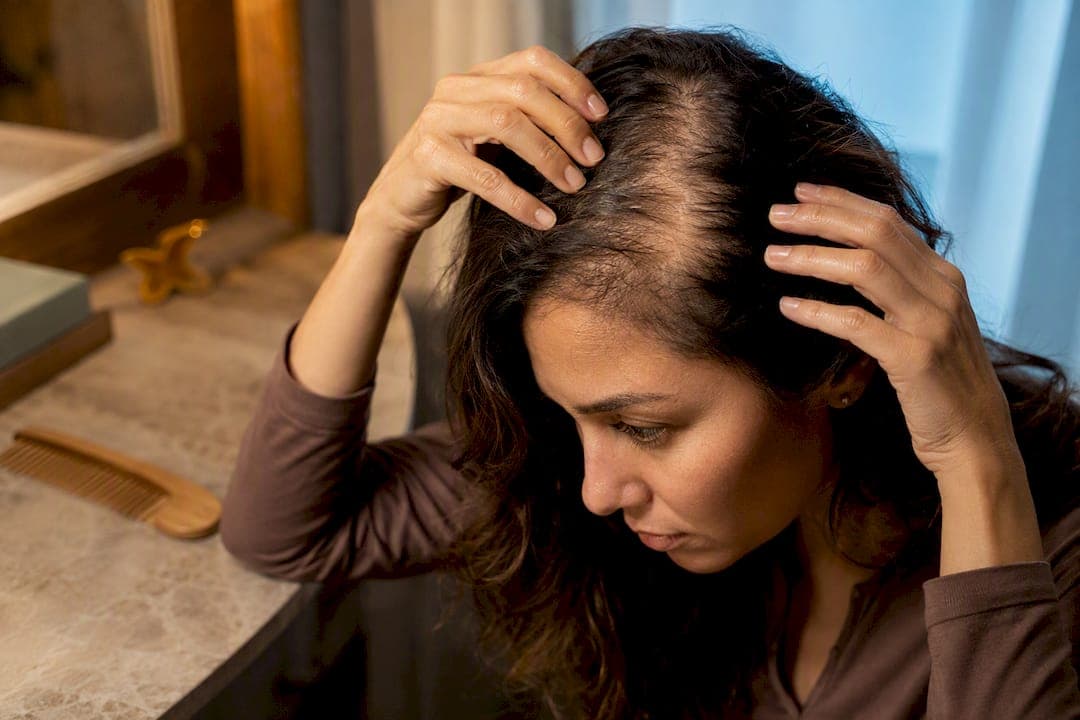
Yes, thyroid dysfunction can cause diffuse hair shedding in women, whether the thyroid is underactive or overactive. Hair often regrows once hormone levels stabilize, but the process is slow, typically unfolding over months, not weeks. Your next move is practical: ask your doctor for a serum TSH and a ferritin test, and skip biotin supplements for several days beforehand so they don't skew your results.
TL;DR:
- About one-third of hypothyroid patients and half of hyperthyroid patients report hair loss, with women bearing most of this burden due to higher thyroid disease prevalence.
- Hair shedding can lag behind thyroid level changes by three months, meaning visible regrowth may not occur until six to twelve months after treatment begins.
- Thyroid-related thinning presents as diffuse scalp thinning, drier hair, and outer eyebrow loss, which helps distinguish it from other hair loss causes like pattern baldness or alopecia areata.
- Blood tests, especially serum TSH and ferritin, are essential for diagnosing thyroid-driven hair loss, with biotin supplements temporarily halted before testing to avoid skewed results.
- Recovery depends on timely treatment of the thyroid disorder, correction of nutritional deficiencies, and supportive hair care, with patience required for meaningful regrowth.
Table of Contents
- Thyroid Hair Loss in Women: What's Actually Happening
- How Thyroid Hormones Control Your Hair Growth Cycle
- Recognizing the Signs: Is This Thyroid or Something Else?
- Which Blood Tests Confirm Thyroid Hair Loss
- Treatment and How Long Regrowth Actually Takes
- Nutrition Gaps That Can Stall Your Recovery
- Gentle Hair Care While You Wait for Regrowth
- The Truth About Thyroid Hair Loss Nobody Tells You Fast Enough
- Where The Ultimate Beauty - You! Fits Into Your Recovery
- Sources
- FAQ
Thyroid Hair Loss in Women: What's Actually Happening
Hair loss shows up with both major thyroid conditions, just through different biological routes. A peer-reviewed review tracking observational studies found hair loss in roughly a third of hypothyroid patients and about half of hyperthyroid patients in some patient groups. That gap makes sense once you understand what each condition does to your follicles.
In hypothyroidism, low thyroid hormone slows the rate at which follicle cells divide. Growth stalls, and a larger share of hairs shift into the resting (telogen) phase before their time. The result is diffuse thinning that spreads evenly across the scalp rather than in patches.
Hyperthyroidism works differently. Excess thyroid hormone speeds up your metabolism and increases oxidative stress inside cells, including those in the hair follicle. Hair tends to become fine, soft, and more prone to breakage rather than uniformly thin, and some women notice their hair simply won't hold a style anymore.
A few other mechanisms matter here, too:
- Antithyroid medications used for hyperthyroidism, like methimazole, can rarely trigger their own shedding episode, separate from the underlying disease.
- Autoimmune thyroid conditions raise the risk of other autoimmune hair disorders occurring at the same time, which complicates the picture.
- Hashimoto's thyroiditis and Graves' disease both fall into this autoimmune category, and having one increases the statistical likelihood of a second autoimmune condition showing up, including alopecia areata.
Thyroid dysfunction and hair loss, by the numbers: about one-third of hypothyroid patients and about half of hyperthyroid patients report hair loss in observational data, according to the PMC review. Those figures come from varied patient samples, so treat them as a signal of how common the overlap is, not a personal prediction.
Women carry a disproportionate share of this burden. According to Womenshealth, a notable portion of women will develop a thyroid problem during their lifetime, and dry, thinning hair is one of the more common early symptoms clinicians see.
How Thyroid Hormones Control Your Hair Growth Cycle
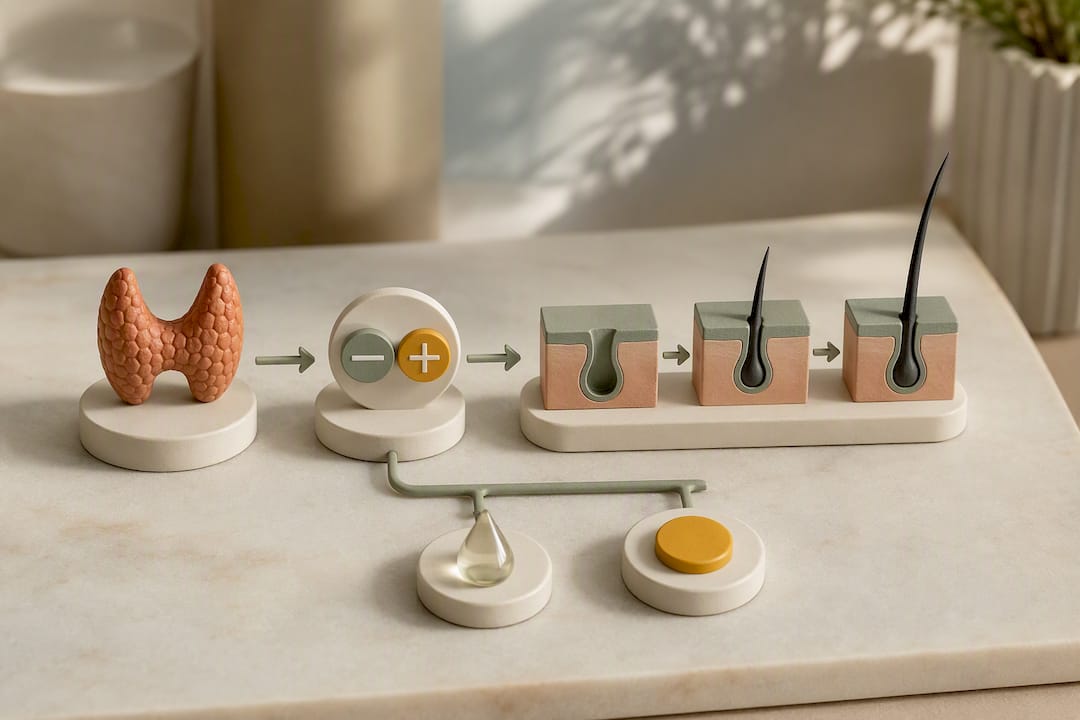
Every hair on your head cycles through growth (anagen), a brief transition (catagen), and rest (telogen) before shedding. Thyroid hormones, particularly T3 and T4, act directly on the metabolic activity inside the follicle, and they help keep hair in the anagen phase long enough to grow to its full length.
When thyroid hormone is too low or too high, that balance shifts. Follicles either exit the growth phase early or fail to reenter it on schedule, and more hairs than usual end up resting simultaneously instead of growing.
This explains something that confuses a lot of women: the delay between cause and symptom.
- A follicle that gets pushed into telogen doesn't shed immediately. It typically sits dormant for around three months before it falls out.
- That means the hair loss you notice today may reflect a thyroid imbalance from two or three months ago, not what your labs show this week.
- The same lag applies in reverse. Starting treatment doesn't stop shedding overnight, because the follicles already in the resting phase have to finish their cycle first.
- Left untreated for a long stretch, thyroid disease can eventually push some follicles into a more prolonged dormant state, which is one reason clinicians push for earlier diagnosis rather than a wait-and-see approach.
Understanding that lag changes how you interpret your own timeline. If your hair started thinning in January, the metabolic disruption behind it may have started back in the fall. It's frustrating, but it's also useful. It means a stable TSH now is doing real work, even if your mirror doesn't show it yet.
Recognizing the Signs: Is This Thyroid or Something Else?
Thyroid-related hair loss tends to follow a recognizable pattern, and learning it helps you describe your symptoms precisely when you see a clinician.
- Diffuse thinning across the entire scalp, rather than loss concentrated at the crown or hairline.
- Noticeably more hair in the shower drain or on your brush than what felt normal a few months ago.
- A ponytail that feels visibly thinner in your hand, even if you can't pinpoint bald spots.
- Thinning eyebrows, especially along the outer third, which the American Academy of Dermatology flags as one of the more distinctive clues tied to thyroid disease.
- Hair that's also drier, coarser, or less elastic than before, sometimes alongside brittle nails.
Where this differs from other common causes matters for how you get evaluated. Female pattern hair loss concentrates along the part line and crown, widening gradually over years, rather than shedding diffusely and suddenly. Alopecia areata produces distinct round, smooth patches of complete hair loss, not generalized thinning. Telogen effluvium, the general stress-and-shedding response, looks almost identical to thyroid-driven loss on the surface, which is exactly why blood testing, not visual inspection, is the deciding factor.
Which Blood Tests Confirm Thyroid Hair Loss
Start with a serum TSH test. It's the first-line screening tool clinicians rely on for suspected thyroid dysfunction, and an abnormal result is usually what triggers everything that follows.
From there, a thorough workup typically layers in a few more pieces:
- Free T4, and free T3 when your TSH result is ambiguous or your symptoms don't match a clean hypothyroid or hyperthyroid picture.
- Anti-TPO and anti-thyroid antibody testing, ordered when autoimmune thyroid disease (Hashimoto's or Graves') is suspected based on your TSH pattern or family history.
- Ferritin, the most sensitive marker of stored iron and a factor clinicians check explicitly whenever hair loss is the presenting complaint, since low iron alone can cause shedding that mimics thyroid disease.
- Vitamin D and a complete blood count, to rule out other common coexisting contributors before settling on thyroid dysfunction as the sole explanation.
Pro Tip: Stop taking biotin supplements for three to five days before any thyroid blood draw. Biotin can interfere with the immunoassay technology many labs use, producing a falsely normal or falsely abnormal TSH result that sends your whole workup off track.
See a dermatologist if your hair loss is patchy, scarring, or doesn't add up despite normal thyroid labs. Seek urgent medical care if hair loss comes with a rapid heartbeat, unexplained weight change, or severe fatigue. Those symptoms suggest your thyroid imbalance may be more advanced than a routine visit can address.
Treatment and How Long Regrowth Actually Takes
Correcting the underlying thyroid disorder is the treatment. For hypothyroidism, that means levothyroxine, a synthetic thyroid hormone dosed to bring your TSH back into normal range. For hyperthyroidism, treatment options range from antithyroid medication to radioactive iodine or surgery, depending on the cause and severity.
Here's the timeline worth setting your expectations around: once your levels normalize, hair regrowth typically begins within a few months, and most women see meaningful improvement somewhere in the 6 to 12 month range. Mayo Clinic's own patient guidance on levothyroxine echoes this, noting that while thyroid levels can normalize relatively quickly on the right dose, hair recovery lags well behind bloodwork.
Some factors tend to slow hair recovery.
- How long the disease went untreated. Follicles that spent a year or more in a disrupted hormonal environment take longer to recover their normal cycling.
- Coexisting deficiencies, particularly low ferritin, which can independently stall regrowth even after your thyroid numbers look perfect.
- Dose adjustments still in progress. Many women need two or three rounds of lab work and dosage tweaks before TSH stabilizes, and each adjustment resets part of the recovery clock.
- Age and baseline hair density, which affect how visible regrowth looks even when the biology is working correctly.
Antithyroid medications themselves rarely cause additional shedding as a side effect, but it happens often enough that it's worth mentioning to your prescriber if new hair loss starts after beginning treatment. It's usually temporary and distinct from the thyroid-driven pattern that brought you in for care in the first place.
For women who want extra support during this window, a clinician may suggest topical minoxidil to shorten the visible gap while the underlying hormonal correction takes effect, along with fixing any nutritional shortfalls found on your labs. Neither replaces getting your thyroid numbers right. Both can make the wait more bearable.
Some women also ask about a connection between GLP-1 medications and hair thinning, since both conditions can overlap in the same patient. If you're on one of these drugs and notice shedding, it's worth reading up on what to expect with GLP-1-related hair loss and mentioning it at your next thyroid check, since the two causes can compound each other.
Nutrition Gaps That Can Stall Your Recovery
Thyroid disease rarely travels alone. Several nutritional deficiencies show up alongside it often enough that clinicians check for them as a matter of routine, and any one of them can keep your hair thin even after your TSH looks perfect.
- Ferritin is the single most useful marker here. Low stored iron is common in women with heavy periods or restrictive diets, and correcting it, under a clinician's guidance and dosing, often unlocks regrowth that thyroid treatment alone didn't finish.
- Vitamin D deficiency correlates with hair shedding in several studies, though the relationship isn't fully settled; testing is simple and worth including in your initial panel.
- Zinc and selenium both play roles in thyroid hormone metabolism and hair structure, but more isn't better. High-dose supplementation without a confirmed deficiency can actually worsen thyroid function in some cases.
- Never self-prescribe high doses of any of these without a blood test first. Excess selenium in particular carries real toxicity risk.
Pro Tip: If you're already taking a biotin-heavy hair supplement, pause it for three to five days before your thyroid panel, then resume it afterward if your clinician has no other concerns about it.
Gentle Hair Care While You Wait for Regrowth
Your hair is more fragile during a shedding phase, and the way you treat it day to day can either protect what's regrowing or add unnecessary breakage on top of a problem your body is already managing.
- Wash with a gentle, sulfate-free shampoo, and stretch out washing if your scalp tolerates it. Over-washing can add mechanical stress to already-weakened strands.
- Choose low-tension hairstyles. Tight ponytails, buns, and braids pull on follicles that are already working to recover.
- Skip heat styling and chemical treatments (color, relaxers, perms) where you can, at least until your bloodwork stabilizes.
- Give your scalp gentle massage during washing to support circulation, but avoid harsh exfoliating scrubs early in recovery, since irritated skin heals more slowly than calm skin.
- Consider a 4 to 6 week scalp routine built around gentle cleansing and consistent scalp care, the kind of clinician-informed approach that supports the environment your follicles need to do their job.
- Ask your dermatologist whether topical minoxidil makes sense for you, and in the meantime, root-lifting powders or strategic parting can soften the visual impact of thinning while you wait for biology to catch up.
The Truth About Thyroid Hair Loss Nobody Tells You Fast Enough
Here's what gets lost in most advice about thyroid hair loss: women spend months blaming stress, diet, or "just getting older" before anyone mentions a simple blood test. That delay is the real damage, not the hair loss itself. The biology is often forgiving. Time is not, because every month spent guessing is a month your follicles spend cycling in the wrong direction.
The single most useful thing you can do this week is book a primary care visit and ask specifically for a TSH and a ferritin test, by name. Don't let a general "I'm just tired" conversation get resolved without bloodwork. If your results come back abnormal, that's not a setback. It's the first concrete step toward a fix that already has a well-documented recovery path behind it.
While you wait for results, or while you wait through the slow months of regrowth, a solid scalp routine and a community that doesn't treat your hair as a vanity issue can carry you through it. Your hair is not the whole story of your worth, but it's fair to want it back, and it's fair to fight for it with real information instead of guesswork dressed up as advice.
— Ava
Where The Ultimate Beauty - You! Fits Into Your Recovery
Getting your thyroid diagnosed and treated is a medical process, and that part belongs with your doctor, full stop. What happens to your hair, skin, and confidence while you wait for those months of regrowth to unfold is where Theultimatebeauty-you steps in.

Theultimatebeauty-you brings together clinician-informed routines, expert-written guides, and a community of women who've walked through exactly this kind of slow, uncertain recovery. You'll find a 4 to 6 week scalp health routine built to support your hair while your thyroid numbers stabilize, alongside a guide on postpartum hair loss timelines if you're navigating multiple hormonal shifts at once. None of this replaces your endocrinologist or dermatologist. It's the inside-out, head-to-toe support system for everything medicine doesn't have time to cover in a fifteen-minute appointment. Visit Theultimatebeauty-you to explore the resources and connect with experts who understand this journey firsthand.
This article is general information, not a substitute for advice from a qualified doctor. Consult a qualified healthcare professional about your own circumstances before acting on anything here.
Sources
- Impact of Thyroid Dysfunction on Hair Disorders - PMC - NIH
- Is My Thyroid To Blame for My Hair Loss? — Cleveland Clinic
- Womenshealth
- Levothyroxine — Mayo Clinic
FAQ
How do you know if hair loss is from thyroid?
The clearest way is a blood test, since thyroid-related shedding looks similar to other diffuse hair loss causes on the surface. Ask for a TSH test first, and note whether your thinning is even across the scalp along with outer-eyebrow loss, both of which point toward thyroid involvement.
Can hair loss from thyroid grow back?
Yes, in most cases hair regrows once thyroid hormone levels return to normal, though the process is gradual and typically takes six to twelve months to become visibly noticeable. Recovery can be slower if the thyroid disorder went untreated for a long time or if a nutritional deficiency like low ferritin is also present.
What are early warning signs of thyroid problems in females?
Early signs often include diffuse hair thinning, dry skin, unexplained fatigue, and changes in menstrual cycles, since women are more likely than men to experience these symptoms. Outer third eyebrow thinning is a specific clue that's easy to miss but worth mentioning to your doctor.
What vitamins help with thyroid hair loss?
Ferritin (iron stores), vitamin D, zinc, and selenium are the nutrients most commonly checked alongside thyroid labs, since deficiencies in any of them can independently slow hair recovery. Supplement only after testing confirms a deficiency, since high doses taken without a confirmed need, especially selenium, can do more harm than good.
Does stress make thyroid hair loss worse?
Stress can trigger its own shedding pattern called telogen effluvium, and when it overlaps with thyroid dysfunction, the combined effect can look more severe than either condition alone. Managing stress won't fix a thyroid imbalance, but reducing it may ease the overall shedding load on your follicles while your treatment takes effect.