
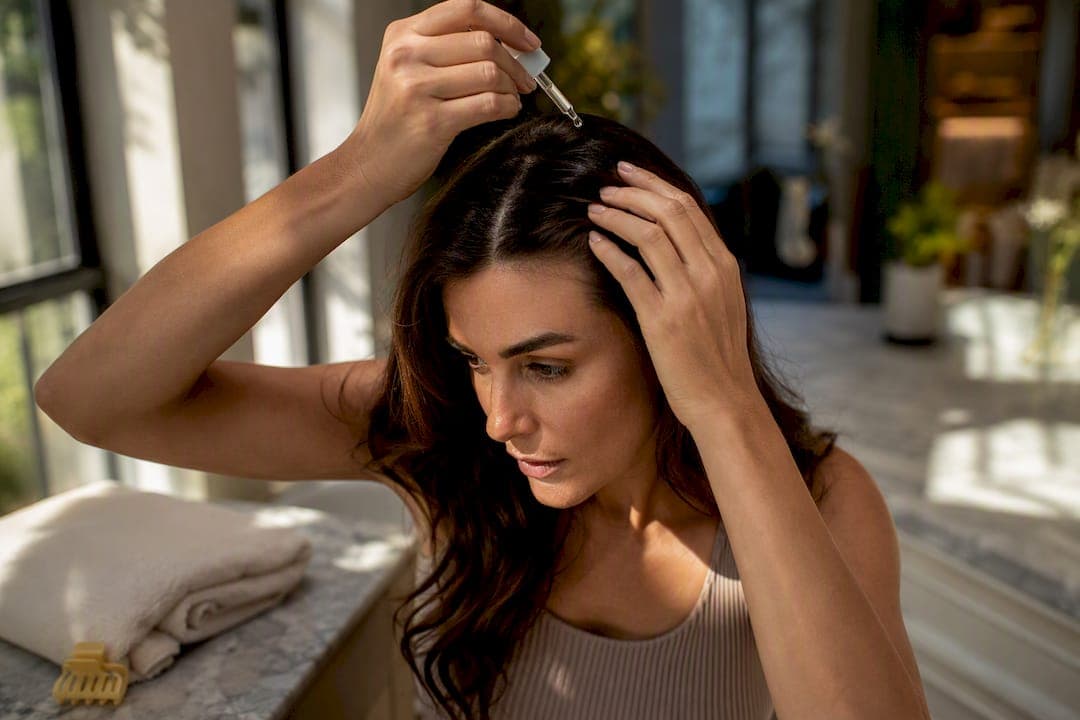
A healthy scalp shows no persistent redness, itching, or flaking, and produces balanced oil rather than excess or dryness. The routine that gets you there is simple: cleanse based on your oil levels, exfoliate occasionally to clear buildup, treat specific concerns with proven actives, hydrate the skin (not the roots), and protect against sun and heat. If you notice open sores, sudden heavy shedding, or inflammation that won't quit, see a dermatologist rather than waiting it out.
TL;DR:
- Proper scalp care depends on balancing oil production, with oily scalps requiring more frequent cleansing and dry scalps needing less, based on individual conditions.
- Avoid sulfates, alcohols, and heavy occlusive oils, as these ingredients can worsen irritation and promote buildup that mimics scalp problems.
- Key active ingredients like ketoconazole and salicylic acid target specific issues such as dandruff and buildup, while overusing irrelevant or harsh products can cause more harm.
- Environmental factors like pollution, UV exposure, and humidity swings directly impact scalp health, requiring protective measures like rinsing after pollution exposure and using SPF on the part line.
- Chronic or severe symptoms, including open sores, persistent flaking, or rapid hair loss, warrant a professional dermatologist assessment for accurate diagnosis and targeted treatment.
Table of Contents
- What Does a Healthy Scalp Actually Look Like?
- What Causes Most Scalp Problems, and When Should You Worry?
- How Do You Build an Effective Scalp Care Routine?
- Which Ingredients Help, and Which Ones Make Things Worse?
- Can Diet, Stress, and Sleep Really Change Your Scalp?
- When Should You See a Dermatologist for Scalp Issues?
- How Do Pollution, Humidity, and UV Exposure Affect Your Scalp?
- Does Styling Damage Your Scalp, Not Just Your Hair?
- Publisher Perspective: A Woman-Centered, Inside-Out Approach to Scalp Care
- Let Theultimatebeauty-you Guide Your Next Step in Scalp Care
- Sources
What Does a Healthy Scalp Actually Look Like?
Skin is skin, whether it's on your cheek or under your part line. A well-functioning scalp holds the same baseline as clear facial skin: no persistent redness, no pain when you touch it, no chronic itch, and no flaking that reappears within a day or two of washing. Oil production stays in a middle zone, not stripped and tight, not so heavy that hair looks slick by afternoon.
The American Academy of Dermatology frames gentle, consistent cleansing as the foundation of that balance, paired with targeted actives only where a specific problem shows up. That's a useful distinction, because plenty of women blame their scalp for a problem that's actually seasonal or textural.
Dry scalp versus dandruff trips people up constantly. Dry scalp tends to produce small, powdery flakes with mild tightness, often worse in winter or after switching to a stripping shampoo. Dandruff, driven largely by an overgrowth of the yeast Malassezia, produces larger, oilier flakes alongside itching that can flare regardless of season. Curly and coily hair textures, which get washed less frequently, often carry more visible buildup without that meaning the scalp underneath is unhealthy.
A few simple checks tell you where you stand:
- Part your hair in several spots and look for redness, scaling, or visible bumps.
- Run a finger along the scalp between washes. Tight and flaky suggests dryness; itchy and greasy points toward yeast overgrowth.
- Note whether flaking clears within a day of washing (normal buildup) or returns almost immediately (a sign of an underlying condition).
- Track any tenderness, which often means inflammation before it becomes visible.
What Causes Most Scalp Problems, and When Should You Worry?
Most scalp complaints trace back to one of a handful of repeat offenders, and knowing which one you're dealing with changes what you should reach for.
- Dandruff and seborrheic dermatitis: greasy, itchy flaking driven by Malassezia yeast reacting with scalp oils. Seborrheic dermatitis is the more inflamed cousin, often showing up around the hairline and eyebrows too.
- Psoriasis: thick, silvery, well-defined plaques with a strong genetic and immune component, sometimes extending past the hairline.
- Eczema (atopic dermatitis): dry, intensely itchy patches, frequently tied to a broader history of sensitive or reactive skin elsewhere on the body.
- Fungal overgrowth (tinea capitis): patchy scaling with hair loss in defined spots, more common in children but not exclusive to them.
- Folliculitis: small, tender bumps or pustules around hair follicles, often from bacteria, heat, or friction.
- Traction and scarring alopecia: gradual hair loss from tight styles or, in scarring types, inflammation that destroys the follicle permanently if untreated.
Behind nearly all of these sits some combination of microbiome imbalance, chronic low-grade inflammation, product buildup, mechanical stress from styling, or a systemic issue like a thyroid condition or nutrient deficiency. Research reviewed on PMC links scalp inflammation and oxidative stress directly to weaker hair retention, which means an irritated scalp isn't just uncomfortable. It's actively working against hair you're trying to keep.
Red flags that call for a dermatologist rather than a drugstore aisle: sudden heavy shedding in clumps, spreading bald patches, open sores or pus, pain that doesn't respond to a gentler shampoo, or flaking that persists past six weeks of consistent, appropriate care.
How Do You Build an Effective Scalp Care Routine?
Treat your scalp as skin with hair growing out of it, and the routine mirrors any solid skin care plan: cleanse, exfoliate, treat, hydrate, protect. Consistency beats complexity here. A clinical review on treatment timelines found that a simple routine followed daily outperforms elaborate, sporadic interventions.
1. Cleanse according to your scalp type, not a fixed schedule. Oily scalps often do better washing every one to two days; dry or textured scalps may only need washing every four to seven days. Massage shampoo into the scalp itself using fingertips (not nails) in small circular motions for 30 to 60 seconds. This lifts buildup and, as a side benefit, increases blood flow to the area.
2. Exfoliate every one to two weeks, choosing the method to match your sensitivity. Chemical exfoliants like salicylic acid dissolve sebum and keratin plugs inside the follicle itself, and clinical evidence on scalp exfoliation suggests they're often gentler and more effective for scaling than physical scrubs, especially if your scalp runs sensitive or inflamed. Physical scrubs work fine for straightforward buildup on a calm scalp, but skip them if you have any active irritation.
3. Treat specific concerns with the right active, not a general "healthy hair" shampoo. If you're managing dandruff, alternate an antifungal shampoo two to three times a week with your regular cleanser. If scaling or texture is the main issue, a salicylic acid treatment a few times weekly clears plugs without over-drying. Rotating actives rather than layering all of them daily reduces irritation risk.
4. Hydrate the scalp skin, but keep heavy conditioners on your strands, not your roots. Lightweight, water-based scalp serums or lotions with humectants can address tightness without clogging follicles. The AAD's healthy hair guidance is direct on this point: conditioners belong on the lengths and ends, and applying rich, heavy products to the scalp is one of the more common ways people accidentally trigger buildup and irritation.
5. Protect against UV and heat, and adjust with the seasons. A hat or scalp-safe SPF spray matters most along the part line, where sun exposure is direct and constant. In winter, indoor heating dries the scalp the same way it dries skin elsewhere, so hydrating steps may need to increase even as washing frequency drops.
Pro Tip: When introducing a new active like an antifungal shampoo or salicylic acid treatment, start at half the recommended frequency for the first two weeks. This lets you catch irritation early instead of finding out after a full week of daily use.
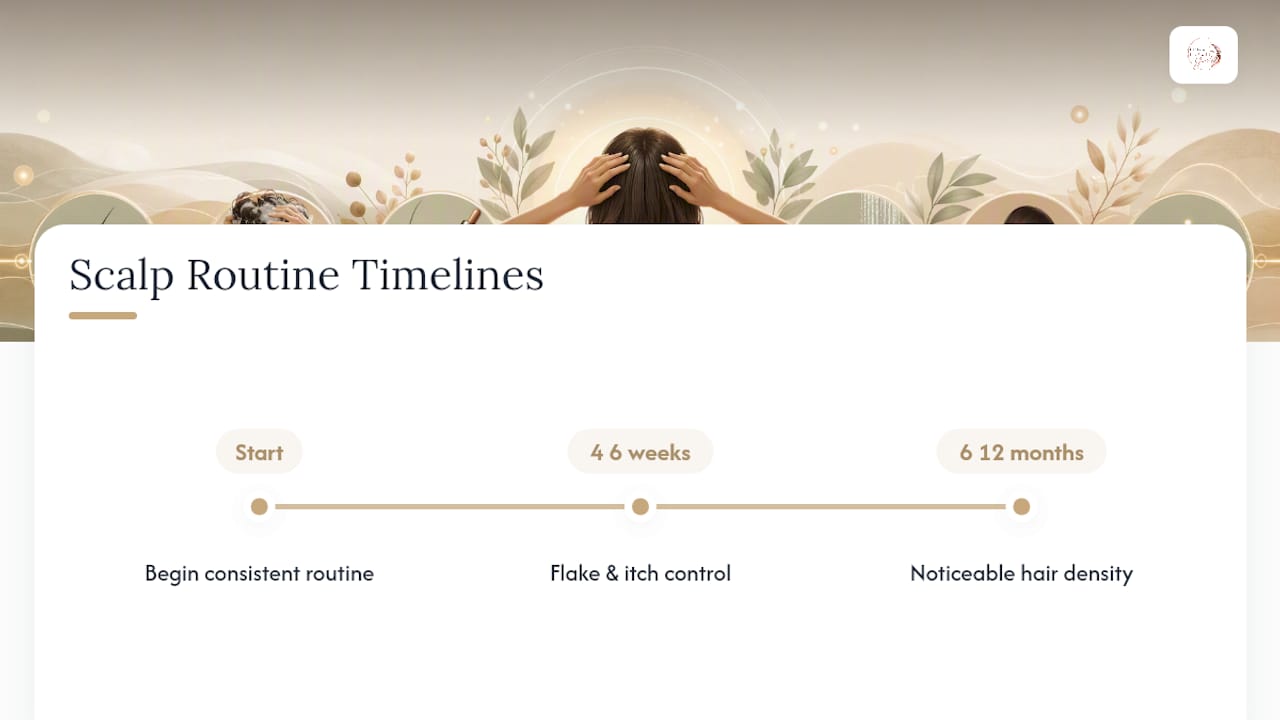
Expect visible flake and itch control within four to six weeks of consistent care. If your goal is hair density or noticeably thicker growth, plan for six to twelve months of steady routine before drawing conclusions, based on clinical timelines for scalp and hair treatments.
Which Ingredients Help, and Which Ones Make Things Worse?
Matching the active ingredient to the actual problem saves both money and irritation. Clinical guidance on scalp management points to a fairly clear map:
- Ketoconazole or zinc pyrithione for dandruff and seborrheic dermatitis driven by Malassezia overgrowth.
- Selenium sulfide as an alternative antifungal option, particularly for more resistant flaking.
- Salicylic acid for scaling, buildup, and plugged follicles, since it works inside the follicle rather than just on the surface.
- Minoxidil for androgenetic thinning, though it addresses shedding patterns rather than scalp inflammation directly.
- Niacinamide or oat-derived compounds for calming irritation on a sensitized or reactive scalp.
On the flip side, certain ingredients tend to work against scalp balance rather than for it. Strong sulfates strip natural oils aggressively enough to trigger rebound oiliness. Denatured alcohols in styling sprays and some treatments dry out the scalp barrier. Heavy, occlusive oils and butters, when applied directly to the scalp rather than the hair shaft, trap moisture against the skin and create conditions where yeast and bacteria thrive. Mayo Clinic Press specifically calls out sulfates and certain silicones as common culprits behind buildup that mimics a chronic scalp condition.
Reading a label takes ten seconds: check the first five ingredients for sulfates or alcohol high on the list, and look for "non-comedogenic" or "scalp-safe" language on products marketed specifically for the scalp rather than general hair shine.
Can Diet, Stress, and Sleep Really Change Your Scalp?
Hygiene gets most of the attention, but what's happening inside your body shows up on your scalp just as visibly as it does on your face. Oxidative stress and chronic low-grade inflammation are consistently linked to weaker hair retention and a less resilient scalp barrier, according to PMC's review of scalp condition and hair growth.
Omega-3 fatty acids carry documented anti-inflammatory properties, and the NIH Office of Dietary Supplements notes their role in supporting skin health as part of a balanced diet, with small trials showing benefits for perceived hair thickness.
That's a real, if modest, signal, not a promise that fish oil alone reverses a scalp condition. Practical steps that align with the evidence: work fatty fish, walnuts, or flaxseed into your week a few times, lean on colorful produce for antioxidants, and talk to a clinician before starting any new supplement, especially if you're pregnant, nursing, or managing another health condition.
Stress and sleep matter through a less obvious channel. Poor sleep and chronic stress elevate cortisol, which can worsen inflammatory skin conditions across the body, scalp included. A two-minute scalp massage daily, whether with your fingers or a silicone massage tool, increases local blood flow and gives you a built-in moment to de-stress at the same time. Neither habit fixes a diagnosed condition on its own, but both remove friction that makes everything else you're doing work harder than it needs to.
When Should You See a Dermatologist for Scalp Issues?
Self-care handles most day-to-day flaking and mild irritation. It stops being enough when symptoms persist past six weeks of consistent, appropriate treatment, when hair loss accelerates or shows up in distinct patches, or when you notice pain, pus, or spreading redness.
A dermatologist visit typically starts with a visual assessment and a history of your products, styling habits, and any recent health changes. For unclear cases, a scalp biopsy can confirm whether you're dealing with scarring alopecia, a fungal infection, or an autoimmune process rather than a garden-variety irritation.
Common treatments and their general timelines:
- Topical steroids for inflammatory conditions like seborrheic dermatitis or eczema, usually showing improvement within two to four weeks.
- Prescription antifungals (stronger than over-the-counter versions) for persistent dandruff or diagnosed fungal infections.
- Systemic therapies, including oral medications, for psoriasis or eczema that doesn't respond to topical treatment.
- Phototherapy for moderate to severe psoriasis, typically requiring multiple sessions over several weeks.
- Prescription-strength minoxidil for androgenetic hair thinning, with results measured over months, not weeks.
The distinction that matters most: some treatments control symptoms, while others aim to stop follicle damage before it becomes permanent. A dermatologist can tell you which category your situation falls into, and that changes how urgently you should act.
How Do Pollution, Humidity, and UV Exposure Affect Your Scalp?
Environmental exposure works on your scalp the same way it works on facial skin, just with less attention paid to it. Airborne pollution particles settle into hair and along the scalp surface throughout the day, mixing with natural oils to create a film that can clog follicles and trigger low-grade irritation over time, particularly in dense urban environments.
Humidity swings in both directions create problems. High humidity encourages excess oil production and can support the yeast overgrowth behind dandruff, while dry winter air combined with indoor heating strips moisture from the scalp barrier, leading to tightness and flaking that has nothing to do with an actual scalp condition.
UV exposure along the part line deserves more attention than it typically gets. That narrow strip of exposed skin takes direct sun with none of the protection your face gets from makeup or moisturizer with SPF, and repeated sun damage there contributes to premature scalp aging and can worsen existing inflammation. A wide-brim hat during peak sun hours, or a lightweight scalp-safe SPF spray for days when you're parting your hair for a style, covers the gap simply.

The practical takeaway: rinse hair after heavy pollution exposure or a swim in chlorinated water, adjust your hydration routine with the seasons rather than keeping it static all year, and treat part-line sun protection as seriously as you treat sunscreen on your cheeks.
Does Styling Damage Your Scalp, Not Just Your Hair?
Heat, tension, and chemical treatments do more to the scalp than most people assume, since the effects aren't limited to the hair shaft.
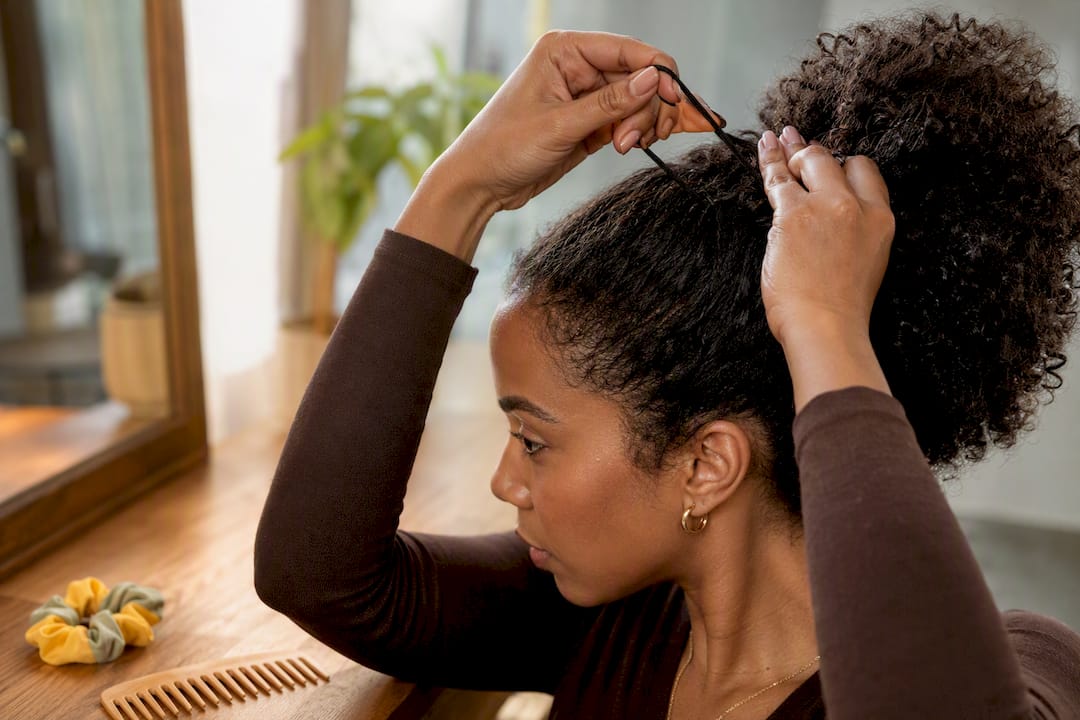
Repeated heat styling near the roots, whether from a blow dryer held too close or a flat iron dragged along the part, can irritate the scalp skin and, over time, contribute to inflammation that makes the area more reactive to everything else you put on it. Tight hairstyles, including high ponytails, braids, and buns worn daily, place sustained tension on the follicle that can progress to traction alopecia if the pattern doesn't change. That's one of the more reversible forms of hair loss when caught early, and one of the least reversible once scarring sets in.
Chemical treatments including relaxers, keratin treatments, and permanent color carry their own scalp-specific risk. These formulas often sit directly against the skin during processing, and repeated exposure can weaken the scalp barrier, increasing sensitivity to products you previously tolerated fine. Spacing out chemical services, requesting a scalp protectant during application, and switching up your part or ponytail height every few days are small adjustments that add up.
None of this means you have to give up styling you love. It means building in recovery: a lower-tension style the day after a tight one, a deep-conditioning break between chemical services, and attention to how your scalp actually feels rather than just how your hair looks in the mirror.
Publisher Perspective: A Woman-Centered, Inside-Out Approach to Scalp Care
Scalp health rarely gets treated with the same seriousness as facial skin care, and that gap shows up in how many women wait years before addressing symptoms a dermatologist could have resolved in weeks. The evidence points somewhere consistent: a simple, steady routine beats a complicated one you abandon after ten days.
We think about scalp care the way we think about every part of becoming your best self. It connects to sleep, to stress, to how you're eating, to what's happening in your life right now. That's why our content threads through postpartum recovery, mental health, and daily routine building rather than treating scalp care as an isolated fix.
If you're navigating shedding after pregnancy, our guide to postpartum hair loss walks through a realistic timeline. And if stress feels like the harder problem to solve, our piece on mental health and beauty is a good next stop.
— Ava
Let Theultimatebeauty-you Guide Your Next Step in Scalp Care
We provide a place to connect the dots between your scalp, your stress levels, your sleep, and the rest of your beauty routine, backed by real experts instead of guesswork from a comment section.

Beyond this guide, the platform brings together vetted advice on healthy beauty habits you can layer into your week without overhauling your entire life at once. If you want a professional take on skin and scalp concerns beyond what a shampoo aisle can offer, our experts and partners directory connects you with specialists, including options like skin texture treatment providers for related skin concerns. Browse curated beauty and wellness products chosen with real ingredient standards in mind, or head to the main platform to see what's available now and what's coming with the app. Start with one page, one habit, and build from there.
This article is general information, not a substitute for advice from a qualified doctor. Consult a qualified healthcare professional about your own circumstances before acting on anything here.
Sources
- Scalp condition impacts hair growth and retention via oxidative stress (PMC)
- Hair and scalp care - American Academy of Dermatology (AAD)
- Omega-3 fatty acids - ODS (NIH)
- Looking to improve your hair and scalp health? Know the ingredients to avoid in shampoos - Mayo Clinic Press