

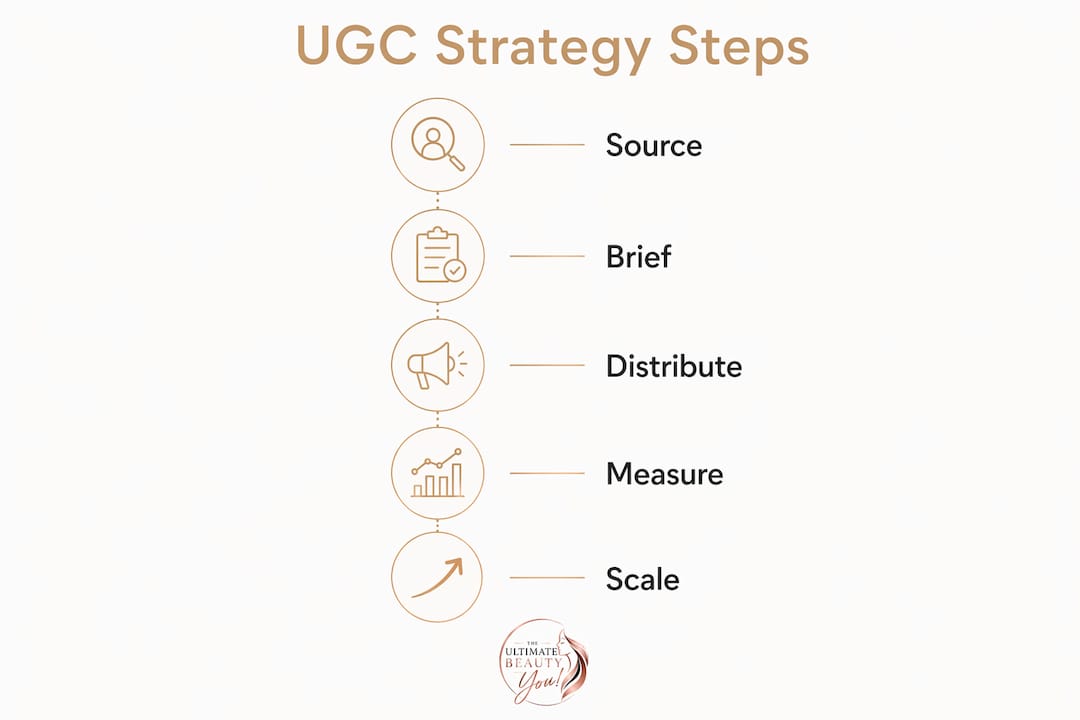
A beauty brand UGC strategy is a systematic approach to sourcing, briefing, distributing, and measuring authentic user-created content that drives trust, engagement, and sales. UGC delivers a 34% hook rate compared to 19% for studio-produced assets, and placing real customer photos near the upper fold of product pages increases purchase likelihood by 137%. These numbers are not flukes. They reflect a fundamental shift in how beauty consumers decide to buy. This guide gives marketing professionals the operational framework to build a UGC program that performs consistently, stays compliant, and scales without losing the authenticity that makes it work.
What makes a beauty brand UGC strategy work?
The most effective user generated content beauty programs treat UGC as a primary creative engine, not a supplemental tactic. The difference between a brand that grows through UGC and one that posts the occasional repost comes down to structure. Brands that build repeatable, measurable content pipelines with integrated compliance checks consistently outperform those relying on hashtag hope alone. Structure is what separates a growth asset from a content graveyard.
The formats that perform best in beauty are specific. Unboxings, get-ready-with-me (GRWM) videos, before-and-after transformations, skin-tone swatches, and step-by-step tutorials all outperform generic lifestyle content. Each format works because it answers a real question a shopper has before buying. A GRWM shows how a product fits into a real routine. A before-and-after shows what it actually does.
Real-skin representation converts better than aspirational studio imagery, especially for shade-sensitive shoppers. A customer swatch on a medium-deep complexion tells a woman with that skin tone far more than a retouched campaign photo ever could. This is why inclusive UGC is not just a values statement. It is a conversion strategy. Brands that segment UGC galleries by skin tone, skin type, and concern report a 41% uplift in conversion. That lift comes directly from relevance.
- Unboxings and first impressions: Build excitement and set product expectations honestly.
- GRWM and routine content: Show real-world application and product fit in daily life.
- Before-and-after content: Demonstrate results with real skin, not retouched imagery.
- Customer swatches: Critical for foundation, concealer, and lip products across diverse skin tones.
- Testimonial clips: Short, direct, and specific claims from real buyers build credibility fast.
Pro Tip: Avoid briefing creators to film in perfect lighting with flawless skin. Lo-fi authenticity, natural lighting, and visible texture signal realness to Gen Z and millennial beauty shoppers. Polished content reads as an ad. Imperfect content reads as a recommendation.
How do you find and manage UGC creators effectively?
Creator selection is where most beauty brands make their first mistake. Follower count is the wrong primary filter. Engagement rate, content style, audience demographics, and skin profile alignment matter far more. A nano creator with 4,000 followers and a highly engaged audience of women with oily, acne-prone skin is worth more to a targeted skincare brand than a macro influencer with a broad, disengaged following.

Brands that treat creators as a distributed production team rather than passive assets generate higher quality and more authentic content at scale. That means building ongoing creator ecosystems, not running one-off campaigns. When creators understand your brand deeply and receive consistent feedback, their content improves with every brief.
A practical creator recruitment process looks like this:
- Define your creator profile. Specify skin type, tone, age range, content style, and platform. Match these to your product's target customer.
- Audit engagement quality. Look at comment depth, not just likes. Real engagement shows up in specific, product-related questions and responses.
- Review content consistency. A creator who posts regularly in a consistent visual style will produce more on-brand UGC than someone with an erratic posting history.
- Start with a paid test brief. Commission one piece of content before committing to a longer relationship. Evaluate quality, responsiveness, and brief adherence.
- Build a tiered roster. Maintain a core group of 10–20 reliable creators and a broader pool of 50+ for campaign bursts and new product launches.
- Create feedback loops. Share performance data with creators. When they see which of their videos drove the most clicks, they produce better content next time.
Pro Tip: Use your own customer base as a creator source. Buyers who already love your product produce the most credible UGC. A post-purchase email sequence with a simple content invitation costs almost nothing and surfaces creators you would never find through talent platforms.
What should a UGC brief include?
A strong UGC brief gives creators clear direction without scripting every word. The goal is to protect your brand while preserving the creator's voice. That balance is what makes the content feel real. Rigid scripts produce content that sounds like an ad read. Flexible briefs produce content that sounds like a recommendation.
Every brief should include these core elements:
- Core message: The one thing you want the viewer to take away. "This serum visibly reduces redness in two weeks" is a core message. "Our serum is amazing" is not.
- Format and platform: Specify whether the content is a 15-second TikTok, a 60-second Instagram Reel, or a static photo. Platform context shapes everything from pacing to caption length.
- Hook structure: Provide two or three proven opening lines the creator can adapt. Hooks drive the first three seconds, which determine whether anyone watches the rest.
- Visual guardrails: Share your brand visual standards without mandating exact execution. "Natural lighting preferred, no heavy filters" is a guardrail. "Film at 3 PM facing a north-facing window" is a script.
- Compliance requirements: List any claims the creator cannot make, required disclosures, and any FDA or FTC language rules specific to your product category.
- Call to action: Tell the creator exactly what you want viewers to do. Visit a link, use a code, or follow the account.
Modular creative brief libraries that balance proven storytelling hooks with creator flexibility produce the highest volume of consistent, high-performing assets. Build a library of 10–15 brief templates organized by product type, content format, and campaign goal. Rotate them regularly to avoid creative fatigue.
How do you scale UGC operations, rights, and compliance?
Scaling UGC without an operational system creates legal and quality risk fast. Rights management is the first priority. Secure full content rights upfront, covering paid social, organic posts, product pages, email, and whitelisting. A vague "you can repost this" agreement will not protect you when you want to run the content as a paid ad.
Whitelisted UGC ads run from creators' handles achieve 30–50% lower cost per acquisition than ads run from official brand pages. That is a significant budget efficiency gain. Whitelisting requires explicit written permission and a formal creator agreement, so build that into your standard onboarding process from day one.
Compliance is where beauty brands, especially skincare brands, face the most risk. The FTC requires clear disclosure of paid partnerships. The FDA restricts drug-level claims on cosmetic products. A creator who says your moisturizer "cures eczema" has just created a regulatory liability for your brand. Automated AI flagging and embedded disclosure overlays are now standard tools for managing these risks at scale. Use them.
Only 16% of brands conduct quarterly FTC compliance audits for their UGC programs. That gap represents significant legal exposure for the brands that skip this step, and a real competitive advantage for those that do it consistently.
For distribution, place UGC across every channel where it can influence a purchase decision.
| Channel | Best UGC format | Primary goal |
|---|---|---|
| Product pages (upper fold) | Customer photos, swatches | Conversion lift |
| Paid social (whitelisted) | Short-form video, testimonials | Lower CPA |
| Email campaigns | Before-and-after, reviews | Re-engagement |
| Organic social | GRWMs, tutorials, unboxings | Awareness and trust |
Advanced workflows integrate automated rights capture, metadata tagging by skin tone and product type, and AI moderation for building high-compliance content libraries. This infrastructure sounds complex, but it pays for itself quickly when you are managing hundreds of assets across multiple channels.
Pro Tip: Tag every UGC asset in your content library with skin tone, product type, content format, and performance tier. When you need content for a targeted paid campaign, you can pull exactly the right asset in minutes instead of hours.
How do you measure UGC performance and improve over time?
UGC measurement requires a specific set of metrics. Standard brand awareness metrics will not tell you whether your content program is working. The metrics that matter are hook rate, video completion rate, cost per acquisition, and UGC-influenced revenue measured through holdout testing.
Rigorous holdout testing prevents overestimation of UGC impact and guides budget allocation accurately. Without holdout groups, you risk attributing conversions to UGC that would have happened anyway. That leads to misallocated budgets and inflated program valuations.
Use paid ad performance as your primary creative testing ground. Run multiple UGC assets against each other in small-budget tests. The assets with the best hook rate and lowest CPA get scaled. The underperformers get retired or revised. This feedback loop also informs your next round of briefs. When you know that before-and-after videos outperform testimonials for your acne serum, you brief more before-and-afters.
Key metrics to track for every UGC asset:
- Hook rate: Percentage of viewers who watch past the first three seconds. Target above 30%.
- Video completion rate: Percentage who watch to the end. Higher completion signals strong storytelling.
- Cost per acquisition: The clearest signal of commercial performance for paid UGC.
- Conversion rate on product pages: Measure pages with UGC against pages without it.
- UGC-influenced revenue: Use holdout testing to isolate the true revenue contribution.
Routine-led creator content programs that track these metrics consistently reduce customer acquisition costs by 14–28%. That reduction compounds over time as your brief library improves and your creator roster matures. Pair your beauty brand SEO strategy with UGC performance data to identify which content themes also drive organic search traffic.
Key Takeaways
A beauty brand UGC strategy delivers its highest returns when it combines authentic creator selection, structured briefing, rights-first operations, and rigorous performance measurement across every distribution channel.
| Point | Details |
|---|---|
| UGC outperforms studio content | Real customer photos increase purchase likelihood by 137% on product pages. |
| Segment UGC by skin profile | Matching content to skin tone and type drives a 41% conversion lift. |
| Secure rights before distributing | Full rights agreements unlock whitelisting, which cuts CPA by 30–50%. |
| Compliance is non-negotiable | Only 16% of brands audit FTC disclosures quarterly; close that gap before scaling. |
| Measure with holdout testing | Isolate true UGC revenue impact to allocate budget accurately and avoid overestimation. |
Why "always-on" beats "always-campaigning" in beauty UGC
I have watched beauty brands pour real budget into UGC campaigns that perform brilliantly for six weeks and then go cold. The content library empties, the creators move on, and the team scrambles to rebuild from scratch for the next launch. The problem is not the content. The problem is the model.
The brands I see winning in 2026 have stopped thinking in campaigns and started thinking in systems. They maintain a roster of 15–30 creators who produce content on a rolling monthly schedule. They have a brief library with 12–15 templates that rotate by season and product focus. They run quarterly compliance audits as a standard operating procedure, not a crisis response. This is not glamorous work. It is operational discipline, and it is exactly what separates a brand with a 30% lower CPA from one that is still guessing.
The piece most brands underestimate is the compliance layer. FTC and FDA rules for skincare UGC are not optional, and they are not stable. They evolve. A creator who made a claim that was fine in 2024 may be creating a liability for you in 2026. AI-assisted claim detection is now accessible enough that there is no excuse for skipping it. Build it into your review workflow before content goes live, not after.
My honest prediction: the next competitive edge in beauty UGC will come from AI-assisted creator matching, where algorithms surface creators whose audience demographics and content style align with specific product SKUs. Brands that build clean, tagged content libraries now will be positioned to use those tools effectively. Brands that do not will be starting from scratch again.
The inclusive beauty marketing angle also matters more than most brands admit. UGC that represents diverse skin tones, ages, and textures is not just the right thing to do. It is the highest-converting content you can produce for a broad beauty audience. Representation is a performance variable.
— Ava
Theultimatebeauty-you: built for beauty marketers who mean it
At Theultimatebeauty-you, we believe beauty is a verb. It is active, evolving, and deeply personal. That philosophy shapes everything we build for the women and brands in our community.

If you are a beauty marketer building a UGC program that reflects real women at every age and stage, our platform connects you with the resources, expert voices, and brand partnerships that make that work possible. From beauty products and tools that align with authentic storytelling to a community that celebrates real results over retouched perfection, Theultimatebeauty-you is where strategy meets substance. Explore what we offer and see how our approach to beauty and becoming can support your brand's growth.
FAQ
What is a beauty brand UGC strategy?
A beauty brand UGC strategy is a structured system for sourcing, briefing, distributing, and measuring user-created content to drive trust and conversions. It treats UGC as a primary creative and commercial asset, not a supplemental tactic.
What types of UGC convert best for beauty brands?
Before-and-after content, customer swatches showing real skin tones, and routine-led tutorials consistently outperform aspirational studio imagery. Segment-matched UGC galleries report a 41% uplift in conversion compared to generic content.
How do FTC and FDA rules affect beauty UGC?
The FTC requires clear paid partnership disclosures on all sponsored UGC. The FDA restricts drug-level claims on cosmetic products. Only 16% of brands conduct quarterly compliance audits, making this one of the most overlooked risks in UGC programs.
What is whitelisting and why does it matter?
Whitelisting means running a creator's content as a paid ad from their account rather than your brand page. Whitelisted UGC ads achieve 30–50% lower cost per acquisition than ads run from official brand accounts.
How do you measure whether UGC is actually driving revenue?
Use holdout testing to isolate UGC-influenced revenue from conversions that would have occurred anyway. Track hook rate, video completion rate, cost per acquisition, and on-page conversion rates to build an accurate picture of performance.