

For most U.S. health and wellness sites, Semrush is the strongest all-round pick, and SurferSEO is the best specialist for content optimization. If you run a WordPress-based studio or clinic, AIOSEO handles schema, local SEO, and sitemaps without requiring a developer. And if you want marketplace visibility alongside your SEO work, Theultimatebeauty-you offers something none of these tools do: a woman-centered platform where your brand gets discovered by a ready audience.
Quick starter picks:
- Theultimatebeauty-you — Best for wellness brands and experts who want platform-driven discovery and community exposure alongside SEO. Pairs beautifully with any SaaS tool below.
- Semrush — Best all-round SaaS pick for content teams and marketers who need keyword research, audits, and reporting in one place. Starting at a premium monthly price.
- SurferSEO — Best specialist for on-page content optimization and AI citation visibility. Starting at a monthly price suitable for specialists.
Recommended starter combo: Semrush (primary platform) + AIOSEO (WordPress plugin for schema and local SEO).
Table of Contents
- How we chose the best SEO tools for wellness sites
- At-a-glance comparison of top SEO tools for health sites
- Short reviews: what each tool does best for wellness sites
- How to choose the right SEO tool for your wellness business
- Why backlink monitoring matters for wellness authority
- Key Takeaways
- The SEO tool question wellness brands keep getting wrong
- Theultimatebeauty-you: visibility beyond the algorithm
- Useful links and where to try these tools
How we chose the best SEO tools for wellness sites
Wellness content sits in Google's YMYL (Your Money or Your Life) category, which means the bar for ranking is genuinely higher than for most niches. Google benchmarks wellness publishers against high-authority medical sites, so tools that help you build E-E-A-T (Experience, Expertise, Authoritativeness, Trustworthiness) are not optional extras.
Every tool in this list was evaluated across ten dimensions:
- Keyword research — depth, intent filtering, and wellness-specific clustering
Beyond features, we applied YMYL-specific checks: does the tool support author credential display, MedicalOrganization or Physician schema, and editorial review workflows? Automated content pipelines (SealSEO, Clustea) were assessed with an extra gate: do they allow human E-E-A-T review before publishing? For regulated health claims, enterprise-grade validation workflows exist precisely because AI-generated wellness content can produce unsafe or misleading statements without them.
Stat to know: According to SurferSEO's own positioning, content optimized with Surfer is 25% more likely to get cited by AI — a meaningful edge for wellness brands building authority in AI search results.
At-a-glance comparison of top SEO tools for health sites
| Tool | Best For | Monthly Starting Price | Keyword Research | Site Audit | Rank Tracking | Competitor Analysis | Backlink Tools | Content Optimization | Ease of Use | Best User | AI / Automation |
|---|---|---|---|---|---|---|---|---|---|---|---|
| The Ultimate Beauty - You! | Marketplace visibility & community discovery for wellness brands | Varies / see source | — | — | — | — | — | Platform-driven | High | Solo / small business | Community + brand matching |
| Semrush | All-round research, audits & reporting | premium monthly price | ✓ Strong | ✓ Full | ✓ Yes | ✓ Strong | ✓ Yes | ✓ Content briefs | Moderate | Small biz / agency | AI drafts, AI search monitoring |
| Ahrefs | Competitor gap & backlink research | monthly price | ✓ Strong | ✓ Full | ✓ Yes | ✓ Strong | ✓ Best-in-class | Limited | Moderate | Small biz / agency | Limited |
| Ubersuggest | Budget keyword discovery | — | ✓ Basic | ✓ Basic | ✓ Basic | ✓ Basic | ✓ Basic | Limited | High | Solo / small biz | Limited |
| SE Ranking | Ongoing rank monitoring & reporting | — | ✓ Good | ✓ Good | ✓ Strong | ✓ Good | ✓ Good | Limited | High | Solo / small biz | Some automation |
| Moz Pro | Domain authority & link tracking | — | ✓ Good | ✓ Good | ✓ Yes | ✓ Good | ✓ Strong | Limited | Moderate | Small biz / agency | Limited |
| SurferSEO | On-page content optimization | — | ✓ Good | Limited | Limited | ✓ SERP-based | — | ✓ Best-in-class | High | Solo / small biz | AI briefs, AI visibility |
| AIOSEO | WordPress sites needing schema & local SEO | $49.60/yr (billed annually) | ✓ Basic | ✓ Good | ✓ Basic | — | — | ✓ Schema + meta | Very High | Solo / small biz | AI meta generator |
| SealSEO | Automated AI blog writing & publishing | From $20/mo | ✓ Good | ✓ Good | — | — | — | ✓ AI writing | High | Solo / indie blogger | Full AI pipeline |
| Clustea | GSC-driven cluster publishing at scale | From $12/mo | ✓ GSC-based | — | — | — | — | ✓ Cluster briefs | High | Solo / small biz | Auto-publish pipeline |
Short reviews: what each tool does best for wellness sites
Semrush
Semrush is the closest thing to a single command center for wellness SEO. Keyword research, technical audits, backlink analysis, content briefs, and AI search monitoring all live under one login. For a wellness brand managing a blog, a product catalog, and a local studio page simultaneously, that breadth matters. The Semrush toolkit now includes AI Search Site Health, which tracks how your content performs in AI-generated answers, not just traditional SERPs.
Pros: Full audit suite, strong competitor gap tools, AI drafting, cross-platform rank tracking, GSC/GA integration. Cons: Price point may be high for solo practitioners; the interface takes time to learn. Who should use this: Content teams at wellness brands, multi-location studios, and wellness e-commerce businesses that need one platform to do everything.
Ahrefs
Ahrefs has the most respected backlink index in the industry. If your growth strategy depends on earning links from health publications, fitness influencers, or medical directories, Ahrefs gives you the clearest picture of who links to competitors and where your gaps are. Site Explorer is particularly strong for backlink research and competitor analysis.
Pros: Best-in-class backlink data, strong Site Explorer, reliable keyword difficulty scores. Cons: No native content editor; on-page optimization guidance is limited compared to Surfer. Who should use this: Wellness agencies and established brands prioritizing link-building campaigns.
Ubersuggest
Ubersuggest is the entry point for solo wellness bloggers who need keyword ideas without a large monthly bill. Keyword clustering and basic audits are included, though the data depth does not match Semrush or Ahrefs.
Pros: Affordable, easy to start, keyword clustering included. Cons: Shallower data, limited backlink index, basic reporting. Who should use this: Solo creators and new wellness blogs testing SEO before committing to a larger platform.
SE Ranking
SE Ranking's rank tracking is its clearest strength. Daily SERP updates, local pack monitoring, and clean visibility reports make it a practical choice for studios and clinics that want to watch their local rankings without navigating a complex dashboard.
Pros: Strong rank tracking, good local SERP monitoring, clean UI, solid audit tools. Cons: Content optimization features are limited; backlink index is smaller than Ahrefs. Who should use this: Local wellness studios and clinics focused on SERP position monitoring.
Moz Pro
Moz built its reputation on Domain Authority (DA), and that metric still matters when you are pitching guest posts or evaluating link prospects. The Link Explorer tool gives a clear view of your backlink profile and authority trajectory.
Pros: Trusted DA metric, solid link tracking, good for authority benchmarking. Cons: Slower feature updates than competitors; content tools are basic. Who should use this: Sites actively building link authority and monitoring domain growth over time.
SurferSEO
SurferSEO is purpose-built for the moment you sit down to write or improve a page. It analyzes the top-ranking SERP results for your target keyword and gives you a real-time content score, NLP-driven keyword suggestions, and an AI-generated outline. For wellness content where content optimized with Surfer is 25% more likely to get cited by AI, that visibility edge is worth the investment. Pairs naturally with the types of digital content that women in wellness actually engage with.
Pros: Best on-page content editor, AI briefs, SERP-driven scoring, AI citation visibility. Cons: Not a full SEO suite; no deep backlink tools or technical audit depth. Who should use this: Content writers, wellness bloggers, and page owners who publish frequently and want every piece to rank.
AIOSEO
For any wellness site built on WordPress, AIOSEO is the most practical starting point. It handles schema generation (including LocalBusiness and MedicalOrganization types), smart XML sitemaps, local SEO, and an AI generator for meta titles and descriptions. Non-technical owners can configure it without touching code.
Pros: Beginner-friendly, strong schema support, local SEO features, Link Assistant, AI meta generator. Cons: Limited to WordPress; not a substitute for a full research platform. Who should use this: WordPress-based clinics, yoga studios, and wellness e-commerce stores needing schema and local SEO without a developer.
SealSEO
SealSEO automates the full content pipeline: keyword research, AI article writing, site audits, and WordPress auto-publishing, with GSC and GA integration built in. At $20/month, it is one of the most affordable automated options available.
Pros: Full AI pipeline, auto-publish, GSC/GA integration, free tier available, very affordable. Cons: AI-generated wellness content needs human E-E-A-T review before publishing; not suitable for regulated medical claims without editorial gates. Who should use this: Solo wellness founders and indie bloggers who want near-autopilot content at a low cost, with a commitment to reviewing output before it goes live.
Clustea
Clustea connects to your Google Search Console, identifies keyword gaps, builds content clusters around them, and auto-publishes to WordPress on a weekly schedule. Starting from $12/month, it is the most affordable automated cluster tool on this list. The GSC-driven approach means your content priorities come from real search data, not guesswork.
Pros: GSC gap analysis, automated cluster generation, auto-publish, very low starting price. Cons: Thin on technical audit features; AI content requires wellness-specific editorial review. Who should use this: Small wellness teams and founders who want data-driven content scaling without hiring a full SEO team.
How to choose the right SEO tool for your wellness business
Start with your primary outcome
Before comparing features, name what you actually need most. A local yoga studio needs rank tracking and local schema. A wellness e-commerce brand needs keyword research and competitor gap analysis. A wellness blogger needs content optimization and a publishing pipeline. That single answer narrows the list immediately.
Map your outcome to tool strengths
Local bookings and clinic visibility point toward AIOSEO (for WordPress schema and Google Business Profile integration) paired with SE Ranking for ongoing rank monitoring. Content volume and authority growth point toward Semrush as the primary platform, with SurferSEO for individual page optimization. Budget-constrained solo creators should look at SealSEO or Clustea first, then graduate to Semrush when revenue supports it.
Ask the right questions before buying
When evaluating any tool for a wellness or health-adjacent site, ask: Does it support MedicalOrganization or Physician schema? Does it integrate with Google Search Console natively? Does it flag YMYL content for human review, or does it publish AI output automatically? For regulated health claims, enterprise validation workflows exist because the stakes of a hallucinated medical claim are real.
Wellness is a YMYL vertical, and an intent-first keyword framework matters more here than in most niches. Topic clusters built around conditions, goals, or life stages outperform single-page targeting. Any tool you choose should support cluster-level planning, not just individual keyword lookups.
Red flags to avoid: No schema guidance, no Core Web Vitals auditing, no GSC integration, and no editorial review step for AI-generated content.
Pro Tip: If you are a solo wellness owner with limited tech experience, start with AIOSEO on WordPress and Ubersuggest for keyword ideas. Once your traffic grows, layer in Semrush for deeper audits and competitor data. You do not need everything on day one.
Why backlink monitoring matters for wellness authority
Backlinks remain one of Google's strongest ranking signals, and in the wellness space they carry extra weight because YMYL sites are evaluated partly by who vouches for them. A link from a recognized health publication, a university wellness program, or a credentialed practitioner's site signals authority that no amount of on-page optimization can fully replace.
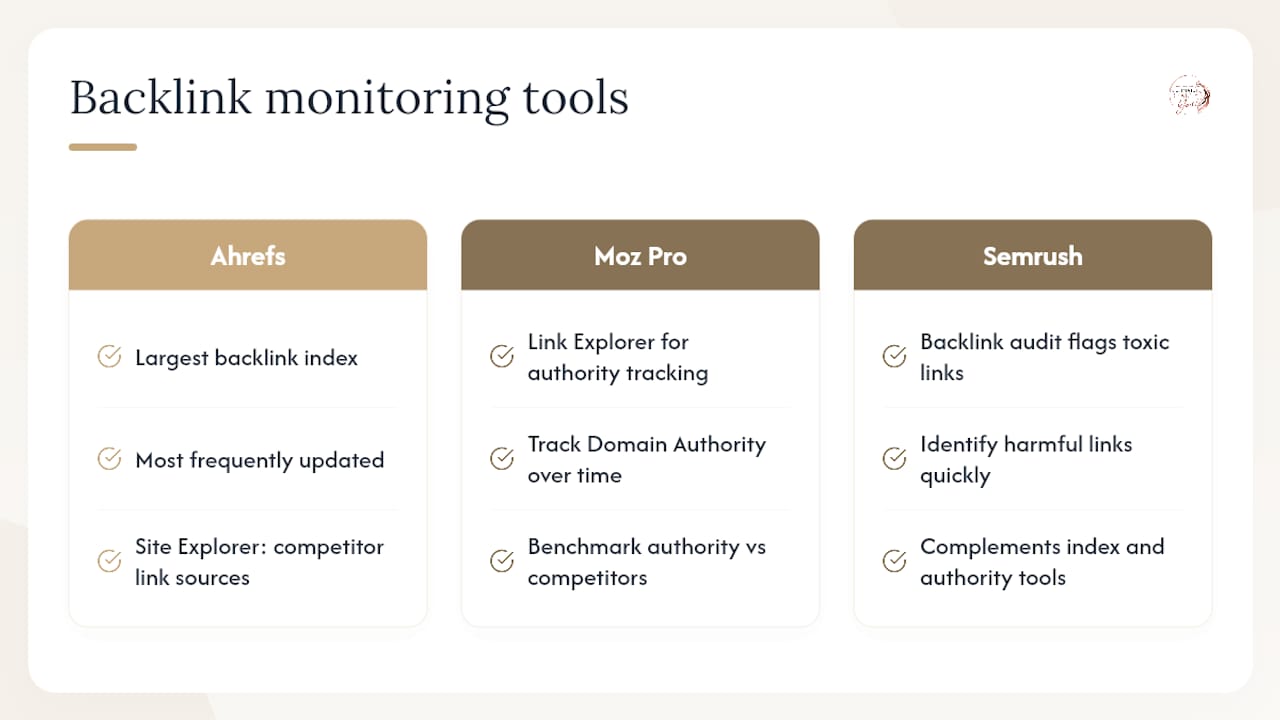
Ahrefs leads the field here. Its backlink index is the largest and most frequently updated, and Site Explorer lets you see exactly which pages on competitor wellness sites attract the most links and from where. That intelligence shapes your outreach strategy directly. Moz Pro's Link Explorer is the right secondary tool if you want to track Domain Authority trends over time and benchmark your authority growth against competitors. Semrush's backlink audit tool rounds out the picture by flagging toxic links that could hurt your standing.
For wellness brands building beauty and wellness content strategies, earning links from relevant, credible sources is a long-term investment. Tools like Ahrefs make that investment measurable.
Key Takeaways
Semrush is the strongest all-round SEO platform for U.S. wellness sites, and pairing it with AIOSEO covers the schema and local SEO gaps that matter most for clinics and studios.
| Point | Details |
|---|---|
| Primary platform pick | Semrush covers keyword research, audits, backlinks, and AI search monitoring in one place. |
| Best content optimizer | SurferSEO's AI-guided briefs enhance wellness content's chance of AI citation by 25%. |
| WordPress + local SEO | AIOSEO adds schema, local SEO, and sitemaps to any WordPress wellness site with easy setup. |
| YMYL obligation | All AI-generated wellness content needs human E-E-A-T review before publishing. |
| Theultimatebeauty-you | Offers marketplace visibility and community discovery for wellness brands alongside any SaaS tool. |
The SEO tool question wellness brands keep getting wrong
Most wellness business owners approach SEO tools the same way they approach a gym membership: they sign up for the biggest, most feature-rich option, use 10% of it, and wonder why nothing changes. The real problem is not the tool. It is the absence of an editorial standard.
Wellness sits in YMYL territory. That means Google is not just asking whether your page is optimized. It is asking whether your page is trustworthy. A perfectly Surfer-scored article written by an anonymous AI and published without author credentials will underperform a moderately optimized article written by a named, credentialed practitioner every time. The tools in this list are multipliers. They amplify what you already bring to the table. If what you bring is thin, no tool fixes that.
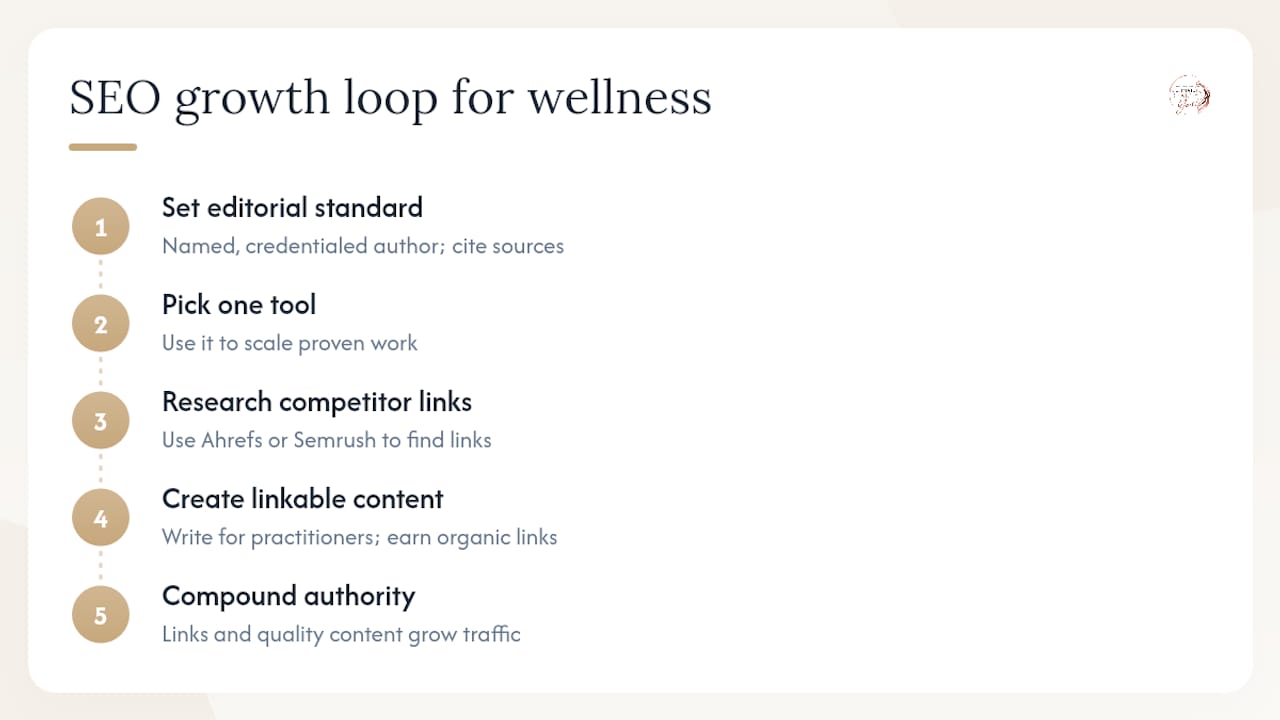
The other mistake: treating backlinks and content as separate strategies. The wellness brands that grow fastest are the ones using Ahrefs or Semrush to find where their competitors earn links, then creating the content that earns those same links organically. That loop, research to content to authority, is what compounds over time.
Choose one primary tool. Build your editorial standard first. Then let the automation scale what already works.
Theultimatebeauty-you: visibility beyond the algorithm
The tools above help you rank. Theultimatebeauty-you helps you get found by the women already looking for what you offer.
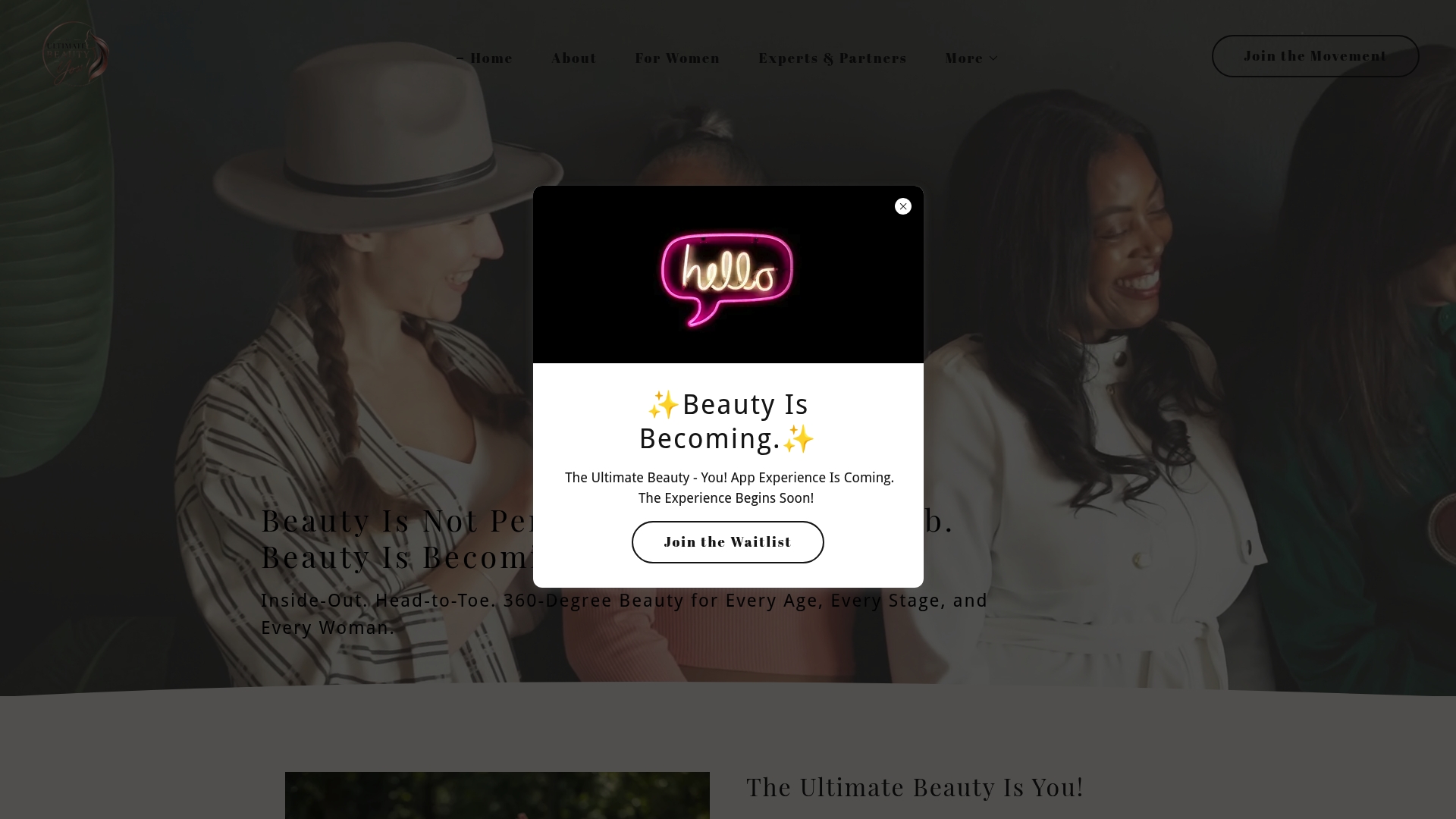
While SEO tools drive organic search traffic, Theultimatebeauty-you connects wellness brands, experts, and practitioners directly with a women-centered community that is already engaged, already curious, and already growing. No ad spend. No algorithm dependency. Your brand or practice gets listed where your audience lives, alongside trusted experts and resources they return to.
For wellness brands ready to grow beyond search rankings, explore partnership and listing options at Theultimatebeauty-you. Or visit the platform directly to see how community-driven discovery works alongside your existing SEO strategy.
Useful links and where to try these tools
SEO platforms and plugins:
- Semrush — Free trial available; full suite with AI search monitoring
- SurferSEO — Free trial available; best for content optimization
- AIOSEO — Free version available on WordPress.org; paid plans from $49.60/year
- SealSEO — Free tier available; paid plans from $20/month
- Clustea — Paid plans from $12/month; GSC-driven cluster publishing
YMYL and E-E-A-T guidance:
- Keyword research framework for health & wellness SEO (SEOBRO.Agency) — Intent-first playbook for wellness publishers
- SatelliteAI Healthcare SEO Platform — Enterprise-level MLR/validation workflows for regulated health content
- TechnologyAdvice: Best SEO Tools — Feature comparisons and pricing benchmarks
Theultimatebeauty-you resources:
- Beauty brand SEO strategy guide — Content-focused SEO for beauty and wellness brands
- Niche targeting in beauty — How to narrow your keyword focus for better results
Always verify current pricing and feature limits directly on vendor pages before purchasing. Plans and tiers change frequently.