
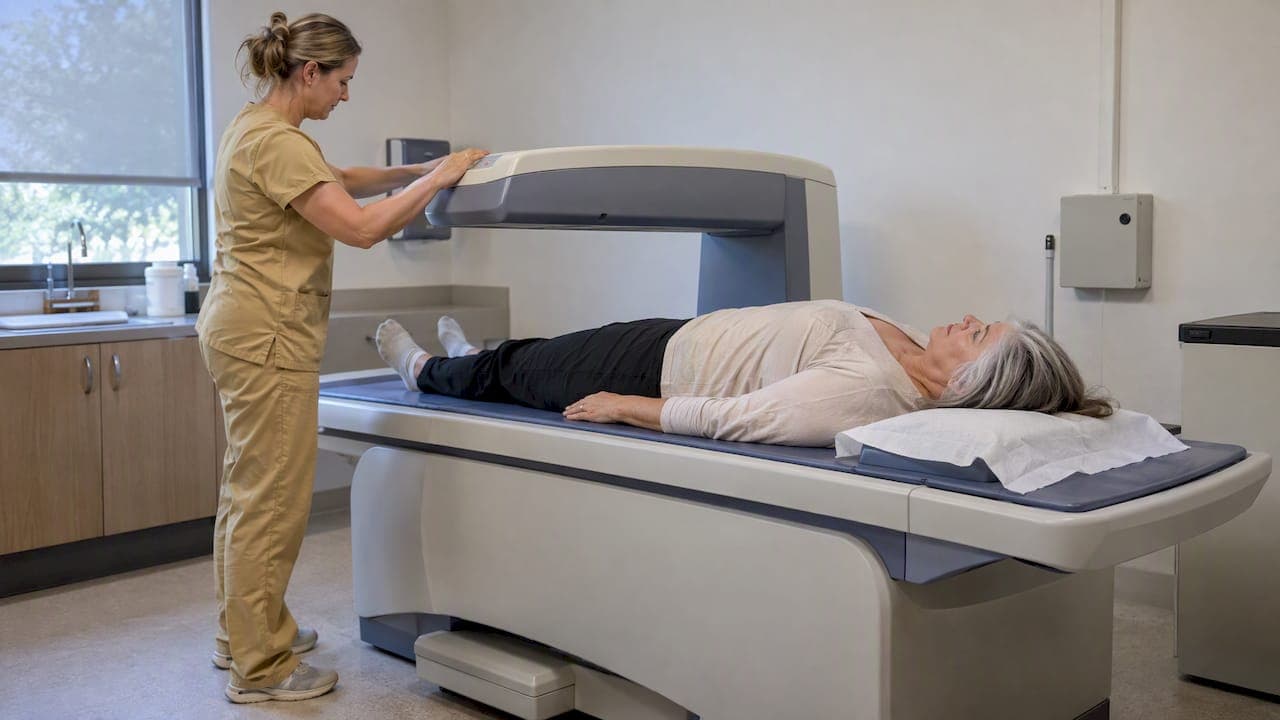
The single most important thing you can do for your bones is to combine daily calcium and vitamin D with regular weight-bearing and resistance exercise, then get screened with a DXA scan if you are 65 or older, or younger with risk factors, as USPSTF guidelines recommend. These three moves, nutrition, movement, and timely testing, form the foundation on which everything else builds.
TL;DR:
- DXA screening is recommended for women 65 and older, and for younger postmenopausal women with clinical fracture risks, including long term steroid use.
- Premenopausal women should be assessed with Z-scores, which compare bone density with peers of similar age, rather than T-scores alone.
- Women ages 19 to 50 need 1,000 milligrams of calcium daily; women 51 and older need 1,200 milligrams, preferably from food.
- Adults up to 70 commonly need 600 IU of vitamin D daily, rising to 800 IU afterward; clinicians may check levels when risk factors exist.
- Aim for weight bearing activity four to five days weekly, resistance training two to three times, and balance practice once or twice, with gradual progression.
Table of Contents
- Quick Bone-Health Checklist: What to Do This Week
- Who Is Most at Risk and How Risk Changes Across Life Stages
- Screening and Diagnosis: What DXA Tells You and When to Test
- Nutrition and Supplements That Help Bones: Practical Guidance
- Exercise Plan to Build and Preserve Bone
- Menopause and Hormones: What Changes and How to Approach Options
- Treatment Overview: Medication Classes, Goals, and Monitoring
- Publisher Resources and Practical Tools From The Ultimate Beauty - You!
- How to Read Bone Lab Tests Beyond DXA
- Psychological and Social Factors Affecting Adherence to Bone Health Regimens
- Guidance on When to Consult a Specialist or Endocrinologist
- Author Perspective: A Prevention-First Mindset
- How The Ultimate Beauty - You! Can Help
- FAQ
- Sources
Quick Bone-Health Checklist: What to Do This Week
Bone strength is built through small, repeated choices, not dramatic overhauls. Start here:
- Eat calcium-rich foods daily (dairy, leafy greens, fortified plant milk) and get sun or a vitamin D3 supplement.
- Walk most days and add two resistance-training sessions weekly to load your bones.
- If you are 65 or postmenopausal with risk factors, talk to your clinician about scheduling a DXA scan.
- Check your home for fall hazards: loose rugs, poor lighting, and clutter on stairs.
Pro Tip: Pair your calcium-rich meal with a short walk afterward. Movement plus nutrient timing supports the way your body uses what you feed it.
Who Is Most at Risk and How Risk Changes Across Life Stages
Women build most of their skeletal strength by their late twenties, which means the bone you accumulate in your teens and twenties becomes the foundation you rely on for decades. After that, bone mass holds fairly steady until perimenopause, when falling estrogen levels accelerate loss, sometimes sharply, during the first several years after menopause.
Certain conditions and medications raise risk further: long-term steroid use, thyroid disorders, celiac disease, and a history of eating disorders or low body weight all interfere with bone maintenance. Smoking and heavy alcohol use compound the problem.
The numbers make the stakes clear. About 10 million Americans have osteoporosis, and roughly 80% are women, with one in three women over 50 expected to experience an osteoporotic fracture in her lifetime. Many American women have osteopenia, a condition of lower bone density that often comes before osteoporosis. These patterns, along with differences in prevalence across racial groups, are part of why screening guidelines target midlife and beyond rather than waiting for a fracture to prompt the conversation.

Screening and Diagnosis: What DXA Tells You and When to Test
A DXA scan (dual-energy X-ray absorptiometry) measures bone mineral density at the hip and spine, the sites most predictive of fracture risk, and remains the diagnostic standard for osteoporosis. The USPSTF recommends DXA screening for all women 65 and older, and for postmenopausal women younger than 65 who have one or more clinical risk factors for fracture.
Your results come back as a T-score, which compares your bone density to that of a healthy young adult:
- A T-score above -1.0 is considered normal.
- A T-score between -1.0 and -2.5 indicates osteopenia, or low bone mass.
- A T-score below -2.5 indicates osteoporosis.
Premenopausal women are evaluated differently. Because T-scores compare you to a young, healthy population, Z-scores, which compare your density to age-matched peers, are the more appropriate tool for younger women; relying on a T-score alone can overstate risk in this group. Once you have a result, your clinician may plug it into a fracture risk calculator like FRAX alongside age, weight, and family history to decide whether lifestyle measures alone are enough or whether medication should enter the conversation.
Nutrition and Supplements That Help Bones: Practical Guidance
Food is your first line of defense. Calcium needs shift with age: women 19 to 50 should aim for 1,000 milligrams daily, while women 51 and older need 1,200 milligrams daily. Vitamin D recommendations commonly cited are 600 IU for adults up to 70 and 800 IU for those older, though your clinician may suggest checking your serum 25(OH)D level if you have risk factors, since needs vary.
Good food sources include:
- Dairy products, fortified plant milks, and leafy greens like kale and bok choy for calcium.
- Fatty fish, egg yolks, and fortified foods for vitamin D, supplemented with time outdoors.
- Protein-rich foods (lean meat, legumes, dairy) to support the collagen matrix bone is built on.
Nearly 27.3 million American women live with osteopenia, the low-bone-mass stage that often goes unnoticed until a scan catches it, according to prevalence data on osteoporosis and osteopenia. That gap between awareness and reality is exactly why food-first habits paired with periodic screening matter so much.
When diet alone cannot close the gap, a vitamin D3 supplement is the form most commonly recommended; our guide to supplements by life stage walks through how to choose one, and a practical overview of vitamin D dosing by age offers additional detail if you want to go deeper. Vitamin K2 and magnesium are often discussed as supporting nutrients for bone metabolism, though the evidence for each is still developing, so think of them as complements to calcium and vitamin D rather than replacements.
Exercise Plan to Build and Preserve Bone
Bone responds to load. Weight-bearing activity and progressive resistance training signal your body to maintain and build density, while a sedentary routine sends the opposite signal. A balanced weekly plan looks like this:
- Walk, hike, or dance four to five days a week for weight-bearing impact.
- Add two to three resistance-training sessions targeting major muscle groups, progressing the load gradually.
- Include one or two balance-focused sessions, such as tai chi or standing single-leg work, to reduce fall risk.
- Rest at least one full day to let your body adapt.
If you have existing joint issues, osteoporosis, or balance concerns, a physical therapist can tailor the plan safely.
Pro Tip: Strength work doesn't need a gym. Bodyweight squats, wall push-ups, and resistance bands at home build the same loading response. Our 3-day strength plan for women offers a structured starting point if you want a ready-made routine.

Menopause and Hormones: What Changes and How to Approach Options
Estrogen plays a direct role in maintaining bone density, and its decline during the menopause transition is the main driver behind the accelerated bone loss many women experience in their late forties and fifties. This is part of why screening conversations often begin earlier for women with additional risk factors, rather than waiting until 65.
Menopausal hormone therapy has shown it can preserve or increase bone density and reduce fracture risk, though the decision involves weighing those benefits against individual cardiovascular and cancer risk factors. Clinicians typically consider MHT for bone preservation when a woman has significant menopausal symptoms alongside bone health concerns, while other pharmacologic options may be preferred when symptoms are absent. Shared decision-making, guided by your personal history and the lowest effective dose, is the standard approach. Our evidence-based plan for perimenopause symptom relief covers nonpharmacologic strategies that can run alongside whatever your clinician recommends.
Treatment Overview: Medication Classes, Goals, and Monitoring
When lifestyle measures are not enough, or a DXA scan shows significant bone loss, treatment aims to reduce fracture risk rather than simply raise a number on a scan. Several medication classes are available, each working differently:
- Bisphosphonates slow the cells that break down bone and are often a first-line option.
- Denosumab, a RANKL inhibitor, works through a different pathway to reduce bone breakdown.
- SERMs (selective estrogen receptor modulators) offer estrogen-like benefits to bone with a different risk profile than hormone therapy.
- Parathyroid hormone analogs and sclerostin inhibitors actively stimulate new bone formation, typically reserved for more severe cases.
NIAMS clinical guidance notes that these medication classes reduce fracture risk in appropriate patients, and that the choice among them is individualized based on severity, other health conditions, and personal preference. Monitoring typically involves repeat DXA scans every one to two years and ongoing conversations about side effects and adherence, since a medication only works if you actually take it as prescribed.
Publisher Resources and Practical Tools From The Ultimate Beauty - You!
We built our 3-day strength plan for women and our guide to supplements by life stage specifically to help you turn the habits in this article into something sustainable. Clinical guidance gives you the targets; our community and expert content help you actually stick with them, week after week, through the life stage you're in right now. We see these resources as companions to your clinician's care, not replacements for it, giving you a place to return to when motivation dips or questions come up between appointments.
How to Read Bone Lab Tests Beyond DXA
DXA gives you a snapshot of bone density, but it does not tell you how quickly your bones are remodeling right now. That is where bone turnover markers come in. These are blood or urine tests that measure byproducts of bone formation and breakdown, giving your clinician a sense of the pace at which your skeleton is changing.
Markers like CTX (a breakdown marker) and P1NP (a formation marker) are sometimes used to see how quickly bone is being lost, or to check whether a medication is working as expected a few months after starting treatment, since DXA changes take a year or more to show up reliably. They are not typically used to diagnose osteoporosis on their own, DXA still holds that role, but they can add useful context, particularly for women whose risk factors or symptoms do not line up cleanly with their T-score.
Other labs your clinician might order alongside a DXA scan include serum calcium, vitamin D (25(OH)D), parathyroid hormone, and thyroid function, since imbalances in any of these can either mimic bone loss or actively contribute to it. If your results come back unusual, that is not necessarily cause for alarm. It is simply a signal that your care team needs more information before mapping out next steps. Bring up any lab result you do not understand directly with your clinician rather than searching for a universal reference range online, since normal values can shift based on the lab, your age, and the specific test used.
Psychological and Social Factors Affecting Adherence to Bone Health Regimens
Knowing what to do for your bones and actually doing it consistently are two different challenges. Bone loss is silent for years, often decades, which makes it easy to deprioritize a daily supplement or a strength session when there is no immediate symptom reminding you why it matters.
Life stage adds another layer. Women in perimenopause are often juggling caregiving responsibilities, career demands, and their own shifting symptoms, all of which compete for the same limited bandwidth that a new exercise habit requires. Financial stress can also affect adherence directly, since consistent access to calcium-rich foods, gym memberships, or supplements is not guaranteed for every household.
Social support changes the picture meaningfully. Women who exercise with a friend, join a class, or talk through their bone health concerns with others in a similar life stage tend to stick with new habits longer than those going it alone. A sense of community turns an isolated chore into a shared practice, which is part of why peer connection shows up again and again in discussions of long-term health behavior change.
Simplifying the regimen also helps. Choosing one consistent time of day for a supplement, pairing a walk with an existing routine like a morning coffee, or tracking workouts in a simple habit app lowers the mental load required to stay consistent. The goal is not perfection. It is building a rhythm you can return to even after a disrupted week, because bone health is measured in years and decades, not single days.
Guidance on When to Consult a Specialist or Endocrinologist
Most bone health conversations start and stay with a primary care provider or gynecologist, and that is appropriate for the majority of women. A referral to an endocrinologist or a specialist in metabolic bone disease becomes worth raising in a few specific situations.
If your DXA results are notably worse than expected for your age, or if bone loss continues rapidly despite treatment, a specialist can look more closely for an underlying cause, such as a thyroid or parathyroid disorder, that a general workup might miss. The same is true if you are diagnosed with osteoporosis at an unusually young age, since premenopausal osteoporosis often points to a secondary cause that needs its own investigation, as reviews on bone fragility in women note.
A specialist referral also makes sense if you have had a fracture from a minor fall or bump, known as a fragility fracture, since this is a strong signal that your current approach needs reassessment regardless of what your last DXA showed. If you are not tolerating a medication, or multiple treatments have not worked as expected, an endocrinologist can offer options and monitoring that fall outside the scope of a routine visit.
Bring your full history to that appointment: past DXA results, medication list, family history of fractures, and any lab work you have already had done. That context helps a specialist move quickly to what matters for your specific case rather than starting from scratch.
Author Perspective: A Prevention-First Mindset
We believe prevention beats correction every time. Build habits early, show up for screening conversations without waiting for a symptom, and trust that small weekly choices compound into real strength over decades.
— Ava
How The Ultimate Beauty - You! Can Help

We know that reading guidelines is one thing and living them, week after week, is another. That's why our platform brings strength programs, supplement guidance, and expert-written resources into one place, so you are not piecing your bone health plan together from scattered sources.
- Our experts and partners connect you with trusted voices across beauty, wellness, and midlife health.
Visit The Ultimate Beauty - You! to explore the full ecosystem built to support you at every stage of becoming.
This article is general information, not a substitute for advice from a qualified doctor. Consult a qualified healthcare professional about your own circumstances before acting on anything here.
FAQ
What are the effects of osteoporosis, and who is most affected?
Osteoporosis weakens bone to the point where fractures can occur from minor falls or everyday movements, most commonly affecting the hip, spine, and wrist. About 10 million Americans have osteoporosis, and roughly 80% are women, with one in three women over 50 expected to experience a related fracture in her lifetime.
Can I improve my bone density without medication?
Yes, for many women, consistent weight-bearing exercise, resistance training, and adequate calcium and vitamin D intake can meaningfully support bone density, particularly when started before significant loss occurs. Whether lifestyle changes alone are sufficient depends on your DXA results and individual risk factors, so this is a conversation worth having with your clinician.
How is osteopenia treated in women?
Osteopenia, a T-score between -1.0 and -2.5 on a DXA scan, is typically managed first with lifestyle measures: calcium, vitamin D, and weight-bearing exercise. Medication is usually reserved for osteopenia only when additional risk factors raise the fracture risk calculation meaningfully.
How can I support bone strength naturally?
The most reliable natural approach combines weight-bearing activity, progressive resistance training, and adequate calcium and vitamin D from food or supplements, since these directly stimulate the cells responsible for maintaining bone. Avoiding smoking and limiting alcohol also protects the bone-building process over time.
When should I get a bone density test?
The USPSTF recommends DXA screening for all women 65 and older, and for postmenopausal women younger than 65 with one or more clinical risk factors for fracture. If you have a strong family history, take long-term steroids, or have a condition that affects bone metabolism, talk to your clinician about testing earlier.
Sources
- Prevalence of osteoporosis and osteopenia — PMC
- Osteoporosis to Prevent Fractures: Screening | USPSTF
- T-scores and DXA results — UAB