
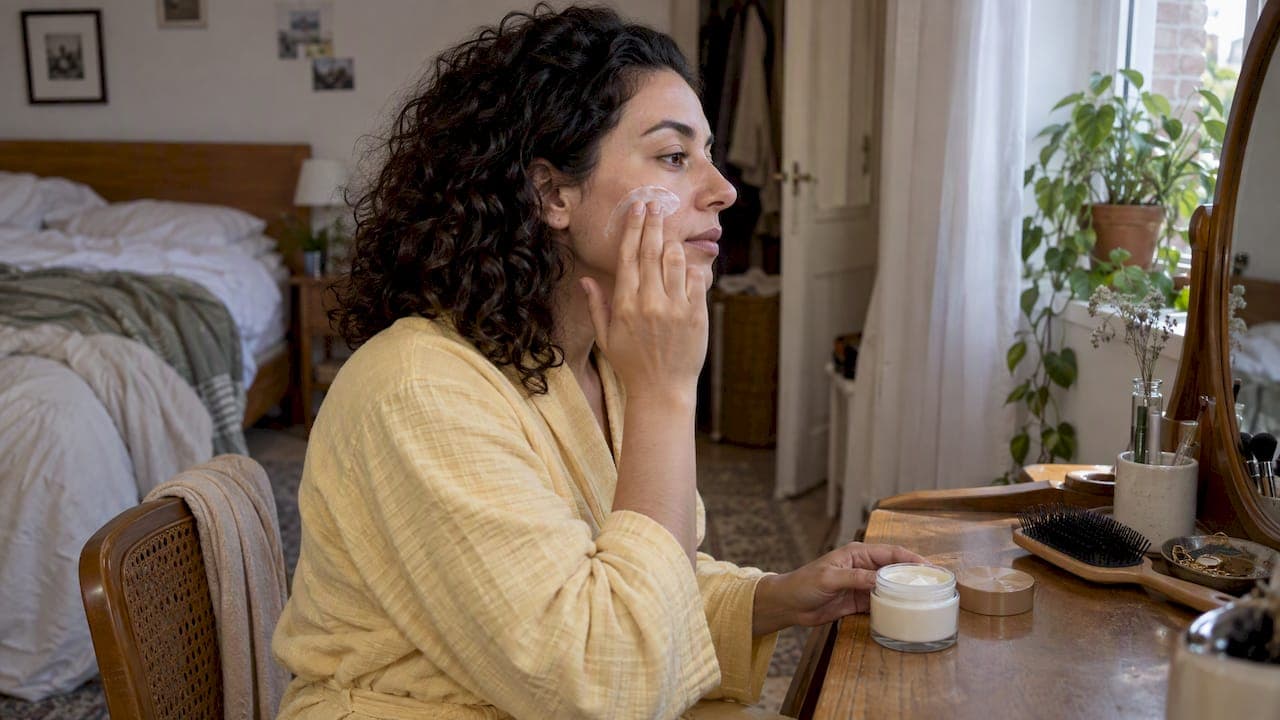
Cycle syncing skincare works best as a steady core routine plus small, temporary tweaks, not a weekly product overhaul. Hormones do shape your skin, and dermatologists advise consistency over constant swapping. Read the phase-by-phase tweaks below. If breakouts hit your jawline every month and nothing helps, see a dermatologist.
TL;DR:
- Acne counts averaged 5–6 units higher in the late luteal and early follicular phases; reserve benzoyl peroxide or salicylic acid for individual spots.
- During menstruation, pause retinoids for a few days if your skin feels irritated; in the follicular phase, reintroduce exfoliants once or twice weekly.
- Give new active ingredients several weeks to months, add only one at a time, and track your cycle day, symptoms, and product changes.
- Deep, painful, persistent jawline breakouts warrant a dermatologist; hormonal treatments may take 2–3 months, and pregnancy plans affect which options are safe.
Table of Contents
- What should your skin care routine for periods look like in each phase?
- What do research and dermatologists agree on?
- When is it hormonal acne, and what can a dermatologist offer?
- What does a simple AM/PM core routine look like?
- How do hormones affect your skin barrier and sensitivity?
- Do hydration and supplements belong in a cycle-aware routine?
- How should you adjust your routine with the seasons?
- Why I keep it simple
- How we can support your cycle-aware routine
- FAQ
- Sources
What should your skin care routine for periods look like in each phase?
Your cycle has distinct phases, and your skin may behave a little differently across them. Think of these as gentle nudges, not strict rules. Your base routine stays the same. Only a few steps shift.
Menstruation (menses)
Skin may feel dry, dull or more sensitive during menstruation.
- AM: Use a gentle cleanser, a hydrating moisturizer with ceramides or hyaluronic acid, and broad-spectrum SPF.
- PM: Cleanse softly and moisturize generously. Skip scrubs and strong acids.
- Ingredients to favor: Hyaluronic acid, glycerin, ceramides.
- Avoid: Harsh exfoliants and anything that stings.
Follicular phase
Skin may feel calmer or more resilient during the follicular phase. This is a good window to reintroduce a gentle chemical exfoliant, like lactic acid, once or twice a week.
- AM: Add an antioxidant serum such as vitamin C if your skin likes it, then moisturizer and SPF.
- PM: Resume your retinoid or exfoliant on its usual nights.
- Ingredients to favor: Vitamin C, lactic acid, niacinamide.
- Avoid: Adding two new actives at once.
Ovulation
Skin may look brighter and feel more elastic, thanks to higher blood flow. Protect that glow.
- AM: Antioxidants, a lightweight moisturizer and SPF every day.
- PM: Keep your regular routine. No need to push harder.
- Ingredients to favor: Antioxidant serums, light humectants.
- Avoid: Over-exfoliating because your skin feels good.
Luteal phase (before your period)
Some people notice more oil and breakouts along the jawline and chin during the luteal phase.
- AM: Gentle cleanser, oil-free or noncomedogenic moisturizer, SPF.
- PM: Spot-treat blemishes with benzoyl peroxide or salicylic acid. Keep your retinoid on its normal schedule unless your skin turns irritated.
- Ingredients to favor: Salicylic acid, benzoyl peroxide, niacinamide, azelaic acid.
- Avoid: Heavy, occlusive creams on the jawline and picking at blemishes.
What do research and dermatologists agree on?
Here is where the evidence stands. A scoping review of skin physiology found that elasticity, temperature, blood flow and sweating shift across the cycle, while changes in skin hydration were inconsistent from study to study. So your skin really does change. The changes just aren't as predictable or as dramatic as many social media routines suggest.
Acne is the clearest signal. A large international study found acne counts were higher by an average of 5–6 units during the late luteal and early follicular phases, in a group of 17,009 women across 20 countries.
Breakouts rise around the end of your cycle, so plan your spot treatments for the days before your period.
Dermatologists quoted in Women's Health pushed back on the weekly-swap trend:
Frequent weekly product swapping can keep active ingredients from working and may cause irritation. Consistent, simple routines with small, strategic adjustments tend to do better.
Three rules follow from that:
- Give an active weeks to months to show what it can do.
- Reintroduce or add one active at a time.
- Track your skin and symptoms so you can see real patterns.
When is it hormonal acne, and what can a dermatologist offer?
Hormonal acne tends to be predictable. Flares often land on the jawline and chin right before your period. Deep, painful bumps and breakouts that stick around despite over-the-counter care are other clues. When breakouts follow that pattern and persist, the American Academy of Dermatology says medical treatment should be considered, not just more routine changes.
Options to discuss with a board-certified dermatologist:
- Combined oral contraceptives: Hormonal therapies like this typically take 2–3 months to show results.
- Spironolactone: An oral medicine that targets the hormone effects behind acne.
- Topical clascoterone (Winlevi): A prescription cream that works on hormone signaling in the skin.
- Topical staples: The AAD lists retinoids, benzoyl peroxide, salicylic acid and azelaic acid as core options, often combined, with oral antibiotics limited when possible.
If you are pregnant or planning to be, tell your provider before starting any hormonal therapy. Some ingredients and medicines are not safe in pregnancy, and our guide on pregnancy-safe skincare walks through what to avoid.
What does a simple AM/PM core routine look like?
Start with a base you can repeat every day. Then use the quick checklist to make small, temporary changes.
- Core AM: Gentle cleanser, optional antioxidant serum, lightweight moisturizer with humectants or ceramides, broad-spectrum SPF.
- Core PM: Gentle cleanser, your scheduled retinoid or acne active, then moisturizer. Do not switch nights from week to week.
- Luteal flare plan: Dab benzoyl peroxide or salicylic acid on individual spots only.
- Menses tweak: If your skin gets sensitive, pause the retinoid for a few days, then resume.
- Adding or removing an active: Change one thing, keep it steady for a while, and watch how your skin responses before touching anything else.
Pro Tip: Jot down your skin, your cycle day and any product change every few days. Small, conservative adjustments are easier to judge when you can see the pattern.
If you want a simpler template to build on, our simple skincare routine is an easy starting point you can adapt.
How do hormones affect your skin barrier and sensitivity?
Your skin barrier is the outer layer that holds in water and keeps irritants out. Hormone shifts can change how well it performs, which is why the same serum may feel lovely one week and sting the next.

In a pilot study of acne-prone skin, researchers measured water loss through the skin, oil levels, hydration and pore volume across cycle phases, and saw measurable differences. The authors suggested that personalized routines could be guided by tracking those signals. In everyday terms: your skin may be more reactive at certain points, so patience with new products pays off.
What helps most is barrier support. Reviews of adult female acne note that barrier-supporting moisturizers and dermocosmetics play an important supporting role next to medical therapy. Ingredients such as ceramides, glycerin and niacinamide have clinical roles in barrier repair alongside azelaic acid and retinaldehyde.
Some practical ways to protect your barrier:
- Choose fragrance-free moisturizers on days your skin feels tight or stingy.
- Avoid layering several actives at once.
- If something burns, rinse it off and rest your skin for a few days.
Barrier care isn't limited to your face. Our body skincare routine shows how the same ceramide-forward approach works head to toe. Some skincare brands also build around the skin microbiome, such as the LactoReborn approach to barrier support, which is worth a look if you are curious about that direction.
Do hydration and supplements belong in a cycle-aware routine?
Hydration works on two levels: what you put on your skin and what you drink. Topically, humectants like hyaluronic acid and glycerin pull water in, and a ceramide moisturizer helps seal it. The scoping review noted that measured skin hydration changes were inconsistent across the cycle, so you don't need a different moisturizer every week. One reliable formula, used daily, does the job.
Drinking enough water supports overall health, but no strong evidence in our sources shows that extra water alone clears breakouts. Treat it as a good habit, not a treatment.
Supplements deserve more caution. Our sources don't establish that any supplement fixes cycle-related skin changes, so think of them as optional extras, not a core step. If you are curious about nutrition-based support, brands like Kikaboni share background on ingredients such as sea moss. Treat that as context, not proof.
A few ground rules before you add anything:
- Check with your doctor or pharmacist first, especially if you take medication or are pregnant.
- Start one supplement at a time so you know what is doing what.
- Give it weeks, not days, and keep your skincare steady while you test.
Eating well, sleeping enough and managing stress support your skin from the inside. These habits build the foundation, and they pair well with the steady routine above. Our holistic beauty routine covers that inside-out approach.
How should you adjust your routine with the seasons?
Seasons add a second layer to your cycle. Cold, dry air and indoor heating in winter can leave your skin tight, flaky and more reactive, which stacks on top of the dryness many people feel during menstruation. Humid summer weather can push oil up, which may add to luteal-phase breakouts.
Think in terms of swapping texture, not overhauling your routine:
- Winter: Move to a richer, ceramide-heavy moisturizer. Keep your gentle cleanser. If you use a retinoid, you may need to apply it less often, or buffer it with moisturizer, when skin feels raw.
- Summer: Choose a lighter, gel-style or oil-free moisturizer. Keep spot treatments handy for the luteal phase.
- Year-round: Wear broad-spectrum SPF. Retinoids, exfoliating acids and some acne treatments can make skin more sun-sensitive, so sunscreen matters in every season, not just summer.
When the weather and your cycle collide, say a dry winter week that lands on menses, lean on hydration and skip the exfoliant. When a humid week meets the luteal phase, lighten your moisturizer and spot-treat. One change at a time keeps it manageable, and the rest of your routine stays put.
Why I keep it simple
I have tried the weekly product rotations, and the lesson I keep coming back to is that maintenance beats novelty. A steady routine, a few notes about how your skin behaves and small, low-risk tweaks will take you further than a shelf full of phase-labeled bottles. Our community is a good place to compare patterns, so please share what you notice with us. Small adjustments are gentle and safe for most people. And if breakouts keep returning, a dermatologist can help you far more than another product can.
— Ava
How we can support your cycle-aware routine
We built The Ultimate Beauty - You! to give you trusted expert content, routine templates and a welcoming community, with an app on the way.

- Explore expert-backed resources and routine ideas on our main site.
- Browse our curated products when you are ready to build your core routine.
FAQ
Does cycle syncing actually work?
Hormones really do change skin, so paying attention to your cycle can help. Dermatologists caution, though, that wholesale weekly product swaps are often more performance than payoff. Small, strategic tweaks on top of a steady routine tend to work better.
Can the menstrual cycle cause acne breakouts?
Yes. In a large study, acne counts rose by 5–6 units on average in the late luteal and early follicular phases. Breakouts along the jawline and chin right before your period are the classic pattern.
How long does it take to see results from skin care changes?
Give an active ingredient several weeks before judging it. Hormonal medical treatments like oral contraceptives or spironolactone typically need 2–3 months to show results, according to the American Academy of Dermatology.
When should I see a dermatologist about period-related breakouts?
Book a visit if your breakouts are painful, deep or keep returning on the jawline despite over-the-counter care. A board-certified dermatologist can talk through options like spironolactone, contraceptives or clascoterone.
Sources
- Stubborn acne? Hormonal therapy may help
- Physiological Changes in Women’s Skin During the Menstrual Cycle: A Scoping Review - PMC
- Should You Sync Skincare With Your Menstrual Cycle?