
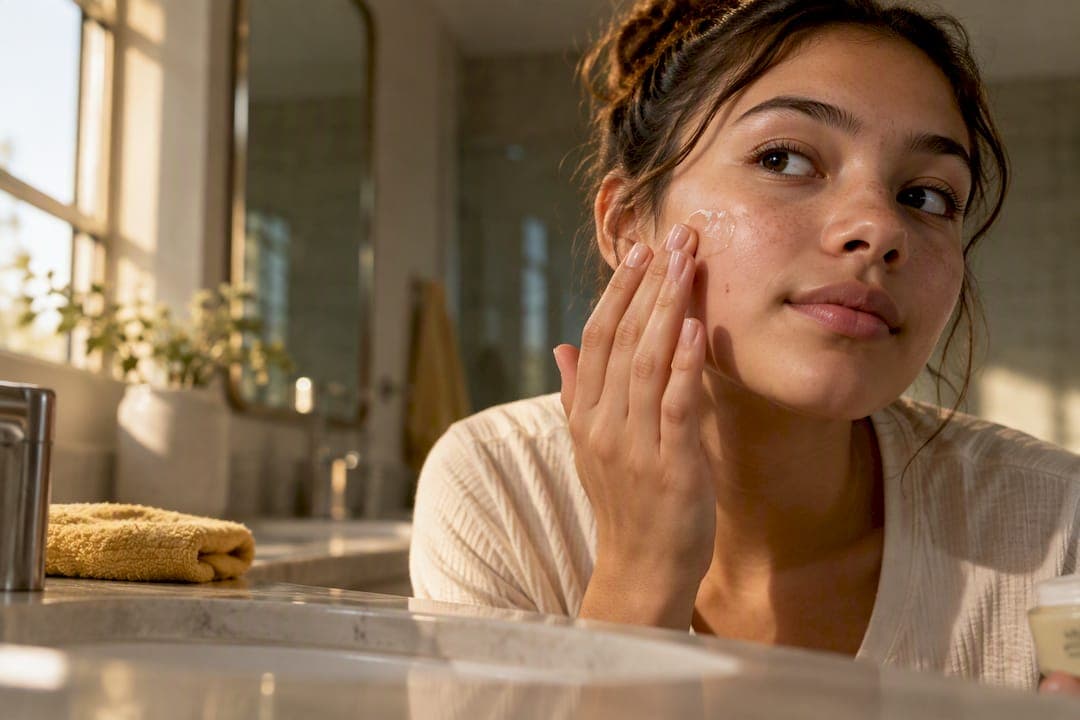
The routine that works for most teens is three steps: a gentle cleanser, a moisturizer, and daily sunscreen. Add benzoyl peroxide, salicylic acid, or over the counter adapalene only when breakouts show up, and give any new product several weeks before judging it. Board certified dermatologists and the American Academy of Dermatology back this minimal approach over trendy multi-step regimens. See a dermatologist if acne is painful, cystic, or leaving scars.
TL;DR:
- Most teens benefit from just a gentle cleanser, moisturizer, and sunscreen, adding acne treatments only when breakouts become visible or severe.
- A routine should be consistent, with products introduced gradually and given six to eight weeks to show results before switching or quitting.
- Products should be fragrance-free, non-comedogenic, and lightweight, avoiding harsh exfoliants, bar soaps, and multi-active routines that risk irritation.
- Combining benzoyl peroxide with adapalene enhances results by targeting both bacteria and pore clogging, but start slowly to build tolerance.
- Teens with cystic, painful, or persistent acne, or those not improving after two months of OTC care, should consult a dermatologist for personalized treatment.
Table of Contents
- Building Your Teen Skincare Routine, Step by Step
- Which Acne Treatments Actually Work?
- Tween vs. Teen: What Changes as Skin Matures?
- What Ingredients Should Teens Avoid?
- How Do You Stick With a Skincare Routine?
- Why Trust This Teen Skincare Advice?
- Does Hydration and Diet Really Affect Teen Skin?
- Can Teens Wear Makeup Without Making Acne Worse?
- How Do Sleep and Stress Affect Teen Skin?
- How Should Teens Handle Blackheads and Whiteheads?
- What Skin Type Do You Have, and Why Does It Matter?
- The Real Problem With Teen Skincare Advice Online
- Sources
- FAQ
Building Your Teen Skincare Routine, Step by Step
Getting the order right matters as much as picking the right products. A great routine fails when steps happen out of sequence or when "gentle" gets confused with "watered down." Here's how the morning and evening actually break down for a teenage skincare routine that holds up over time.
Morning routine:
- Cleanse with a gentle, fragrance-free face wash, or rinse with lukewarm water only if your skin runs dry or tight.
- Apply a lightweight, non-comedogenic moisturizer if your skin needs it.
- Finish with broad-spectrum sunscreen, SPF 30 or higher. This step goes last, every time, no exceptions.
Evening routine:
- Remove makeup or sunscreen residue thoroughly, then cleanse.
- Apply any acne treatment, if you're using one.
- Moisturize to lock in hydration and calm irritation from actives.
Cleansing itself is a small skill worth doing right. Use lukewarm water, never hot, since hot water strips the skin's natural barrier. Massage the cleanser with your fingertips only (skip the washcloths and scrubbing pads) for about 10 to 20 seconds, rinse fully, then pat the skin dry instead of rubbing.
Product selection follows a few consistent rules:
- Choose fragrance-free formulas whenever possible, since fragrance is one of the top irritants for young, reactive skin.
- Look for "non-comedogenic" on the label, meaning it won't clog pores.
- Favor lightweight gels or lotions over heavy creams, especially for oily or acne-prone skin.
- Skip bar soaps and anything labeled "deep cleansing" or "exfoliating" for daily use.
Moisturizer trips people up the most. Oily skin still needs it. Skipping moisturizer when skin feels greasy often backfires, triggering the skin to produce even more oil to compensate for the dryness a harsh cleanser left behind. A gel-based, oil-free moisturizer solves this without adding shine.
Which Acne Treatments Actually Work?
Three ingredients carry real evidence behind them: benzoyl peroxide, salicylic acid, and adapalene. Each does a different job, and knowing which one fits which problem saves a lot of trial and error.
Benzoyl peroxide kills the bacteria that drive inflamed, red pimples. Salicylic acid works inside the pore, breaking down the oil and dead skin cells that cause blackheads and clogged pores. Adapalene, a topical retinoid available over the counter, normalizes how skin cells shed inside the follicle, which prevents new clogs from forming in the first place.
Clinical research on acne treatment shows that combining a retinoid like adapalene with benzoyl peroxide works better than using either ingredient alone. That pairing addresses both the bacterial and the clogging side of acne at once.
Start slow. Apply a retinoid or benzoyl peroxide just two or three nights a week at first, then patch test on a small area of skin before going all in. Increase frequency gradually as tolerance builds.
- If redness, peeling, or stinging shows up, cut back frequency rather than quitting the product outright.
- Follow with a plain, fragrance-free moisturizer to buffer irritation.
- Know that benzoyl peroxide will bleach colored fabric, so switch to white pillowcases or a dedicated white towel while using it.
See a dermatologist if breakouts are cystic or painful, if acne leaves dark marks or scars, if there's no improvement after a couple of months of consistent use, or if breakouts are affecting mood or confidence day to day.
Pro Tip: Apply acne treatments to the entire acne-prone area, not just individual pimples. These actives work by preventing new breakouts, not just treating existing ones.
Tween vs. Teen: What Changes as Skin Matures?
Age isn't really the deciding factor here. Skin condition is. Still, there are useful general patterns for tweens (roughly under 12) versus older teens.
- Tweens usually need just a gentle cleanser and daily sunscreen. Moisturizer gets added only if skin runs dry, flaky, or irritated.
- Teens with active breakouts can add one targeted treatment to that same simple base, once skin actually shows signs of acne.
- Watch the skin, not the birthday. A 12 year old with persistent blackheads may need salicylic acid before a 15 year old with clear skin ever does.
- Parents play a real role here: help choose products, supervise the first patch test, and keep a young teen from mixing five different actives because a video told them to.
Age-specific routine guidance can help parents map out what changes as kids move from tween to teen to young adult skin.
What Ingredients Should Teens Avoid?
Young skin is thinner and more reactive than adult skin, which makes it more prone to irritation and allergic contact dermatitis when it meets ingredients built for a 40 year old's concerns. Dermatologists specifically advise against anti-aging actives like retinol, vitamin C serums, and strong exfoliating acids unless a doctor has prescribed them for acne.
Skip these unless a dermatologist says otherwise:
- Retinol or other anti-aging retinoids (adapalene for acne is a different case and generally fine)
- Vitamin C serums layered under other actives
- Frequent use of strong chemical exfoliants like high-percentage glycolic or lactic acid
- Stacking multiple actives in the same routine, which multiplies irritation risk
Stick to the basics instead: fragrance-free cleansers, moisturizers built around ceramides or hyaluronic acid for hydration, and sunscreen. Trendy multi-step routines marketed on social media often skip sunscreen entirely while piling on actives, which is close to the opposite of what dermatologists recommend.
How Do You Stick With a Skincare Routine?
Most routines don't fail because the products are wrong. They fail because teens switch too soon.
- Commit to any new product for a full 6 to 8 weeks before deciding whether it's working. Skin cell turnover takes time, and switching too early is one of the most common reasons routines fail.
- Introduce one new product at a time, so if irritation shows up, you know exactly what caused it.
- Find a sunscreen texture you'll actually reach for. Gel formulas work well for oily skin, and tinted mineral options without a white cast solve a real complaint for teens with deeper skin tones. Reapply every two hours when outdoors.
- If a product stings, reduce how often you use it before giving up on it completely, and lean on a plain moisturizer to calm things down.
Pro Tip: Keep your evening routine near your toothbrush. Pairing a new habit with one you already do automatically is one of the simplest ways to make it stick. Small habit pairing tricks like this work for skincare just as well as they do for any other daily routine.
Why Trust This Teen Skincare Advice?
This guidance is built around what board certified dermatologists actually recommend, not what's trending this week. That means favoring the simple three-step base over ten-step routines, and treating sunscreen as non-negotiable rather than optional.
"A dermatologist's guide to skincare" from the American Academy of Dermatology puts sunscreen at the top of the list for teen skin, precisely because many acne treatments increase sun sensitivity and unprotected sun exposure can darken post-acne marks that would otherwise fade on their own.
If acne is scarring, painful, or simply not responding to consistent over the counter care, that's the signal to see a dermatologist rather than trying yet another product.
Does Hydration and Diet Really Affect Teen Skin?
Skin is the body's largest organ, and it shows dehydration fast, usually as dullness, tightness, or flaking that no moisturizer fully fixes. Drinking water throughout the day supports the skin barrier from the inside, working alongside (not instead of) a good moisturizer.
Diet plays a role too, though it's easy to overstate. A few patterns show up consistently in conversations with dermatologists:
Sugary drinks and heavily processed snacks are linked to breakout flare-ups in some teens, likely tied to blood sugar spikes that trigger oil production. Dairy has a similar reputation for a subset of people, though the effect varies person to person and isn't universal. Foods rich in omega-3 fatty acids, like salmon or walnuts, support the skin barrier's ability to hold onto moisture.
None of this replaces a solid topical routine. Diet changes are a supporting habit, not a treatment for existing acne, and no food swap will out-perform a consistent cleanser, moisturizer, and sunscreen routine. Think of hydration and nutrition as the foundation the rest of the routine builds on, not a shortcut around it.
Can Teens Wear Makeup Without Making Acne Worse?
Makeup itself rarely causes breakouts. The wrong formula, or leaving it on overnight, usually does.
Look for "non-comedogenic" or "oil-free" on labels, which means the formula is designed not to clog pores. Mineral-based foundations and tinted moisturizers tend to sit lighter on acne-prone skin than heavy, full-coverage liquid foundations.
Removal matters just as much as selection. A single face wash often isn't enough to break down waterproof mascara or long-wear foundation completely, leaving residue behind that can clog pores overnight. A micellar water or gentle oil-based cleanser as a first step, followed by the regular face wash, gets skin genuinely clean rather than just visibly clean. Sleeping in makeup, even "good" makeup, is one of the most common causes of new breakouts along the hairline and jaw.
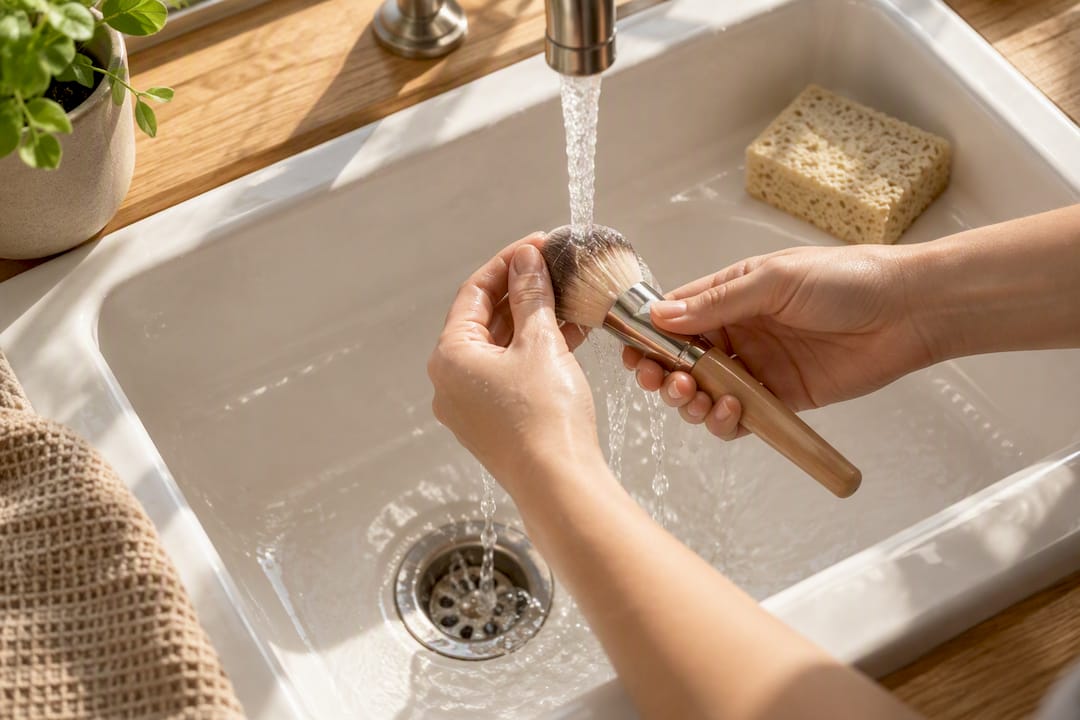
Brushes and sponges deserve attention too. Washing makeup tools once a week keeps bacteria and old product from transferring straight back onto the skin.
How Do Sleep and Stress Affect Teen Skin?
Skin repairs itself overnight, and cutting sleep short cuts that repair window short too. Teens who consistently sleep less tend to show more inflammation and slower healing of existing blemishes, along with the dullness and under-eye puffiness that come from a tired complexion generally.
Stress works through a more direct biological path. It raises cortisol, and cortisol increases oil production, which feeds the exact bacteria that cause inflamed breakouts. That's the real explanation behind the "stress breakout" pattern so many teens notice around exams or big events. It's not in their head. It's hormonal.
Neither of these problems gets solved by a new serum. Consistent sleep and basic stress management, whether that's exercise, journaling, or just enough downtime, support the skin's ability to repair itself in ways no product can substitute for. A teen skincare routine that ignores sleep and stress is working against its own progress.
How Should Teens Handle Blackheads and Whiteheads?
Blackheads and whiteheads are both clogged pores, just at different stages. A whitehead is closed over by skin, giving it that raised white bump. A blackhead is open at the surface, and the dark color comes from oil oxidizing when it hits air, not from trapped dirt.
Salicylic acid is the most reliable tool for both, since it works inside the pore to loosen the buildup causing the clog. Consistent, gentle exfoliation with a salicylic acid cleanser or leave-on treatment, used two to three times a week at first, tends to outperform occasional deep treatments.
What to avoid matters just as much as what to use. Popping or picking at blackheads and whiteheads pushes bacteria deeper into the skin and is one of the most common causes of scarring in otherwise mild acne. Pore strips offer a quick fix for surface blackheads but do nothing for the pore itself and can irritate surrounding skin with repeated use. Patience with a salicylic acid routine, given the same 6 to 8 week window as any other product, beats aggressive extraction every time.
What Skin Type Do You Have, and Why Does It Matter?
Most teens fall into one of four categories: oily, dry, combination, or sensitive. Figuring out which one shapes almost every product choice that follows.
Oily skin produces visible shine by midday, especially across the forehead and nose, and tends toward larger pores and more frequent breakouts. Gel cleansers and oil-free, lightweight moisturizers work best here.
Dry skin feels tight after washing and may show flaking or rough patches. Richer, ceramide-based moisturizers and a cream cleanser (instead of a foaming one) help restore comfort.
Combination skin runs oily through the T-zone (forehead, nose, chin) while staying normal or dry on the cheeks. This type sometimes benefits from a lightweight moisturizer overall with a slightly richer layer just on drier areas.
Sensitive skin reacts easily to new products with redness, stinging, or itching. Fragrance-free everything is the rule here, and new products get patch tested on the inner forearm before ever reaching the face.
Skin type can also shift during puberty as hormones fluctuate, so a routine that worked at 12 might need adjusting at 15. Watching how skin responds, rather than sticking rigidly to one skin type label, keeps the routine relevant as it changes.
The Real Problem With Teen Skincare Advice Online
Most teen skincare content online sells complexity. Ten-step routines, viral serums, ingredient combinations no dermatologist would actually recommend for a 14 year old's skin. The evidence points the other way entirely.
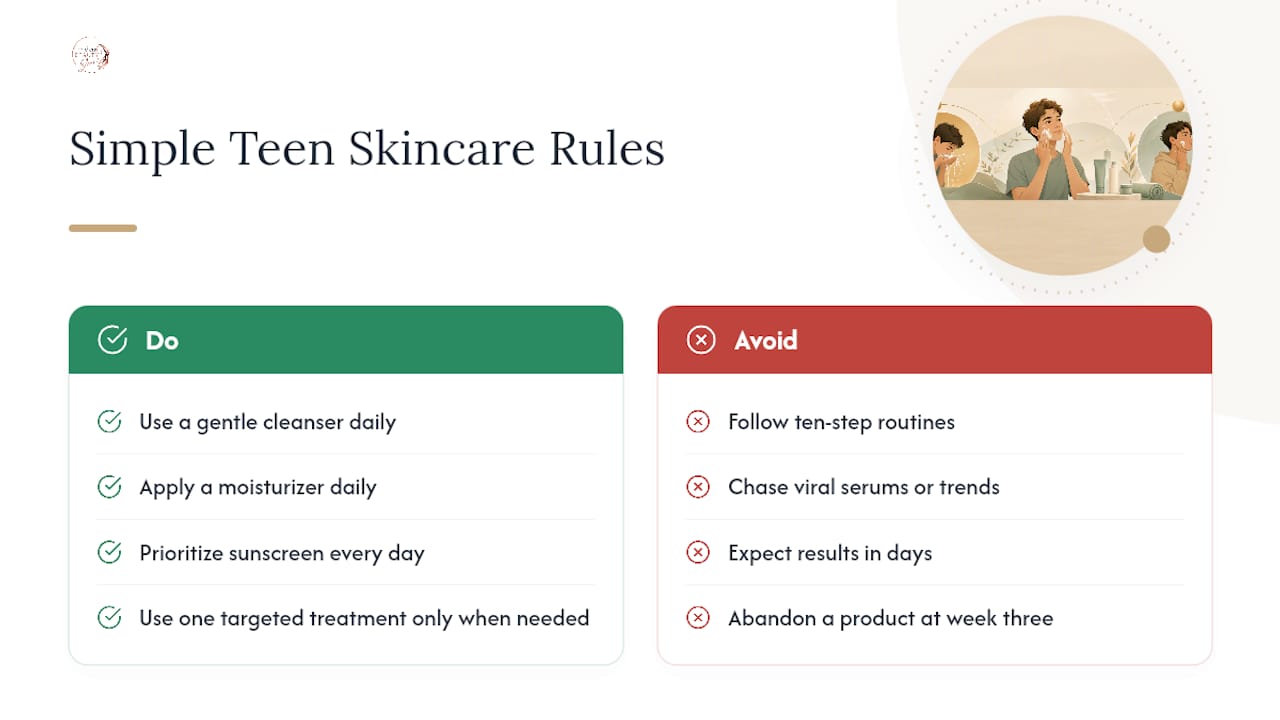
The routines that hold up over months, not just for one dramatic before-and-after video, are boring by design: a gentle cleanser, a moisturizer, sunscreen, and one targeted treatment added only when the skin actually calls for it. Where conventional teen advice falls short isn't the science. It's the pacing. Teens get told to expect results in days and abandon a perfectly good product at week three, right before it would have started working.
If there's one thing to prioritize above all else, it's patience paired with sunscreen. Not the trendiest serum, not the five-step Korean routine borrowed from a skincare influencer, but the unglamorous habit of showing up daily with the same three or four products and giving them the 6 to 8 weeks they need to prove themselves. That's not exciting advice. It's just the advice that actually works.
— Ava
This article is general information, not a substitute for advice from a qualified doctor. Consult a qualified healthcare professional about your own circumstances before acting on anything here.
Sources
FAQ
What Is the 4-2-4 Rule in Skincare?
The 4-2-4 rule refers to a simplified approach some dermatologists recommend: roughly 4 minutes on cleansing and prep, 2 minutes on treatment products, and 4 minutes on moisturizing and sunscreen. It's less a strict formula than a reminder that a short, unhurried routine beats a rushed ten-step one.
What Should a 14 Year Old's Skincare Routine Be?
A 14 year old's routine should center on a gentle cleanser twice daily, a lightweight moisturizer, and broad-spectrum sunscreen every morning. If breakouts have started, one acne treatment like benzoyl peroxide, salicylic acid, or OTC adapalene can be added, introduced slowly, and given 6 to 8 weeks before judging results.
What Is a Good Skincare Routine for a Teenager?
The most effective teen skincare routine is a simple one: cleanse, moisturize, and apply sunscreen daily, adding a single acne active only when needed. This approach, backed by the American Academy of Dermatology, consistently outperforms complicated multi-step regimens for both results and long-term adherence.
What Should a 12 Year Old Use for Skincare?
Most 12 year olds need just a gentle, fragrance-free cleanser and daily sunscreen, with moisturizer added only if skin feels dry or irritated. Acne treatments and anti-aging products generally aren't necessary at this age unless breakouts appear, and even then, a dermatologist's input is worth seeking for younger skin.
When Should a Teen See a Dermatologist for Acne?
A teen should see a dermatologist if acne is cystic, painful, or leaving scars or dark marks, or if there's no improvement after a couple of months of consistent over the counter treatment. Acne that's affecting mood, confidence, or daily activities is also a clear signal to get professional care rather than waiting it out.