
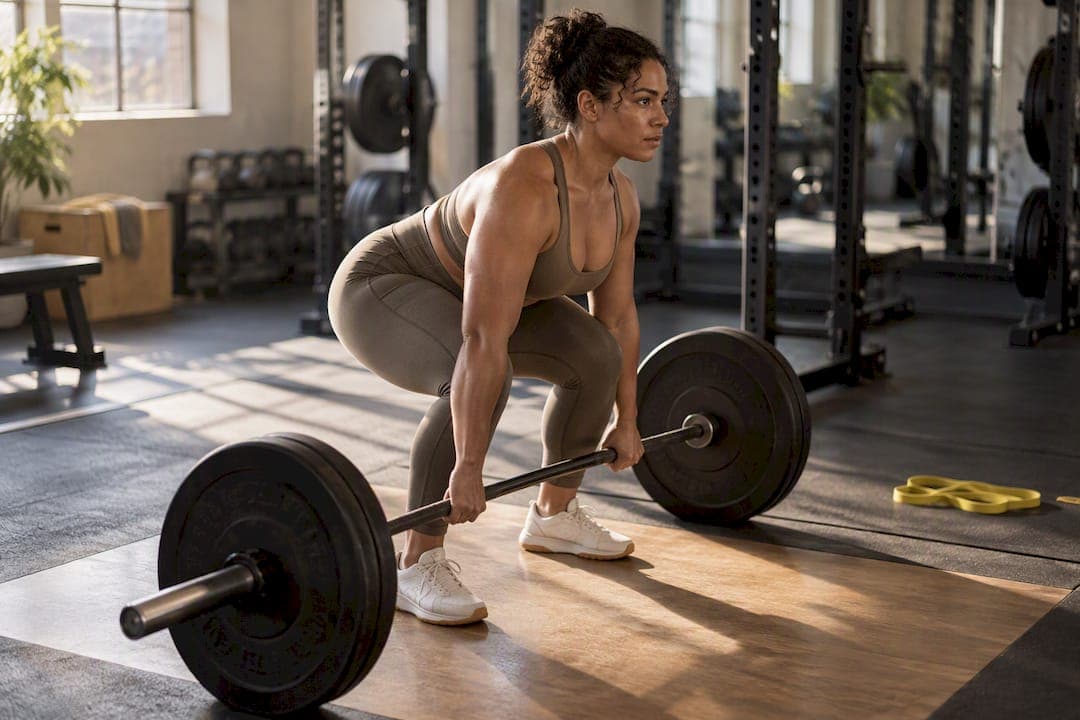
Cycle-aware tweaks can genuinely help you feel and train better, but most healthy women don't need a rigid phase-based program to see results. The evidence-first move is to keep at least two resistance training sessions every week, no matter where you are in your cycle, and adjust intensity day-to-day based on how you actually feel. The nuance lives in the evidence below. The concrete session ideas live in the phase-by-phase section that follows.
TL;DR:
- Exercise for period pain relief requires at least 8 weeks of consistent sessions longer than 30 minutes, with more than three workouts per week.
- Performance differences across menstrual cycle phases are small and vary significantly between women, so a personalized tracking approach is more effective than strict phase-based routines.
- During the follicular phase, women should focus on strength-building with compound lifts and high-energy workouts, while the luteal phase calls for moderate intensity and lower volume.
- Maintaining at least two resistance training sessions weekly is crucial for long-term strength and bone health, regardless of cycle phase.
- Flexible, data-driven adjustments based on symptom tracking are recommended over rigid calendar-based exercise plans for optimal results and recovery.
Table of Contents
- What Is Cycle Syncing, and What Are the Four Cycle Phases?
- Does Cycle Syncing Actually Work? Here's What the Evidence Shows
- Workouts by Cycle Phase: Practical Session Ideas
- How to Start Cycle Syncing Workouts: A Simple Setup
- Safety, Contraception, and Protecting Your Progress
- Research Roundup: The Studies Behind These Recommendations
- Publisher Perspective: How Theultimatebeauty-you Recommends Using Cycle Awareness
- How a platform can help you build this routine
- Sources
- FAQ
What Is Cycle Syncing, and What Are the Four Cycle Phases?
Cycle syncing means aligning your workout type, intensity, and sometimes nutrition with where you are in your menstrual cycle. Cycle-aware training is the more flexible cousin: you track your patterns and adjust on the fly instead of following a rigid calendar. This article leans firmly toward the second approach, and the evidence backs that call.
Your cycle breaks into four phases, each with its own hormonal backdrop and typical energy pattern.
- Menstrual phase (roughly days 1 to 5): Estrogen and progesterone are both low. Energy often dips, and cramping or fatigue is common.
- Follicular phase (roughly days 1 to 13, overlapping with menstruation): Estrogen climbs steadily. Many women report rising energy and improved mood.
- Ovulatory phase (roughly days 12 to 16): Estrogen peaks, then a luteinizing hormone surge triggers ovulation. Energy and strength often feel highest here.
- Luteal phase (roughly days 15 to 28): Progesterone rises, then both hormones fall if pregnancy doesn't occur. PMS symptoms, bloating, and mood shifts tend to cluster in the back half.
Don't assume every cycle is a tidy 28 days. Cycle length varies by woman and month, so the day ranges above are a starting point, not a rule.
Does Cycle Syncing Actually Work? Here's What the Evidence Shows
The honest answer: cycle phase has a smaller effect on your workouts than most fitness content implies. A large systematic review and meta-analysis of 78 studies found only a trivial average reduction in exercise performance during the early follicular phase compared with other phases. Overall evidence quality was rated low, and the researchers concluded that a personalized approach beats a blanket phase-based prescription.
The takeaway in one line: average differences across cycle phases are small, but individual variability is real. Some women notice clear energy swings; others feel steady all month. Tracking your own pattern matters more than following a generic phase chart.
Where the evidence gets genuinely strong is dysmenorrhea, the clinical term for period pain. A meta-analysis of randomized controlled trials found exercise reduces menstrual pain, with the biggest benefits showing up when women trained for at least 8 weeks, more than 3 sessions per week, with sessions longer than 30 minutes, totaling at least 90 minutes weekly. A separate network meta-analysis covering 49 studies and 3,129 participants ranked resistance exercise and multi-component programs among the most effective interventions for pain relief, ahead of stretching alone.
Put those two findings together and a clear picture emerges:
- Performance swings by phase are usually minor and inconsistent between women.
- Exercise for period pain works, but the dose matters more than the timing.
- Tracking helps you find your own patterns instead of guessing from a generic phase chart.
- Progressive overload, kept consistent across the month, matters more than which phase you're in.
Workouts by Cycle Phase: Practical Session Ideas
Here's where cycle-aware training earns its keep. You're not overhauling your program every week. You're making small, sensible swaps based on how you feel and what the research supports.
1. Menstrual phase: lighter, still purposeful
Energy often dips here, especially in the first two days. That doesn't mean you skip training. Cleveland Clinic's patient guidance on exercise through the menstrual cycle recommends leaning toward lighter movement during your period while staying active.
Try one of these 20 to 30 minute sessions:
- A brisk 25 minute walk outdoors, plus 10 minutes of hip and lower-back mobility work.
- A short full-body resistance circuit at lighter loads (squats, rows, glute bridges) with longer rest between sets.
- A restorative yoga flow focused on the hips, low back, and breath.
2. Follicular phase: build strength while energy climbs
As estrogen rises, most women notice better mood, more drive, and higher work capacity. This is the window to push progressive overload. A 40 to 60 minute strength session built around compound lifts, squats, deadlifts, bench press, rows, paired with moderate-to-high intensity cardio on non-lifting days, fits this phase well.
3. Ovulatory phase: your potential performance peak
Estrogen peaks and many women report feeling strong and sharp. If you're symptom-free and energized, this is a reasonable window for heavier lifts, sprint intervals, or plyometric work. One randomized controlled trial found structured high-intensity interval training improved both fitness and menstrual symptoms over an 8 to 10 week block, supporting HIIT as a legitimate tool rather than something to avoid.

4. Luteal phase: sustain, don't sabotage
Perceived exertion often climbs here even when actual output hasn't changed much. Rather than cutting training altogether, shift toward moderate-intensity resistance and cardio, and swap in lower-volume or technique-focused sessions when PMS symptoms flare. Clinicians warn against telling women to routinely back off training for large chunks of the month, since that habit can quietly erode long-term strength gains built through progressive resistance training.
The 3-3-3 rule for a flexible weekly structure
One simple framework: aim for 3 strength sessions, 3 cardio or conditioning sessions, and 3 mobility or recovery elements across your week. Across all four phases, keep the strength count steady at 3 (or at minimum 2). Let the intensity and volume of the cardio and conditioning pieces flex with your energy, and lean harder into the mobility and recovery elements during the menstrual and late luteal windows.
Pro Tip: Keep a non-negotiable floor of two resistance sessions every single week, regardless of phase. That floor protects bone density and muscle mass far more than any phase-timed diet trick.
How to Start Cycle Syncing Workouts: A Simple Setup
You don't need a complicated system on day one. You need consistent tracking and a plan flexible enough to bend without breaking.
Step 1: Pick a tracking method. A calendar, a notes app, or a dedicated cycle-tracking app all work. Record your start day, flow intensity, cramping, energy level, sleep quality, and a rough perceived-exertion (RPE) score for your workouts.
Step 2: Give it 2 to 3 cycles before changing anything major. One month isn't enough data. Tracking two or three full cycles lets you see whether your energy dips are predictable or whether they vary month to month.

Step 3: Write flexible swap rules, not a fixed calendar. Instead of "Tuesday is always leg day," write a rule like: "If RPE feels 2 points higher than usual and cramping is present, swap the planned heavy session for a moderate one." That keeps structure without forcing you to train through misery.
If you use an app, prioritize:
- Symptom and energy logging, not just period-start prediction.
- Reminders that nudge you to log data consistently.
- Exportable notes so you can review patterns over several months.
A quick privacy reminder: cycle-tracking data is sensitive health information, so check any app's data-sharing policy before you commit to it.
Safety, Contraception, and Protecting Your Progress
If you use hormonal contraception, you're likely wondering whether it changes any of this. Guidance from the American College of Sports Medicine's webinar on supporting female athletes suggests contraceptive use generally doesn't derail long-term training adaptations for most people, though individual response varies. If you have concerns about how your specific method interacts with training or recovery, that's a conversation for your clinician, not a fitness article.
For primary dysmenorrhea specifically, the dysmenorrhea meta-analysis points to a clear effective dose: at least 8 weeks of consistent training, more than 3 sessions weekly, sessions longer than 30 minutes, totaling roughly 90 minutes per week or more. Resistance and multi-component programs performed particularly well for pain reduction.
A few practical safety notes worth keeping in your back pocket:
- Reduce load or switch to low-impact movement during unusually heavy bleeding or severe cramping.
- Stop and seek medical care if pain is severe enough to interfere with daily function, or if bleeding is unusually heavy.
- Consider pelvic-floor-friendly modifications (avoiding maximal Valsalva efforts) if you notice leaking or pelvic pressure during heavy-load lifts.
- Preserve your resistance training volume across the month rather than cutting it during the luteal or menstrual phases by default.
For deeper, evidence-backed relief strategies beyond exercise, Theultimatebeauty-you's guide to period pain relief covers fast, practical options worth pairing with your training plan.
Research Roundup: The Studies Behind These Recommendations
The recommendations above rest on a handful of high-quality sources, not fitness-influencer intuition.
- A meta-analysis of 78 studies found trivial average performance differences across cycle phases, and recommended personalized rather than blanket programming.
- A meta-analysis of dysmenorrhea trials established the effective exercise dose for period pain relief.
- A network meta-analysis of 49 studies ranked resistance and multi-component exercise highest for pain reduction.
- ACSM's webinar guidance emphasizes individualized, consistent training over rigid phase-based periodization.
- Cleveland Clinic's patient guidance offers accessible, phase-based movement suggestions for everyday readers.
Limitations across this evidence base include study heterogeneity, frequently small sample sizes, and wide individual variability, which is exactly why tracking your own body beats copying a generic phase chart.
Publisher Perspective: How Theultimatebeauty-you Recommends Using Cycle Awareness
Our stance is evidence-first: track your cycle, stay flexible, and never sacrifice consistent resistance training for a rigid phase rulebook. Small, patient adjustments beat dramatic overhauls every time. If you want a next step, pair this with our strength training plan or explore mindful, intentional self-care practices for recovery. Give it a few months before judging results. Be kind to yourself along the way.
— Ava
How a platform can help you build this routine
This platform offers an inside-out approach to strength, recovery, and self-care to help unify fitness advice.

Our platform brings together structured strength programming, pelvic-floor-conscious guidance, and a community of women figuring out the same cycle-aware questions you are. If period-related fatigue or soreness has been slowing you down, our healthy habits guide pairs well with a structured plan, and pairing movement with recovery support, including options like a wellness recovery lounge for adjunctive care, rounds out the picture. Membership and app features are rolling out for readers who want deeper, personalized resources. Visit Theultimatebeauty-you's offerings to see what fits your current routine and pick your starting point today.
Sources
- The Effects of Menstrual Cycle Phase on Exercise Performance in Eumenorrheic Women: A Systematic Review and Meta-Analysis
- Efficacy and safety of therapeutic exercise for primary dysmenorrhea: a systematic review and meta-analysis
- Comparative effectiveness of exercise interventions for primary dysmenorrhea: a systematic review and network meta-analysis
- GSSI Presented Webinar Q&A | Supporting Female Athletes
- Nutrition and Exercise Throughout Your Menstrual Cycle
FAQ
What Is the 3-3-3 Rule for Workouts?
The 3-3-3 rule structures your week around 3 strength sessions, 3 cardio or conditioning sessions, and 3 mobility or recovery elements. You keep the strength count steady across your cycle while letting cardio intensity and recovery emphasis flex with your energy and symptoms.
Does Cycle Syncing Actually Work?
Cycle syncing produces only trivial average performance differences across most healthy women, so a rigid phase-based program isn't necessary for everyone. It helps most as a flexible, tracking-based approach for managing energy and symptoms rather than a strict rulebook.
How Long Does It Take to See Results From Cycle-Aware Training?
Give it 2 to 3 full cycles just to identify your personal patterns before changing anything major. For period pain specifically, research shows meaningful relief tends to build over at least 8 weeks of consistent training.
Is There a Workout App That Can Help Me Sync My Cycle?
Look for an app that logs symptoms and energy, not just predicts your period start date, and check its privacy policy before sharing health data. Theultimatebeauty-you's upcoming app and current resources, including its strength training plan, offer a structured starting point while you build your own tracking habit.