
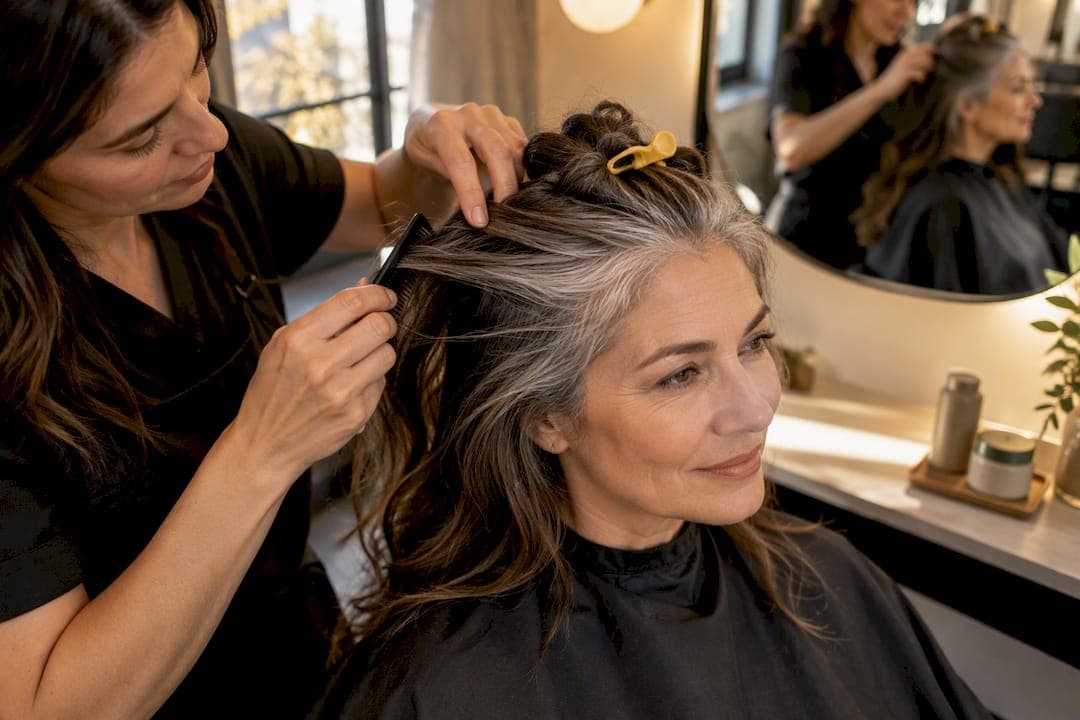
If you want the fastest exit, the big chop gets you there in one appointment. If you want the least disruption to your daily life, gray blending softens the line so nobody sees a "before and after" moment. Most women land somewhere in between, and a well-planned transition typically runs 6 to 12 months for shoulder-length hair, longer for anything past your shoulders.
TL;DR:
- The most common transitional period lasts between 6 and 12 months for shoulder-length hair, with longer hair taking up to two years to fully grow out.
- Short haircuts like pixies or bobs help reduce the visibility of the contrast line and speed up the transition process.
- Proper gray hair care involves consistent hydration, gentle products, and weekly toning shampoos to prevent dryness and yellowing.
- A professional colorist can significantly accelerate the transition with techniques like lifting, lowlights, and glossing, while at-home methods carry risks of damage.
- The emotional challenge peaks between months 2 and 6, but regular trims, blending, and strategic styling can shorten or smooth this awkward phase.
Table of Contents
- What Are the Main Ways to Start Your Gray Hair Transition?
- How Long Does It Actually Take to Go Gray?
- How Do You Take Care of Gray Hair While It's Growing In?
- Should You See a Colorist or Handle It Yourself?
- What Haircuts and Styles Help During the Awkward Phase?
- Why Ava and Theultimatebeauty-you Take This Seriously
- What I'd Tell a Friend Starting This
- How a women's beauty and wellness community Supports Your Gray Hair Journey
- Sources
- FAQ
What Are the Main Ways to Start Your Gray Hair Transition?
Four paths lead to the same destination. The right one depends on how much visible contrast you can tolerate and how often you're willing to sit in a salon chair.
Cold turkey means you stop coloring and let your natural gray grow in, untouched, until it meets your ends. It's the cheapest option and the most honest, but you'll live with a visible demarcation line for months. Regular trims are your best tool here, since cutting away the dyed length faster shortens the awkward middle stretch.
The big chop compresses the whole thing into an afternoon. You cut off the colored hair and keep only your natural growth, often landing somewhere between a pixie and a short bob. It's the fastest route to a fully gray head, and many women say the confidence boost of controlling the reveal outweighs losing length.
Gray blending, sometimes called "quiet silver," is the middle path stylists recommend most. Colorists use highlights, lowlights, or demi-permanent toners to camouflage the line between your natural gray and your dyed color, which can reduce how often you need root touch-ups. It costs more up front but spares you the stark two-tone look.
Dyeing toward gray with ash or silver demi-permanent tints buys you a transitional shade that fades gradually instead of growing out abruptly.
A quick way to choose:
- Want speed over length? Big chop.
- Want zero salon visits? Cold turkey with regular trims.
- Want the smoothest visual transition? Gray blending.
- Want a bridge color while you decide? Demi-permanent tinting.
How Long Does It Actually Take to Go Gray?
Hair grows roughly half an inch a month, so the math is straightforward: the more length you're carrying, the longer your transition stretches. Most colorists put a well-blended process at 6 to 12 months for shoulder-length hair, while a full grow-out on longer hair can take up to two years.
Here's a rough stage map:
- Months 1 to 2: New growth appears at the root. Barely noticeable yet, but the line has started.
- Months 2 to 6: The demarcation line becomes visible and this stretch is where most people report the hardest emotional patch, since the contrast is at its sharpest.
- Months 7 to 9: A turning point tends to arrive here. Enough natural gray has grown in that the line reads as a style choice, not an accident.
- Months 9 to 12+: You're mostly or fully gray, depending on your starting length.
Trims, a big chop at any point, or a blending appointment mid process can all shorten that visible middle stage.
How Do You Take Care of Gray Hair While It's Growing In?
Gray strands behave differently than pigmented hair, and adopting effective post-beach care helps protect against dryness and discoloration post beach hair care that actually works. They tend to be drier, coarser, and more prone to picking up yellow or brassy discoloration from hard water, sun, and product buildup. That's a texture and porosity issue, not a cosmetic flaw, and your routine needs to shift to match it.
Build your week around hydration first, toning second:
- Sulfate-free, moisture-rich cleanser two to three times a week.
- A hydrating mask once weekly to counter coarseness.
- Leave-in conditioner and heat protectant before any styling tool touches your hair.
- A clarifying or chelating treatment monthly to strip mineral buildup before it dulls your gray.
- UV-protectant spray or a shower filter to slow sun and hard-water yellowing, a tactic covered well by Real Simple's grow-out guide.
Purple and silver toning shampoos neutralize yellow tones, but they're easy to overdo. Stylists generally recommend once a week, alternating with your regular cleanser, because daily use can leave a dull violet cast instead of a clean, bright silver.
Statistic Callout: Colorists and trichologists cited by Harper's Bazaar consistently point to hydration and gentler surfactants, not a longer product list, as the change that matters most once gray strands take over.
Pro Tip: Keep a small bottle of purple shampoo in the shower and use it as a rinse, not a wash. Two minutes of contact time tones without stripping moisture.

Should You See a Colorist or Handle It Yourself?
A professional earns their fee at the technical steps: lifting dyed hair to a lighter base, placing lowlights that mimic natural gray patterns, and applying a gloss to unify tone. These are the services that most visibly speed up a graceful transition, and colorists warn against repeated home bleaching since it risks real breakage.
Bring three questions to your consultation:
- What's my realistic timeline given my current color and length?
- How often will I need to come back, and what does that cost over a year?
- What's the least damaging way to get there from my current dye job?
At home, demi-permanent root sprays and gray-blending powders are low-risk camouflage between appointments. Leave bleach and permanent lightening to the pros.
What Haircuts and Styles Help During the Awkward Phase?
A shorter cut, whether a pixie, a lob, or a face-framing bob, shrinks the visible distance between root and end, which shortens how long the transition looks unfinished. Side parts, headbands, and braids all disguise the line naturally by breaking up where your eye lands.
Try root smudging with a temporary powder on the days you skip styling entirely. A few other moves worth stealing:
- Deep side part to soften a sharp demarcation line.
- Loose braids or twists that blend two tones visually.
- Warmer makeup tones (a rosier blush, a warmer lip) if your skin looks washed out against emerging silver.
- Photo galleries and community hashtags for real transitions, not just salon marketing shots, tend to be the most reassuring source of inspiration.
Why Ava and Theultimatebeauty-you Take This Seriously
As part of a women's beauty and wellness community's editorial team, Ava has watched the emotional arc of a gray hair transition play out the same way across dozens of stories: hope, doubt, a rough middle, then quiet pride. That pattern is normal, not a sign you chose wrong. If you're rebuilding your routine anyway, pair this guide with our scalp health resource and curly hair routine for texture-specific care.
What I'd Tell a Friend Starting This
The conventional advice treats going gray like a single decision. It isn't. It's a six to twelve month project with a genuinely hard middle stretch, and most guides skip past that part to get to the pretty "after" photo.
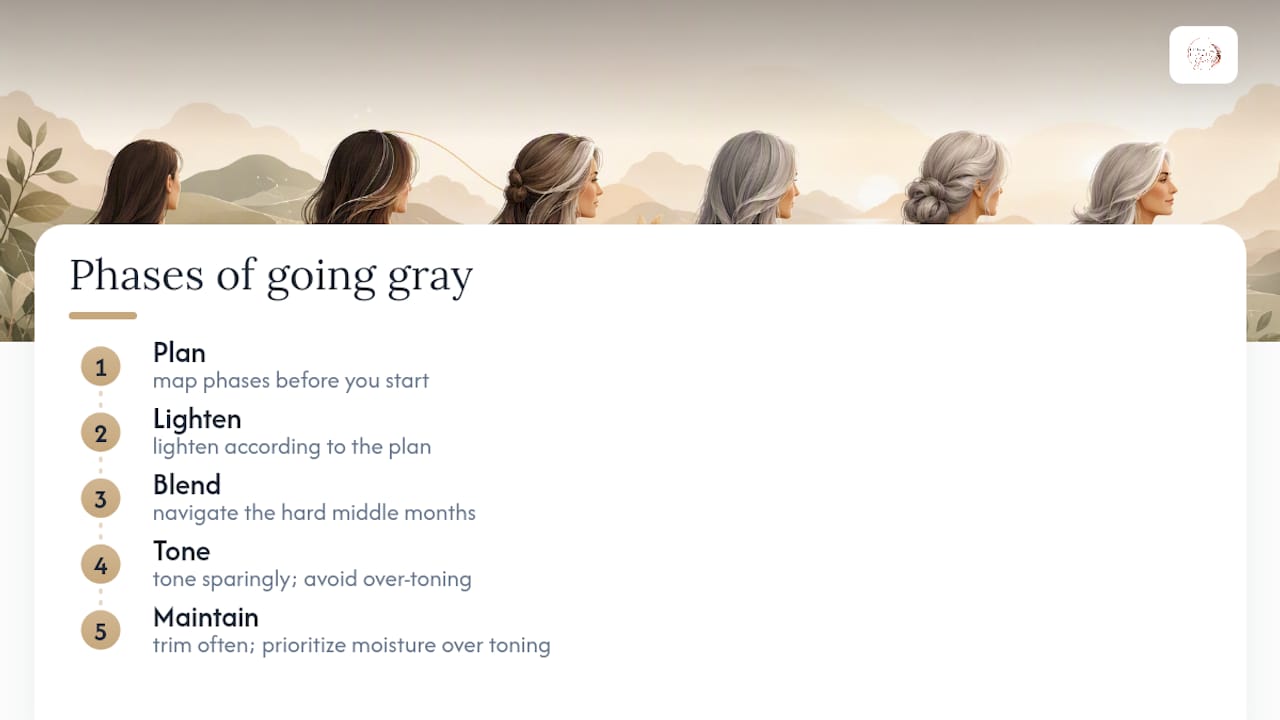
Here's what the research and the real accounts actually support: plan the phases before you start, not after you're three months in and panicking about the line. Stylists who work in this space consistently say a mapped plan, lighten, blend, tone, maintain, produces a better result than stopping color cold and hoping it works out.
What's overrated is the pressure to pick the "right" method on day one. What's underrated is trimming aggressively and often, which does more to shorten the awkward phase than any product on your bathroom shelf. Prioritize moisture over toning frequency, and prioritize a plan over a mood.
The middle months will feel like the hardest part. That's not a sign you're doing it wrong. It's the part everyone leaves out of the story.
— Ava
How a women's beauty and wellness community Supports Your Gray Hair Journey
A women-centered beauty and wellness community offers support when a beauty decision feels bigger than a single product choice, and going gray usually is. Instead of piecing together advice from multiple scattered sources, it aims to provide expert guidance, real community stories, and product recommendations built around the whole process, not just the cut.

Our experts and partners directory connects you with pros who understand blending techniques and maintenance routines, so you're not guessing which colorist to trust. Browse product collections built for the texture and moisture needs gray hair develops, and join a community that's already living through this exact transition. Visit Theultimatebeauty-you to start building your routine today.
Sources
- How to Transition to Gray Hair, According to Pro Colorists | Glamour
- Quiet silver is the most seamless way to go gray | Allure
- Gray hair guide | Harper's Bazaar
- The Grey Hair Transition Timeline: What – Art in Aging
FAQ
How Do I Gracefully Transition to Gray Hair?
The most graceful route is planning your phases in advance: lighten with a colorist if needed, blend with lowlights or a demi-permanent toner, then maintain with hydrating, low-frequency toning products. Combining regular trims with gray blending softens the line so the process reads as intentional rather than accidental.
What's the Average Cost of Gray Blending?
Salon pricing for gray blending varies widely by region and colorist experience, so current rates are best confirmed directly with a stylist during a consultation. Expect it to cost more per visit than a single-process color, but appointments typically get less frequent as blending progresses.
What Age Should You Transition to Gray Hair?
There's no set age. Gray hair can appear anytime from your twenties onward, and the right time to transition is whenever you're ready to stop coloring, not a specific birthday.
Can I Go Gray Without Looking Older?
Yes. A flattering haircut, warmer makeup tones, and a well-blended transition (rather than an abrupt line) all keep gray hair looking styled and current rather than aging. Texture and shine matter more here than the gray itself, which is why the hydration-focused routine matters through every stage.
How Long Does the Awkward Phase Last?
The hardest emotional stretch typically falls around months 2 through 6, with most people hitting a turning point by months 7 to 9. Regular trims, a big chop, or a blending appointment can all shorten that window.