
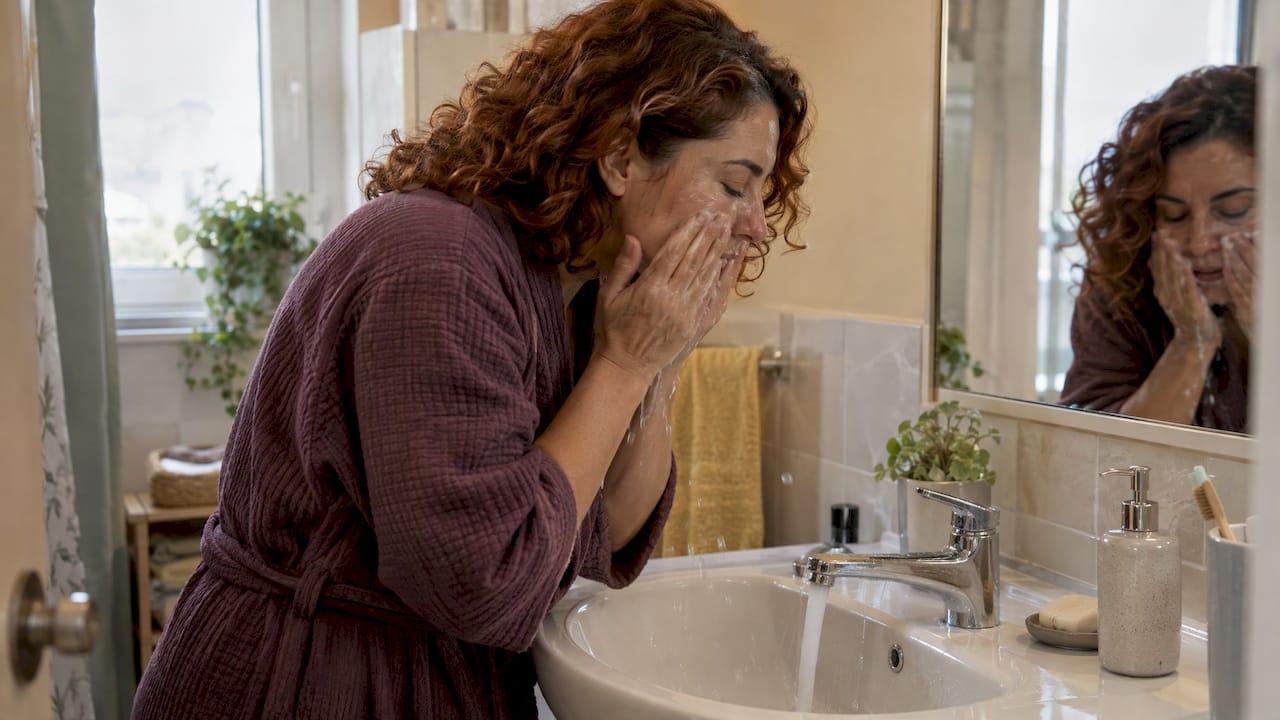
Inside out beauty is the idea that how you look and how you live are connected. Skin care, sleep, movement, hydration, stress and confidence all work together. Care for the surface and the foundation, and each supports the other. You don't need a new face or a perfect routine. You need a handful of habits you can keep.
Beauty is not perfection. Beauty is a verb. Beauty is becoming. This guide shows what that looks like in daily life, and what the research says about each piece.
TL;DR
- Inside out beauty pairs outer care (cleanser, moisturizer, sunscreen) with inner care (sleep, hydration, movement, stress relief, self-respect).
- Dermatologists name sunscreen of SPF 30 or higher as the single most dependable step for slowing visible skin aging.
- Seven to nine hours of sleep and lower stress both show up in skin research, and both are free.
- Confidence is part of beauty, not a bonus: self-esteem is closely tied to how we see our appearance.
- Be curious, not credulous, about "beauty from within" supplements. The evidence is mixed and varies by ingredient.
Table of Contents
- What inside out beauty actually means
- Why your skin reflects more than your skincare
- The outside: a simple routine that does the heavy lifting
- The inside: habits that show up on your face
- Stress and mood: the part most routines skip
- Confidence: where inner and outer meet
- Supplements and "beauty from within" claims: choose with care
- Your inside out beauty week
- Our perspective
- Join the community
- FAQ
- Sources
What inside out beauty actually means
The phrase gets used in two ways. In the beauty industry, it describes pairing topical products with dietary supplements: one acts on the surface and quickly, the other works from within, gradually and over the long term.
We use it more broadly. For us, inside out beauty is a way of living. It starts with how you treat your body and mind, and it shows in your skin, your posture and your energy. Inner beauty and outer beauty are not rivals. They are one conversation.
That is why we call it Inside-Out. Head-to-Toe. 360-Degree Beauty. It covers:
- Your skin: protection and gentle, steady care.
- Your body: food, water, movement and rest.
- Your mind: stress, mood and the story you tell about yourself.
- Your community: the people and experts who help you keep going.
Why your skin reflects more than your skincare
Skin is not just a surface. A 2025 review in PMC describes it as more than a physical barrier, one that plays a role in overall health, emotional well-being and social interaction. The same paper notes that routine skin care can boost confidence and self-esteem.
The American Academy of Dermatology puts it simply in its National Healthy Skin Month guidance: wellness is more than skin deep. Skin plays a crucial role in overall health and well-being, so looking after it is looking after you.
A 2020 review in Annual Reviews goes further. It describes skin as the main interface between the body and the environment. Pollutants and other outdoor stressors can generate reactive oxygen species that overwhelm the skin's own defenses and contribute to premature aging. Your skin is working for you all day. It deserves support from both directions.
The outside: a simple routine that does the heavy lifting
The outer half of inside out beauty does not need ten steps. The AAD recommends a gentle cleanser, a moisturizer and a broad-spectrum sunscreen with SPF 30 or higher. That is the core.

Make sunscreen non-negotiable
The AAD calls sunscreen the closest thing we have to a fountain of youth. It can slow skin aging and help prevent skin cancer. Look for broad-spectrum protection, SPF 30 or higher, and water resistance.
Mayo Clinic adds the practical details: use a palm-sized amount, reapply every two hours or more often if you swim or sweat, and seek shade between 10 a.m. and 4 p.m., when UV rays are strongest. The AAD notes that UV rays can damage skin even on cloudy or cool days, so this is a year-round habit.
Be gentle with everything else
The AAD's guidance includes a few small rules worth keeping:
- Introduce new ingredients gradually, not all at once.
- Wash your face and body with warm water, not hot.
- Find an exfoliating schedule that suits you. Over-exfoliating can leave skin red and irritated.
If your skin is persistently irritated, breaking out or changing, see a board-certified dermatologist. That is the right person to ask, not a social feed.
Want routines matched to your stage of life? Our guide to beauty routines by age group runs from teens to 60s. For your body, see this five-step body skincare routine for barrier care.
The inside: habits that show up on your face
Here is where inside out beauty gets personal. Each habit below has research behind it, and each one is within your reach.
Sleep: the overnight reset
Experts recommend seven to eight hours of sleep each night, according to Harvard Health. Dr. Tsao explains that when we are deprived of quality sleep, we trigger an inflammatory process that can show up as tired-looking skin, with exaggerated wrinkles, facial folds and sallowness.

A 2026 review in a SAGE journal adds that poor or insufficient sleep may impair barrier recovery and worsen visible and perceived signs of aging. It suggests 7 to 9 hours of quality sleep as an evidence-based part of healthy skin maintenance.
A smaller study reported by Forbes looked at 60 women. Those with poor sleep had more under-eye circles and greater water loss through the skin, and those who slept better rated themselves as more attractive.
Start tonight with one change: a consistent bedtime. Our guide to night habits for better skin walks you through it.
Hydration: more than a trend
The same Forbes piece describes a study of women in their 20s who increased water intake by two liters a day. After 30 days, skin hydration, elasticity and wrinkle depth improved, most of all in women who started out less hydrated. It is one study, so treat it as encouragement, not a prescription. If you have a medical condition that affects how much fluid you should drink, ask your doctor about your own target.

Movement: circulation and strength
The AAD says findings from a few studies suggest that moderate exercise can improve circulation and boost the immune system, which may give skin a more youthful appearance. The Forbes article also reports that a 16-week resistance training program in sedentary Japanese women improved skin elasticity and dermal structure, and notes the American Heart Association's recommendation of at least two strength sessions a week.

Find movement you enjoy. A walk counts. Dancing in the kitchen counts.
Smoking and alcohol
The AAD is direct here. Smoking greatly speeds up skin aging, causing wrinkles and a dull, sallow complexion. Alcohol dehydrates skin and, over time, damages it, which can make us look older. If you want support quitting either, your doctor can help you find a plan.
Stress and mood: the part most routines skip
Chronic stress is not just a feeling. A 2026 review by Nwaopara and Woolery-Lloyd concludes that chronic psychological stress has a measurable and consistent impact on skin aging. Stress-related signals can impair barrier repair, reduce antioxidant capacity and affect collagen-related gene expression.
A 2020 review in the Journal of Drugs in Dermatology explains that psychosocial stress raises cortisol and activates the neuroendocrine system. Stress and emotional states can predispose or worsen many skin conditions, including acne, chronic itch, atopic dermatitis and psoriasis. The AAD agrees: stress can cause flare-ups of acne, eczema, psoriasis and rosacea.
So calming your nervous system is skin care. Small, repeatable practices help: a short walk, a screen-free hour, breathing exercises, time with people who lift you. Here are some easy ways to boost your mood naturally to try this week.
If stress, anxiety or low mood is weighing on you for more than a couple of weeks, talk to a licensed therapist or your primary care provider. That is care, not weakness. For more on this link, read the role of mental health in beauty and confidence.
Confidence: where inner and outer meet
Inner beauty is not a consolation prize. It is a driver of how beauty is experienced. A 2025 article in the Journal of Drugs in Dermatology by Steven Dayan, MD, states that roughly 60% to 85% of self-esteem is tied to how we perceive our appearance. It also says confidence shapes how beauty is perceived through posture, facial expressions and social engagement.
Read that both ways. Feeling good about how you look lifts confidence. Confidence changes how you carry yourself, and that is part of how others see you. It is a loop, and you can step into it anywhere.
Ways to step in:
- Keep one promise to yourself each day, however small.
- Notice what your body does for you, not only how it looks.
- Build a routine you can predict. Consistency creates a sense of control.
- Surround yourself with women who cheer you on.
For concrete practices, see these confidence-building habits for women and our guide to embracing natural beauty at every age.
Supplements and "beauty from within" claims: choose with care
Many women search for beauty from within because they want to know whether a pill, powder or drink can do the work. The honest answer is that evidence varies by ingredient and by outcome, so it pays to be a smart shopper.
A 2020 PMC review of cosmeceuticals notes that, apart from retinol derivatives and hydroxy acids, clinical evidence is limited for many skin products, even where early lab evidence looks promising. The same author points out that the industry moves faster than the evidence of efficacy and safety can be gathered.
How to shop wisely:
- Start with the basics. Sunscreen, sleep, food and movement come first.
- Ask about your own situation. If you are pregnant, nursing, on medication or managing a health condition, check with your doctor or pharmacist before adding any supplement.
- Look for specifics. Prefer products that name ingredients, amounts and the research behind them.
- Add one thing at a time. The AAD advises introducing new skin care ingredients gradually, and the same logic suits anything new you take or apply.
- Be patient. Inside out changes are gradual.
Your inside out beauty week
Big plans fade. Small ones stay. Try this rhythm for the next seven days, then adjust it to your life.
| Area | One small step | Why it matters |
|---|---|---|
| Morning skin | Cleanser, moisturizer, SPF 30 or higher | The AAD's core routine |
| Midday | Reapply sunscreen if outdoors, drink water, step outside | Mayo Clinic advises reapplying every two hours |
| Movement | A walk or two strength sessions this week | Circulation and skin elasticity research |
| Evening | Same bedtime, screens down, gentle cleanse | Sleep supports barrier recovery |
| Mind | Ten minutes of quiet or a call with a friend | Stress affects skin and mood |
| Confidence | Write down one thing you did well | Self-esteem shapes how beauty is felt |
For a fuller plan, our three-layer self-care routine and four steps for holistic beauty give you structure. If you like to slow down and choose with intention, read what mindful beauty is, and explore more healthy beauty habits for every woman.
Our perspective
Beauty is not perfection. Beauty is a verb. Beauty is becoming.
We built The Ultimate Beauty - You! because women told us the same thing: advice is scattered. One place says skincare, another says wellness, another says confidence, and none of them talk to each other. We believe they belong together.
Our approach is inside-out, head-to-toe, 360-degree. We bring trusted experts, brands and resources into one community so you can care for your skin, your body, your mind and your sense of self in one place, at every age and stage.
Beauty is something you do, not something you have to earn. Every small act of care counts: the sunscreen, the early night, the walk, the honest conversation with a friend. We are here to walk it with you.
Ava
Join the community
Inside out beauty is easier with company. The Ultimate Beauty - You! is a women-centered platform for beauty, wellness, confidence and community, with an app on the way. If you are an expert, brand or organization that serves women, we invite you to connect with our audience through our Experts & Partners page. If you are looking for resources, start at our home page.

Whatever your age or stage, you belong here.
FAQ
What does inside out beauty mean?
It means caring for how you look and how you feel together. Outer care covers skin routines and sun protection. Inner care covers sleep, hydration, movement, stress and confidence. In the beauty industry, the term often also refers to pairing topical products with dietary supplements.
What is the most important step for healthy-looking skin?
Dermatologists point to daily sun protection. The AAD recommends a broad-spectrum sunscreen with SPF 30 or higher and water resistance, and says it can slow skin aging. Pair it with a gentle cleanser and a moisturizer.
Does sleep really affect my skin?
Research says yes. A 2026 review links insufficient sleep with impaired barrier recovery and more visible signs of aging, and suggests 7 to 9 hours of quality sleep. If you struggle to sleep, ask your doctor, since persistent trouble sleeping can have many causes.
Can stress show up on my skin?
It can. The AAD says stress can flare up acne, eczema, psoriasis and rosacea. Managing stress through rest, movement and support is part of skin care, and a dermatologist can help if a condition keeps returning.
Are beauty supplements worth it?
Results depend on the ingredient and the outcome. A 2020 review notes that clinical evidence is limited for many skin-focused products. Build the basics first, and check with your doctor or pharmacist before adding a supplement, especially if you are pregnant, nursing or on medication.
Sources
- Inside Out Beauty: Key trends to inspire innovations, Seppic
- Skin Care Supports Overall Well-Being, PMC
- National Healthy Skin Month: Wellness is more than skin deep, AAD
- Skin Health from the Inside Out, Annual Reviews
- 10 skin care secrets for healthier-looking skin, AAD
- Skin care: 5 tips for healthy skin, Mayo Clinic
- Fresh-faced through the years, Harvard Health
- A Review of the Effects of Lifestyle Factors on Skin Aging, SAGE
- 10 Science-Backed Habits That Improve Your Appearance, Forbes
- 11 ways to reduce premature skin aging, AAD
- Psychosocial Stress and Mechanisms of Skin Health, Journal of Drugs in Dermatology
- The Psychology of Beauty, Journal of Drugs in Dermatology
- Cosmeceuticals: The Principles and Practice of Skin Rejuvenation, PMC
- 8 Ways to Boost your Mood Naturally, Alvarado Therapy