
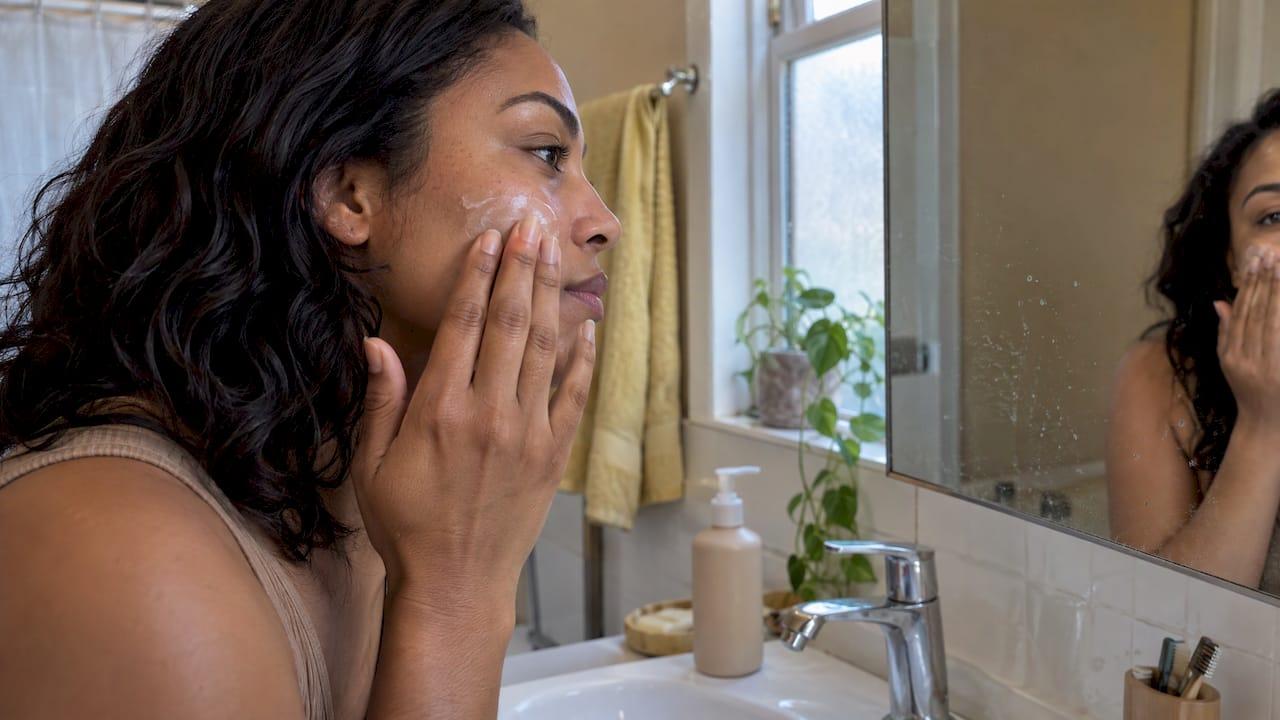
The best rosacea skincare routine is a short one. Cleanse gently twice a day, moisturize with a fragrance-free formula, wear mineral sunscreen every morning, and skip anything that burns or stings. Add prescription treatment if your clinician recommends it. That is the core, and everything below shows you how to do it well.
Rosacea can make you feel like your face is out of your control. It isn't. A calm routine, steady habits and a few smart swaps give your skin the best chance to settle. Beauty Is Not Perfection. Beauty Is a Verb. Beauty Is Becoming. Caring for sensitive skin is part of that becoming.
TL;DR
- Cleanse up to twice a day with a mild, non-soap cleanser, your fingertips and lukewarm water. Pat dry.
- Moisturize daily with a fragrance-free product, even if your skin feels oily.
- Use broad-spectrum, water-resistant SPF 30 or higher every day. Mineral formulas with zinc oxide or titanium dioxide are the gentler choice if sunscreen stings.
- Skip alcohol, fragrance, menthol, witch hazel, scrubs and toners, and patch test anything new for 7 to 10 days.
- Green-tinted concealer and water-based or powder makeup can cover redness without extra irritation.
Table of Contents
- Your Daily Rosacea Routine at a Glance
- Morning Routine: Cleanse, Treat, Moisturize, Protect
- Evening Routine: Reset and Restore
- How to Cleanse Without Irritating Your Skin
- What to Leave Off Your Face
- How to Introduce a New Product Safely
- Makeup for Rosacea: Cover Redness Gently
- Calming a Flare
- Professional Treatments and Rosacea
- Our Perspective
- Find Trusted Beauty and Wellness Support
- FAQ
- Sources
Your Daily Rosacea Routine at a Glance
Rosacea is a chronic inflammatory facial skin condition. The American Academy of Family Physicians describes daily sunscreen, moisturizer, mild cleansing and trigger avoidance as essential maintenance, with prescription treatment discussed with a clinician when needed. Here is how that looks in practice.
| Step | Morning | Evening |
|---|---|---|
| 1. Cleanse | Mild cleanser, lukewarm water, fingertips | Mild cleanser to remove sunscreen, makeup and oil |
| 2. Treat | Prescribed topical, if you have one | Prescribed topical, if you have one |
| 3. Moisturize | Fragrance-free moisturizer | Fragrance-free moisturizer |
| 4. Protect | Broad-spectrum SPF 30+, water-resistant | Not needed |
| 5. Makeup | Optional, after sunscreen | Remove fully |
Four products can cover almost everyone: a cleanser, a moisturizer, a sunscreen and, if prescribed, your medication. The National Rosacea Society (NRS) advises using as few products as possible, because each extra product raises the chance of irritation. Multifunctional products can help you keep the list short.
Morning Routine: Cleanse, Treat, Moisturize, Protect
Step 1: Cleanse gently
Wet your face with lukewarm water. Smooth on a mild, non-soap cleanser with clean fingertips only. Rinse well so no residue stays behind, then pat your skin dry with a clean, soft towel. The American Academy of Dermatology (AAD) says no scrubbing, no abrasive washcloths or sponges, and no exfoliators.
Some mornings your skin may feel clean after a splash of water. If it is calm and you did not wear much the night before, ask your dermatologist whether a lighter morning wash suits you.
Step 2: Apply prescribed medication, if you have it
If your clinician prescribed a topical medication, apply it as directed. The NRS suggests letting skin dry first if damp skin stings, then waiting another five to 10 minutes after the medication before you apply moisturizer, sunscreen or makeup.
Step 3: Moisturize, even if you feel oily
The AAD recommends moisturizer after cleansing even when your skin feels oily, because it helps hydrate skin, reduce irritation and improve comfort. Choose a fragrance-free formula made for sensitive skin. Apply it with soft, light strokes. Do not rub.
Step 4: Protect with sunscreen
Sun is a well-known rosacea trigger, so this step matters most. Use a broad-spectrum, water-resistant SPF 30 or higher every day. If sunscreen stings, pick a mineral formula with zinc oxide or titanium dioxide. NRS treatment guidance says mineral sunscreens are preferable because they do not produce heat as a byproduct. Add shade and protective clothing on bright days.
If you have a deeper skin tone and worry about a chalky finish, the AAD notes that micronized or tinted mineral sunscreen can help avoid the white cast. Our guide to SPF for dark skin without a white cast walks through what to look for.
Evening Routine: Reset and Restore
Evening is simple. Cleanse to remove sunscreen, makeup and the day's oil and debris. The NRS says twice-daily cleansing removes excess oil, environmental debris, microorganisms and product residue, which is why it is an important first step.
Then follow the same order: medication if prescribed, a short wait, and your fragrance-free moisturizer. Skip anything that tingles, no matter how it is marketed. If you wear a lot of makeup, a cream cleanser you tissue off or a no-rinse micellar water can be a softer option, particularly if tap water itself bothers you.
How to Cleanse Without Irritating Your Skin
How often? The AAD and NRS generally recommend cleansing twice a day, morning and evening. More is not better. Over-washing strips the skin and invites more redness.
What water temperature? Lukewarm. The NRS recommends it over hot or cold because temperature extremes can cause flushing or irritation.
What tools? Your fingertips and a soft, clean towel. Skip cleansing brushes, sponges and rough cloths. Pat, never rub.
What kind of cleanser? Choose a mild, non-soap formula, never bar soap. Look for "fragrance-free" on the label. The NRS points out that "hypoallergenic" is not clearly defined by the cosmetics industry, so read the ingredient list instead of trusting the front of the bottle.
What to Leave Off Your Face
The AAD says to avoid products containing alcohol, camphor, fragrance, glycolic acid, lactic acid, menthol, sodium lauryl sulfate or urea. It also advises skipping astringents and toners, along with rubbing, scrubbing, massage, washcloths, sponges and exfoliators.

In an NRS survey of people with rosacea, the most commonly reported irritants were alcohol (66%), witch hazel (30%), fragrance (30%), menthol (21%), peppermint (14%) and eucalyptus oil (13%). Triggers differ from person to person. Those numbers are a reason to read labels, not a reason to panic.
A quick checklist for the shelf:
- Fragrance-free, including "essential oil" blends
- No alcohol-heavy toners or witch hazel
- No peppermint, menthol, camphor or eucalyptus
- No scrubs, peels or rough tools
- Noncomedogenic and made for sensitive skin
Our guide to clean beauty for sensitive skin with a one-week test can help you protect your barrier while you sort through labels.
How to Introduce a New Product Safely
New products are where many flares begin. Slow down.
- Apply a quarter-sized amount to the inside of your arm once a day.
- Repeat for 7 to 10 days. The AAD recommends this patch test before any facial use.
- If your skin stays clear, try the product on your face.
- Add only one new product at a time, so you know the cause if your skin reacts.
- Stop anything that burns, stings or irritates, as the NRS advises.
This includes makeup, sunscreen and moisturizer. It is patient work. It protects your skin.
Makeup for Rosacea: Cover Redness Gently
Makeup can be part of your routine, not a reward at the end of a bad skin day. The goal is color correction with the least friction and irritation.
Start with a calm base
The NRS recommends beginning makeup on clean, moisturized skin and handling your face gently. Rubbing, pulling and rough sponges or towels can irritate. Give medication, moisturizer and sunscreen time to settle before you start.
Choose formulas that behave
The AAD says water-based or powder makeup is less likely to irritate sensitive skin. The NRS recommends oil-free foundation and concealer, a foundation matched closely to your natural skin tone, and a concealer about one shade lighter.
How to cover redness
Green sits opposite red on the color wheel, so it cancels it out. The AAD says green-tinted concealer can camouflage redness, while yellow-tinted concealer can mask discoloration. The NRS suggests a sheer green-tinted base, ideally with UVA and UVB protection.
Here is a gentle order that works:
- Moisturize and let it set.
- Apply sunscreen and wait.
- Dab a sheer green-tinted base only where redness is strongest, such as cheeks and the sides of the nose.
- Add a light layer of oil-free foundation that matches your skin tone.
- Finish with a light powder if you like.
Use clean fingertips or a clean, soft brush, and press instead of dragging. Test every new makeup product on your arm first. Remove it fully every evening with your gentle cleanser.
Calming a Flare
When your face is hot and red, simplify. Cleanse with lukewarm water, pat dry, and use only products you already know are safe. Avoid new products, scrubs, hot showers and heavy makeup until your skin settles. Keep wearing mineral sunscreen. Because rosacea is chronic, a flare that keeps returning or worsens, or one with bumps, burning or eye irritation, deserves a visit to a board-certified dermatologist. The AAFP notes that prescription treatment should be discussed with a clinician when needed.
It also helps to notice what came before the flare: sun, heat, a new product, an alcohol-based cleanser. Writing it down helps you and your clinician spot your personal triggers.
Professional Treatments and Rosacea
Some women ask about facials and peels. Many standard options use exfoliating acids or heat, which are the very things rosacea-prone skin often dislikes. Before booking anything, talk to your dermatologist, and tell any provider that you have rosacea. If your clinician gives the go-ahead, ask the provider how the treatment can be customized for sensitive skin. A med spa offering facials and peels under medical supervision is the kind of setting where you can have that conversation. Keep your home routine gentle around any appointment.
Our Perspective
We believe rosacea care should never feel like a punishment. Too many women are handed a long list of "don'ts" and left to figure out the rest alone.
Our approach is inside-out and head-to-toe. Your skin routine sits next to your sleep, your stress, your confidence and your community. A flare can shake all of it. So we focus on fewer products, steady habits and advice from trusted experts.
That is what we are building: one place where women of every age and stage find trusted experts, brands and resources, instead of scattered advice that contradicts itself. Beauty Is Not Perfection. Beauty Is a Verb. Beauty Is Becoming.
Ava
Find Trusted Beauty and Wellness Support
You should not have to sort through conflicting advice alone. The Ultimate Beauty - You! brings together expert guidance, brand recommendations and a community of women who understand. Explore what we offer at The Ultimate Beauty - You!, or browse our products.

Are you a skincare expert, brand or organization that serves women? See how you can connect with our audience on our Experts & Partners page.
FAQ
Should I wash my face every day if I have rosacea?
Yes, gently. The AAD and NRS generally recommend cleansing up to twice a day, morning and evening, with a mild cleanser, fingertips and lukewarm water. Rinse away all residue and pat dry. Do not scrub.
What should I not put on rosacea skin?
Avoid products with alcohol, fragrance, menthol, camphor, witch hazel, sodium lauryl sulfate, urea, and glycolic or lactic acid. Skip astringents, toners, scrubs and rough washcloths. Patch test anything new on your inner arm for 7 to 10 days first.
Should moisturizer go on before or after medication?
Prescription topicals usually go on clean, dry skin first. The NRS suggests waiting five to 10 minutes after medication before moisturizer, sunscreen or makeup. Follow your clinician's instructions for your specific prescription.
What is the best makeup to cover redness?
A sheer green-tinted concealer or base cancels out red tones. Choose water-based or powder formulas, or oil-free foundation, matched closely to your skin tone. Test any new product on your arm first and remove it gently each night.
How do I choose sunscreen if it stings my skin?
Try a broad-spectrum, water-resistant mineral sunscreen with zinc oxide or titanium dioxide, SPF 30 or higher. Mineral formulas do not produce heat as a byproduct. If you have deeper skin, look for micronized or tinted versions to reduce white cast.
Sources
- Rosacea: Common Questions and Answers, American Family Physician
- Rosacea skin care tips, American Academy of Dermatology
- 7 rosacea skin care tips, American Academy of Dermatology
- Facial Cleansing for Rosacea, National Rosacea Society
- Treatment Algorithms for Patients, National Rosacea Society
- Rosacea Skin Care & Cosmetics, National Rosacea Society
- Makeup for Rosacea, National Rosacea Society
- Saving Face: Rosacea Can Be Controlled With Medical Therapy and Lifestyle Changes, National Rosacea Society