

A holistic beauty approach is defined as the practice of nurturing skin and overall wellness by addressing the interconnected relationship between mental, physical, and emotional health, rather than focusing solely on external appearance. Your skin is not just a surface. It is an expression of everything happening inside your body. Holistic beauty treats skin as a reflection of whole-body health, integrating lifestyle, internal wellness, and emotional state into every care decision. This guide breaks down what that means in practice, why it works, and how you can start living it.
What is a holistic beauty approach and why does it matter?
A holistic beauty approach treats your skin as a diagnostic tool, not just a canvas for products. When your skin breaks out, flares up, or looks dull, the root cause is often internal. Factors like sleep quality, gut health, stress, and nutrition are critical drivers of skin health. Poor sleep raises inflammation and dulls your complexion in ways that no serum can fully correct.
This approach draws from integrative wellness philosophy, which recognizes that the body, mind, and environment are deeply connected. The beauty industry has begun catching up. The shift from "anti-aging" language to terms like "longevity" and "balance" signals a broader cultural change in how women think about their appearance and health. At Theultimatebeauty-you, this inside-out, head-to-toe philosophy is the foundation of everything we share.
What are the core principles of holistic beauty?
The principles of holistic beauty rest on five interconnected pillars. Each one supports the others, and neglecting any one weakens the whole.
- Whole-body nutrition. A nutrient-dense diet drives collagen production, cellular repair, and defense against environmental damage. What you eat shows up on your face.
- Quality sleep. Seven to eight hours of restorative sleep supports cellular repair and reduces inflammatory markers that age skin prematurely.
- Stress management. Practices like meditation, breathwork, and time in nature lower cortisol levels, which directly improves skin barrier function.
- Clean, plant-based products. Choosing products with natural ingredient transparency and eco-friendly packaging aligns your external routine with your internal values.
- Mind-body awareness. Mindful beauty practices, from intentional skincare rituals to body movement, reinforce the connection between emotional wellbeing and physical appearance.
Sustainability is not optional in this framework. It is a core value. Choosing ethical, responsibly sourced products reflects the same respect for your body that you extend to the planet.
Pro Tip: Start with one pillar at a time. Improving sleep quality alone can produce visible skin changes within two weeks, making it the highest-return first step for most women.
How does holistic beauty address skin concerns differently?
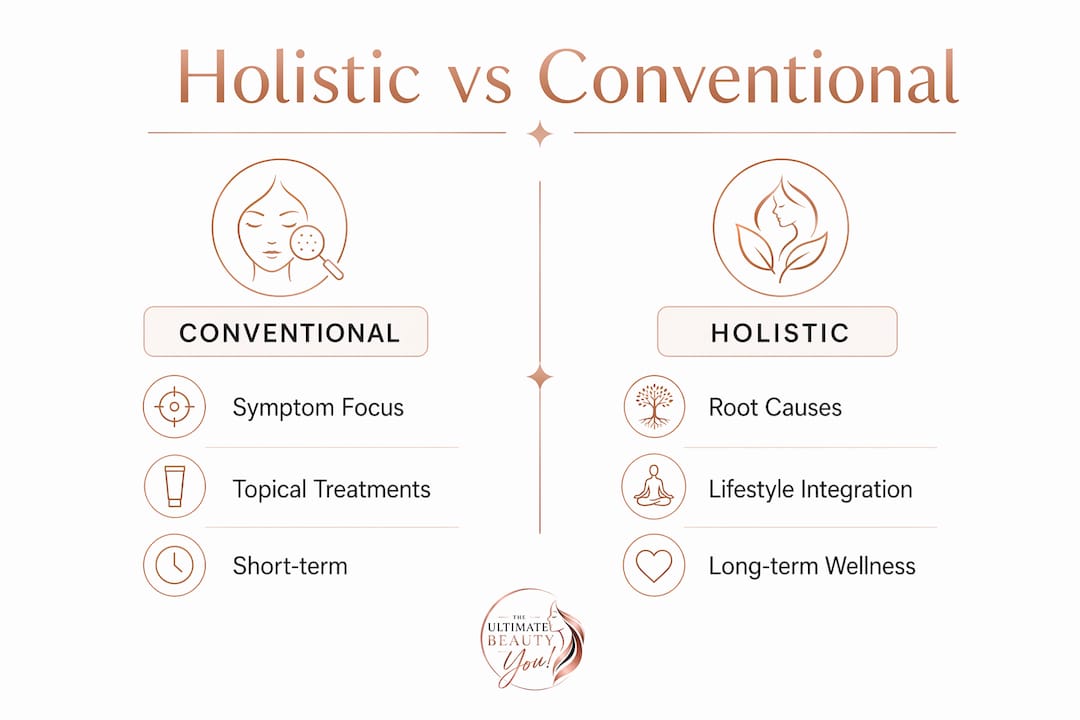
Traditional skincare targets symptoms. A breakout gets a spot treatment. Dryness gets a moisturizer. The problem is treated where it appears, not where it originates. A whole-person approach reads those same symptoms as signals from deeper systems.
| Approach | Focus | Method | Outcome |
|---|---|---|---|
| Conventional skincare | Surface symptoms | Topical products | Short-term relief |
| Holistic beauty | Root causes | Lifestyle plus topicals | Long-term skin health |
| Integrative beauty | Both layers | Clinical care plus wellness | Balanced, personalized results |
Persistent breakouts, for example, often trace back to hormonal imbalances or digestive disruption, not just clogged pores. Viewing skin as a diagnostic tool reveals that persistent skin issues frequently reflect deeper systemic imbalances. That insight changes everything about how you treat them.
One of the most exciting developments in this space is neurocosmetics, a field that targets the skin-brain axis to manage stress and inflammation simultaneously. Neurocosmetics use postbiotics and fatty acids to improve emotional wellbeing and skin barrier integrity at the same time. This is science confirming what integrative practitioners have known for years.
Holistic consultations also look different. They run longer, often 30–60 minutes more than a standard facial appointment, because they explore internal triggers beyond topical symptoms. That depth requires a real partnership between you and your practitioner.
Pro Tip: Before your next skin appointment, track your sleep, stress levels, and diet for one week. Bringing that data to your practitioner gives them a far more complete picture than a skin analysis alone.
What does a daily holistic beauty routine look like?
A practical whole-person routine does not require an overhaul of your life. It requires consistency across a few key habits. Here is what a well-rounded daily routine includes:
- Sleep 7–8 hours. Consistency in sleep supports cellular repair and collagen production. This is the single most powerful free skincare tool available to you.
- Cleanse gently. Use a sulfate-free, pH-balanced cleanser morning and night. Stripping your skin's acid mantle triggers overproduction of oil and weakens barrier function.
- Protect with SPF daily. Sun protection is non-negotiable, regardless of season or skin tone. UV damage is cumulative and the leading cause of premature skin aging.
- Eat for your skin. Prioritize omega-3 fatty acids, antioxidants, and hydrating foods. Internal wellness amplifies the effectiveness of every topical product you apply.
- Manage stress intentionally. Even ten minutes of meditation, a walk outside, or a breathing exercise lowers cortisol and reduces skin inflammation.
Beyond the daily steps, your mindset during your routine matters. Applying your skincare with intention, rather than rushing through it, turns a two-minute task into a genuine act of self-care. That shift in attention has real effects on your nervous system and, by extension, your skin.
- Swap harsh exfoliants for enzyme-based formulas two to three times per week
- Add a healthy beauty habit like dry brushing or facial massage to stimulate circulation
- Hydrate consistently throughout the day, not just when you feel thirsty
What are the benefits and challenges of a whole-person beauty approach?
The benefits of holistic beauty are real, but they are not instant. That is the most important thing to understand before you commit.
Benefits:
- Skin health that lasts because it is built on a stable internal foundation
- Stronger relationships with practitioners who understand your full picture
- A shift from chasing anti-aging fixes to building genuine longevity and balance
- Greater self-awareness and confidence as you learn what your body needs
- Alignment between your beauty choices and your personal values
Clients who understand the "why" behind their skin issues engage in longer-term, personalized care instead of symptom chasing. That understanding builds loyalty to a practice, not just a product.
The challenges are equally real. This approach takes time. It requires patience, honest self-reflection, and a willingness to sit with complexity instead of reaching for a quick fix. Holistic consultations are more intensive. Lifestyle changes are harder to sustain than swapping one cream for another.
"Shifting from a reductionist to a whole-person mindset requires patience and deeper engagement, especially for clients used to fast fixes." — Kin Aesthetics
Effective integrative care balances clinical modalities with lifestyle and emotional wellness. It does not reject modern science. It uses active ingredients and evidence-based treatments alongside lifestyle care. That balance is what makes it work for real women with real skin concerns.
How is whole-person beauty shaping the future of the industry?
The beauty industry is in the middle of a significant shift. Isolated treatments are giving way to integrated wellness lifestyles. Women are no longer satisfied with products that promise results without addressing the conditions that create skin problems in the first place.
Several trends are driving this change:
- Sustainability and transparency. Consumers demand natural ingredient transparency and ethical sourcing as baseline expectations, not premium features.
- Neurocosmetics. Products targeting the skin-brain connection are moving from niche to mainstream, reflecting growing scientific interest in emotional skin health.
- Community wellness. Social beauty rituals like bathhouse visits, group movement classes, and shared self-care practices are replacing solitary mirror routines.
- Personalized, evidence-based services. Demand is rising for practitioners who combine clinical expertise with lifestyle coaching.
- Multifunctional products. Women want products that do more with fewer ingredients, reducing both complexity and environmental impact.
You can read more about where these shifts are heading in the beauty industry trends for 2026. The direction is clear. Beauty is becoming a lifestyle, not a routine.
Key Takeaways
A whole-person beauty approach works because it treats skin as a reflection of internal health, requiring consistent lifestyle habits, not just better products.
| Point | Details |
|---|---|
| Skin as a signal | Persistent skin issues often point to internal imbalances like stress, poor sleep, or gut disruption. |
| Five core pillars | Nutrition, sleep, stress management, clean products, and mind-body awareness form the foundation. |
| Root cause focus | Holistic care addresses why skin issues occur, not just how they appear on the surface. |
| Patience is required | Visible results take longer than topical treatments but are more durable and sustainable. |
| Science and wellness together | Effective integrative care uses clinical ingredients alongside lifestyle changes, not one or the other. |
Why I believe holistic beauty is the most honest approach to skin
Real talk: I spent years chasing the next great serum. I tried every trending ingredient, every new formula, every promise of clearer, brighter skin. Some things helped. Nothing lasted. The turning point came when I stopped asking "what should I put on my face?" and started asking "what is my skin trying to tell me?"
That question changed everything. Once I connected my skin flares to stress cycles and poor sleep, the fixes became obvious and sustainable. I did not need more products. I needed better sleep, less cortisol, and more honesty about what I was putting in my body. The mental health and beauty connection is not soft science. It is physiology.
My honest advice: do not wait until you are frustrated with your skin to try this approach. Start with one habit, sleep or nutrition, and watch what happens over 30 days. You will see your skin differently. More than that, you will see yourself differently. Beauty is not perfection. Beauty is becoming. And becoming starts from the inside.
— Ava
Theultimatebeauty-you: your partner in whole-person beauty
At Theultimatebeauty-you, we believe beauty is a verb. It is active, evolving, and deeply personal. Our platform is built for women who want more than surface solutions.

We bring together trusted experts, clean beauty products, and a community of women who are committed to growing from the inside out. Whether you are building your first intentional skincare routine or deepening a practice you have had for years, our holistic beauty products are curated to support every pillar of whole-person care. From nutrition-aligned formulas to stress-supporting rituals, everything we offer is chosen with your full self in mind. You can also explore our full platform to find expert guidance, community programs, and resources designed for women at every age and stage.
FAQ
What is the holistic beauty approach in simple terms?
A holistic beauty approach treats skin as a reflection of whole-body health, addressing internal factors like sleep, nutrition, stress, and emotional wellbeing alongside topical skincare.
How is holistic beauty different from conventional skincare?
Conventional skincare targets visible symptoms with topical products. Holistic beauty looks for root causes in lifestyle, gut health, hormones, and emotional state to create lasting skin health.
What are the main principles of holistic beauty?
The core principles include quality sleep, a nutrient-dense diet, stress management, clean and sustainable product choices, and mind-body awareness practiced consistently over time.
Can holistic beauty work alongside clinical skincare treatments?
Yes. Effective integrative care combines active clinical ingredients and professional treatments with lifestyle and emotional wellness practices, rather than replacing one with the other.
How long does it take to see results from a holistic beauty routine?
Results vary by person, but most women notice meaningful changes in skin clarity and energy within four to eight weeks of consistent lifestyle adjustments, particularly improved sleep and reduced stress.