
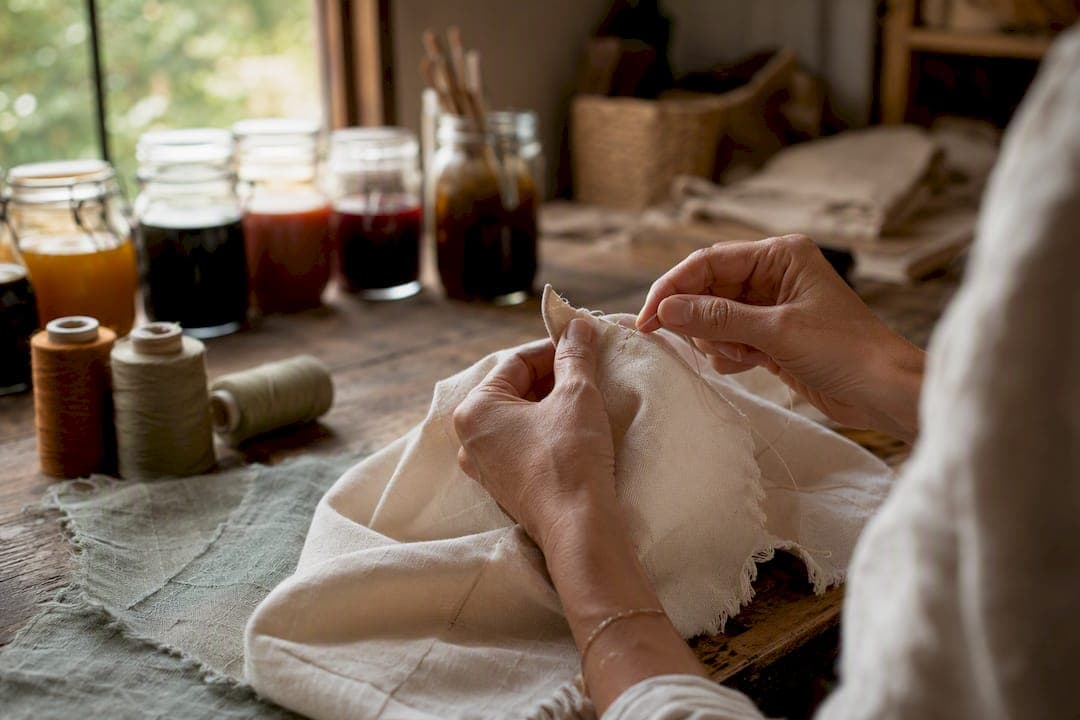
Slow fashion is a way of buying and wearing clothes that values quality, longevity, and fair treatment of workers over speed and volume. It stands opposite fast fashion, which chases weekly trend cycles and cheap, disposable pieces. Textile production has roughly doubled since 2000 while garments get worn far less often before being discarded, which is the exact pattern slow fashion pushes back against.
You don't need a closet overhaul to start. Two moves matter most right away:
- Buy less, and choose pieces built to last rather than trend-driven impulse buys.
- Prioritize garments with strong construction, natural or recycled fibers, and a clear supply chain, even if the price tag runs higher upfront.
Key Takeaways
Slow fashion works because it replaces speed and volume with durability, transparency, and fair labor practices across the entire garment lifecycle.
| Point | Details |
|---|---|
| Definition matters | Slow fashion prioritizes quality, ethics, and longevity over rapid trend cycles and disposable pricing. |
| Cost-per-wear beats sticker price | Divide purchase price by realistic wears to compare true value across cheap and premium garments. |
| Repair and secondhand come first | Extending a garment's life through repair or resale remains the most accessible entry point at any budget. |
| Certifications need specifics | Ask brands for verified percentages and third-party audits, not vague sustainability language. |
| Individual action has limits | Personal purchasing choices help, but systemic industry and policy change determine the larger outcome. |
Table of Contents
- Understanding Slow Fashion: Origins and Core Principles
- Slow Fashion vs Fast Fashion: What Actually Separates Them
- The Real Environmental and Social Cost of Fast Fashion
- How to Start Practicing Slow Fashion This Month
- Materials and Certifications: What to Trust
- Where the Slow Fashion Movement Falls Short
- How Theultimatebeauty-you Supports Your Slow Fashion Shift
- What Slow Fashion Means for Local Communities and Global Markets
- Why Consumer Habits Are Shifting Toward Slower Fashion
- Technology's Growing Role in Slow Fashion
- Notable Names Shaping the Slow Fashion Movement
- Ready to Build a Wardrobe That Actually Lasts?
- What Slow Fashion Advocates Get Wrong
- Sources
Understanding Slow Fashion: Origins and Core Principles
The phrase borrows directly from the slow food movement, and writer Kate Fletcher popularized the "slow fashion" term to describe an alternative to speed-driven apparel production. Where slow food asked people to reconnect with where their meals come from, slow fashion asks the same about clothes: who made them, what they're made of, and how long they're built to last. It's worth separating this from adjacent terms. Ethical fashion focuses on labor and animal welfare, sustainable fashion focuses on environmental footprint, and slow fashion specifically targets the pace of production and consumption. They overlap heavily, but they're not identical.
Five principles define the movement in practice:
- Quality over quantity. Fewer garments, each built to survive years of wear rather than a single season.
- Ethical production. Fair wages, safe working conditions, and traceable factories instead of hidden subcontracting chains.
- Sustainable materials. Fibers chosen for lower environmental impact, from organic cotton to recycled synthetics.
- Timeless design. Silhouettes and colors that don't expire when a trend cycle ends.
- Transparency. Brands that disclose where and how a garment was made, not vague "conscious collection" language.
These principles show up as actual business models, not just marketing copy. Repair services extend a garment's working life. Rental platforms let people wear special-occasion pieces without owning them outright. Secondhand and resale markets keep clothes circulating instead of landing in a landfill after two wears. A scholarly review of the fashion industry's environmental footprint points to reuse, rental, and repair as the scalable mechanisms most likely to slow down the industry's overall impact, more so than any single consumer swap. That's a meaningful distinction: slow fashion isn't just a shopping philosophy, it's a set of systems that has to exist for the philosophy to work at scale.
If this framing sounds familiar, it should. The same logic drives slow beauty, where fewer, better products replace a crowded shelf of quick fixes.
Slow Fashion vs Fast Fashion: What Actually Separates Them
Fast fashion brands release new collections weekly, sometimes daily, chasing runway trends and social media cycles within days rather than seasons. Slow fashion brands work on longer timelines, often two collections a year or none at all, built around pieces meant to outlast a trend rather than chase one.
Price tells only half the story. A $20 fast fashion top and a $120 well-made blouse look wildly different on a receipt, but cost-per-wear flips that comparison. Divide the price by the number of times you'll realistically wear it. The $20 top worn ten times before it pills or rips costs $2 per wear. The $120 blouse worn 150 times over five years costs $0.80 per wear. Slower, pricier, and cheaper in the end.
Statistic Callout: Textile production and consumption have roughly doubled globally since 2000, while the number of times a garment gets worn before disposal has dropped sharply over the same period.
Beyond price, look at:
- Supply-chain visibility. Slow fashion brands typically name factories and disclose labor practices; fast fashion supply chains are often layered through subcontractors nobody tracks closely.
- Waste generation. Fast fashion's rapid turnover produces far more discarded inventory and post-consumer waste per garment sold.
- Water and chemical use. Dyeing and finishing processes at fast fashion's production volume strain water systems disproportionately compared to smaller, slower runs.
- Microfiber shedding. Cheaper synthetic blends common in fast fashion shed more plastic microfibers per wash cycle than sturdier natural or blended fabrics.
The Real Environmental and Social Cost of Fast Fashion
Every discarded garment carries a footprint that starts long before it hits a donation bin. Textile waste piles up fastest where use rates are lowest, and that's precisely the trend line running through the past two decades of production growth.
Dyeing and finishing textiles consumes enormous volumes of water and often introduces chemical runoff into local water systems near manufacturing hubs. Synthetic fabrics compound the problem after purchase: every wash cycle sheds microfibers, tiny plastic particles that flow through wastewater treatment and into rivers and oceans, where they enter the food chain in ways researchers are still tracing.
Individual purchasing choices matter, but they can't substitute for structural change in how the industry operates. Consumers should push for better practices while recognizing that systemic shifts, not just personal shopping habits, determine whether the industry's footprint actually shrinks.
The human cost runs parallel to the environmental one:
- Garment workers in many production hubs earn wages well below a living wage, even when working full-time hours.
- Safety conditions in some factories remain inconsistent, with subcontracting chains that make oversight difficult.
- Rapid order turnaround pressures factories to cut corners on both labor standards and material quality.
- Worker organizing and wage transparency remain uneven across regions and brands.
None of this means one shopper switching to secondhand clothes will fix a global supply chain. It means individual habits and policy pressure both matter, and neither one alone gets the job done.
How to Start Practicing Slow Fashion This Month
You don't need to donate your entire closet to start. Small, deliberate changes compound faster than most people expect.
- Audit what you own. Pull everything out, sort into "worn in the last year," "never worn," and "needs repair." Ask honestly why each unworn piece never got used.
- Repair before replacing. A loose button, a broken zipper, or a small tear is often a five-minute fix, not a reason to toss something.
- Apply the 3-3-3 rule. Build outfits from three tops, three bottoms, and three pairs of shoes you already own before buying anything new. It curbs impulse purchases and reveals genuine gaps in your wardrobe.
- Run the cost-per-wear math before buying. Divide the price by realistic expected wears. A $150 coat worn 150 times costs $1 per wear; a $30 coat worn ten times before falling apart costs $3 per wear.
- Shop secondhand first. Thrift stores, consignment shops, and resale apps often carry higher-quality construction at a fraction of original retail price.
- Invest selectively in staples. Save new-purchase budget for versatile basics you'll wear year-round, not trend pieces with a six-month shelf life.
Pro Tip: Check stitch density, seam finishing, and lining quality before buying, not the brand name or price tag. A garment with tight, even stitching and a proper lining will outlast a "premium" logo tee with loose seams every time.
Not sure where to start building a capsule around pieces you already love? A wardrobe capsule guide walks through the process step by step.
Materials and Certifications: What to Trust
Fiber choice shapes both durability and environmental impact. Organic cotton uses fewer synthetic pesticides than conventional cotton but still demands significant water. Hemp grows with minimal irrigation and produces a durable, breathable fabric. Tencel, made from wood pulp through a closed-loop process, offers a lower-impact alternative to conventional rayon. Recycled polyester diverts plastic from landfills but still sheds microfibers like virgin synthetics.
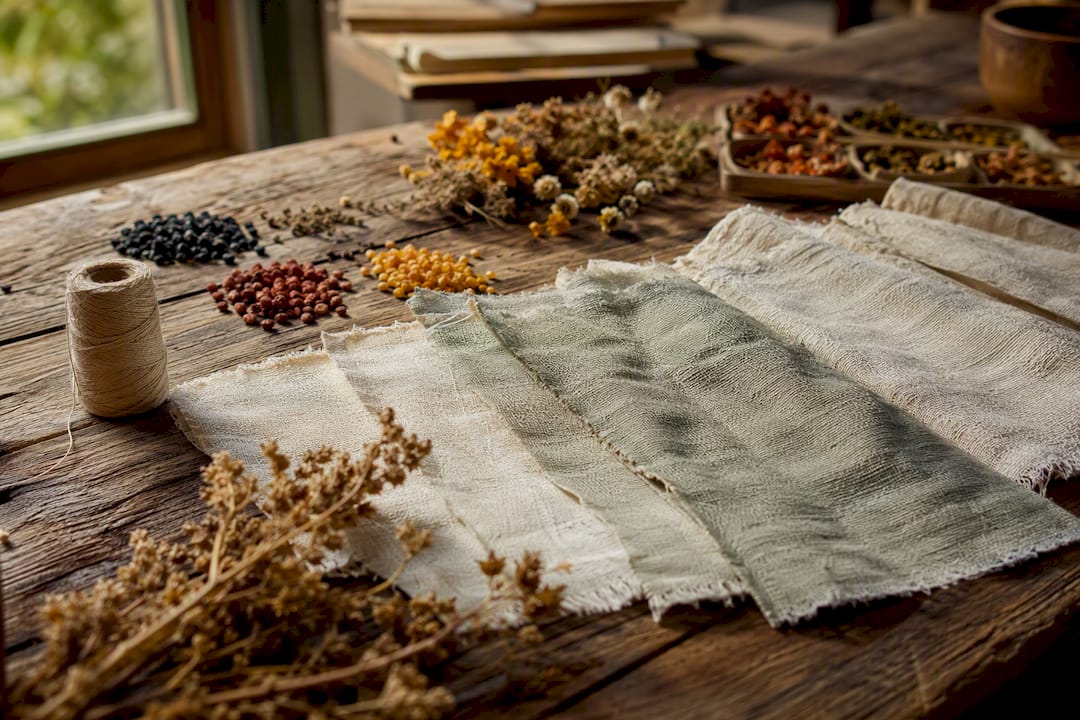
Certifications help, with limits. Better Cotton and the Responsible Wool Standard set real production benchmarks, and Fairtrade addresses labor conditions specifically. But labels vary widely in what they actually verify, so ask brands for specifics: what percentage of a garment is certified, and by which independent auditor.
Statistic Callout: Blended fabrics, common in budget apparel, complicate end-of-life recycling because separating fiber types at scale remains technically difficult, a limitation flagged directly in circular-economy research. A closer look at fabric quality in minimalist wardrobes breaks down how to judge this at the point of sale.
Where the Slow Fashion Movement Falls Short
Slow fashion asks readers to buy less and spend more per item, which is a genuine barrier for households on a tight budget. A $120 blouse beats a $20 top on cost-per-wear, but only if someone has $120 available today. That gap risks turning slow fashion into a status marker rather than a universally accessible practice.
Greenwashing compounds the problem. Vague terms like "conscious collection" or "eco-friendly" without third-party verification are red flags, not proof.
- Watch for brands that market sustainability without disclosing factory locations or material percentages.
- Question any claim that isn't backed by a specific certification or audited standard.
- Recognize that secondhand shopping and repair remain the most accessible entry points regardless of income.
- Understand that policy change, like extended producer responsibility laws, matters more than any single purchasing decision.
How Theultimatebeauty-you Supports Your Slow Fashion Shift
Slow fashion and slow beauty run on the same logic: fewer, better choices made with intention instead of urgency. Theultimatebeauty-you built its resources around that overlap.
- The slow beauty movement guide connects mindful consumption principles across beauty and wardrobe decisions.
- The sustainability in beauty explainer breaks down certification language you'll recognize from fashion labels too.
- The personal style guide for women shows how to keep your look distinctive while buying less.
Editorial contributor Ava draws on the platform's broader wardrobe and mindful-consumption research to connect slow fashion's principles to real, actionable steps for readers at any budget level.
What Slow Fashion Means for Local Communities and Global Markets
Slow fashion's economic footprint runs in two directions at once. Locally, it tends to favor smaller-batch production, independent designers, and repair or alteration businesses, work that stays in a community rather than routing through overseas mega-factories. Tailors, cobblers, and small textile studios see more demand when consumers commit to repairing instead of replacing.
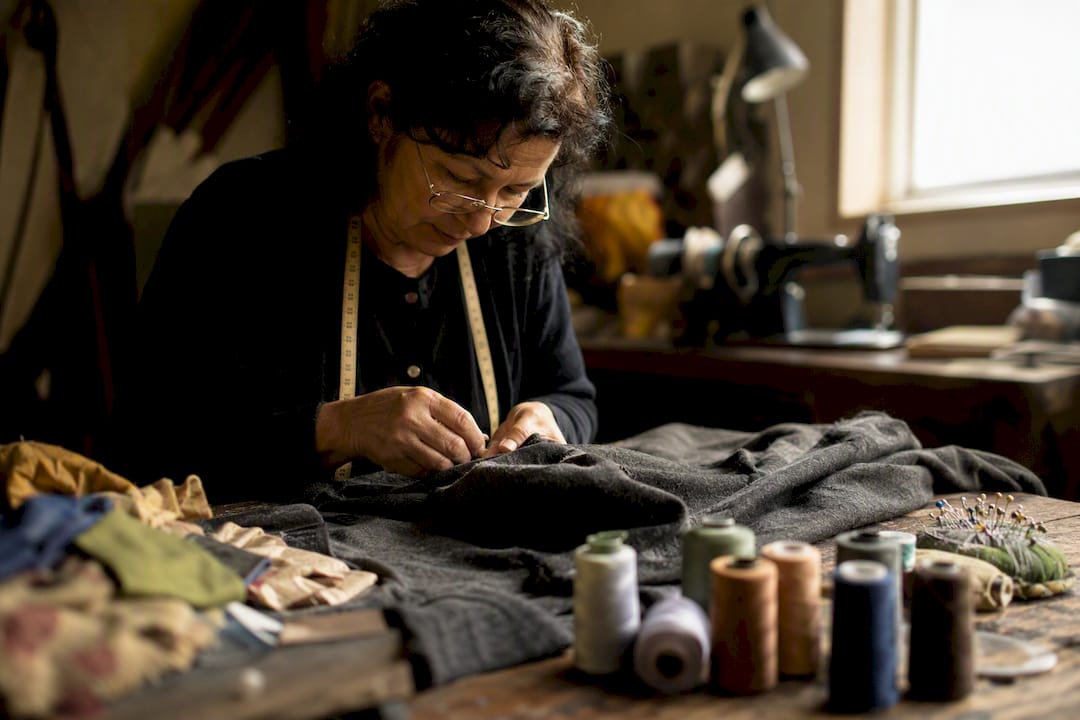
Globally, the picture is more complicated. Fast fashion's low-cost manufacturing hubs employ millions of garment workers, many in countries where that income, however inadequate, still represents essential household earnings. A rapid, wholesale shift away from fast fashion without a parallel investment in fair-wage alternatives could destabilize those livelihoods rather than improve them. That's why credible slow fashion advocacy pairs "buy less" messaging with pressure for living wages and safer conditions within existing production hubs, not just relocation of manufacturing.
Resale and rental markets add a newer economic layer. Secondhand platforms create jobs in sorting, authentication, and logistics, while extending a garment's economic life well past its original sale. Circular models, repair, resale, rental, don't just reduce waste; they redistribute where value gets captured, often toward local service providers instead of overseas factories.
Why Consumer Habits Are Shifting Toward Slower Fashion
Consumer behavior around clothing has visibly shifted over the past several years, and slow fashion sits at the center of that change. Shoppers increasingly research a brand's supply chain before buying, check for certifications, and factor in a garment's expected lifespan rather than just its sticker price. That shift in expectation has pushed even mainstream retailers to introduce repair programs, resale marketplaces, and "responsible" product lines, whether or not those lines fully live up to the marketing.
Social media plays a double role here. It accelerated fast fashion's trend cycles for years, but it's also where secondhand shopping, capsule wardrobes, and outfit repeating gained genuine cultural traction. Watching someone build a versatile wardrobe from a dozen pieces carries real influence, especially compared to a haul video showcasing forty items nobody will wear twice.
The industry has responded unevenly. Some brands have restructured collections around fewer, longer-running styles. Others have simply added sustainability language to existing fast-turnover models, a distinction consumers are getting sharper at spotting. The net effect is a market where transparency and durability now function as competitive advantages, not just ethical bonus points, which is a meaningful shift from a decade ago when price and trend speed were nearly the only variables that mattered.
Technology's Growing Role in Slow Fashion
Innovation is closing gaps that used to make slow fashion harder to practice consistently. Resale and rental apps use algorithms to match secondhand inventory with buyers faster than a physical thrift store ever could, turning what used to be a scavenger hunt into a searchable marketplace. Digital tracking now lets some brands publish real-time supply chain data, showing exactly which factory produced a specific garment.
Material science is advancing too. Recycling technology capable of separating blended fibers, historically one of the field's toughest technical problems, is improving, which could eventually make circular systems viable at a scale they aren't today. Fabric innovations like Tencel and next-generation recycled synthetics offer lower-impact alternatives without sacrificing the durability slow fashion depends on.
On the consumer side, apps that calculate cost-per-wear or track how often a garment gets worn turn an abstract sustainability concept into a visible number. That kind of visibility changes buying behavior more effectively than a general appeal to "shop responsibly" ever could, because it gives shoppers a concrete metric instead of a vague aspiration. None of this technology replaces the core habits, buying less and choosing well, but it does make those habits easier to sustain long term.
Notable Names Shaping the Slow Fashion Movement
A handful of approaches illustrate what slow fashion looks like when principles turn into practice. Independent designers working in small production runs, often using deadstock or locally sourced fabric, avoid the overproduction problem baked into fast fashion's business model entirely by only making what's already been ordered or is realistically expected to sell.
Rental platforms represent another model worth understanding: instead of buying an occasion outfit worn once, renters access the same garment multiple times across different customers, dramatically lowering the per-wear environmental cost of formal or special-occasion clothing. Repair-focused cooperatives and alteration studios extend the working life of garments people already own, which research consistently ranks as one of the single most impactful actions available to an individual consumer.
Cultural and heritage-focused labels add a dimension worth recognizing too. Brands rooted in traditional craft techniques, whether handwoven textiles or region-specific dyeing methods, often build slowness into production by necessity rather than marketing strategy, since these techniques simply can't be rushed without losing what makes them distinct. That's a useful reminder that slow fashion isn't a new invention. In many parts of the world, it's simply how clothing was made before industrial speed became the default.
Ready to Build a Wardrobe That Actually Lasts?
Slow fashion isn't a one-time closet purge, it's an ongoing set of habits: auditing what you own, repairing what still has life in it, and buying selectively when you do add something new. Theultimatebeauty-you built its wardrobe and mindful-consumption resources around exactly that kind of gradual, sustainable shift. Explore the full library at Theultimatebeauty-you, browse curated recommendations on the products page, or connect with wardrobe and style experts through the Experts & Partners directory to get guidance tailored to your closet and your budget.
What Slow Fashion Advocates Get Wrong
Most slow fashion advice assumes a shopper with disposable income and a walk-in closet worth auditing. That framing alienates exactly the people who'd benefit most from buying less. The research here supports a different priority order than what typically gets pushed: repair and secondhand shopping first, cost-per-wear thinking second, and new "investment piece" purchases a distant third.
Where conventional advice falls short is in treating certification labels as a finish line. A Fairtrade tag or a Better Cotton mention feels like due diligence, but labels vary in what they actually verify, and plenty of brands lean on vague language precisely because specifics are inconvenient. Ask for percentages. Ask who audited the claim.
If you take one thing from this guide, let it be the 3-3-3 rule applied before your next purchase, not after. Prevention beats a guilt-driven donation pile every time.
— Ava
Sources
For readers who want primary reporting behind these claims: National Geographic on cost-per-wear, Scientific American on ethical sourcing, ASU Online on production data, and Good On You on terminology.
- Ready to give up fast fashion? Give 'slow fashion' a try. | National Geographic
- Slow fashion — Wikipedia
- What Is Sustainable Fashion? | ASU Online News