

Social media affects self-image because curated, appearance-focused content combined with reward-driven platform features makes upward social comparison and self-objectification more frequent and more intense than they'd ever be in daily offline life. A 2026 meta-analysis of 45 studies covering 33,086 adolescents confirmed a significant association between social media engagement and body-image concerns, with the strongest effects showing up on visual platforms and in female-majority samples. Adolescents and young adults carry the highest risk, since identity is still forming and peer approval carries outsized weight.
Here's what to watch for and do about it, starting today:
- Watch for: mood dips right after scrolling, or an urge to edit every photo before posting.
- Do now: swap ten minutes of passive scrolling for one intentional, positive interaction.
- Get help if: low mood, body distress, or disordered eating patterns persist beyond a couple of weeks.
Key Takeaways
Social media reshapes self-image primarily through upward social comparison and self-objectification, amplified by algorithms, editing tools, and reward-based feedback loops.
| Point | Details |
|---|---|
| Core mechanism | Upward comparison and self-objectification drive most of the harm, not screen time alone. |
| Strongest evidence | A meta-analysis of 45 studies and 33,086 adolescents links engagement to body-image concerns. |
| Highest-risk groups | Adolescents and young adults, especially those with low or unstable baseline self-esteem. |
| Immediate action | Curate your feed and swap passive scrolling for one active, supportive interaction daily. |
| Support resource | Theultimatebeauty-you offers community and expert content to reinforce these habits long-term. |
This article is general information, not a substitute for advice from a qualified doctor. Consult a qualified healthcare professional about your own circumstances before acting on anything here.
Table of Contents
- Why Social Media Affects Self-Image: The Core Mechanisms
- What the Research Shows About Social Media and Self-Esteem
- Who Is Most Vulnerable to Social Media's Effects on Self-Image
- Common Effects of Social Media on Self-Esteem and Mental Health
- How to Spot a Damaged Self-Image From Social Media Use
- Practical Strategies to Protect Your Self-Image on Social Media
- When Social Media's Effect on Self-Image Needs Professional Help
- An Honest Word From Theultimatebeauty-you
- Build Self-Image Habits With Support That Gets It
- Sources
Why Social Media Affects Self-Image: The Core Mechanisms
Your self-image doesn't shift because of an algorithm alone. It shifts because that algorithm plugs directly into psychological wiring that's been comparing "us" to "them" since long before smartphones existed.
Upward social comparison sits at the center of it. Social comparison theory explains that when you compare yourself to someone who appears superior in looks, lifestyle, or success, your own self-evaluation drops. Social media turns this into a constant, high-volume activity. A 2025 study in Frontiers in Psychology found that upward comparisons on Instagram directly mediate lower global self-esteem, meaning the comparison itself, not the platform, is doing the damage.
Self-objectification works alongside it. Repeated exposure to appearance-focused content trains you to view your own body as an object to be evaluated rather than a body that does things. Researchers describe social platforms as digital ecosystems that amplify appearance scrutiny precisely during the identity-development years, which is why teenagers and young women often feel the effects most sharply.
Internalization of appearance ideals and sociometer effects round out the psychological picture. The sociometer theory holds that self-esteem functions like a gauge of your social standing. Likes, followers, and comment counts feed that gauge real-time data, so a quiet post can genuinely feel like social rejection.
On the platform side, four features do most of the work:
- Algorithmic amplification pushes appearance-salient content because it earns more engagement, so your feed skews toward bodies and faces optimized for attention.
- Likes and comments function as intermittent rewards, the same unpredictable reinforcement pattern that keeps you checking a notification bell.
- Filters and editing tools normalize an unreal baseline. A British study of 175 young adults found that 90% of respondents used filters or editing tools before posting, meaning nearly every photo you scroll past has already been altered.
- Influencer norms set a reference point that's mathematically impossible for most people to match, since it's built from lighting, angles, and selection bias.
Passive scrolling through a curated, appearance-heavy feed and actively posting an edited selfie are two different activities with two different risk profiles. Scrolling invites comparison without control; posting invites validation-seeking without resolution. Neither one is inherently harmful in a single sitting, but both compound with repetition.
Pro Tip: If you only change one habit, change how you engage, not how long you stay online. Swap five minutes of passive comparison scrolling for one active, supportive comment to a friend. It shifts you from spectator to participant, and that shift alone tends to lower comparison intensity.
What the Research Shows About Social Media and Self-Esteem
The strongest recent evidence comes from a 2026 meta-analysis pooling 45 studies and 33,086 adolescents, which found a significant link between social media engagement and both body-image concerns and disordered-eating symptoms. The association held more strongly on visual platforms and among samples with more female participants, reinforcing that what you look at matters as much as how long you look.
A separate preregistered systematic review of numerous studies involving over thirty thousand adolescents reached a related but sharper conclusion: specific activities predict harm more reliably than raw screen time. Editing and posting selfies, or seeking out appearance-focused content, moved the needle far more than simply logging hours.
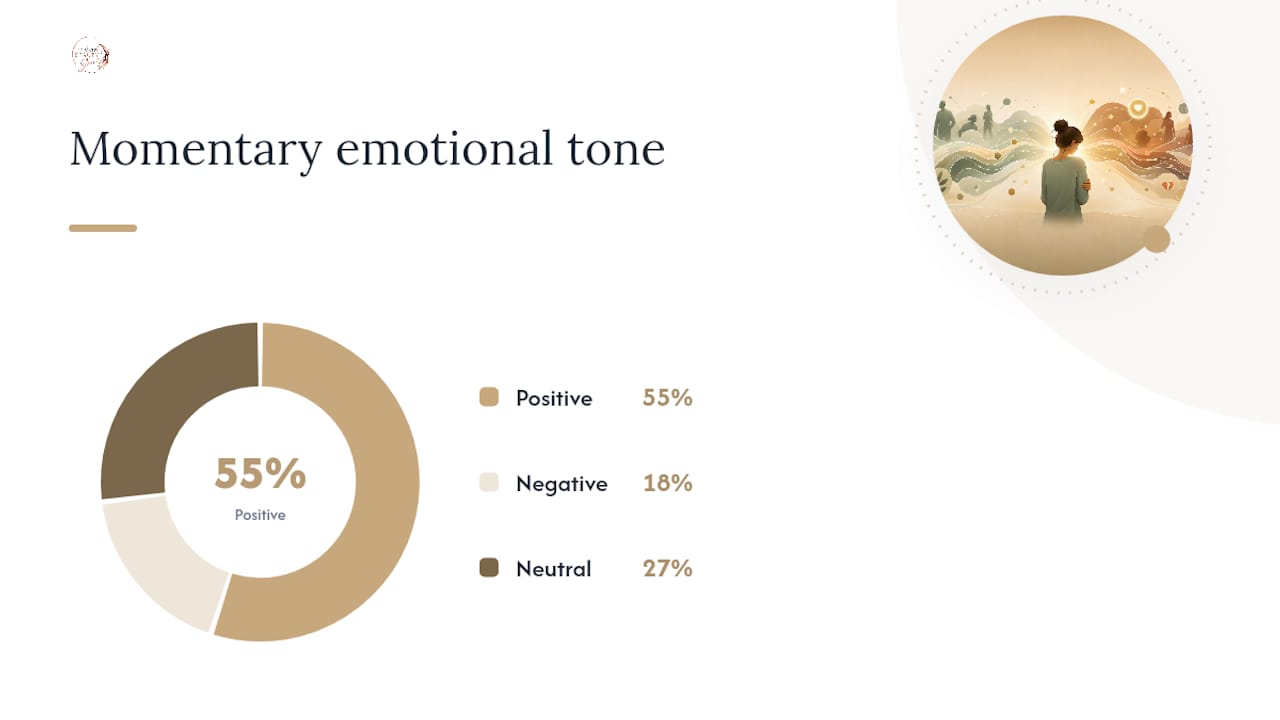
An experience-sampling study offers the most granular picture. Researchers tracked 300 adolescents through 21,970 momentary check-ins and found that 55% of social media moments felt positive, 18% negative, and 27% neutral. The emotional tone of each moment predicted shifts in self-esteem far better than total time spent on the app.
Study type matters for how much weight you give any single finding:
- Cross-sectional studies capture a snapshot and show association, not cause. Most of the meta-analysis's underlying studies fall here.
- Longitudinal studies track the same people over time, offering a stronger (though still imperfect) causal signal.
- Experience-sampling studies, like the 21,970-observation project above, catch real-time mood shifts that self-report surveys miss entirely.
Every one of these designs shares a limitation: they rely heavily on self-reported activity, and "time online" is a blunt measurement compared to what someone was actually looking at. NCBI's overview of adolescent social media and mental health makes the same point, noting the field still needs more longitudinal work to nail down direction of effect.
Who Is Most Vulnerable to Social Media's Effects on Self-Image
Adolescents and young adults top every risk list, largely because identity formation during these years leans heavily on peer feedback. Many samples in the research also show stronger effects among female participants, particularly around body image and disordered eating.
Beyond age and gender, a few personal traits raise risk further:
- Baseline low self-esteem or unstable self-esteem that swings with daily events.
- Heavy exposure to appearance-focused or heavily edited content.
- A habit of frequent upward comparisons rather than lateral or downward ones.
- A personal or family history of disordered eating.
- High reliance on peer approval for a sense of self-worth.
Susceptibility is genuinely individual. Experience-sampling data shows wide variation between people exposed to the same content, some barely affected, others strongly so, which means your own history and temperament matter as much as what's on your screen.
Common Effects of Social Media on Self-Esteem and Mental Health
Body dissatisfaction sits at the top of the list, followed closely by lower global self-esteem, depressive symptoms, and elevated risk of disordered eating. Clinical guidance from Cleveland Clinic notes that repeated exposure to filtered, edited images can distort what people consider a "normal" appearance, and in some cases contributes to body dysmorphic concerns. Envy and loneliness tend to follow the same comparison pathway: someone else's highlight reel becomes the unspoken benchmark for your average Tuesday.
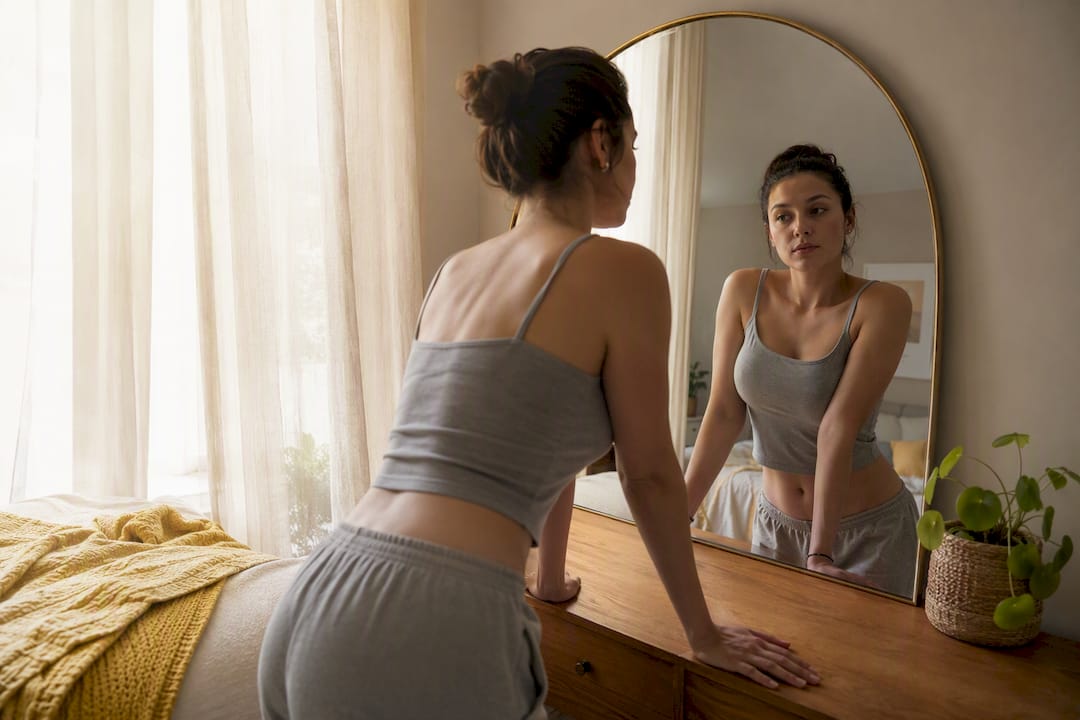
The mechanism-to-outcome chain usually runs like this: algorithmic exposure serves more appearance-heavy content, which increases upward comparisons, which lowers body satisfaction and self-esteem over time. It's a feedback loop, not a single event.
None of this means social media is uniformly harmful. Many adolescents report genuinely positive experiences, identity exploration, creative expression, and real social connection among them. The experience-sampling data bears this out directly: most moments were positive, not negative. The deciding factor isn't whether someone uses social media. It's the valence of what they encounter and how they engage with it.
How to Spot a Damaged Self-Image From Social Media Use
Some warning signs show up in behavior before they show up in words. Watch for a sudden preoccupation with appearance, excessive editing before posting, or repeated posting purely for reassurance. Mood drops that consistently follow app use, pulling away from offline activities and friends, disordered eating behaviors, and rising social anxiety all deserve attention too.
For parents watching an adolescent, secretive social-media use, sharp mood swings tied to screen time, and a noticeable drop in school performance or social functioning are red flags worth a direct, calm conversation. Our guide to beauty anxiety breaks down related symptoms in more depth.
Ask yourself these quick check-in questions: Do I feel worse about my body after scrolling than before? Am I comparing myself to people I've never met? Would I rather edit a photo for ten minutes than post it as it is? Honest answers here tell you more than any screen-time report.
Practical Strategies to Protect Your Self-Image on Social Media
Real change comes from adjusting three layers at once: what you consume, how you think about it, and who you lean on offline. None of these require quitting social media entirely.
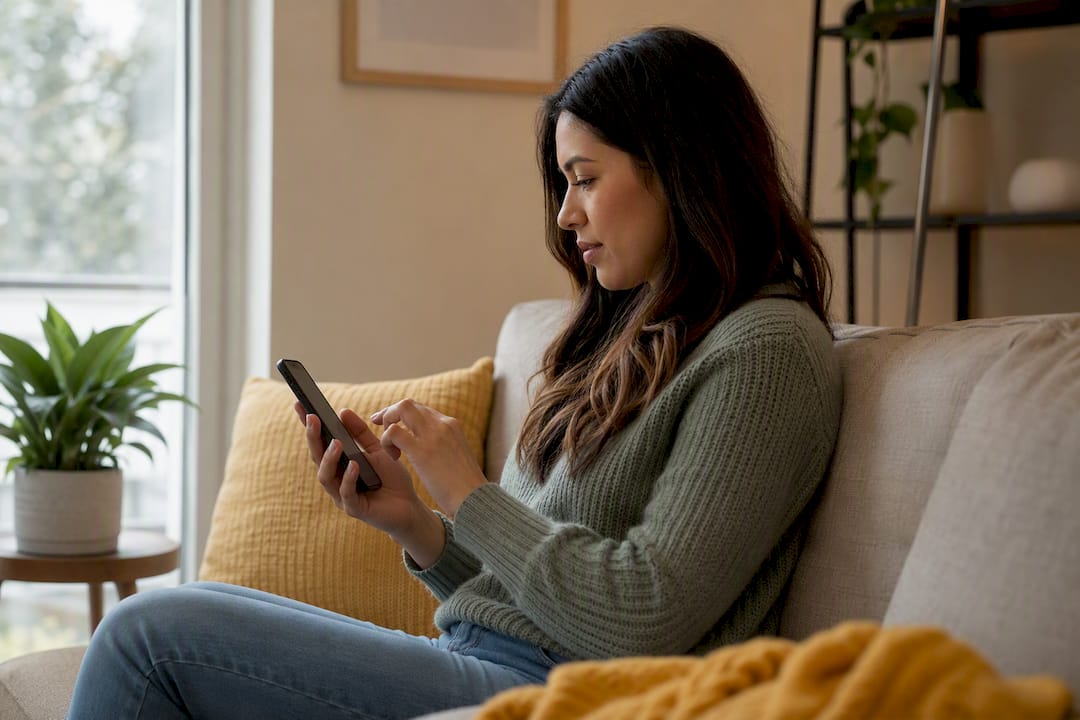
Digital habits carry the most immediate impact. Curate your feed by unfollowing accounts that consistently trigger comparison, even if you like the person. Turn off visible like counts where the platform allows it. Set a specific time limit for appearance-focused apps rather than a vague "less time" goal. Swap five minutes of passive scrolling for content that has nothing to do with bodies or beauty, cooking, hobbies, news, anything neutral.
Cognitive habits build resilience underneath the digital changes. Media literacy training, learning to recognize editing, lighting, and selection bias in posts, has shown modest but consistent benefits in university-focused research on body image. Pair that with brief self-compassion exercises: when you catch yourself comparing, name it out loud ("I'm comparing myself to a curated photo") and redirect to something you value about yourself that has nothing to do with appearance.
Social habits matter just as much as anything you do alone. Seek out a few people, online or offline, who reliably make you feel steady rather than smaller. Diversify your time so social media isn't your only source of connection or validation.
A short reset can make these habits concrete. Try this 7-day version:
- Day 1: Audit your feed. Unfollow five accounts that trigger comparison.
- Day 2: Turn off like/comment counts if your platform supports it.
- Day 3: Set a firm daily time limit on your most-used app.
- Day 4: Replace one scrolling session with an offline activity you enjoy.
- Day 5: Practice one self-compassion check-in when you notice comparison thoughts.
- Day 6: Reach out to one supportive person instead of posting for reassurance.
- Day 7: Reflect: rate your mood and body satisfaction compared to Day 1.
The evidence behind each piece varies in strength. Media literacy modules and short digital breaks show the most consistent support in the research. Self-compassion exercises show real but modest benefit. None of these are cures. They're small, testable shifts that tend to compound.
Pro Tip for parents: Ask open questions instead of issuing rules. "What do you like about this app?" opens a conversation. "You're spending too much time on that" closes one.
Pro Tip for young adults: Before unfollowing an account, ask "Does this make me feel curious or does it make me feel small?" That single question filters most feeds fast. Our piece on confidence-building habits offers a longer-term follow-up plan once your reset week ends. For daily habit ideas that reinforce this work, see healthy beauty habits for every woman.
When Social Media's Effect on Self-Image Needs Professional Help
Self-directed changes work for a lot of people, but some signs call for more than a feed cleanup. Seek professional support if you notice persistent low mood lasting more than two weeks, suicidal thoughts of any intensity, severe disordered eating behaviors, a loss of ability to function day to day, or thoughts of self-harm.
If you or someone you know is in crisis, call or text 988 to reach the Suicide and Prevention Lifeline in the United States, available around the clock. For ongoing concerns, a licensed therapist or counselor can help untangle what's coming from social media and what's coming from other stressors.
If a minor shows these signs, parents or guardians should seek professional evaluation directly rather than waiting it out. Conversations with a mental health provider are confidential, which itself often lowers the barrier to asking for help.
An Honest Word From Theultimatebeauty-you
Every woman we talk to at Theultimatebeauty-you has felt that quiet sting of comparing herself to a stranger's curated photo. It's not a personal failing. It's how the mechanisms above are built to work.
We believe becoming your best self starts with small, honest shifts, not overhauls. Try the seven-day reset above. Notice what changes. And know that a supportive community can carry you further than any single app ever will, though it's never a substitute for emergency mental health care when that's what's needed.
Build Self-Image Habits With Support That Gets It
A feed cleanup and a self-compassion exercise go further with people who actually understand what you're navigating. Theultimatebeauty-you was built around exactly that: an inside-out, head-to-toe community where expert content on mental health and confidence sits alongside real women working through the same comparison spirals you just read about.

Unlike a generic wellness app or a one-off self-help article, Theultimatebeauty-you pairs practical strategies with an actual community and trusted experts, so the seven-day reset you just tried doesn't fizzle out alone on day eight. If you want guided resources, expert connections, and a space built specifically for women rebuilding a healthier relationship with their self-image, visit Theultimatebeauty-you and explore what fits your stage right now. This platform complements professional care; it is not a replacement for emergency mental health services.
Sources
- Systematic review on social networking sites and body image (PubMed entry)
- How social media impacts body image (Cleveland Clinic Health)