
The best community partnerships start with one question: what do the women around us need, and who is already trusted to help? From there, the strongest ideas are simple. A wellness workshop with a youth organization. A self-care day for women who give care to others. A neighborhood gathering built around shared food. A partnership works when each partner brings something real and the community has a say in the plan.
Below you will find proven examples, partner types to approach, event formats you can borrow, and a way to keep it all going after the first event.
TL;DR
- Start with listening. Ask the women and girls you want to serve what they need, then pick partners who already have their trust.
- Pair a mission-driven organization with a business or expert. Wellness, beauty, mentoring and career exploration work well together.
- Choose formats that are easy to join: shared meals, walks, book groups, workshops and pop-up care days.
- Build in access from day one: location, cost, language, seating, quiet space and clear communication.
- Define roles in writing and plan for more than one event. Long-term partnerships outperform one-off ones.
Table of Contents
- Real community partnership examples for women and girls
- Who to partner with
- Event ideas that bring women together
- Outreach programs that meet practical needs
- How to plan a partnership that serves everyone
- Make every event accessible and welcoming
- Keeping a partnership alive
- Bring your partnership idea to our community
- FAQ
- Sources
Real community partnership examples for women and girls
Ideas land better when you can see them working. These four show different ways to combine beauty, wellness and confidence.
Confidence and career exploration for girls. YWCA Metropolitan Chicago launched Pretty Empowered in 2022 with funding from a national beauty retailer's charitable foundation. The program uses interactive sessions on wellness, cosmetic science and career exploration. In 2024 it aimed to reach 800 girls at eight local YWCA locations. The lesson: beauty can be the doorway to science, careers and self-worth.
Restorative care for women who care for others. A beauty retailer, Metropolitan Peace Initiatives and Metropolitan Family Services hosted a Day of Beauty for women working across community violence intervention organizations. It offered a restorative self-care experience to women who spend their days supporting others. The lesson: the women holding a community together deserve care too.
Peer-led wellness. The SHE Tribe (She's Healthy and Empowered) program is a social network-based, peer-facilitated intervention. It helps women in underserved U.S. communities adopt sustainable health behaviors, including stress reduction and physical activity. The lesson: women often trust other women who have walked the same road.
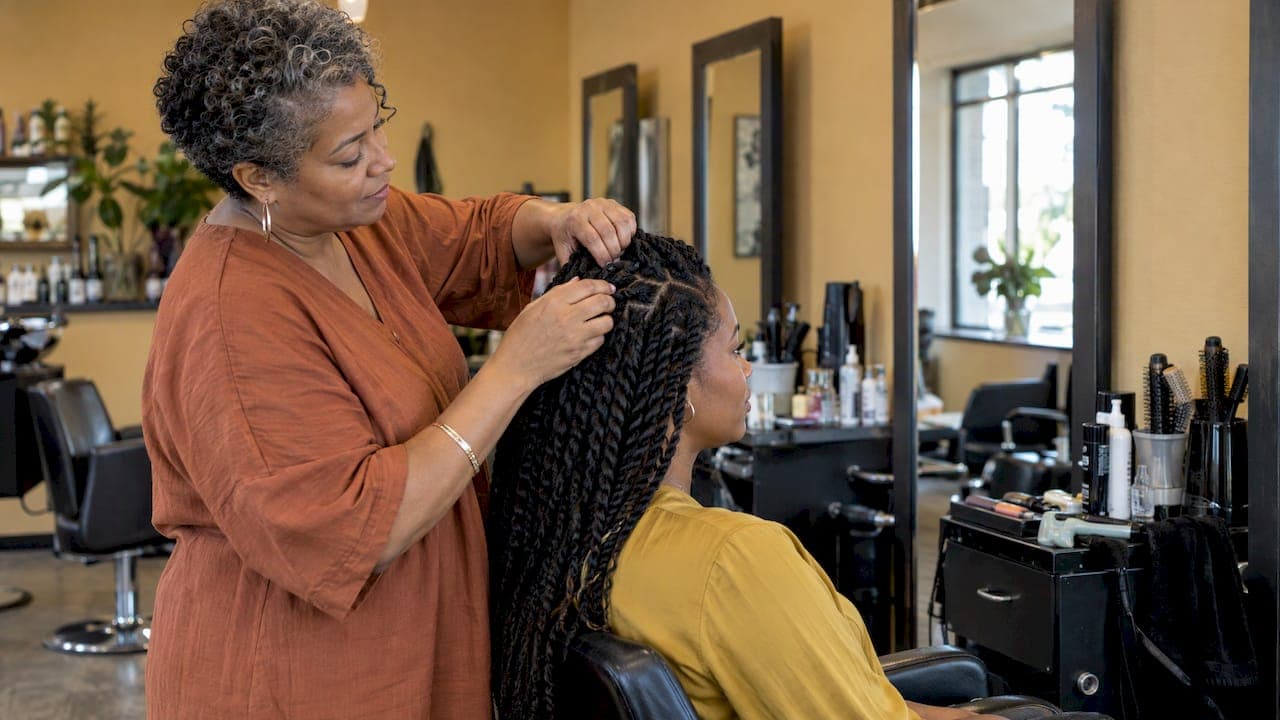
Salons as wellness sanctuaries. The Create to Heal initiative turns salon spaces into places of restorative care. It offers personalized hair analysis and wellness services for women navigating trauma, transition or economic disruption. The lesson: spaces women already love can become spaces where they heal.
Notice the pattern. Each one pairs a community-rooted organization with a partner that brings resources, expertise or a welcoming space. Each one treats beauty as more than appearance.
Who to partner with
A good partner list is wider than most people expect. Utah State University Extension's partnership guide suggests combining libraries, childcare and home-visiting programs, schools, food pantries, health departments, city offices, community centers, faith-based groups, youth organizations and community nonprofits. Its examples include play-and-learn events in parks and coordinated food drives.
For wellness and confidence programs specifically, the School-Based Health Alliance's toolkit names food banks, hospitals, gyms, YMCAs, nonprofits, universities and businesses as potential partners. It also describes collaborations with nutritionists, yoga or mindfulness teachers and massage therapists.
Here is a quick way to match partner types to ideas.
| Partner type | What they bring | Idea to try |
|---|---|---|
| Library | Free, trusted, central space | Book group or "ask me anything" session with a wellness expert |
| Youth organization | Access to girls and mentors | Confidence and career exploration workshop |
| Gym or yoga studio | Movement and mindfulness teachers | Free community class series |
| Salon or spa | Skilled professionals, welcoming space | Care day for caregivers or women in transition |
| University program | Student volunteers, research support | Mentoring, tutoring or job-readiness sessions |
| Food pantry or garden | Fresh food, a gathering reason | Cooking and nutrition session with recipe bags |
| Local business | Funding, products, volunteers | Sponsored event or supply drive |
The University of Utah's Bennion Center groups its community partner programs into advocacy, arts and recreation, education, health and wellness, mentorship, and sustainability and food justice. That is a useful menu if you are not sure where your idea fits.
If you are a brand or expert looking for women's communities to partner with, our guide to building women's community partnerships that last goes deeper on the relationship side.
Event ideas that bring women together
You do not need a big budget. You need a reason to gather and a space where people feel safe.
The OneAID Community Programming Toolkit lists coffee or tea chats, happy hours, free or low-cost cultural or sporting events, walks or hikes, garden visits, picnics or barbecues, book or podcast groups, open mics, library "Ask Me Anything" sessions and letter-writing gatherings. It also advises choosing accessible, comfortable locations and creating safe, respectful spaces.
Here is how we would adapt those for a women-centered partnership:
- Self-care circles. A local wellness teacher leads a short guided session. A skincare or hair expert answers questions. Everyone leaves with something practical.
- Letter-writing gatherings. Women write notes of encouragement to each other or to girls in a partner program. Simple, low-cost, deeply moving.
- Walk and talk clubs. A park, a partner gym and a monthly meet-up. No equipment, no pressure.
- Potluck or block party. The Village of Evergreen Park's Block Party Kit suggests activities for neighbors of all ages and shared food through household dishes, a potluck or a barbecue.
- Intentional shared meals. UnidosUS's Recipe for Unity toolkit recommends meals that intentionally include people of different races, ethnicities, genders, sexual orientations, religions, political perspectives and ages. It suggests keeping an intimate event to about 20 to 25 attendees so everyone has space to share.
- Welcoming events across differences. Welcoming America's toolkit says events can bring immigrant and non-immigrant residents together, encourage dialogue and build connections across differences.
Pick one idea and run it well before adding another. Small and consistent beats big and one-time.
Outreach programs that meet practical needs
Confidence grows when the basics are covered. Some of the strongest partnerships pair practical help with joy.
- Food and learning. The Utah State guide mentions a food drive coordinated with the health department, local library and city offices, and a partnership between a food pantry and a community garden to distribute recipe bags with fresh produce.
- A neighbor care network. AARP Foundation's Create the Good guide recommends asking residents what support they want, then forming teams for driving, handyman help, food preparation and delivery, personal connection, resource navigation, pet care and yard care. It then suggests pairing the network with a fun event such as a barbecue, parade, walking club or book group.
- Pop-up care. Next City reports that LavaMae X's Pop-Up Care Villages combine showers, medical care, legal advice, employment assistance, haircuts and clothing with wellness care, music, hot meals and social connection for people experiencing homelessness.
The common thread is dignity. A haircut, a hot meal and a friendly conversation in the same place say: you matter. That is what beauty can be when it is treated as a verb.
For ideas that connect beauty and health, see how beauty and wellness are converging and what mindful beauty looks like in practice.
How to plan a partnership that serves everyone
The planning is where good intentions become real results. Follow these steps.
- Listen first. Planning should seek diverse representation and leadership, ask neighbors what they need to participate, and consider barriers such as mobility, travel, cost and language. Hold a few conversations before you design anything.
- Share the power. Community participatory research engages stakeholders in sharing decision-making and power and brings multiple perspectives into the partnership. In practice, that means women from the community help choose the format, the date and the message.
- Involve the people affected. The Accessible Public Engagement Toolkit says those affected by policies should be directly involved in developing them. The same logic applies to programs about women's wellbeing.
- Fit the culture. University of Minnesota RICH Center researchers emphasize that health interventions are more successful when they sit within the specific culture of the community and engage multiple stakeholders, including elders and youth.
- Put roles in writing. Utah State University Extension emphasizes reciprocal, long-term partnerships: define each organization's roles, communication, decision-making and contributions, then keep building beyond a single event.
- Make it mutual. Trusted local organizations can add expertise, share resources, coordinate care and extend service delivery while also expanding their own community reach. Say clearly what each partner gains.
Make every event accessible and welcoming
An idea only works if women can actually take part. Build access into the plan, not onto the end of it.
The City of Edmonton's guide to inclusive gatherings recommends choosing welcoming local spaces, considering mobility and travel barriers, asking what support people need, and using concise, high-contrast communications that do not rely on graphics for essential information.
Civic Canopy's 2024 checklist goes further. It recommends microphones, captioning, ASL and language interpretation, lactation and prayer spaces, a quiet low-sensory area, accessible parking and entrances, inclusive restrooms, varied seating and room layouts that do not segregate wheelchair users.

If you host in Colorado, local accessible-event guidance recommends a disability coordinator, accessible sites with features such as 36-inch sidewalks and transit within 200 yards, and ASL interpretation on request. Check your own city's rules, since requirements differ by place.
Finally, trust. OneAID says trust is the foundation of effective community programming: safe, accountable, respectful spaces help people feel heard and empowered. Set ground rules, protect privacy and follow through on what you promise.
Want to market inclusively once the event is planned? Our inclusive beauty brand marketing guide can help.
Keeping a partnership alive
One great event is a spark. A partnership is the fire.
Research on sustainability points to a clear approach: share decision-making with community partners, emphasize their strengths, work within community structures, and support flexibility and evolution. Programs that adapt as women's needs change tend to last.
A simple rhythm helps:
- After every event, ask participants and partners what worked and what to change.
- Each season, meet with partners to review roles, resources and goals.
- Each year, invite new voices to the planning table, especially younger and older women.
- Always, tell the story back to the community. Share what happened, what you learned and what comes next.
Track what matters to you: attendance, repeat participation, partner satisfaction and how women describe the experience in their own words. Numbers show reach. Stories show change.
Our perspective
We believe beauty is not perfection. Beauty is a verb. Beauty is becoming.
That belief shapes how we think about partnerships. Women do not live in categories. A woman's confidence is tied to her health, her relationships, her work, her rest and how she feels in her own skin. Yet the advice, products and support she needs are scattered across many places. We built The Ultimate Beauty - You! to bring them together: inside-out, head-to-toe, 360-degree.
The best community partnerships work the same way. They bring trusted experts, brands, organizations and neighbors into one room with one purpose. When a wellness teacher, a beauty professional and a community organizer share a table, a woman can find care for her body, her mind and her sense of self in one place.
That is the idea behind our platform and our upcoming app. We connect women of every age and stage with experts and brands they can trust, and we give those experts and brands a meaningful way to reach women. Start with listening. Build with generosity. Keep showing up.
Ava
Bring your partnership idea to our community
If you are an expert, brand or organization with a way to support women, we would love to hear from you. The Ultimate Beauty - You! is a women-centered platform that connects beauty, wellness, confidence and personal growth, with a community of women at every age and stage. Our model includes sponsored partnerships and listings that help experts and organizations reach this audience.
Explore the platform and start a conversation at The Ultimate Beauty - You!. If you are still shaping your idea, our guides on choosing a women's wellness community and building a women's community platform are good places to begin.
FAQ
What are examples of community partnerships?
A youth organization teaming with a business to run workshops on wellness, science and careers is one. A retailer and nonprofits hosting a self-care day for women who serve their community is another. Food pantries joining community gardens to share fresh produce also count. Each pairs local trust with outside resources.
What are some ideas for bringing a community together?
Shared meals, walks, book groups, potlucks, open mics and library question-and-answer sessions all work. Choose accessible, comfortable locations and keep gatherings small enough for people to talk. For a small meal, about 20 to 25 guests gives everyone room to share.
How do I find the right community partner?
Start with organizations already trusted by the women you want to reach: libraries, schools, youth groups, community centers, faith-based groups, gyms and nonprofits. Ask what they need before you pitch what you offer. Then define each side's role in writing.
How do I make a community event inclusive?
Ask neighbors what support they need, then plan for mobility, travel, cost and language. Use clear, high-contrast communications and offer features like captioning, interpretation and a quiet space. Involve diverse voices in planning, not only in attendance.
How do I know if a partnership is working?
Look at repeat participation, partner satisfaction and what women say about the experience. Ask for feedback after every event and review roles each season. A healthy partnership adapts as needs change.
Sources
- YWCA USA: Pretty Empowered expansion
- Metropolitan Peace Initiatives: A Day of Care
- Partnership Processes to Develop SHE Tribe
- ESSENCE: Create to Heal
- Utah State University Extension: Identifying Community Partners
- School-Based Health Alliance: Engage Community-Based Organizations and Businesses
- University of Utah Bennion Center: Community Partner Programs
- OneAID Community Programming Toolkit
- Village of Evergreen Park: Block Party Kit
- UnidosUS: Recipe for Unity
- Welcoming America: Welcoming Week Toolkit
- AARP Foundation: Build A Caring Community Network
- Next City: Pop-Up Care Villages
- City of Edmonton: Creating Inclusive Neighbourhood Gatherings
- Engaging Stakeholder Communities as Body Image Intervention Partners
- Accessible Public Engagement Toolkit
- Little Earth Strong: A Community-Level, Culturally Grounded Intervention
- Civic Canopy: Inclusive Community Event Checklist
- City of Longmont: Community Engagement Guide