
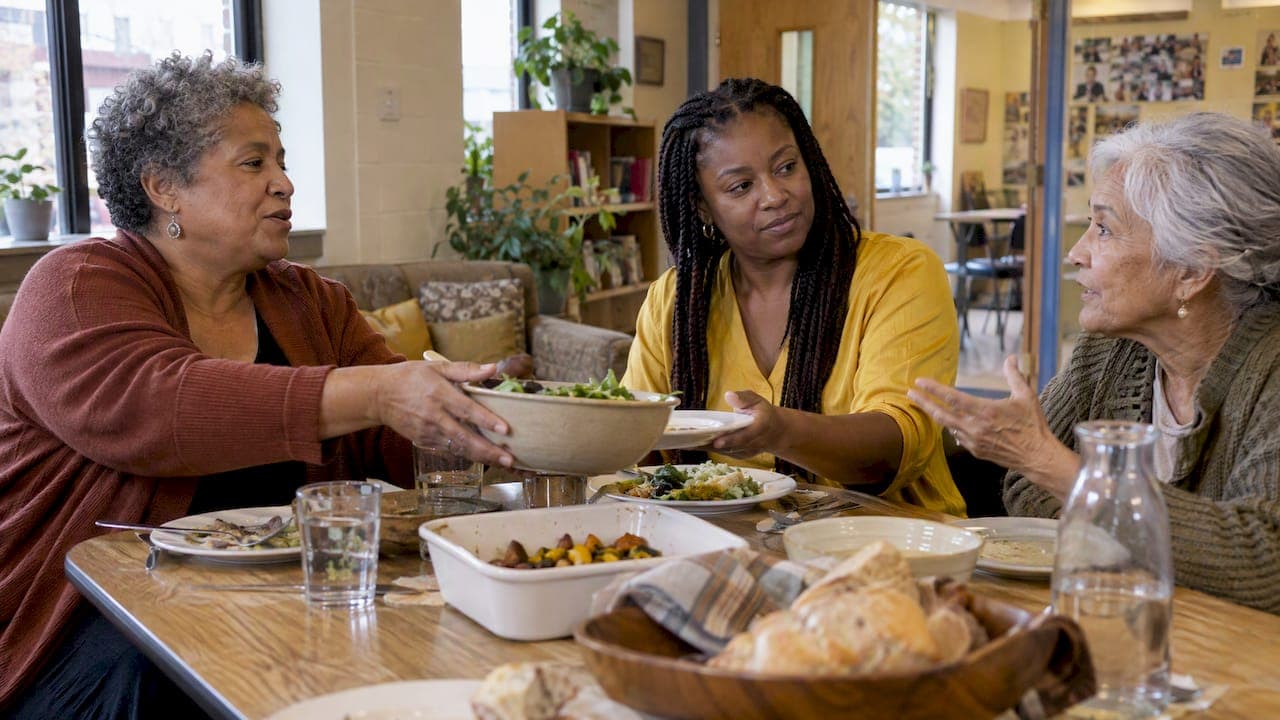
A women's community partnership is a working relationship between organizations, experts, brands or community groups. They commit to serving women together. The good ones share power, trust and results, not just logos on a sponsor page. The weak ones last one grant cycle and fade.
This guide is for two readers. One is a woman leading a nonprofit, a group or a practice. The other is a brand or expert who wants to reach women with respect. We cover what partners actually do, how to choose them, how to run the first ninety days, and where partnerships go wrong.
Beauty Is Not Perfection. Beauty Is a Verb. Beauty Is Becoming. Partnerships work the same way: they are something you do, again and again, not something you announce.
TL;DR
- Strong partnerships are co-designed with the women they serve from day one. They are not handed to them finished.
- Trust is the real currency. Build on relationships that already exist, and pay community partners for their time and labor.
- Involve partners in deciding how success is measured, or they become data collectors instead of collaborators.
- Programs that pair connection with real skills, such as financial education or life skills, show larger empowerment effects than programs without them.
- Start small: one shared goal, one clear role each, one honest check-in schedule.
Table of Contents
- What women's community partnerships actually are
- Why the need is real
- What makes a partnership last
- How to choose the right partner
- Your first 90 days
- Ideas for partnerships women actually want
- For brands: partner with purpose, not with a banner
- Our perspective
- Partner with The Ultimate Beauty - You!
- Common pitfalls to avoid
- FAQ
- Sources
What women's community partnerships actually are
Search this topic and you will find a mix of pages. Some are nonprofits listing their community partners. Some are national women's organizations describing coalitions with academic institutions and federal agencies. Others are local groups thanking the organizations that supply workshops and resources. They all describe the same idea from different angles: no single organization reaches every woman in every part of her life.
In the women's sector, partners typically provide four kinds of support: technical assistance, policy advocacy, prevention education and direct services. Federally funded networks addressing domestic and gender-based violence show how this looks at scale. They offer training, technical assistance, research sharing and policy work, and they use formal agreements such as memorandums of understanding to define who does what.
Not every partnership needs that structure. A neighborhood salon hosting a confidence workshop with a local counselor is a partnership too. So is a brand funding a mentoring circle, or a group of experts co-hosting a summit. What matters is the shape of the relationship, not the size.
The main types you will meet
| Type | Who is involved | What it looks like | Best for |
|---|---|---|---|
| Service partnership | Nonprofits, clinics, counselors, coaches | Referrals, workshops, shared resources | Women who need practical support |
| Educational partnership | Schools, colleges, training providers | Skills programs, mentoring, scholarships | Career and personal growth |
| Sponsored partnership | Brands and retailers with community groups | Funding, products, events, visibility | Reaching a wide audience with purpose |
| Expert collaboration | Independent experts and creators | Joint content, panels, listings | Building trust and a shared audience |
| Advocacy partnership | Coalitions and policy groups | Campaigns, testimony, public education | Changing systems, not only services |
Why the need is real
Women are not a niche audience. According to the Bureau of Labor Statistics, women made up 47.1 percent of employed people age 16 and over in 2025. The same source shows that more than 60 percent of women 16 and older participated in the labor force in 2024, and that women's median earnings were 80.9 percent of men's for full-time, year-round workers.
That gap is one reason women look for community. Mentors, peers, financial know-how and a place to be heard all change what is possible. They also change how it feels to get there.
The evidence supports the instinct. A Campbell systematic review of women's self-help groups, which focused on low- and middle-income countries, found that programs with a training component, such as financial education or life skills, had larger effects on empowerment than those without. Research on community-based girl groups, sometimes called safe spaces, reports positive effects on girl-level outcomes. Both bodies of work come from specific contexts, so treat them as signals, not guarantees. The signal is clear: connection plus skills beats connection alone.

What makes a partnership last
Most partnerships fail quietly. Nobody quits. The calls just get fewer, and the project stalls. Researchers who study community-engaged work describe a consistent pattern behind the ones that survive.
Share power, not just credit
Equitable partnerships share power at the individual, organizational and system levels. A review of core competencies for equitable partnerships in community-based participatory research lays out the conditions that make that possible. Urban Institute researchers make a related point in a guide to community-based partnerships. The strongest programs move past short, transactional links. They treat community residents as co-designers from the start.
In practice, that means the women you serve help decide the question before you build the answer.
Build on trust that already exists
Practitioners who developed the SHE Tribe healthy lifestyle program for women of color describe what they call proxy trust. They lean on deep relationships already present in a community instead of creating brand new transactional links. Their account of the partnership process also makes a plain recommendation: partnerships need cultivation over time, not just a grant cycle. They add that community partners should ideally be paid for their time and labor, not only the agency staff.
If you want a quick test of whether a partnership is equitable, ask who gets paid.

Skip the corporate meeting voice
The same practitioners found that formal agendas and business talk can alienate community partners. They suggest starting with a shared meal and ordinary conversation. They also recommend plain, community-developed language in place of long academic consent forms, because bureaucratic process can signal that nobody is truly interested in lived experience.
Warmth is not a soft extra. It is the working method.
Bring partners into measurement
One of the most common mistakes is deciding the metrics alone. Urban Institute's guidance warns that when organizations set the scope and measures up front, partners can end up feeling like data collectors. The fix is simple. Ask partners to review the design before it is final, and agree on what success means in their words.
Name the structure, not just the self-help
A paper on empowerment programs makes a point worth keeping close. The most effective programs openly acknowledge the political and structural dimensions of the disparities women face. They do not stop at self-help. They build tools and networks for collective action. A confidence workshop is wonderful. A confidence workshop that also connects women to mentors, jobs and each other is a partnership.
How to choose the right partner
Use criteria, not charisma. Before you say yes, work through these questions.
- Shared purpose. Can both sides describe the goal in the same sentence?
- Reach into the community. Does the partner have real standing with the women you want to serve, or only a mailing list?
- Complementary strengths. What do they do that you cannot? What do you do that they cannot?
- Respect for lived experience. Do they ask women what they need before they offer a program?
- Fairness in resources. Who funds what? Who is compensated? Who owns the data and the story?
- Staying power. Will they show up in month seven, after the launch photos?
- Inclusion across ages and stages. Does the partnership welcome girls, young women, mothers, midlife and older women, or only one slice?
If a prospective partner fails the first or fifth question, pause. Everything else can be repaired.
Your first 90 days
A partnership does not need a 40-page plan. It needs a clear start.
- Weeks 1 to 2: Listen. Meet partners and community women informally. Over a meal if you can. Write down what they say in their own words.
- Weeks 3 to 4: Pick one shared goal. One goal, such as hosting four skills workshops or launching a mentoring circle, beats five vague ones.
- Weeks 5 to 6: Write roles on one page. Who convenes, who funds, who teaches, who follows up. Add how partners are paid or otherwise compensated. If you want formal protection, a memorandum of understanding is a common way to record it.
- Weeks 7 to 8: Co-design the measures. Ask partners what a good outcome looks like. Share your draft before you finalize it.
- Weeks 9 to 12: Run a pilot and debrief. Hold the first event or session. Then sit down together and ask what to keep, change or drop.
Mental wellbeing deserves a place in the plan from the beginning. If your program touches stress, grief or trauma, bring in a licensed professional rather than improvising. A counseling practice that offers coaching and therapy for individuals and teens in the Phoenix area is one example of the kind of local resource worth knowing about. Whatever you choose, check that the person is qualified and fits the women you serve. Our own piece on the role of mental health in beauty and confidence explains why this belongs in beauty and wellness work.
Ideas for partnerships women actually want
Searchers often ask for empowerment program ideas. These formats combine connection with something concrete.
- Mentoring circles. Match women by stage, not only by industry. Our guide to women's mentoring programs helps you find the right fit without a nomination.
- Skills series. Money basics, public speaking, small business, digital skills. Pair each with a peer group so the learning sticks.
- Wellness and beauty days. Combine self-care with a short talk from a trusted expert. The mindful beauty approach fits naturally here.
- Campaign collaborations. Brands and groups can mark moments such as International Women's Day together. See these campaign ideas for beauty brands.
- Summits and gatherings. One day, many partners, shared audiences. We explain why beauty summits matter for brands.
- Online communities. A digital home keeps the connection alive between events. Our women community platform guide covers how to build and grow one.
For brands: partner with purpose, not with a banner
Brands are part of this picture, and women notice quickly when a partnership is only a banner. A few habits separate the real from the performed.
- Show up for the long run. One campaign month is not a relationship.
- Pay the community partners, not only the famous names.
- Represent women of every age, shade, size and stage. Our inclusive beauty brand marketing guide goes deeper.
- Work with trusted voices at human scale. Read how micro-influencers shape beauty marketing.
- Look at where beauty and wellness meet. This is covered in what beauty-wellness convergence means in 2026.
Our perspective
We built The Ultimate Beauty - You! because women's advice is scattered. Beauty tips live in one place, wellness in another, confidence and growth somewhere else, and community nowhere in particular. We think that split is the problem.
Our approach is inside-out, head-to-toe, 360-degree. Beauty is not only appearance. It is how you care for yourself, how you speak to yourself and who stands beside you. So when we talk about partnerships, we do not mean a transaction between a brand and an audience. We mean trusted experts, brands and organizations meeting women where they are, at every age and stage.
Here is what we hold to:
- Women are participants, not targets.
- Experts and partners earn trust by being useful before being visible.
- Partnerships should serve the whole woman: confidence, wellness, growth, and yes, beauty.
- Community comes first. Everything else follows.
The research above matches what we see. Lasting partnerships are built slowly, with shared meals, honest roles and women at the table. Beauty Is a Verb. So is partnership.
— Ava
Partner with The Ultimate Beauty - You!
If you are an expert, brand, retailer or organization that wants to connect with women in a way that feels human, we would love to hear from you. Our platform brings together women-centered beauty, wellness, confidence and personal growth resources, and it offers expert and organization listings, as well as sponsored partnerships, to reach our community.
Meet the people we work with on our Experts & Partners page. Or start at The Ultimate Beauty - You! to see how the community comes together. You can also browse our blog for ideas you can use right now.
Common pitfalls to avoid
- Treating partners as a logo list. If partners do not shape decisions, the partnership is decoration.
- Designing the program first. Ask first. Build second.
- Ignoring the burden on small partners. Time is money. Compensate it.
- Overly formal process. Dense forms and stiff meetings can tell people their experience does not matter.
- Measuring only what is easy. Economic numbers are useful, but qualitative changes such as confidence, solidarity and expanded networks matter too, as the empowerment research notes.
- Forgetting inclusion. Researchers working with sexual and gender minority trauma survivors show why partnerships must be built so every woman is welcome and served well.
FAQ
What do community partners do?
They contribute what the lead organization cannot do alone. That might be training, referrals, technical assistance, education, advocacy or direct services. In the best partnerships, they also help decide goals and measures.
What are some ideas for women's empowerment programs?
Mentoring circles, skills series on money or public speaking, peer groups, wellness days and online communities are all good starting points. Programs that add a structured skills component tend to show stronger empowerment effects in the research. Choose formats that match the women you serve, and ask them first.
How do we keep a partnership going beyond the first event?
Build on relationships that already exist, set a regular check-in rhythm and compensate partners for their time. Review results together and adjust. Partnerships built only around one grant or campaign usually fade when it ends.
Can brands join women's community partnerships?
Yes, when they bring more than funding. Brands help most when they commit for the long term, represent women of all ages and stages, and let community voices guide the work. Sponsored partnerships on our platform are one way to do this.
Sources
- BLS: Serving up employment data on Pi Day
- Campbell systematic review: Economic self-help group programs for improving women's empowerment
- ACF: Domestic and gender-based violence networks
- Urban Institute: Strengthening program implementation and evaluation through community-based partnerships
- Partnership processes to develop SHE Tribe
- Seven core competencies for equitable partnerships in CBPR
- Close to Home: Evidence on community-based girl groups
- CBPR with sexual and gender minority trauma survivors