
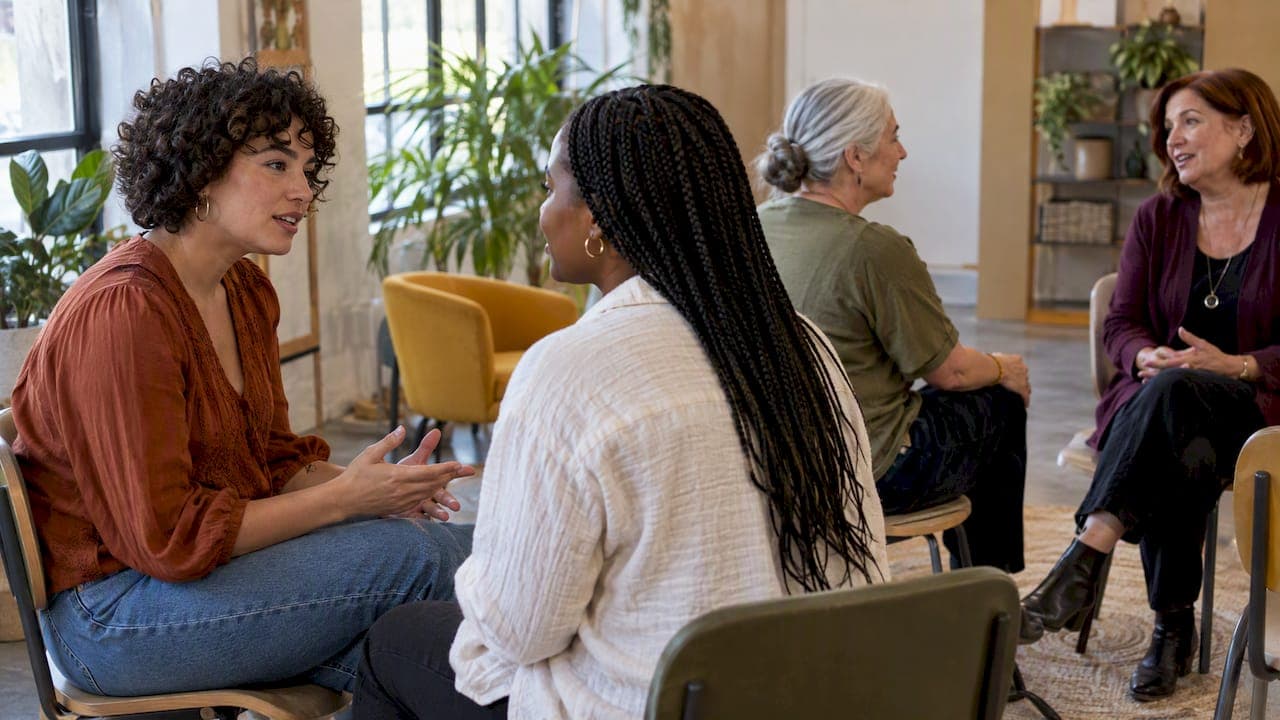
The best women's workshop is one where every woman leaves with something she can use: a new skill, a clearer thought, a friend, a little more confidence. The ideas below cover empowerment, creativity, wellness, beauty and connection. Each one comes with a way to match it to your group, your space and your clock.
Beauty Is Not Perfection. Beauty Is a Verb. Beauty Is Becoming. A good workshop works the same way. It is something women do together, not something they sit and watch.
TL;DR
- Choose the people first and the topic second. Who is in the room, and what should she leave with?
- Aim for active over lecture: a short teach, then hands-on practice, then a way to apply it at home.
- Strong categories: empowerment and confidence, creative making, wellness and movement, beauty and self-care, and networking.
- Build in time for arrival, transitions, breaks and a wrap-up. Most workshops run long because these are forgotten.
- Ask about access needs before the day, and offer more than one way to take part.
Table of Contents
- Start With the Room, Not the Theme
- Empowerment and Confidence Workshop Ideas
- Creative Workshop Ideas for Women's Groups
- Wellness Workshop Ideas for Body, Mind and Connection
- Beauty and Self-Care Workshop Ideas
- Connection and Networking Activities
- Match the Idea to Your Group
- How to Plan the Day So It Actually Works
- Our Perspective: Beauty Is a Verb
- Find Experts and Resources for Your Next Workshop
- Making It Last After the Day Ends
- FAQ
- Sources
Start With the Room, Not the Theme
It is tempting to pick the theme that sounds most fun. Resist that for ten minutes. A workshop that works for 30 women at a church hall will not work for six friends in a living room, and neither will work for a company lunch-and-learn.
A professional workshop-design outline suggests defining the audience, length, location, needs and intended outcome before you choose any activity. Answer these five questions in writing:
- Who is coming? Ages, life stages, how well they know each other.
- How long do you have? Be honest, and count setup and cleanup.
- Where is it? Room layout, tables, power outlets, space to move.
- What do they need? Rest, skills, connection, direction.
- What should they leave with? One sentence. If you cannot write it, the workshop is not ready.
That last question matters most. Guidance on empowerment workshops says the strongest topics depend on who is in the room and the specific change they need to leave with. "Confidence" is a mood. "Say no to one request this week without apologizing" is a transformation a woman can actually carry home.
Size shapes the format too. A workshop planning guide notes that larger groups generally need more paired or small-group work, and that room layout, accessibility and space for movement should influence which activities you pick. Thirty women cannot all share one conversation. Thirty women in pairs of two, then groups of six, can.

Empowerment and Confidence Workshop Ideas
Empowerment workshops work best when they are specific. Broad goals produce nice feelings and no change. Narrow goals produce action. Published guidance on this topic recommends one actionable transformation with themes such as boundaries, entrepreneurship and identity transitions.
Ideas to start from:
- Boundaries lab. Teach three scripts for saying no, then have women practice in pairs with real situations from their week.
- Strengths assessment session. Confidence workshops often center on a strengths assessment. Each woman names her strengths, then asks a partner what she sees. The gap between the two lists is usually the most interesting part.
- Identity transitions circle. New mother, empty nester, career changer, retiree. Bring together women facing the same chapter and let them trade what they wish they had known.
- Vision board morning. Magazines, scissors, glue, and one rule: choose images for how you want to feel, not just what you want to own.
- Self-defense basics. Photography and self-defense classes are both suggested as ways to build confidence and new skills. A local instructor can run a 90-minute introduction.
- Self-discovery journaling. Pair prompts with quiet time, then a voluntary share-out. Our guide to the role of self-discovery in womanhood offers questions you can borrow.
If your group wants confidence that lasts past the day, send women home with a small daily practice. Our confidence building habits for women make a ready-made handout.
Leadership and career ideas
Professional women's groups often ask for skills they can use on Monday. Popular themes include communication, delegation, negotiation and executive presence. One useful principle: leadership sessions should move away from predetermined images and help each participant define her own style.
- Negotiation practice. Give each pair a real scenario, such as a raise, a vendor price or a household division of labor. Swap roles halfway.
- Mentoring circles. One formal model, the CEO Action Mentoring Initiative, uses virtual circles of no more than 10 that meet for six months and discuss topics such as imposter syndrome and intentional career mapping. You can borrow the format at a smaller scale: small circles, one theme per meeting.
- Marketing masterclass for women entrepreneurs. Ask each woman to bring one product or service and leave with a one-sentence pitch.
- Writing exercises. Short, timed writing on "the story I tell about my work" helps women see the narrative they have been living.
Creative Workshop Ideas for Women's Groups
Creative workshops lower the pressure. Nobody has to be good at it, and everyone ends up with something in her hands. That makes them perfect for groups where women do not yet know each other.
- Mosaic lamp making. One private-group studio runs a 2.5-hour session for 8 to 300 guests. Participants design a pattern, glue tiles and add beads, then grout the lamp at home after the glue dries for 12 hours or more. No art experience is required, which is exactly what a mixed-skill group needs.
- Paint and sip, guided or freestyle. Women's group programs commonly use themed or guided paint-and-sip sessions and freestyle canvas work. Offer both so the planners and the wanderers are happy.
- Poetry, storytelling and testimony writing. The same source lists poetry or psalm writing, personal-testimony writing and scripture-based storytelling for faith-based groups. Secular groups can use the same shapes with a different theme: the story of a turning point, a letter to your younger self.
- Group singing. Choir or music sessions need no talent and create instant connection.
- Mini-maker faire. Set up stations with tools such as 3D printers and laser cutters so women can build things together. One workshop guide frames this as a celebration of curiosity and a chance for hands-on collaboration.
- Expressive arts sampler. Painting, dance, writing or sculpting, each for 20 minutes. Writing in particular can also be an emotional release.
A practical note: messy projects need a longer cleanup window than you think. Plan it into the schedule rather than into someone's goodwill.
Wellness Workshop Ideas for Body, Mind and Connection
Wellness is not only a yoga mat. It covers body, mind and belonging, and the best sessions touch all three.
Calm and restore
- Mindfulness and breathing. Retreat workshop lists regularly include meditation and mindfulness with breathing techniques, plus yoga and movement. Start with five minutes. Short and doable beats long and intimidating. Our guide to the types of mindfulness practices for women helps you choose between them.
- The mini-retreat. Yoga, massage and stress management techniques can be combined as a mini-retreat from daily routines. Invite a local yoga teacher and a licensed massage therapist, and keep the room quiet.
- Stress reset session. Teach three tools women can use at a desk, in a car or at a kitchen counter. Our stress management guide for women covers practical options, and our piece on the role of mental health in beauty and confidence gives you the "why" for the opening five minutes.
Move together
Movement is the easiest way to turn strangers into a group.
- Walking groups. City Girls Who Walk is a movement with groups in more than 250 U.S. cities, built to help women make friends in a judgment-free space. A monthly themed walk is one of the lowest-cost women's events you can run.
- Indoor mall walking. A group called Food Court 5000 pairs structured walks with fun and silly costumes, which makes it a good rainy-day or winter option. Fitness expert Stephanie Mansour says walking groups bring physical benefits such as metabolic support and a stronger heart, along with better mental health and coordination.
- Weekend retreat elements. One program for people affected by breast and gynecological cancers, Camp Breastie, mixes glamping, educational panels, movement, arts and crafts and social events. It is a good model for how a wellness gathering can blend learning, play and rest.
If a participant has a health condition or is recovering from an injury, invite her to check with her own doctor before joining any physical activity, and make every movement optional.
Beauty and Self-Care Workshop Ideas
Beauty workshops are most powerful when they are about how a woman feels, not how she should look. This is where our whole approach lives: inside-out, head-to-toe, 360-degree.
- Skincare and stress. Pair a short talk on how stress shows up on the skin with a hands-on routine. For ideas on calming products and rituals, see this overview of a de-stress skincare routine. Always invite women to patch test and to skip anything that does not suit their skin.
- Shade matching. Lifestyle events have featured skin analysis, shade-matching sessions and even a 3D foot scan so guests can find a proper shoe fit. A makeup artist or a department-store counter specialist can run a shade station. Our foundation shade matching guide walks through a jawline test you can teach in minutes.
- Natural beauty across ages. Seat women of different decades together and ask what beauty meant to them at 20, 40 and 60. Our guide to embracing natural beauty at every age gives you discussion prompts.
- Healthy beauty habits swap. Each woman brings one small habit that works for her. Collect them on a shared sheet. Our healthy beauty habits examples can seed the conversation.
- Spa night in a box. Masks, tea, a playlist and a rule that phones stay in bags. Our at-home spa day guide offers 30 to 90 minute formats that scale well for a group.
- Personal style session. Invite a stylist to talk about building outfits you love from what you already own. A women's designer wardrobe guide can be a source of inspiration for the conversation, whatever your budget.
- Mindful beauty ritual. Slow down a daily routine so it becomes a moment of intention. See what mindful beauty is for a simple script.
Connection and Networking Activities
Sometimes the workshop is the excuse and the connection is the point. Make the connecting deliberate.
An article on women's advancement describes networking as a craft, with active listening and leading and lifting others at the center. You can turn that into activities:
- Listening rounds. In pairs, one woman speaks for three minutes about a challenge while the other only listens. Then swap. Then each says what she heard.
- Ask and offer boards. Every woman writes one thing she needs and one thing she can give. Post them on a wall and let the matches happen.
- Skill swap. Five-minute mini lessons from the group: how to tie a scarf, read a lease, grow tomatoes, write a cover letter.
- Story circles. A prompt, a timer, and no interruptions.
- Mixed-age tables. Seat a teenager next to a grandmother and watch both of them learn.
Match the Idea to Your Group
Use this table as a starting point, then adjust to your five answers from the start of this article.
| Group | Time | Good fit | Why it works |
|---|---|---|---|
| Church or community group of 30 | 60 to 90 minutes | Paint and sip, group singing, story circles | Easy to run, low skill barrier, lots of talking |
| Friends at home, 6 to 10 | 2 to 3 hours | Spa night, vision boards, skin and shade session | Intimate, flexible, relaxed |
| Workplace or professional network | 60 to 120 minutes | Negotiation practice, listening rounds, mentoring circle | Direct link to work outcomes |
| Retreat weekend | Several sessions | Mindfulness, journaling, movement, creative sampler | Room for rest and depth |
| Mixed ages and life stages | 90 minutes | Natural beauty at every age, skill swap | Creates cross-generational learning |
| Ongoing local club | Monthly | Themed walks, shared habits challenge | Builds routine and belonging |
How to Plan the Day So It Actually Works
Good ideas fail without good logistics. Here is the shape most successful workshops share.

An outline from workshop-design professionals recommends combining a welcome or icebreaker, brief instruction, active practice, application and evaluation. Active practice can be think-pair-share, breakouts, role-play, games or case discussion. The same guidance describes an effective workshop as active and experiential, not a lecture: women interact, practice, solve problems and leave with a practical application.
A 90-minute example:
- 0:00 to 0:15, Arrival and welcome. Name tags, a simple question on the wall, tea.
- 0:15 to 0:25, Icebreaker. One question in pairs.
- 0:25 to 0:35, Brief teach. One idea, one example.
- 0:35 to 1:05, Active practice. Hands-on work in pairs or small groups.
- 1:05 to 1:20, Share and apply. What will you do this week?
- 1:20 to 1:30, Wrap-up. Thank you, next steps, a take-home sheet.
Plan for access and for surprises
A university extension facilitation guide advises you to ask participants in advance about access needs and to offer several ways to take part, including small and large groups, talking, writing and movement. It also recommends building in time for arrival, transitions, breaks, technology problems and a wrap-up.
In practice that means:
- Send a short pre-event note asking about mobility, vision, hearing, dietary needs and anything else that would help someone feel welcome.
- Give every activity a quiet option. Not every woman wants to speak in front of 30 people.
- Add 10 to 15 minutes of slack. If you finish early, you can use it for conversation.
- Have a backup for anything that needs a screen.
- Set the room before women arrive. Walking into a ready space says you were expected.
Our Perspective: Beauty Is a Verb
We built The Ultimate Beauty - You! because women told us the same thing in different words: advice about beauty, wellness and confidence is scattered, and rarely made for her stage of life. Workshops are where those threads come together.
Here is what we believe makes a women's workshop work.
Start with becoming, not fixing. Nobody comes to a workshop because she is broken. She comes because she wants to grow. Frame every activity around what she is moving toward.
Honor every age and stage. A workshop that only speaks to one decade leaves everyone else out. Mixed rooms are richer.
Treat the whole woman. A skincare session lands better when it acknowledges stress. A confidence session lands better when it acknowledges the body. Inside-out is not a slogan for us. It is a design rule.
Make it active. Beauty Is Not Perfection. Beauty Is a Verb. Beauty Is Becoming. If women leave having only listened, the workshop missed its chance. If they leave having made, moved, said or tried something, it did its job.
Invite experts who care. The right guest, whether an esthetician, therapist, trainer or stylist, turns a good afternoon into a memorable one.
— Ava
Find Experts and Resources for Your Next Workshop
Planning a workshop and want a speaker, a demo or a discussion starter? Visit our Experts & Partners page to meet the beauty, wellness and personal-growth voices in our community. If you are an expert or brand who wants to reach women who care about this, that is the page for you too. You can also explore The Ultimate Beauty - You! for more on our inside-out approach, or browse our blog for guides you can turn into handouts.
Making It Last After the Day Ends
The workshop is one evening. The change is what happens next.
- Send a follow-up within two days. One page: the main idea, the practice, a photo of the group.
- Create a small channel. A group chat or shared document where women can share progress.
- Ask one feedback question. "What is one thing you will do differently?" tells you more than a rating scale.
- Schedule the next one before everyone leaves. Momentum is easier to keep than to rebuild.
FAQ
What are some ideas for a women's empowerment workshop?
Good options include a boundaries lab, a strengths assessment session, a negotiation practice, a vision board morning and a self-defense introduction. Choose one specific change you want women to leave with, such as saying no confidently or pitching their work in one sentence. Specific beats broad every time.
What women's wellness workshop ideas work for a mixed-age group?
Mindfulness and breathing, gentle yoga and a group walk suit almost every age when each activity is optional and adaptable. Pair them with a conversation circle so women can share what helps them. Ask about access needs beforehand so no one is left out.
What are creative workshop ideas for a group of 30 women?
Paint and sip, group singing, story circles and vision boards scale well to larger groups. Use pairs and tables of six so everyone has a chance to talk. Keep the skill barrier low so beginners feel at ease.
How long should a women's workshop be?
Ninety minutes is a comfortable length for one theme with hands-on practice. Add time for arrival, transitions, breaks and a wrap-up. Craft projects with drying or cleanup steps may need two to three hours.
How do I choose the right workshop topic?
Start with who is coming and what you want them to leave with, then pick the activity that gets them there. Match the format to the room size and available time. If you are unsure, ask the group in a short survey before you commit.
Sources
- Designing Workshops That Promote Active Learning
- Women's empowerment workshops: 7 Essential Types
- SessionLab's Complete Guide to Workshop Planning
- 21 Women's Leadership Workshop Ideas
- CEO Action Mentoring Initiative Works with Mentees from Diverse Populations
- Private Group Mosaic Lamp Workshops
- 25 awesome women's ministry ideas
- 13 Great Women's Empowerment Workshop Ideas
- 17 Empowering Workshop Ideas for a Women's Retreat
- City Girls Who Walk founder on creating a safe space for women
- How Mall Walking Can Motivate You to Walk More
- As More Young Women Are Diagnosed With Cancer, Camp Breastie
- Rethink Your Network: How Connection Drives Women's Advancement
- What is Shop TODAY Stages?
- Facilitation Tipsheet
- Best De-Stress Skincare Products for Healthy Glowing Skin
- Women's designer wardrobe guide