

Authentic brand storytelling puts the customer at the center as the hero, positions the brand as a trusted guide, and backs every claim with lived evidence. When it works, you feel it: the story is specific, the proof is visible, and the brand's behavior matches its words.
Five story types show this pattern in action:
- Values-driven: Patagonia's Worn Wear program kept 583,000+ items out of landfills, turning environmental commitment into a measurable act.
- Product ritual: Graza's squeeze-bottle olive oil became the content itself, generating organic UGC without a production budget.
- Customer-hero: Salesforce's Trailblazer stories center real users who transformed their careers, with the platform as the guide.
- Experiential/community: Airbnb's "Belong Anywhere" campaign built its narrative from host and guest stories, not brand copy.
- Data/identity: Spotify Wrapped converts first-party listening data into a personal identity moment that users share by the millions.
Three signals that separate authentic stories from polished fiction:
- The brand's behavior matches the story (evidence of lived practice, not just stated values).
- Real community members co-create or appear in the narrative.
- A measurable outcome ties the story to a business or social result.
Key Takeaways
Authentic brand storytelling works when the customer is the hero, the brand's behavior matches its claims, and real community voices shape the narrative.
| Point | Details |
|---|---|
| Customer-as-hero is non-negotiable | Every story brief must name a real protagonist and a real conflict before production begins. |
| Proof is the story | Require three pieces of behavioral evidence per campaign; Patagonia's 583,000+ item count shows what proof looks like at scale. |
| Community co-creation cuts cost and builds credibility | Brands that involve community members in the brief stage produce more authentic narratives and reduce production spend. |
| Measure brand lift, not just clicks | Emotional connection predicts long-term loyalty more strongly than satisfaction; track unaided recall and share rate alongside conversion. |
| Avoid the five red flags | Story in a vacuum, performative activism, lack of proof, token representation, and over-polished UGC each signal inauthenticity to your audience. |
Table of Contents
- What are the core elements of authentic brand storytelling?
- Examples of authentic brand storytelling, grouped by type
- How to craft an authentic brand story step by step
- What makes brand storytelling feel inauthentic, and how to fix it
- How to measure the impact of brand storytelling
- How authentic storytelling works in beauty and wellness
- The three things I'd do first for a storytelling pilot
- Sources
What are the core elements of authentic brand storytelling?
The most durable framework in brand narrative comes from Harvard Business School's Creating Brand Value: position the customer as the hero and the brand as the guide. The customer faces a real problem. The brand offers a path forward. The customer grows. That arc is why stories like Dove's Real Beauty or Salesforce's Trailblazer series feel personal, not promotional.
Six elements make that arc work in practice:
- Protagonist. A specific, relatable person or community, not a demographic abstraction. Dove's "Real Beauty" campaign featured real women, not models.
- Stakes and conflict. A genuine tension the audience recognizes. Volvo's safety messaging works because the stakes (protecting your family) are universal and real.
- Brand as guide. The brand provides a tool, a community, or a philosophy, but never steals the spotlight. State Farm's "Here to Help Life Go Right" positions the brand as a steady presence, not a hero.
- Lived evidence and proof. Claims backed by behavior. Patagonia doesn't just say it cares about the planet; it repairs your jacket and tracks the landfill impact.
- Repeatable ritual. A recurring touchpoint that deepens the story over time. Apple's "Shot on iPhone" campaign is a ritual: every new season, real users contribute.
- Distribution format. The channel shapes the story. Long-form documentary suits YouTube and brand websites; UGC thrives on Instagram and TikTok; data stories (Spotify Wrapped) need mobile-first, shareable design.
Brands that co-create with their communities produce narratives that feel rooted in audience reality rather than boardroom strategy. That co-creation is what separates a campaign from a movement.
Pro Tip: Before scaling any story, run the "stranger test": share the story with someone outside your company and ask them to name the hero. If they name the brand instead of the customer, rewrite the brief.
Examples of authentic brand storytelling, grouped by type
Values-driven storytelling
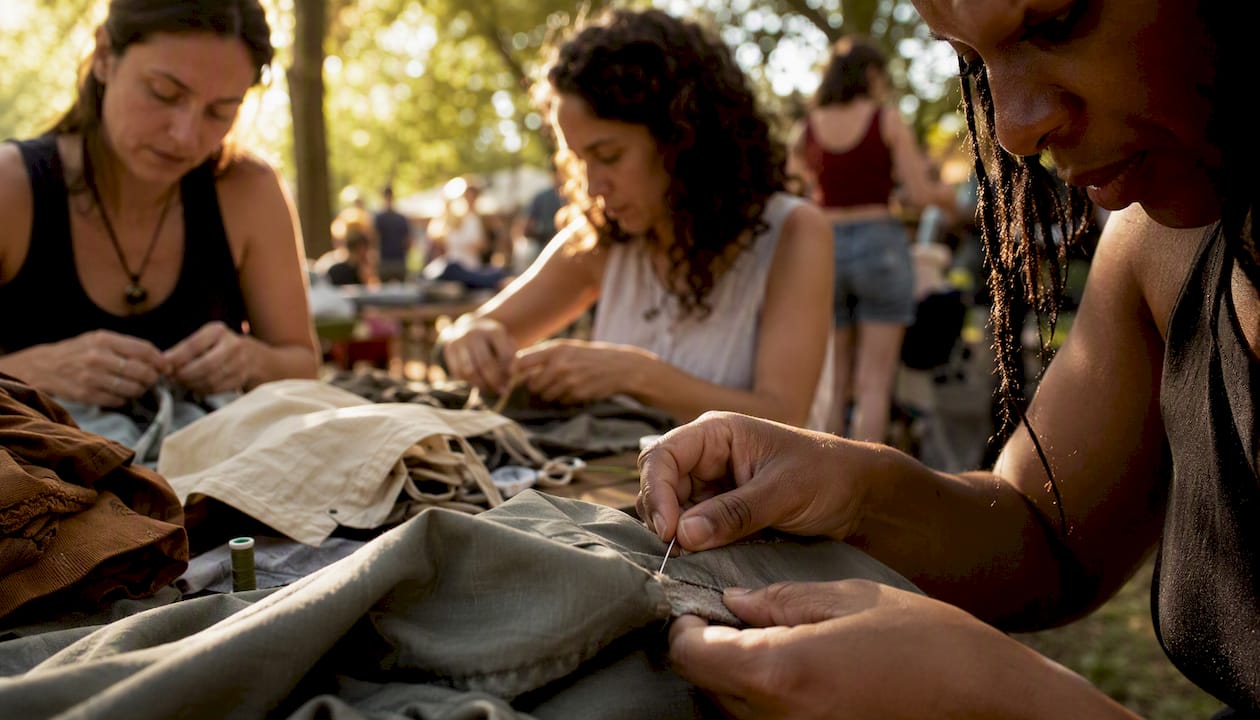
Patagonia — Worn Wear Patagonia's Worn Wear program invited customers to repair, reuse, and recycle gear rather than buy new. The story wasn't told in a press release; it was told through repair trucks, pop-up events, and a running tally of items kept out of landfills. That 583,000+ item count is the proof point that makes the values claim credible. Patagonia's 2025–2026 creative overhaul went further, requiring every creative brief to include a human protagonist and real stakes, which contributed to a reported 29% improvement in returning customer purchase frequency and a 41% lift in video completion rates across Meta placements.
Adapt it: Audit one brand behavior that already matches your stated values and document it publicly. Then build a running counter or visual proof point that shows cumulative impact.
Dove — Real Beauty Dove's campaign against digital distortion in advertising put real women's faces and bodies at the center of every asset. The authenticity signal was the absence of retouching, which was itself a visible act of brand courage. Multi-channel rollout (TV, social, in-store) amplified reach, and the campaign generated measurable brand-association lift tied to its anti-manipulation stance.
Adapt it: Identify one industry norm your brand refuses to follow and make that refusal the story. Document it visibly rather than just stating it in a mission statement.
Product-ritual storytelling
Apple — Shot on iPhone Apple's campaign is a masterclass in product-ritual storytelling. Real users submit photos and videos taken on their iPhones; Apple selects the best and displays them on billboards, social channels, and its website. The product is the proof. No celebrity, no studio lighting, no manufactured scenario. The ritual repeats with every product cycle, so the story compounds over time.

Adapt it: Design a recurring content challenge that invites your community to demonstrate the product in their own lives. The brief should specify the outcome, not the aesthetic.
Graza — Squeeze Bottle as Story Graza engineered its olive-oil packaging as a creative asset. The squeeze bottle was so distinctive that early customers filmed themselves using it without any prompting. That organic UGC spike at launch became the brand's primary content engine, scaling creative output without high production costs. The product decision and the storytelling decision were the same decision.
Adapt it: Ask whether your packaging, onboarding experience, or product ritual is inherently shareable. If not, redesign one touchpoint with shareability as a brief requirement. See how visual identity shapes storytelling at every touchpoint.
Customer-hero storytelling
Salesforce — Trailblazer Community Salesforce's Trailblazer series features real users who learned the platform and changed their careers: a single mother who became a Salesforce admin, a veteran who transitioned into tech. The brand appears as the learning environment, never the protagonist. The stories are specific, named, and verifiable, which is exactly what makes them land.
Adapt it: Interview three customers about a transformation your product enabled. Let them speak in their own words. Publish the story with their name and photo, and resist the urge to polish the language into marketing copy.
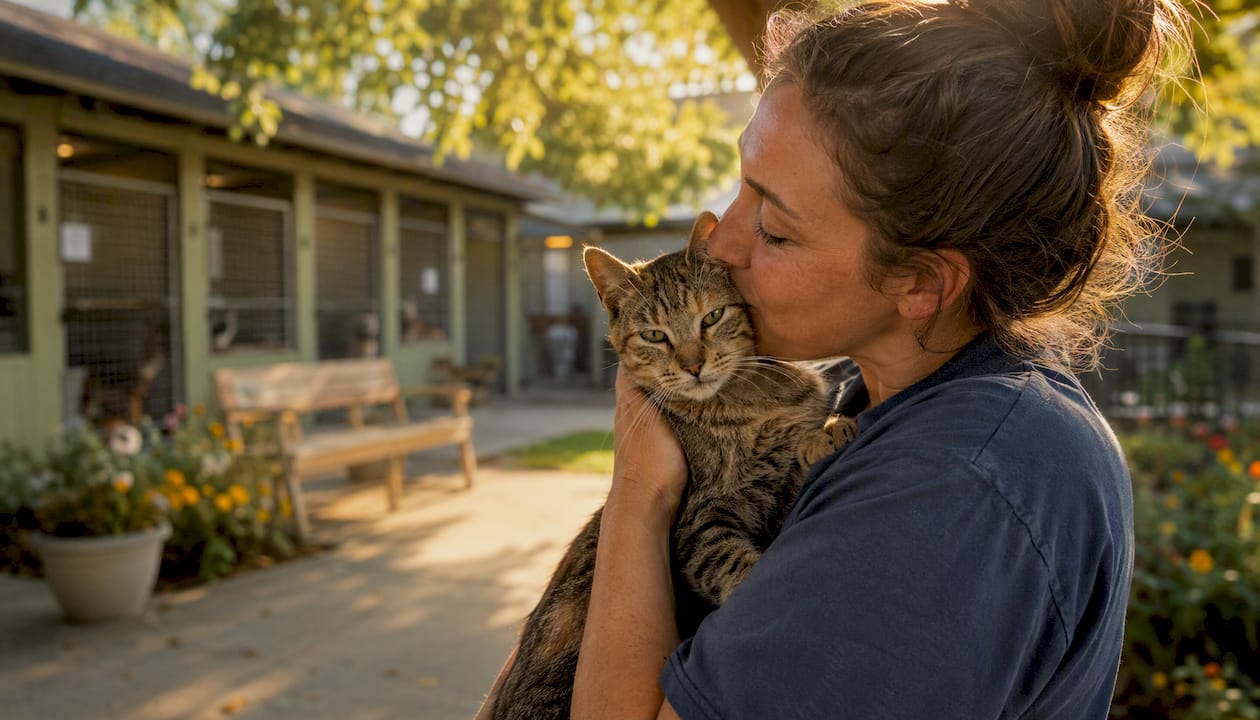
The Humane Society of the United States — Rescue Stories The Humane Society centers individual animals and the people who save them. Each rescue story has a protagonist (the animal), stakes (life or death), a guide (the shelter and donor community), and a resolution. Donation pages that lead with a named animal's story consistently outperform generic appeals because the narrative structure triggers empathy before the ask.
Adapt it: If your brand serves a cause, lead every campaign asset with one named story before introducing aggregate impact data. The specific always outperforms the statistical in emotional engagement.
Experiential and community storytelling
Airbnb — Belong Anywhere Airbnb's "Belong Anywhere" campaign drew its content from actual host and guest experiences. The brand collected stories from its community, then amplified the most resonant ones across video, social, and editorial. The campaign worked because Airbnb didn't write the stories; it curated and distributed them. The brand's role was editorial, not authorial.
Adapt it: Create a story-collection mechanism (a simple submission form, a hashtag, or a community prompt) before you write a single word of campaign copy. Let the community surface the narrative.
State Farm — "Here to Help Life Go Right" State Farm's long-running brand narrative positions the insurer as a calm, reliable presence during life's unpredictable moments. The storytelling format leans on real customer scenarios, often delivered through humor, to make an inherently unsexy product feel human. The consistency of the "good neighbor" positioning across decades is itself a form of authenticity: the story hasn't changed because the brand behavior hasn't changed.
Adapt it: Audit your brand's messaging over the past five years. If the core story has shifted with every campaign cycle, that inconsistency is the inauthenticity problem to solve first.
Nostalgia and heritage storytelling
Procter & Gamble — "Thank You, Mom" P&G's Olympic campaign told the story of mothers who raised the world's greatest athletes. It wasn't a product story at all. It was a values story about the invisible labor behind achievement, and it connected P&G's household brands to a universal emotional truth. The campaign ran across multiple Olympic cycles, which gave it the weight of a tradition rather than a one-off ad.
Adapt it: Identify the human truth behind your category, not your product, and build a story around that truth. The product earns its place by association.
Pizza Hut — Nostalgia and Community Roots Pizza Hut has leaned into its heritage as a family gathering place, using archival imagery, retro design, and community-focused campaigns to remind audiences of shared memories. The storytelling works because it taps into a collective cultural experience rather than a manufactured one. Nostalgia is only authentic when the history is real.
Adapt it: If your brand has genuine history, document it visually and share it. Archival content performs well on social because it signals longevity and earned trust.
Data and identity storytelling
Spotify Wrapped Spotify Wrapped converts each user's listening data into a personal identity story, then makes it shareable. The result is millions of users voluntarily broadcasting Spotify's brand across social media every December. The high engagement and share metrics reported for Wrapped make it the clearest modern example of data-led identity storytelling at scale.
Adapt it: Identify one data point your brand collects about individual customer behavior and ask whether it could be turned into a personal story the customer would want to share.
Repeatable patterns to steal from these examples:
- Specificity beats scale: one named person or one concrete number outperforms a general claim.
- Proof is the story: the most authentic brands show behavior, not just values.
- Community co-creation reduces production cost and increases credibility simultaneously.
- Consistency across time is itself a form of authenticity.
- The channel should match the story type: data stories need mobile-first design; community stories need submission infrastructure.
| Brand | Why it felt authentic | Story type | Channels used | Reported impact | How to adapt |
|---|---|---|---|---|---|
| Patagonia | Behavior matched values; running proof count | Values-driven | Events, video, social, DTC | 583,000+ items diverted; 29% returning customer lift | Document one brand behavior publicly with a running counter |
| Dove | Visible refusal to retouch; real women featured | Values-driven | TV, social, in-store | Brand-association lift reported | Make your brand's refusal of an industry norm the story |
| Apple | Real user photos; no studio production | Product ritual | Billboards, social, web | Sustained brand equity across product cycles | Run a recurring community content challenge |
| Graza | Packaging designed for shareability | Product ritual | Organic social, UGC | Organic UGC spike at launch; scaled creative cheaply | Redesign one touchpoint for inherent shareability |
| Salesforce | Named, verifiable customer transformation stories | Customer-hero | Video, community platform, events | Career-change narratives drive community growth | Interview three customers; publish in their own words |
| Airbnb | Brand curated, not authored, community stories | Experiential/community | Video, social, editorial | "Belong Anywhere" became a cultural phrase | Build a story-collection mechanism before writing copy |
| State Farm | Decades of consistent "good neighbor" positioning | Heritage/values | TV, social, sponsorships | Brand recognition and trust sustained across generations | Audit messaging consistency over five years |
| P&G | Universal human truth behind the category | Nostalgia/heritage | TV, digital, multi-Olympic | Emotional resonance across multiple campaign cycles | Find the human truth behind your category, not your product |
| Pizza Hut | Real cultural history; archival authenticity | Nostalgia/heritage | Social, in-store, digital | Community affinity and brand recall | Share genuine archival content to signal longevity |
| Spotify Wrapped | Personal data turned into shareable identity | Data/identity | Mobile, social | High engagement and share rates reported | Turn one customer data point into a personal shareable story |
| The Humane Society | Named animal protagonist; life-or-death stakes | Customer-hero | Email, social, donation pages | Named-story pages outperform generic appeals | Lead every campaign with one named story before aggregate data |
| Volvo | Safety stakes are universal and real | Values-driven | TV, digital, experiential | Long-term brand association with family safety | Anchor your story to a universal, verifiable human stake |
How to craft an authentic brand story step by step
A strong story starts with discovery, not a creative brief. Here is a process you can hand to a creative team or agency partner today.
- Conduct audience discovery interviews. Talk to five to ten real customers. Ask what problem they had before your brand, what they tried first, and what changed. Record and transcribe.
- Choose your protagonist. Select one real person or community whose story represents the broader audience. Specificity is the point.
- Name the conflict. Identify the tension your protagonist faced. It should be real, relatable, and unresolved before your brand appeared.
- Define the brand's role. Write one sentence describing what the brand provided: a tool, a community, a philosophy. The brand is the guide, not the hero.
- Select your proof points. List three pieces of evidence that the story is true: a behavior, a metric, a testimonial, a product decision. If you can't find three, the story isn't ready.
- Pick your format and channel. Match the story type to the medium. Long-form documentary for YouTube and brand sites; short-form UGC for Instagram and TikTok; data stories for mobile-first, shareable design.
- Write a campaign brief. Include: protagonist description, conflict, brand role, proof points, channel, success metric, and one thing the brand will NOT do in this story.
- Test with a micro-campaign. Run the story with a small audience before full production. Measure engagement rate, share rate, and qualitative response.
- Measure and iterate. Use the KPIs in the measurement section below. Adjust the protagonist, proof point, or format based on what the data shows.
- Scale what resonates. Once a story format proves out, build a repeatable system: a creator brief template, a submission mechanism, or a content calendar that runs the ritual on a defined cadence.
Campaign brief checklist: protagonist description, conflict statement, brand role (one sentence), three proof points, channel and format, one prohibited move, and one primary KPI.
Sample story template: [Protagonist name] was [specific situation/conflict]. Every [time period], they [repeated struggle]. Then [brand] gave them [specific tool or community]. Now [specific, measurable change in their life or work]. That's why [brand] exists.
Pro Tip: When briefing creators or UGC contributors, give them the outcome you want to illustrate, not the script. Ask: "Show us how you use [product] on a [specific occasion]." The authentic moment lives in their interpretation, not yours. See the UGC strategy playbook for brief templates that surface real stories.
What makes brand storytelling feel inauthentic, and how to fix it
Most storytelling fails not because the brand lacks a good story, but because it skips the proof. Here are the five most common red flags and their corrective actions.
- Story in a vacuum. The narrative exists only in campaign assets, with no corresponding brand behavior. Fix: Identify one operational change the brand will make that matches the story before publishing it.
- Performative activism. The brand adopts a social cause for a campaign cycle with no ongoing commitment or community involvement. Fix: Partner with an organization that has lived expertise in the cause and document the partnership's ongoing work, not just its launch.
- Lack of proof. Claims are made without evidence: "We care about our customers" with no data, no testimonials, no behavioral demonstration. Fix: Require three proof points in every creative brief before production begins.
- Token representation. Diverse faces appear in campaign imagery without diverse voices in the story itself. Fix: Involve community members in the brief and the narrative, not just the casting. See inclusive storytelling strategies for practical guidance.
- Over-polished UGC. Creator content is so heavily directed and edited that it loses the texture that made it credible. Fix: Give creators an outcome brief, not a script. Accept imperfection as a signal of authenticity.
Brands that create content in a vacuum consistently produce narratives that feel disconnected from audience reality. The fix is structural: build community input into the brief stage, not the approval stage.
Stakeholder approval checklist (run before publishing):
- Does the story have a named, real protagonist?
- Can we point to three pieces of evidence that the story is true?
- Does the brand's current behavior match what the story claims?
- Did at least one community member review the narrative before production?
- Is there a plan to sustain this story beyond the campaign launch date?
How to measure the impact of brand storytelling
Emotional connection often predicts long-term growth and loyalty more strongly than satisfaction alone, which means the KPIs for storytelling need to reach beyond clicks and conversions. Here is the metric set and a 90-day measurement plan.
Primary KPIs for brand storytelling:
- Brand lift (unaided recall, brand association, purchase intent) measured via pre/post surveys.
- Engagement rate (time on page, video completion rate, comment sentiment).
- Share rate (organic shares and saves, not paid amplification).
- Community growth (new sign-ups, community members, email subscribers tied to story content).
- Repeat purchase rate among audiences exposed to story content vs. control.
- Donations or cause-related actions (for nonprofit-adjacent campaigns like The Humane Society).
- Conversion lift from story-exposed audiences vs. non-exposed.
| KPI | What it indicates | Short-term benchmark |
|---|---|---|
| Unaided brand recall | Story memorability and mental availability | Measure baseline before campaign; target a lift after 60 days |
| Video completion rate | Story resonance and format fit | Patagonia's creative overhaul reported a 41% lift after protagonist-led briefs |
| Share rate | Audience identification with the story | Spotify Wrapped's high share rate is the benchmark for data-identity stories |
| Community sign-ups | Story-driven trust conversion | Track sign-ups attributed to story content vs. product content |
| Repeat purchase rate | Long-term loyalty signal | Compare story-exposed vs. control cohort over 90 days |
90-day measurement plan:
- Days 1–15 (Discovery/Baseline). Run a brand-lift survey with your target audience. Capture unaided recall, brand association, and purchase intent. Set engagement benchmarks from your last three content campaigns.
- Days 16–60 (Pilot). Launch one story format with a defined protagonist and proof points. A/B test two versions if possible (different protagonist, same story structure). Track video completion, share rate, and community sign-ups weekly.
- Days 61–90 (Scale decision). Compare pilot KPIs to baseline. If brand lift and engagement exceed benchmarks, build a repeatable content system. If not, adjust the protagonist or proof point and run a second pilot before scaling.
Storytelling metrics connect to business outcomes through a simple chain: higher brand recall reduces customer acquisition cost over time, stronger emotional connection increases lifetime value, and community growth from story content compounds as an owned-audience asset.
How authentic storytelling works in beauty and wellness
Beauty and wellness brands carry a built-in storytelling advantage: the transformation is visible, the ritual is repeatable, and the community is deeply engaged. The challenge is avoiding the inauthenticity traps that are especially common in this sector: over-retouched imagery, unverifiable ingredient claims, and influencer content that reads as paid performance.
Three micro-examples that work:
Product ritual: A skincare brand films its founder's actual morning routine, unedited, with real skin texture visible. The ritual becomes the proof. No claims needed. The beauty brand storytelling guide outlines how to structure these ritual narratives for maximum credibility.
Founder story: A wellness brand documents the founder's personal health challenge that led to the product's creation. The story is specific, dated, and verifiable. It positions the founder as the first customer, which is the most credible origin story in this category.
Community-led UGC: A haircare brand invites customers with textured hair to share their wash-day routines using a specific hashtag. The brand curates and amplifies the best submissions without editing them. The community becomes the proof of the product's effectiveness.
Six-item sector checklist for authenticity in beauty and wellness:
- Representation that reflects your actual customer community, not an aspirational demographic.
- Ingredient provenance documented and verifiable (sourcing, certifications, supply chain transparency).
- Expert testimony from named, credentialed contributors (dermatologists, estheticians, nutritionists).
- Demonstrable routines shown in real conditions, not studio lighting.
- Community co-creation built into the brief stage, not the approval stage.
- Long-form documentation (a founder interview, a process video, a supply chain story) published on an owned channel.
Theultimatebeauty-you's platform is built for exactly this kind of story distribution. With expert contributors, a growing community of women across every age and life stage, and a 360-degree approach to beauty and becoming, the platform offers beauty and wellness brands a credible home for long-form story content and community co-creation.
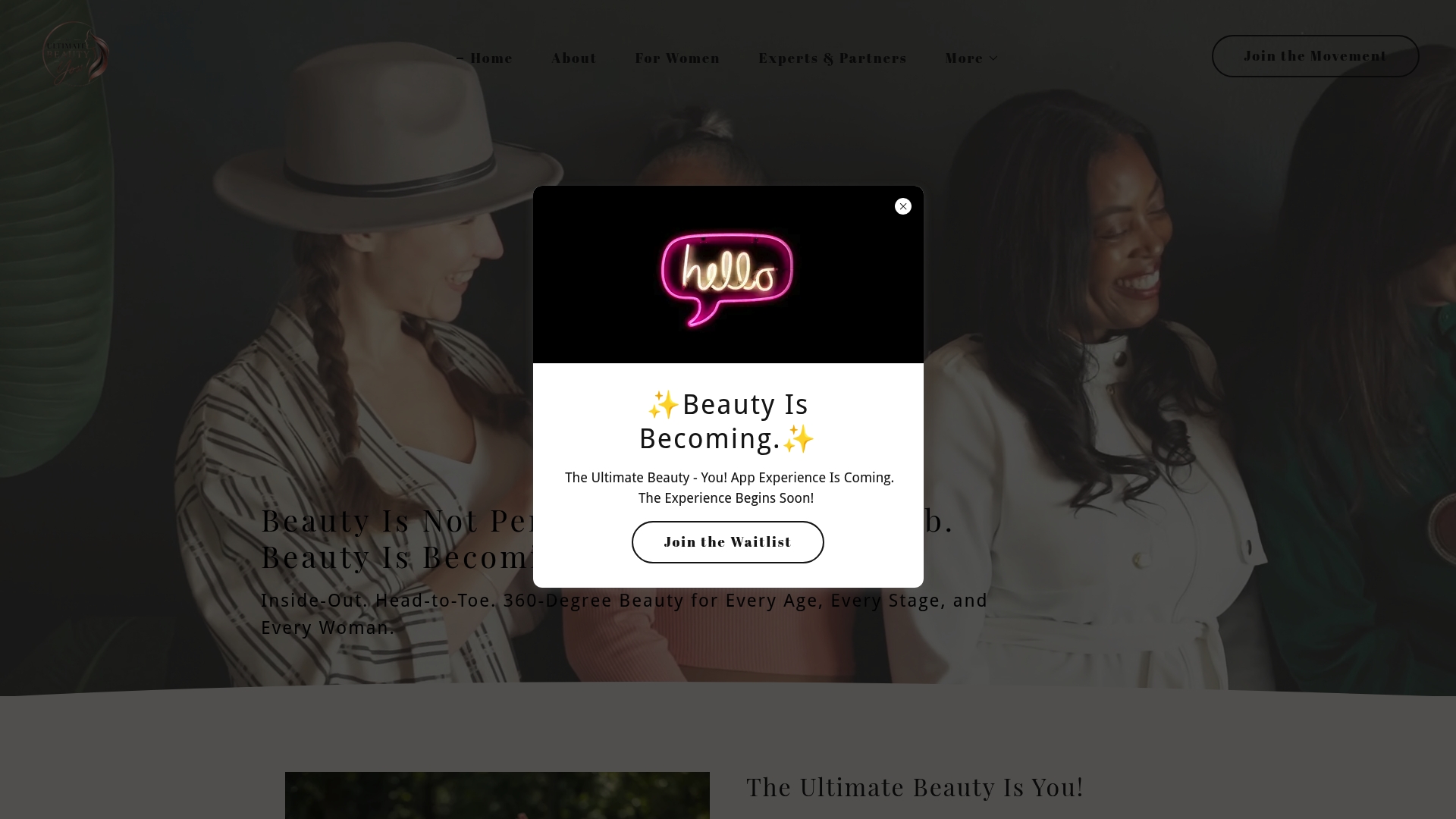
If you're a beauty or wellness brand ready to tell stories that resonate, explore partnership and listing opportunities on Theultimatebeauty-you, where your story reaches an audience that's already invested in growth, confidence, and becoming.
Pro Tip: Beauty brands that publish founder or expert stories on a platform with established E-E-A-T signals (named contributors, editorial standards, community trust) inherit credibility they would take years to build alone. Theultimatebeauty-you's contributor framework is designed for exactly that.
The three things I'd do first for a storytelling pilot
Most brands spend their first storytelling budget on production. That's the wrong order.
First: run five discovery interviews. Before writing a single brief, talk to five real customers. Ask them to describe the moment before they found your brand, in their own words. Those words are your story. The resource required is two hours of your time and a transcription tool like Otter.ai.
Second: commission one creator brief and one micro-documentary. Give a creator the outcome brief (not a script) and ask a videographer to document one real customer transformation in under three minutes. These two assets will tell you more about what resonates than six months of social analytics. Budget: modest production costs for the documentary; a creator fee for the brief.
Third: set your baseline KPIs before you launch anything. Run a brand-lift survey with 200–300 people in your target audience. Capture unaided recall and purchase intent. Without a baseline, you cannot measure whether the story worked. This step costs almost nothing and makes every subsequent decision defensible.
A valid storytelling pilot doesn't require a large budget. It requires one real protagonist, one proof point, one channel, and a baseline measurement. Start there.
Sources
- What Is a Brand Story? | HBS Online
- Storytelling in Branding: How To Craft a Story That Sells in 2025 - Shopify
- How to tell a compelling brand story (guide + examples)
- An emotional connection matters more than customer satisfaction | HBR
- How Patagonia’s DTC Creative Overhaul Is Rewriting the Rules on Brand Storytelling – D2C Times