
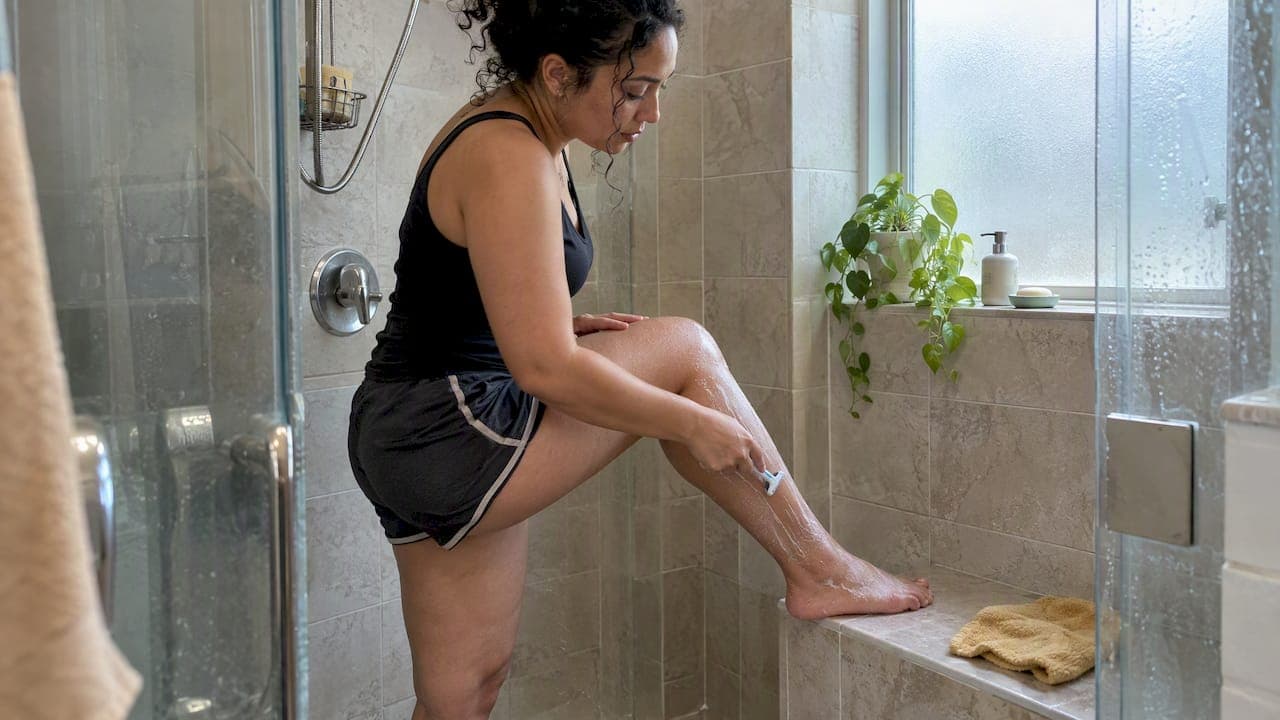
The most reliable way to prevent ingrown hairs is to reduce how often you remove hair and to be gentle when you do. Soften the hair first. Use a sharp blade or a trimmer. Follow the direction of growth. Skip the aggressive scrub. Then give your skin time to calm down between sessions.
Beauty Is Not Perfection. Beauty Is a Verb. Beauty Is Becoming. That includes how you treat your skin after hair removal. The goal is comfortable, healthy skin, not a flawless finish at any cost.
TL;DR
- Ingrown hairs happen when a hair, cut or pulled, curves back into the skin. Shaving, waxing and tweezing are the usual triggers.
- The surest prevention is to remove hair less often, or to trim instead of shaving very close.
- If you shave: warm water, a moisturizing gel or cream, a sharp single-blade razor, short strokes in the direction of growth, no stretching the skin.
- Exfoliate gently, not harder. Irritation can make redness, breakouts and dark marks worse.
- See a clinician for pain, heat, swelling, pus, fever or bumps that keep coming back.
Table of Contents
- Why ingrown hairs happen
- The surest prevention: remove less, or remove differently
- How to shave to prevent ingrown hairs
- Ingrown hair after waxing
- Exfoliate gently, not harder
- The bikini area and friction
- What to do when you already have ingrown hairs
- Is laser hair removal worth considering?
- Our perspective: prevention is a practice, not a punishment
- A simple prevention routine you can start this week
- Find trusted help in one place
- FAQ
- Sources
Why ingrown hairs happen
An ingrown hair is a strand that grows back into your skin instead of out of it. Cleveland Clinic describes it as a raised, discolored spot, often after shaving, tweezing or waxing. You may see a small bump, some itching, or a red or darker spot with a hair trapped beneath.
Two things set it up.
- A sharp edge. Mayo Clinic explains that a very close shave can leave a sharply cut hair tip that can curve back into the skin.
- Hair that curves. Tightly curled or coarse hair raises the risk, because the hair is more likely to bend back toward the skin. The Canadian Dermatology Association notes that people with coarse, curly or afro-textured hair have a higher tendency to get them.
Ingrown hairs show up wherever hair is removed: face, legs, underarms and the bikini area. They are not contagious, according to the NHS. If you are prone to them, it is not a hygiene problem and it is not your fault. It is mostly mechanics.
The surest prevention: remove less, or remove differently
Mayo Clinic's prevention advice starts with the least exciting option: avoid shaving, tweezing and waxing if you can. It is not for everyone, and you do not have to give up hair removal to feel good in your skin. But it helps to know the order of options.
| Approach | Why it helps | Watch out for |
|---|---|---|
| Letting hair grow | No new sharp edge, no pulling | Not always the look you want |
| Trimming with an electric trimmer set above the skin | Leaves a little length so hair is less likely to curl back | Not a smooth finish |
| Shaving with good technique | Fast, painless, easy to adjust | Close shaves raise risk |
| Depilatory cream | Dissolves hair at the surface | Mayo Clinic advises patch testing because it can irritate |
| Waxing or tweezing | Longer-lasting smoothness | Pulls hair from the follicle, a known trigger |
| Laser hair reduction | Can reduce recurrence for people with repeated razor bumps | Not guaranteed permanent, provider choice matters |
There is a trade-off hiding here: closeness versus recurrence. The closer the shave, the smoother you look for a day, and the more likely a sharp hair tip is to find its way back under the skin. Leaving a touch of stubble is often kinder to bump-prone skin.
How to shave to prevent ingrown hairs
The American Academy of Dermatology (AAD) lays out razor bump prevention in clear steps. Here is how that looks in practice.
Before the razor
- Soften first. Wet your skin and hair with warm water. Shaving right after a shower, not before, gives the hair time to soften.
- Never dry shave. Apply a moisturizing shaving cream or gel and let it sit for a moment.
- Check your blade. Use a sharp single-blade razor. The AAD advises replacing a disposable razor after 5 to 7 shaves, and cleaning an electric razor every 5 to 7 shaves.
During the shave
- Go with the grain. Shave in the direction your hair grows. Against the grain gives a closer cut, but it can let the shortened hair retract or curve into the skin.
- Map each area. Hair does not grow one way across your body. Your underarm, shin and bikini line can each grow in different directions. Look at the hair, or feel it, before you start.
- Do not stretch the skin. Pulling skin taut can make the shave feel smoother, but it also lets the hair cut below the surface and retreat. Mayo Clinic advises against it.
- Use as few strokes as you can. Rinse the blade after each stroke. Do not keep going over the same spot.
After the shave
- Rinse with cool water to calm the skin.
- Apply a fragrance-free moisturizer.
- Wear loose, breathable clothing over freshly shaved areas when you can.
How often should you shave?
Here the guidance is nuanced. The AAD notes that shaving daily or every two to three days may give hair less time to grow and curve for some people. The NHS advises avoiding daily shaving if possible. Both can be true, because skin differs. Try a pattern for a few weeks, watch your skin, and adjust. If bumps appear, space sessions out.

Ingrown hair after waxing
Waxing pulls hair out from the root. When the new hair grows back, it can be weak, bent or blocked by dead skin, and it may turn sideways under the surface. Mayo Clinic lists waxing along with shaving and tweezing as habits to avoid when prevention is the goal.
If you wax anyway, a few habits help.
- Let hair reach a workable length. Do not wax stubble that is too short for the wax to grip.
- Keep the skin clean and calm. Avoid heavy creams or scrubs right before your appointment.
- Treat the days after gently. Skip hot baths, tight clothes, and strong acids on freshly waxed skin.
- Wait before you exfoliate. The AAD's advice on safe exfoliation is clear that you should never exfoliate cut, open or sunburned skin. If your skin is tender, wait. The Mayo Clinic's wording on active bumps is just as simple: stop waxing, shaving and tweezing until the skin clears.
Choose a licensed professional you trust, and tell them if you often get bumps. If waxing keeps causing them, that is useful information, not a failure on your part.
Exfoliate gently, not harder
Exfoliation is the most misunderstood step. The idea is sound: removing dead skin cells can help hairs reach the surface. But the "scrub harder" approach can backfire. According to the AAD's guide to safe exfoliation, irritation can increase redness and breakouts. People with sensitive, dry, acne-prone or darker skin can also develop dark marks from harsh scrubs or strong acids.
A simple way to think about it:
- Pick one method. A soft washcloth or a mild chemical exfoliant, not a gritty scrub plus a strong acid plus a retinoid.
- Keep it brief and light. Short contact, no pressure.
- Start slowly. Begin once or twice a week and see how your skin responds.
- Pause when skin is irritated. Redness, stinging or open skin means rest.
- Moisturize after. Hydrated skin is more flexible and less prone to trapping hairs.
Mayo Clinic also notes that a glycolic acid lotion may help reduce hair curvature, and that prescription retinoids can take about two months before results show. Because these can irritate, pick them with a clinician, especially if your skin is sensitive, you are pregnant, or you already use other exfoliating products.
Our step-by-step guide to 30-second body exfoliation for women walks through safe, gentle routines. If irritation tends to leave marks, our women's hyperpigmentation safety plan and our guide to skincare for women of color explain how to protect your skin tone while it heals.

The bikini area and friction
The bikini area deserves its own approach. The skin is sensitive, hair is often coarse and curly, and friction and moisture add to irritation. The same principles apply, only with a lighter hand.
- Use a trimmer for a tidy look if closeness is not essential.
- Shave in short, light strokes with the grain, and do not stretch the skin.
- Choose breathable fabrics afterward. Reading about how seamless, breathable underwear reduces chafe can help you pick what to wear on days when your skin is freshly shaved or sensitive.
- Wash gently and avoid fragranced products on irritated skin.
If you want a skin-first approach to the rest of your body, our five-step body skincare routine for barrier care is a good companion. A healthy barrier tolerates hair removal better.
What to do when you already have ingrown hairs
Most ingrown hairs improve without treatment, says Mayo Clinic. The urge to fix them is strong. Resist it.
- Do not scratch, pick, squeeze or dig. The NHS is firm on this. It can cause infection and scarring.
- Pause hair removal. Stop shaving, waxing and tweezing until the bumps clear. Mayo Clinic says improvement can take 1 to 6 months in recurring razor bump conditions.
- Use warmth. A warm compress for a few minutes can soften skin.
- Keep skin moisturized and protected.
- Trim if you must. An electric trimmer set above the skin is a gentler option.
Body acne or ingrown hairs?
Bumps on the legs, buttocks or bikini area can look like body acne, and the two can overlap. A clue: an ingrown hair often has a visible hair line or loop in the bump and appears in places you shave or wax. If bumps appear where you do not remove hair, or they are widespread, ask a dermatologist before starting a body acne treatment. Strong products can irritate already inflamed follicles.
When to see a clinician
The NHS advises seeking medical care if the area becomes very painful, hot or swollen, produces pus, or if you develop a fever, chills or feel unwell. Those can be signs of infection. Bumps that are persistent or recurrent also deserve a look, because scarring or another skin condition may be involved.
A board-certified dermatologist or your primary care clinician can assess your skin and your hair removal pattern. Depending on what they find, they may suggest anti-inflammatory treatment, retinoids, antibiotics if there is infection, or laser-assisted hair removal.
Is laser hair removal worth considering?
For people who get razor bumps again and again, laser can be a long-term option. Mayo Clinic says it may reduce recurrence. The StatPearls overview of laser hair removal describes it as long-lasting hair reduction, not a guaranteed permanent cure, and maintenance may be needed.
Provider choice matters, particularly for darker skin tones, where pigment changes, blistering and scarring are possible. Ask a dermatologist or a clinic led by a medical professional about experience with your skin tone and the device they would use. Ask for a patch test.
Our perspective: prevention is a practice, not a punishment
We talk with women every day about what they want from their skin. Almost no one says, "I want to fight my body." Yet many hair removal habits feel exactly like a fight: the closest shave, the hardest scrub, the fastest fix.
We see ingrown hairs as feedback. Your skin is telling you the routine is asking too much. So we focus on three things.
- Less trauma. Fewer passes, less pulling, more rest between sessions.
- More care. Warmth, moisture, gentle exfoliation, breathable clothing.
- Honest expectations. Smooth is a choice, not an obligation. Hair, texture and curl are part of you.
The dermatology guidance backs this. The AAD, quoting dermatologist Dr. Cameron K. Rokhsar, says changing shaving habits can lead to fewer and less painful bumps. That is what we want for you: comfort first.
If you need a reset, our healthy beauty habits guide and our look at common beauty myths are good places to begin. And if your skin is easily irritated, try our one-week test for sensitive skin before adding new products.
— Ava
A simple prevention routine you can start this week
- Decide your goal. Smooth, tidy or natural? Choose the least aggressive method that gets you there.
- Prep. Warm water, then moisturizing gel or cream.
- Remove. Fresh blade, with the grain, light pressure, few strokes.
- Soothe. Cool rinse, fragrance-free moisturizer.
- Wait. Give skin 24 to 72 hours before exfoliating if it feels tender, and never exfoliate cut or sunburned skin.
- Exfoliate lightly. Once or twice a week, one method only.
- Track. Note which area, which tool and which day bumps appear. Patterns show up quickly.
- Adjust. Lengthen the gap, switch to a trimmer, or talk to a dermatologist.
Your needs change with life stage, too. Hormones, skin dryness and hair texture shift over the years, and our guide to beauty routines by age group and menopause skincare can help you adapt.
Find trusted help in one place
The Ultimate Beauty - You! is a women-centered platform built around an inside-out, head-to-toe, 360-degree approach to beauty. Explore our blog for expert-led guidance on skin, wellness and confidence, browse our products page, or start at theultimatebeauty-you.com to see how we bring advice, brands and community together.
FAQ
Why am I so prone to ingrown hairs?
The most common reasons are coarse or tightly curled hair and very close hair removal. Curved hair is more likely to bend back into the skin, and a sharply cut tip makes that easier. Changing your method or leaving a little length often helps. If bumps keep returning, see a dermatologist.
Is it okay to squeeze out an ingrown hair?
No. The NHS advises against scratching, picking, squeezing or digging at bumps, because it can lead to infection and scarring. Use a warm compress and pause hair removal instead. If the bump becomes very painful, hot, swollen or filled with pus, see a clinician.
How do I stop ingrown hairs after shaving?
Soften skin and hair with warm water, use a moisturizing shave gel or cream, and shave with a sharp single-blade razor in the direction of growth. Avoid stretching your skin and use as few strokes as possible. Rinse with cool water and moisturize afterward.
Can I prevent ingrown hairs after waxing?
You can lower the risk but not remove it, since pulling hair from the root is a known trigger. Keep skin calm after waxing, avoid friction and harsh acids, and exfoliate only gently once skin is no longer tender. If waxing causes bumps repeatedly, consider trimming or another method.
Does exfoliating prevent ingrown hairs?
Gentle exfoliation can help, but scrubbing harder does not work better. The AAD warns that irritation can worsen redness, breakouts and pigmentation. Choose one gentle method, use it lightly, and skip any skin that is cut, open or sunburned.
Sources
- Ingrown hair: Symptoms and causes, Mayo Clinic
- Ingrown hair: Diagnosis and treatment, Mayo Clinic
- Razor bump prevention tips from dermatologists, American Academy of Dermatology
- How to safely exfoliate at home, American Academy of Dermatology
- How to prevent razor bumps, American Academy of Dermatology
- Ingrown hairs, NHS
- Ingrown hair, Cleveland Clinic
- Ingrown hair, Canadian Dermatology Association
- Laser Hair Removal, StatPearls, NCBI Bookshelf