
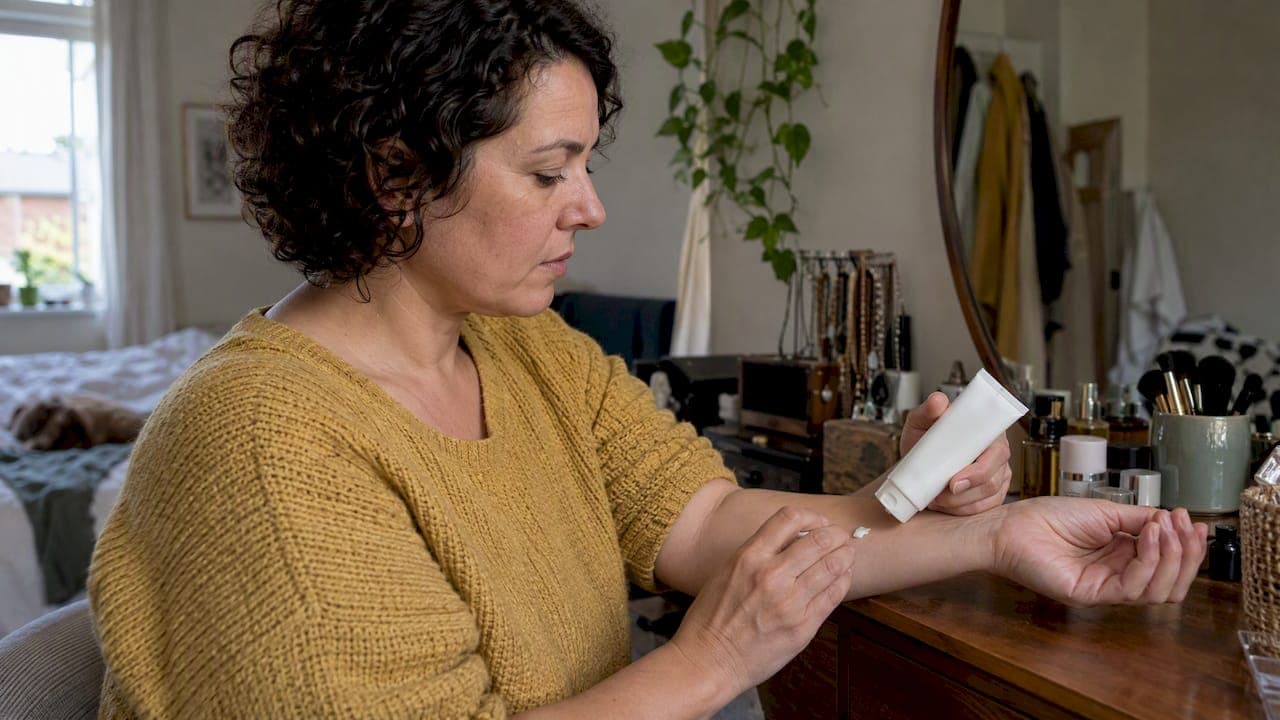
Retinol is the stronger, better-studied anti-aging ingredient, while bakuchiol is the gentler alternative with promising results in short trials. Retinol caused more scaling and stinging in a head-to-head trial, and Cleveland Clinic advises avoiding it during pregnancy. Bakuchiol is often chosen instead, though its long-term safety data are thinner. Below, we walk through the trials, the routines, and who should pick which.
TL;DR:
- A 12 week trial involving 44 participants found no statistically significant efficacy difference between 0.5% bakuchiol twice daily and 0.5% retinol once daily.
- A 2024 review found bakuchiol studies were often small or difficult to compare, while a 2025 analysis found retinol significant across more outcomes.
- Retinol users reported more scaling and stinging; stop either product if worsening redness, persistent flaking, severe stinging, swelling, blistering, or a rash develops.
- Patch test for several days, follow product directions, introduce the ingredient gradually, use daytime sunscreen, and pause if irritation develops.
- Cleveland Clinic advises avoiding retinoids during pregnancy; bakuchiol's pregnancy safety is unclear, so ask a clinician before choosing it as an alternative.
Table of Contents
- How do retinol and bakuchiol compare at a glance?
- What does the clinical evidence actually show?
- How often does each ingredient cause irritation?
- Which one should you choose for your skin?
- How do you start using retinol or bakuchiol safely?
- What do we think about the retinol vs bakuchiol choice?
- How can we help you build a routine you trust?
- FAQ
- Sources
How do retinol and bakuchiol compare at a glance?
Here is the quick view, so you can scan before you read the details:
- Effects: Both can soften fine lines, improve texture, and even out pigmentation.
- Evidence: Retinol has the larger evidence base. Bakuchiol showed no statistically significant difference in efficacy from retinol in one small 12-week trial.
- Irritation: Retinol is more likely to cause scaling and stinging. Bakuchiol was better tolerated in trials.
- Sun and timing: Follow the product directions for either ingredient, and use sunscreen as part of your daytime skincare routine.
- Pregnancy: Standard dermatology guidance is to avoid retinoids. Bakuchiol's pregnancy safety is less certain, so talk with a clinician before using it.
Beauty is a verb. Your routine can keep evolving as your skin does.
What does the clinical evidence actually show?
The study most people cite is a randomized, double-blind 12-week trial with 44 participants. It compared 0.5% bakuchiol twice daily with 0.5% retinol once daily. Both reduced wrinkle surface area and hyperpigmentation, and the difference in efficacy between them was not statistically significant. The retinol group reported more facial scaling and stinging.
Key finding: In a 44-person, 12-week trial, bakuchiol and retinol showed no statistically significant difference in efficacy, but retinol users reported more scaling and stinging.
That is encouraging, but one small trial does not settle the question. A 2024 systematic review of bakuchiol trials found that many studies were small, open-label, or too different from one another to compare cleanly. Its authors concluded that the clinical data lack methodological rigor and that more rigorous studies are needed to confirm how bakuchiol stacks up against retinoids.
A 2025 network meta-analysis pooled many photoaging treatments. Retinol showed significant efficacy across many outcomes. Topical bakuchiol did not always reach statistical significance in the models, which suggests it needs further validation. The same analysis, published in full, noted moderate efficacy for bakuchiol and mixed rankings on both effectiveness and adverse reactions.
The honest takeaway: bakuchiol offers supportive, promising evidence, but the pool of high-quality trials is smaller than the one behind retinoids.

How often does each ingredient cause irritation?
Retinol can cause irritation. In the head-to-head trial, retinol users reported more scaling and stinging. In the head-to-head trial, bakuchiol showed a trend toward temporary redness early on, with less scaling and stinging overall.
Cleveland Clinic guidance describes bakuchiol as a gentler alternative that is often recommended for sensitive skin, while retinol remains the better-studied option.
Signs your skin is telling you to pause:
- Redness that keeps increasing instead of settling
- Flaking that persists for more than a couple of weeks
- Severe or lingering stinging after application
- Any swelling, blistering, or rash
If you see these, stop the product and let your skin recover. Contact a dermatologist if symptoms do not ease.
Pro Tip: Patch test on your inner forearm or behind the ear for several days, then start slowly on your face.
If your barrier already feels fragile, our guide to clean beauty for sensitive skin shows how to protect it first.
Which one should you choose for your skin?
Your skin type and life stage matter more than any headline. Here is how we would think it through:
- Choose retinol if you want an option with a larger evidence base and can tolerate some irritation. Cleveland Clinic advises avoiding it during pregnancy.
- Choose bakuchiol if your skin is sensitive or reactive, or if you want a gentler route.
- Acne-prone skin: If your skin reacts easily, ask a dermatologist which option may suit your skin.
- Rosacea-prone skin: Ask a dermatologist which option may suit your skin, especially if you have active symptoms.
- Pregnancy: Standard guidance says to avoid retinoids. Bakuchiol is often used as an alternative, but clinical safety data in pregnancy are limited, so check with your clinician. Our piece on pregnancy-safe skincare covers more ingredients to review.
For prescription-strength retinoids or complex concerns, ask a dermatologist about options suited to you. If dark spots are your main goal, our guide on fading hyperpigmentation for women of color offers realistic timelines.
How do you start using retinol or bakuchiol safely?
Slow and steady wins. Follow these steps:
- Patch test first. Follow the product directions and stop using it if you develop a reaction.
- Start low. Follow the product directions and adjust use to your skin’s tolerance. In the trial, bakuchiol was applied twice daily.
- Apply after cleansing. Follow the product directions. If you are prone to irritation, ask a dermatologist how to introduce the product.
- Introduce products cautiously. If you use other potent actives, ask a dermatologist or pharmacist how to combine them with retinol.
- Follow daytime sun-protection guidance. Ask a dermatologist or pharmacist whether your products affect your sun-protection routine.
- Step back when needed. If irritation appears, reduce frequency or pause until your skin calms, then restart gently.
Pro Tip: Introduce changes gradually and pay attention to how your skin responds.
Wondering how this fits your stage of life? Our beauty routines by age group can help you plan.
For another look at tolerability, this 12-week sensitive skin comparison is useful supplemental reading.
What do we think about the retinol vs bakuchiol choice?
Here is where I land. If your skin handles it, retinol is the proven choice for established anti-aging goals. If your skin is sensitive, bakuchiol may be a gentler option, though more rigorous research is needed. Neither is a failure. Test, listen to your skin, and bring a dermatologist in for prescriptions or pregnancy questions. Use expert content to build a routine that feels like you.
— Ava
How can we help you build a routine you trust?
Beauty is not perfection. Beauty is becoming. At The Ultimate Beauty - You!, we bring together expert guidance, community support, and product advice so you never have to sort through conflicting advice alone.

- Read our curated posts on our blog
- Connect with professionals through our Experts & Partners page
- Join our community and get guidance made for women at every stage
Start at our homepage and take your next step today.
This article is general information, not a substitute for advice from a qualified doctor. Consult a qualified healthcare professional about your own circumstances before acting on anything here.
FAQ
What are the downsides of bakuchiol?
Its main limitation is evidence: many bakuchiol trials are small or inconsistent, and a 2024 systematic review called for more rigorous studies. The trial noted a trend toward temporary redness early on with bakuchiol. Follow product directions and stop if you develop a reaction.
Is bakuchiol as effective as retinol?
In one 12-week trial, bakuchiol and retinol showed no statistically significant difference in efficacy. Pooled analyses found significant effects for retinol across some outcomes, while bakuchiol did not reach statistical significance in some analyses. Bakuchiol may be a gentler option.
What should you not pair with bakuchiol?
If your skin is reactive, introduce bakuchiol cautiously and follow the product directions. Ask a dermatologist or pharmacist before combining it with other potent actives.
Can you use retinol or bakuchiol during pregnancy?
Cleveland Clinic advises avoiding retinoids during pregnancy. Bakuchiol is often used instead, but its pregnancy safety data are limited, so ask your clinician first.
Sources
- Prospective, randomized, double‐blind assessment of topical bakuchiol and retinol for facial photoageing
- Human Clinical Trials Using Topical Bakuchiol Formulations for the Treatment of Skin Disorders: A Systematic Review
- Pubmed
- Bakuchiol: Retinol Alternative for Sensitive Skin