
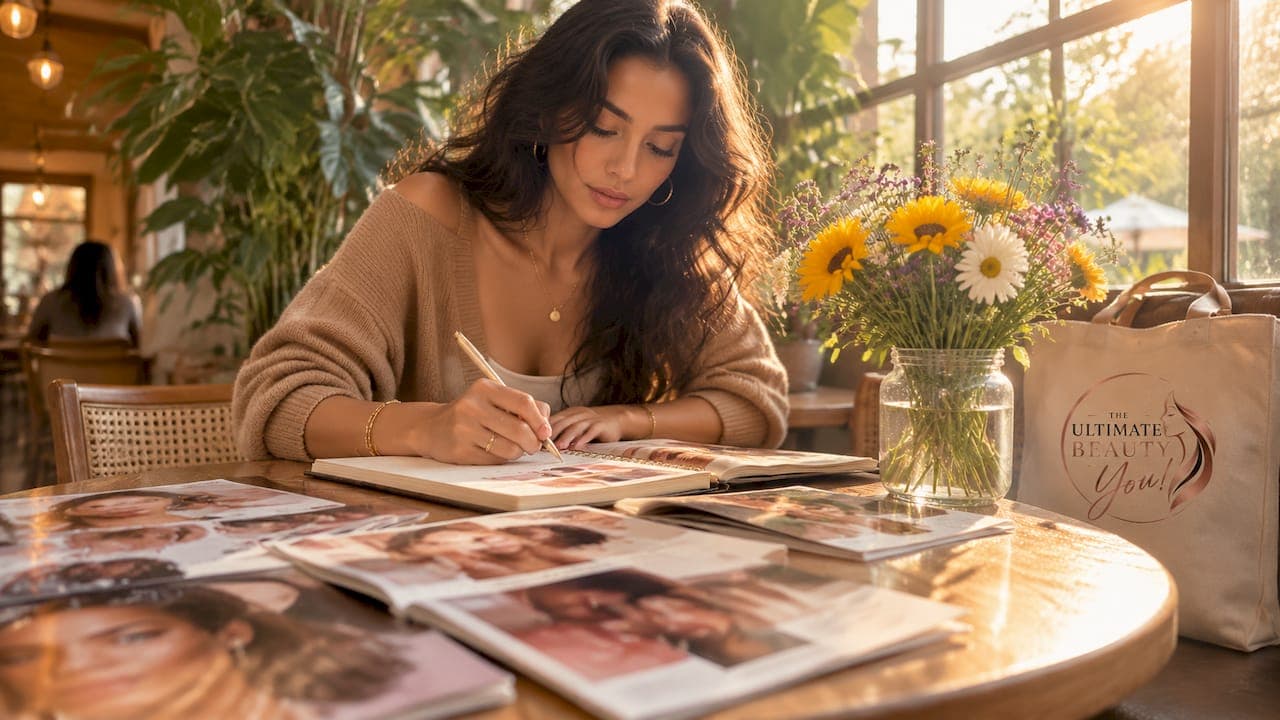
Trend forecasting in beauty is the practice of identifying future consumer preferences, emerging ingredients, and cultural shifts before they reach mass adoption. It is the difference between a brand that leads a category and one that scrambles to catch up. For beauty professionals and brand strategists, forecasting is not a luxury. It is the engine behind every product launch, every campaign pivot, and every decision about where to invest next. Agencies like WGSN, platforms like Vogue Business Beauty Tracker, and internal intelligence teams like L'Oréal Prospective & Consumer Intelligence have built entire methodologies around one goal: see what consumers want before consumers know they want it.
Here is what separates forecasting from general trend watching:
- It is predictive, not descriptive. Forecasting identifies signals 6–18 months ahead of peak adoption, not after a trend has already gone viral.
- It drives product development. Insights from forecasting feed directly into formulation, packaging, and positioning decisions.
- It integrates multiple data streams. Social listening, e-commerce shelf data, search queries, and cultural analysis all feed the process.
- It requires human interpretation. AI can surface patterns, but a trained analyst gives those patterns meaning and cultural context.
- It shapes marketing strategy. Knowing what consumers will care about next allows brands to build campaigns that feel timely, not reactive.
Beauty is becoming. And forecasting is how the industry stays ahead of that becoming.
How forecasting shapes what consumers want and how brands innovate
The most powerful thing forecasting does is close the gap between what consumers are starting to feel and what brands are ready to offer. Digital-first discovery and e-commerce now dominate how beauty products are found and evaluated, which means the signals consumers send online are richer and faster than ever before. A brand that reads those signals early can develop a product that feels inevitable by the time it hits shelves.

L'Oréal's TrendSpotter platform illustrates this precisely. The tool uses an AI Trend Detection Engine to scan content from beauty influencers, celebrities, professionals, and scientific experts across blogs and social media, then surfaces rising signals in skincare, haircare, and makeup on a 6–18 month horizon. The result is that L'Oréal's Prospective, R&I, and Marketing teams can align on emerging consumer needs before those needs become mainstream demand. That kind of early detection shifts the entire product development cycle from reactive to predictive.
The connection between forecasting and innovation is direct across every category. In skincare, forecasting identified the consumer shift toward barrier repair and microbiome health well before those terms became standard retail vocabulary. In haircare, signals around scalp care and low-manipulation styling were spotted in niche creator communities before they drove category growth. In fragrance, forecasting tracked the cultural move toward personal scent identity, which contributed to fragrance surpassing color cosmetics as the third-largest beauty category by mid-2026.

| Category | Forecasting signal | Innovation outcome |
|---|---|---|
| Skincare | Barrier repair and microbiome interest | Probiotic serums, ceramide-led moisturizers |
| Haircare | Scalp health and low-manipulation styling | Scalp treatments, protective styling products |
| Fragrance | Personal scent identity and layering | Niche fragrance wardrobing, refillable formats |
| Makeup | Skin-first, natural finish preferences | Tinted moisturizers, skin tints, blurring primers |
| Wellness beauty | Health-beauty integration | Ingestible beauty, metabolic skincare |
AI accelerates every stage of this process. Pattern recognition tools can cross-reference millions of data points, from product launches and patents to viral posts and global consumer sentiment, in seconds. What once required weeks of manual research now surfaces in a curated stream of early signals. The creative output has changed too: generative AI now allows forecasting teams to produce visual concepts and color stories that capture a future aesthetic before a single product is formulated.
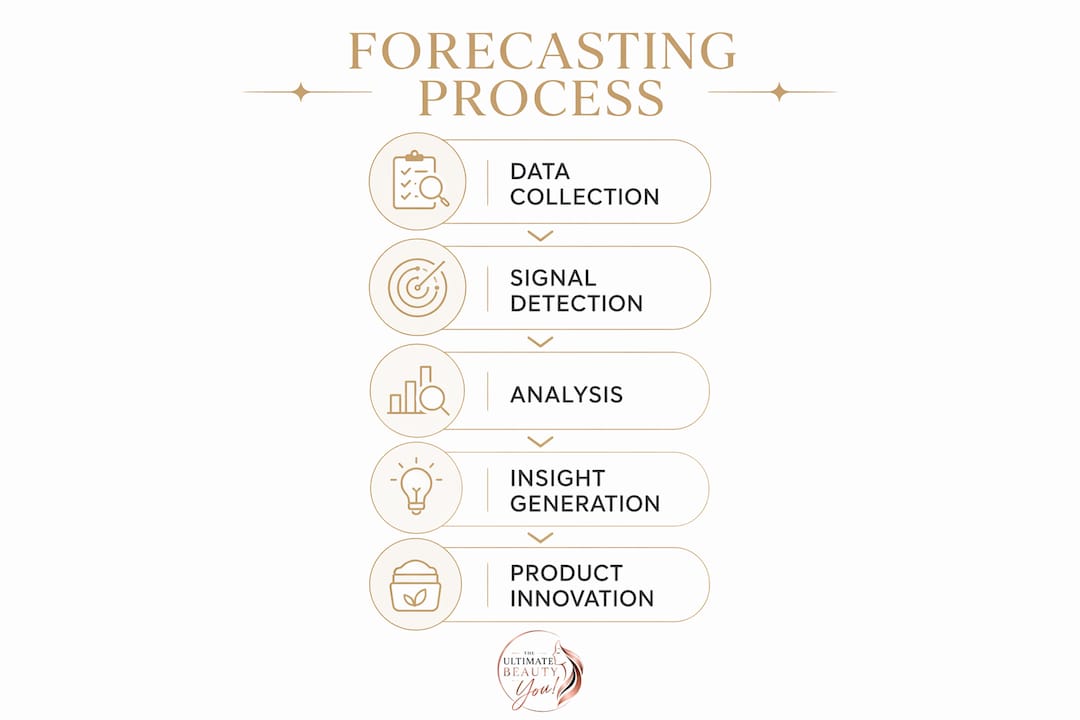
What the top forecasting sources say is coming next
The most credible forecasting sources in the industry are converging on several themes for 2026 and beyond. These are not speculative. They are grounded in data, cultural observation, and the kind of cross-category pattern recognition that separates durable trends from short-lived noise.
WGSN tracks over 400 million SKUs across more than 10,000 brands and 300 retailers daily, combining that shelf data with social listening, catwalk imagery, and consumer sentiment. Their forecasts consistently identify the intersection of cultural mood and commercial readiness, which is where the most durable beauty trends live.
Mintel analysts have identified beauty's evolution into a health-integrated category as the defining shift of this era. Metabolic beauty, which connects skincare and wellness to internal health markers, is positioned as the next scalable opportunity. Mintel's framework, built on seven Trend Drivers including Wellbeing, Identity, and Technology, tracks how individual markets accelerate or slow these shifts at different rates.
The Boots Beauty & Wellness Trends Report 2026 highlights six macro themes: optimization, global influence, shifting attitudes to aging, neurocosmetics, resilience, and the tension between AI and authenticity. The report notes that a significant portion of consumers now see wellness as an essential part of their daily beauty routine, a figure that has direct implications for how brands position products across every category.
Vogue Business Beauty Tracker and real-time social data, particularly TikTok Analytics, add the speed layer. TikTok content tagged with "UV index" has garnered extensive views in the past 12 months, driving demand for advanced SPFs, biotech skincare, and sweat-resistant formulas. That kind of hashtag velocity is a forecasting signal in itself.
Key trends emerging from these sources right now:
- AI-driven beauty personalization. Skin analysis tools, predictive product suggestions, and intelligent shopping companions are moving from novelty to expectation.
- Metabolic and wellness beauty. Consumers are connecting skincare to internal health, creating demand for products that address the body from the inside out.
- Neurocosmetics. Products designed to influence mood and emotional wellbeing through sensory experience, fragrance, texture, and sound, are gaining traction.
- Gen Z nostalgia aesthetics. Early-2000s references in color, packaging, and campaign tone are showing up across makeup and haircare.
- Inclusive aging. Shifting attitudes toward aging are reshaping anti-aging messaging into pro-aging and longevity-focused positioning.
- Resilience skincare. Environmental stressors including UV, pollution, and temperature extremes are driving demand for barrier-strengthening and protective formulas.
- Fragrance as identity. The holistic beauty approach to scent, layering fragrances as personal expression rather than a single signature, is reshaping the category.
Pro Tip: When evaluating a trend signal from TikTok, cross-reference it with search data and retail velocity before committing to a product development cycle. A hashtag spike without repurchase behavior is usually a moment, not a movement.
How forecasters actually gather and analyze data
The methodology behind beauty trend forecasting has changed more in the past five years than in the previous two decades. The process now combines AI-powered data processing with what Michele Superchi, Global Vice President of Beautystreams, describes as an "internal archive" of cultural references, aesthetic memories, and historical knowledge. Neither element works without the other.
WGSN's analyst-in-the-loop approach is the clearest model of this balance. Machine-learning algorithms extract statistical patterns from proprietary shelf data, social media tracking, and consumer sentiment, then analysts apply cultural and aesthetic expertise to fine-tune the forecast. The AI surfaces what is happening. The analyst explains why it matters and whether it will last.
Trend signals are typically grouped by timeframe. Short-term signals cover weeks to months, medium-term signals span one to two years, and long-term signals extend up to a decade. A trending hashtag tells you what is popular right now. A durable trend shows up across multiple data streams simultaneously: search intent, repurchase behavior, retailer assortment expansion, and creator adoption in adjacent communities.
| Data source | What it reveals | Forecasting use |
|---|---|---|
| Social listening (TikTok, Instagram) | Early consumer interest and aesthetic signals | Short-term trend detection |
| Search query data | Consumer intent and growing awareness | Medium-term demand validation |
| E-commerce shelf data (new-ins, markdowns) | Retail adoption and trend exit timing | Lifecycle management |
| Creator analytics | Community diffusion and mainstream readiness | Adoption curve mapping |
| Patent and product launch tracking | Brand innovation pipeline | Long-term category forecasting |
| Consumer sentiment and review analysis | Emotional resonance and retention signals | Positioning and messaging strategy |
Assessing trend longevity requires evaluating four evidence pillars: attention, conversion, diffusion, and adaptation. Attention asks whether consumers are talking about the trend consistently, not just in a single burst. Conversion asks whether they are buying, reviewing, and repurchasing. Diffusion tracks whether the trend is moving from niche creators into adjacent communities and mainstream retail. Adaptation looks at whether brands are reinterpreting the original idea into more accessible formats. When all four align, the trend has staying power. When one is missing, the signal is likely ephemeral.
Timing the exit of a trend is just as important as spotting its rise. Shelf velocity data, including new-in rates and markdown frequency, helps brands avoid overproduction and the waste that comes with it. Getting out of a trend at the right moment protects both margin and brand credibility.
Why investing in forecasting gives brands a real competitive edge
Forecasting is a proactive business tool. Brands that invest in it do not wait for a trend to peak before responding. They build the product, the supply chain, and the campaign before the consumer even articulates the need. That timing advantage compounds across every function of the business.
The business case for forecasting shows up in several concrete ways:
- Better product-market fit. Products developed from forecast insights arrive when consumer appetite is building, not after it has peaked.
- Faster innovation cycles. Early signal detection compresses the time between insight and launch.
- Reduced waste. Knowing when a trend is declining prevents overproduction and excess inventory. WGSN's shelf velocity tracking is built specifically for this purpose.
- Stronger brand differentiation. Brands that consistently lead trends build a reputation for vision, which deepens consumer loyalty.
- More effective marketing. Campaigns built around emerging cultural themes feel timely and resonant rather than generic.
- Sustainability alignment. Forecasting supports more intentional production, reducing the environmental cost of trend-chasing without data.
The financial upside of accurate forecasting is not just about launching the right product. It is about avoiding the wrong one. A brand that commits to a trend at peak saturation faces markdown pressure, inventory write-offs, and the reputational cost of looking like a follower. Forecasting reduces all three risks simultaneously.
Consumer loyalty is also at stake. Shoppers increasingly recognize when a brand is leading culture versus chasing it. A brand that consistently shows up with products that feel ahead of the moment builds trust that generic trend-following cannot replicate. That trust translates into repurchase rates, community advocacy, and the kind of word-of-mouth that no paid media budget can fully replace.
For brand strategists, the operational argument is equally strong. Forecasting aligns product development, supply chain, marketing, and retail teams around a shared view of where the market is heading. That alignment reduces internal friction and speeds up execution across the board. You can explore how beauty brand visibility connects to trend adoption as part of a broader growth strategy.
What experts and researchers are saying about forecasting's future
The consensus among leading forecasters, researchers, and brand intelligence teams is clear: forecasting is shifting from trend tracking to predictive intelligence, and the brands that adapt to that shift will define the next decade of beauty.
L'Oréal's TrendSpotter work demonstrates what predictive intelligence looks like in practice. By scanning trendsetters' content across blogs and social platforms, the AI engine captures rising signals in ingredients, textures, packaging, and lifestyle before those signals reach mass awareness. The Prospective & Consumer Intelligence team then interprets those signals through the lens of consumer psychology and cultural context. The result is a forecast that is both data-grounded and human-nuanced.
Mintel's senior analysts have framed 2026 as a pivotal year for beauty's evolution into a health-integrated category. Metabolic beauty, multisensory experiences, and the human-led beauty revolution are the three defining predictions. Each requires a forecasting framework that goes beyond aesthetics into wellbeing, identity, and emotional resonance. Traditional trend analysis, focused on color palettes and product formats, falls short of capturing these deeper shifts.
The Boots Beauty & Wellness Trends Report 2026 captures a tension that every forecaster is navigating right now: consumers want the benefits of AI-driven personalization and also crave authenticity and genuine human connection. These are not contradictory desires. They are a signal that the most resonant beauty brands will use technology to enhance, not replace, the human experience of beauty.
Beautystreams' Michele Superchi articulates the human side of this balance with precision. Vision, he explains, comes from sensitivity: the ability to observe what everyone else sees and connect the dots in a way no one else has imagined. AI can analyze and simulate, but it cannot read beyond the data. The forecaster's internal archive of cultural references and aesthetic memory is what transforms a data pattern into a compelling narrative about where beauty is going.
Pro Tip: Build your forecasting practice around the four evidence pillars: attention, conversion, diffusion, and adaptation. A trend that scores high on all four is worth committing to. A trend that only scores on attention is worth watching, not launching.
The natural wellness and aromatherapy space offers a useful example of how forecasting works across adjacent categories. Fragrance and sensory wellness signals that appeared in niche communities years ago are now driving mainstream category growth, validating the long-term forecasting frameworks that identified them early.
The future of beauty forecasting belongs to teams that can hold both truths at once: data is indispensable, and so is the human capacity to interpret what that data means for real women's lives. Beauty is not just becoming more personalized. It is becoming more meaningful. Forecasting is how the industry keeps up with that evolution, one signal at a time.
Key Takeaways
Trend forecasting in beauty gives brands the ability to anticipate consumer needs 6–18 months ahead, turning data signals into products, campaigns, and strategies that lead the market rather than follow it.
| Point | Details |
|---|---|
| Forecasting leads product development | L'Oréal's TrendSpotter detects consumer needs 6–18 months ahead, shifting brands from reactive to predictive. |
| Four pillars validate trend longevity | Attention, conversion, diffusion, and adaptation together determine whether a trend will last or fade. |
| Fragrance category growth is real | Fragrance surpassed color cosmetics as the third-largest beauty category by mid-2026. |
| AI needs human interpretation | AI surfaces patterns; trained analysts give those patterns cultural meaning and strategic direction. |
| Shelf velocity prevents waste | Tracking new-ins and markdown rates helps brands exit trends at the right time, protecting margin and reducing overproduction. |
Discover beauty that stays ahead
At Theultimatebeauty-you, we believe beauty is a verb. It grows, evolves, and becomes something new with every season. Our curated collection reflects the trends that matter most right now, grounded in the same forecasting intelligence that shapes the industry's leading brands. Whether you are building a routine around resilience skincare, exploring fragrance as identity, or stepping into wellness beauty for the first time, we have gathered the products and insights to meet you where you are.
Explore our curated beauty collection and discover what becoming your best self looks like in 2026. Beauty is not perfection. Beauty is becoming. And it starts here.