

A successful pop-up is a short, measurable retail program built on one clear objective, a realistic budget, and three operational priorities: location, experience, and measurement. Retail pop-up event planning gets messy fast when owners chase every goal at once. Pick one. Awareness, acquisition, sales, or research. Then let that single objective drive your location, your design, and your KPIs.
Here's what to do in the first 72 hours:
- Write your objective and pick one primary KPI to match it.
- Shortlist three to five short-term spaces that fit your budget and audience.
- Build a simple budget with a 10 to 15 percent contingency line.
Your top logistical priorities after that: permits and insurance timelines, your point-of-sale and inventory sync, and a staffing plan for opening day. Everything else in this guide builds on those foundations.
Key Takeaways
A successful retail pop-up requires one clear objective, a realistic budget with contingency, and a measurement plan tied to specific KPIs from day one.
| Point | Details |
|---|---|
| Pick one objective | Awareness, acquisition, sales, or research should drive your location, design, and KPIs. |
| Budget with contingency | Plan for $5,000 to $20,000 for a small activation, plus 10 to 15 percent contingency. |
| Start permits early | Begin the permit and insurance process two to eight weeks before opening day. |
| Measure across activations | Track capture rate, conversion, and online lift to spot repeatable patterns. |
| Build a reusable program | Standardize your brief, fixtures, and measurement framework for future pop-ups. |
Table of Contents
- What Is a Pop-Up and Which Format Fits Your Goal?
- An 8-Step Checklist to Plan Your Retail Pop-Up
- How to Find and Rent Short-Term Retail Space
- Permits, Insurance, and Legal Timelines to Check First
- Designing the Space and Setting Up Your Tech
- What Marketing Tactics Actually Fill a Pop-Up?
- Which KPIs Prove Your Pop-Up Worked?
- What Does a Retail Pop-Up Actually Cost?
- Turning One Pop-Up Into a Repeatable Program
- Pop-Up Activation Templates You Can Copy
- How Do You Train Staff to Run the Floor?
- Curated Resources to Help You Execute
- Retail Pop-Up Event Planning for Owners and Marketers
- Frequently Asked Questions
- Sources
What Is a Pop-Up and Which Format Fits Your Goal?
A pop-up shop is a temporary retail space that runs for a defined period, anywhere from a single day to several months, used to test markets, launch products, clear inventory, or build brand awareness. It's retail on a deadline, and that constraint is the whole point. You get real customer behavior data without the multi-year lease commitment.
Your format should follow your objective, not the other way around. Pop-ups work best when matched to a single primary objective, and each format serves a different one:
- Physical standalone: best for product launches or seasonal drops that need full brand control. Example: a skincare line renting a corner storefront for a holiday collection.
- Shop-in-shop: a brand nested inside an existing retailer, ideal for testing a new market without full overhead. Example: a haircare brand setting up a counter inside a department store.
- Kiosk or market stall: low-cost, high-visibility, great for sampling or inventory clearance.
- Mobile (truck or Airstream): built for discovery and buzz, especially near complementary retailers or events.
- Event activation: a booth or installation tied to a festival, trade show, or community event.
- Virtual or livestream pop-up: useful when physical space isn't available but urgency and exclusivity still matter.
Market test? Go shop-in-shop. Product launch? Go standalone. Clearing inventory fast? A kiosk gets you there cheaper.
An 8-Step Checklist to Plan Your Retail Pop-Up
Treat this as your project brief. Copy it, fill it in, hand it to your team.
- Define your objective and KPI. One goal. One number that proves it worked.
- Nail down your audience and assortment. Who's walking in, and what are they buying?
- Set your budget and contingency. Build in 10 to 15 percent for the unexpected.
- Map your timeline. Work backward from opening day, including permit lead time.
- Scout locations. Shortlist at least three options before committing.
- Plan your design and fixtures. Zone the space for flow, not just aesthetics.
- Staff and assign roles. Who greets, who sells, who runs the register?
- Build your marketing and measurement plan. Pre-launch, during, and post-event.
When you inspect a shortlisted venue, check power capacity, load-in access, storage room, signage restrictions, ADA compliance, and sightlines from the street. A gorgeous space with no loading dock will wreck your install day.
Pop-ups can serve different primary objectives, and your KPIs should map directly to whichever one you picked: capture rate and dwell time for awareness, conversion rate and cost per acquisition for sales, and post-event online lift for research or market-testing goals. Run length matters here too. Awareness activations can work over a single weekend, while acquisition and sales goals often need at least 30 days to gather reliable data and let your team optimize on the fly.
Pro Tip: Build a reusable pop-up kit, standard brief template, fixture set, signage, POS setup, so your second activation takes half the planning time of your first.
How to Find and Rent Short-Term Retail Space
Specialized marketplaces make short-term leasing far easier than cold-calling landlords. Storefront and Appear Here are the two most established platforms for finding pop-up-ready venues, listing everything from single-day retail slots to multi-month leases. Local commercial real estate agents, sublease boards, mall kiosk programs, and shop-in-shop partnerships with complementary retailers round out your options.
Lease structures vary widely:
- Flat short-term rent: predictable, simple, best for first-time pop-ups.
- Percentage-of-sales deals: lower upfront risk, common in malls and high-traffic centers.
- Teaser or intro rates: watch for automatic rate hikes after the first month.
- Month-to-month: flexible but often priced at a premium.
Before signing, check the lease for signage restrictions, modification limits, operating hour requirements, utility responsibility, and load-in/strike windows. Start scouting at least six to eight weeks out, and always have a Plan B and C location in your back pocket.
Permits, Insurance, and Legal Timelines to Check First
Permit requirements vary by city, but expect to need a temporary business license, a sales tax permit, health permits if you're serving food or samples, fire marshal occupancy approval, and a signage permit. Permitting timelines commonly run two to eight weeks, and fire marshal inspections are often required for any public-facing activation.
Insurance basics to lock in before you sign a lease:
- General liability coverage, non-negotiable for foot traffic.
- Added-insured status for your landlord, often required in the lease itself.
- Product liability coverage if you're selling anything consumable or applied to skin.
Pro Tip: Name the landlord as additional insured on your policy from day one, and keep every permit, certificate, and inspection document in one shared folder before install week starts.
Designing the Space and Setting Up Your Tech
Zone your layout in five parts: an introduction zone near the entrance, an exploration zone for browsing, an engagement zone for demos or sampling, a transaction zone, and a social-sharing moment for photos. Best practice allocates 15 to 20 percent of your total floor space to back-of-house storage, with primary aisles kept wide enough for comfortable, ADA-friendly movement.
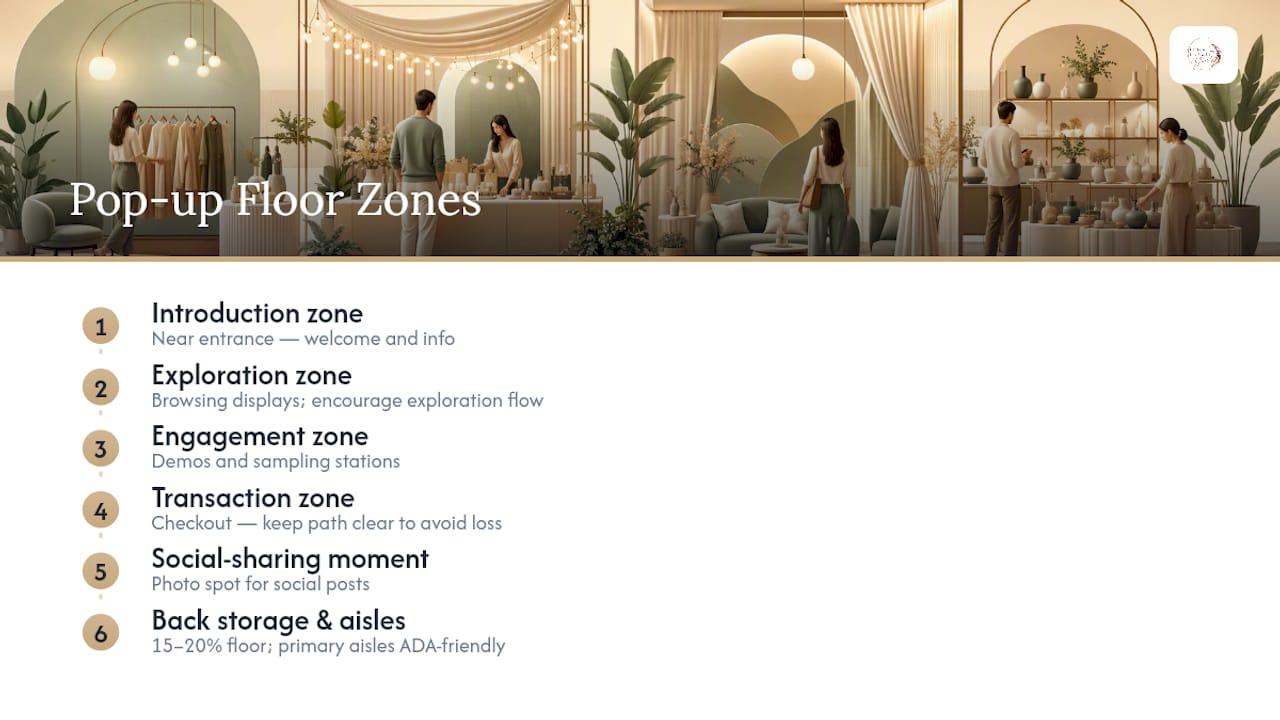
Merchandise for both photography and flow. A stunning display that blocks the path to checkout costs you sales.
On payments, evaluate Shopify POS and Square side by side. Both handle offline mode for spotty Wi-Fi, real-time inventory sync back to your main store, digital receipt capture, and email or SMS opt-ins built into checkout. Your inventory checklist should cover opening stock levels, a same-day replenishment plan, and secure overnight storage. Your tech checklist: reliable Wi-Fi, backup power, and a charged battery pack for your POS device.
What Marketing Tactics Actually Fill a Pop-Up?
Marketing works best split into three stages: pre-launch, during-event, and post-event, with your pre-launch window running two to four weeks before opening day.
- Pre-launch (2 to 4 weeks out): email your existing customer list, run geo-targeted social ads around the venue, pitch local press, invite micro-influencers for a preview, and co-market with neighboring businesses.
- During the event: clear signage and wayfinding, an Instagrammable moment tied to your brand storytelling, staff-driven email or SMS opt-ins at checkout, limited-time offers, and a plan for managing lines when traffic spikes.
- Post-event: a welcome email sequence for new sign-ups, repurposed user-generated content from the event, and measurement of your online sales lift in the following weeks.
Pro Tip: Give staff a specific opt-in script instead of "sign up for our newsletter." "Want early access to our next drop?" converts noticeably better at checkout.
Which KPIs Prove Your Pop-Up Worked?
Your core KPIs depend on your objective, but most owners should track foot traffic and dwell time, conversion rate, average order value, cost per acquisition, and post-event online sales lift. A 20 to 40 percent walk-in-to-purchase rate is a commonly cited storefront benchmark, though it swings hard by category, location, and price point, so treat it as a reference point, not a target you're guaranteed to hit.
Use your POS analytics for on-site conversion, geo-filtered web analytics for online lift, and cohort tracking to see if pop-up customers return.
Your post-mortem checklist:
- Reconcile total sales against your budget and KPI target.
- Count new opt-ins and compare against your acquisition cost.
- Review UGC volume, press mentions, and staff feedback.
- Decide: repeat this format, try a new location, or explore a permanent lease.
What Does a Retail Pop-Up Actually Cost?
Cost drivers include rent or space fees, build-out and fixtures, staffing, marketing, insurance, permits, POS and payment fees, and shipping. Many small businesses report spending under $5,000 on their pop-up space, with typical small-business budgets landing between $5,000 and $20,000, while higher-end multi-week activations can run $10,000 to $50,000 or more per month depending on scope.
Build your budget with one all-in cost line, a 10 to 15 percent contingency, and simple break-even math: divide your total cost by your average order value to know exactly how many transactions you need. For contingency, line up a backup supplier, keep your hours flexible if weather threatens turnout, and set your refund and exchange policy before day one, not during a customer complaint.
Turning One Pop-Up Into a Repeatable Program
The owners who win at this stop treating each pop-up as a one-off stunt. Retail strategists increasingly recommend running pop-ups as a program: a reusable kit, a standard brief, and one fixed measurement framework applied to every activation. That consistency is what lets you compare results across cities instead of guessing.
Track capture rate, conversion, and online lift across every activation, and watch for patterns that repeat versus spikes that don't. A single great weekend might be a fluke. Three cities showing the same 30 percent conversion rate is a signal worth acting on. Using pop-up data this way can meaningfully de-risk the decision to sign a permanent lease, since you're testing the market with real transactions instead of a forecast spreadsheet.
Pro Tip: Build a scaling checklist before your second activation: fixed brief template, reusable fixtures, one dashboard tracking KPIs across every market, and a graduation rule for when a market earns a permanent location.
Pop-Up Activation Templates You Can Copy
- Product launch demo: two-week run, target existing customers and lookalikes, KPI is units sold, minimum staffing is two plus one demo table.
- Collaboration shop-in-shop: four to eight weeks, shared audience with your host retailer, KPI is new customer acquisition, needs a shared fixture set.
- Seasonal clearance pop-up: one to two weeks, price-sensitive shoppers, KPI is inventory sell-through, minimal fixtures needed.
- Virtual livestream pop-up: single event, existing social following, KPI is watch-time-to-purchase conversion.
For beauty activations specifically, build in a sampling station, a personalization counter, and an influencer trial slot, informed by strategies outlined in Types of Small-Batch Apparel Releases for Creators. It's the fastest way to turn browsers into buyers on the spot.
How Do You Train Staff to Run the Floor?
Your staff make or break the customer experience in a space you don't have months to fix. Before opening day, run a training session covering your brand story, product knowledge, and a clear greeting script, something warmer than "let me know if you need anything."
Assign roles explicitly: someone greets and directs traffic, someone demos or samples product, someone owns the register and opt-in capture, and someone restocks and tidies displays. In a small pop-up, one person often wears two hats, but everyone should know which hat comes first when the floor gets busy.
Upselling in a pop-up works best when it's suggestion-based, not pushy. Train staff to pair products naturally: "This pairs really well with what you picked up," lands far better than a hard pitch. Give them two or three specific pairing suggestions per product line so it feels like advice, not a sales script.
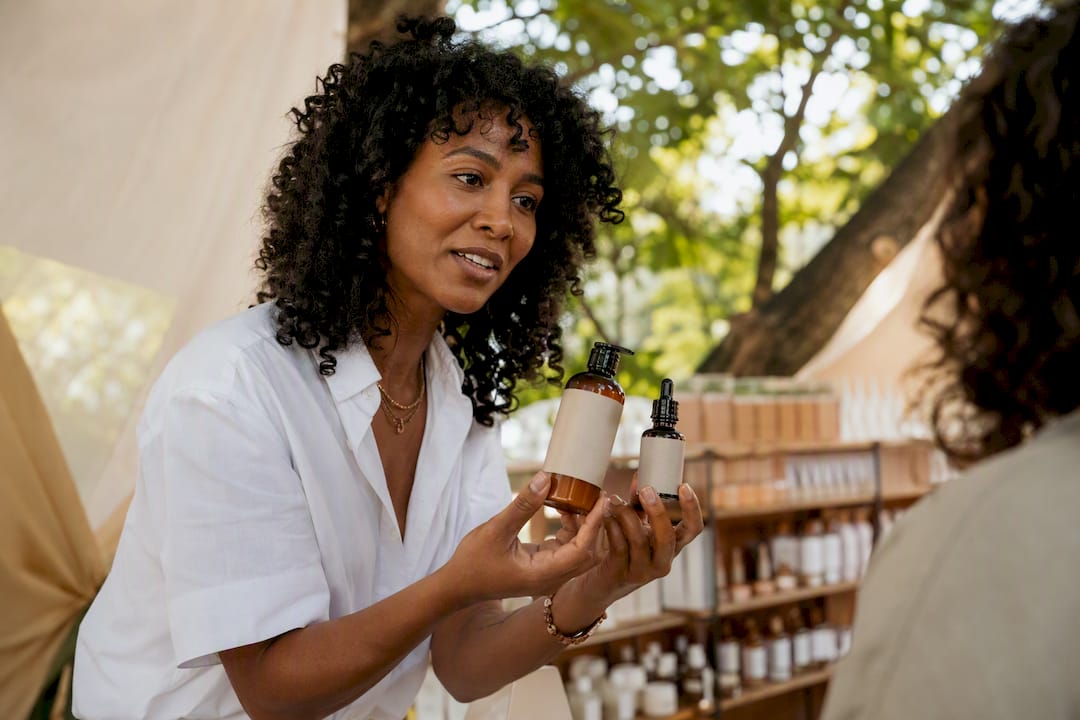
Customer service expectations should include a response time standard for questions, a clear return or exchange policy staff can explain without checking with a manager, and a system for capturing feedback on the spot, whether that's a quick verbal check-in or a QR code survey at checkout. The goal is a floor that feels curated and personal, not understaffed and rushed.
Curated Resources to Help You Execute
- Shopify's pop-up guide covers formats and setup basics.
- Square's planning guide breaks down realistic budgets.
- Storefront and Appear Here remain the go-to marketplaces for short-term space.
- The pop-up design guide details zoning and layout.
Always confirm permit and insurance rules with your local jurisdiction before signing anything.
Retail Pop-Up Event Planning for Owners and Marketers
The conventional advice treats pop-ups like one-off marketing stunts, a flashy weekend, a photo moment, then back to business as usual. That's the biggest miss I see in this space. The retailers getting real value from pop-ups treat them as a testing instrument first and a marketing event second.
Here's what gets underweighted: measurement discipline matters more than venue glamour. A gorgeous space with no fixed KPI framework tells you nothing you can act on next quarter. A modest kiosk with clean capture-rate and conversion data across three cities tells you exactly where to open next.
What should you prioritize first? Not the coolest location. Your measurement framework. Decide your KPIs and how you'll capture them before you even shortlist venues. Everything else, design, staffing, marketing, should serve that data collection, not distract from it. For beauty and wellness brands especially, a pop-up done this way becomes less an event and more a research tool that pays for itself in better decisions down the line, something we explore further in our guide to pop-ups in beauty retail.
Ready to connect your brand with a wider audience of engaged women through partnerships, expert listings, or your next activation? Explore how Theultimatebeauty-you helps beauty and wellness brands turn pop-up momentum into lasting community connections.
Frequently Asked Questions
What's the minimum budget to run a retail pop-up? Many small businesses launch for under $5,000, though most realistic budgets fall between $5,000 and $20,000 depending on location, build-out, and run length.
How long should a pop-up run? Awareness-focused activations can succeed in a single weekend, while sales or acquisition goals typically need around 30 days to gather reliable performance data.
Do I need insurance for a short-term pop-up? Yes. General liability is standard, and most landlords require you to name them as additional insured on your policy before handing over keys.
What's a good conversion benchmark for a pop-up? A 20 to 40 percent walk-in-to-purchase rate is a commonly referenced benchmark, though it varies significantly by product category and location.
Should I use Shopify POS or Square for a pop-up? Both handle offline mode, inventory sync, and checkout opt-ins well. Test each with your specific inventory volume and existing e-commerce platform before committing.
Sources
- Pop-Up Shop: What It Is and How to Start One (2025) - Shopify
- Pop-Up Shop Planning: How to open a pop-up shop - Square
- How to market your pop-up shop - Shopify
- Pop-Up Shop Design Guide: From Concept to Open (2026)
- Pop-up retail explained as a brand growth lever