
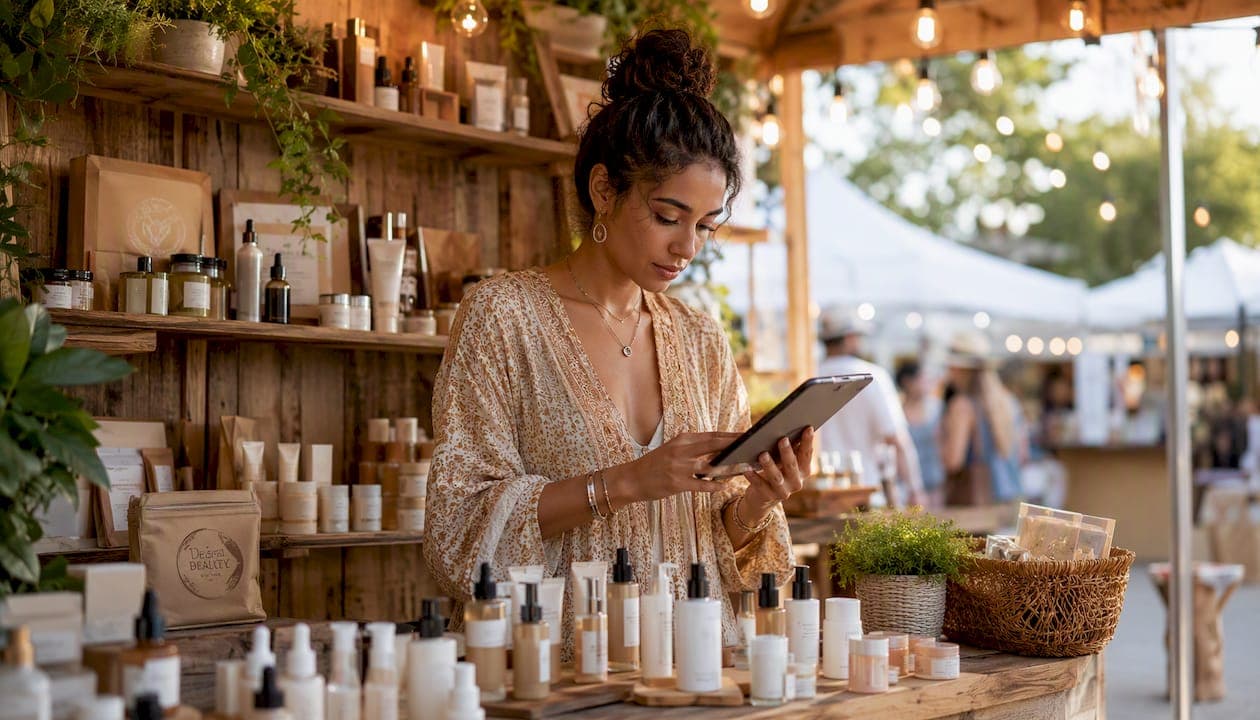
Pop-ups convert product curiosity into brand loyalty by delivering high-impact, trial-driven experiences that digital channels simply cannot replicate. Beauty is an inherently tactile category: customers want to swatch, smell, and feel before they commit. A well-executed pop-up puts that sensory moment at the center of your strategy, then layers community, content, and commerce on top.
The quick case for beauty pop-ups:
- Product trial: Physical sampling drives purchase confidence in ways no influencer video can fully replace.
- Community building: Masterclasses and influencer residencies turn first-time visitors into vocal advocates.
- Social amplification: Scenographic installations generate organic UGC that extends reach far beyond the activation footprint.
- Market testing: A four-week pop-up in a new city costs a fraction of a permanent lease and delivers real demand data.
- Direct sales: Well-designed pop-up experiences can target 5–8% conversion for beauty categories, above the general web average.
Brands at every stage, from indie launches to global prestige lines, use temporary retail experiences to close the gap between digital awareness and physical loyalty. The rest of this guide gives you the frameworks, formats, budgets, and playbooks to do it well.
Table of Contents
- Why are beauty pop-ups growing so fast right now?
- What objectives should your beauty pop-up be designed to achieve?
- Which pop-up format fits your brand's goals?
- What experience design elements actually drive conversion and shareability?
- How do you plan and budget a beauty pop-up from concept to teardown?
- How do you measure pop-up success with real KPIs?
- What can you learn from Huda Beauty, Clarins, Glossier, and Deciem?
- Is a pop-up the right move for your brand right now?
- What do practitioners say about execution, timing, and long-term value?
- How do you manage risk and plan for operational challenges?
- How do you connect your pop-up to your broader omnichannel strategy?
- How do you sustain customer engagement after the pop-up ends?
- What are the most common pitfalls in beauty pop-up campaigns?
- Key Takeaways
- The pop-up as a relationship, not just a retail moment
- How Theultimatebeauty-you helps brands reach beauty communities without running their own pop-up
- Useful sources and further reading
Why are beauty pop-ups growing so fast right now?
The economics of digital acquisition have shifted. Paid social costs have climbed steadily, and the department store beauty counter, once the industry's primary trial engine, has contracted sharply across the U.S. Those two forces together have pushed brands toward owned, physical moments where they control the environment, the conversation, and the data.
Experiential retail in beauty is no longer a novelty tactic. It is a strategic response to a category truth: beauty customers need to try before they trust. A foundation shade, a fragrance note, a skincare texture — these are decisions that require sensory input. Pop-ups deliver that input in a branded environment, which is why they consistently outperform digital-only acquisition for categories with high trial barriers.
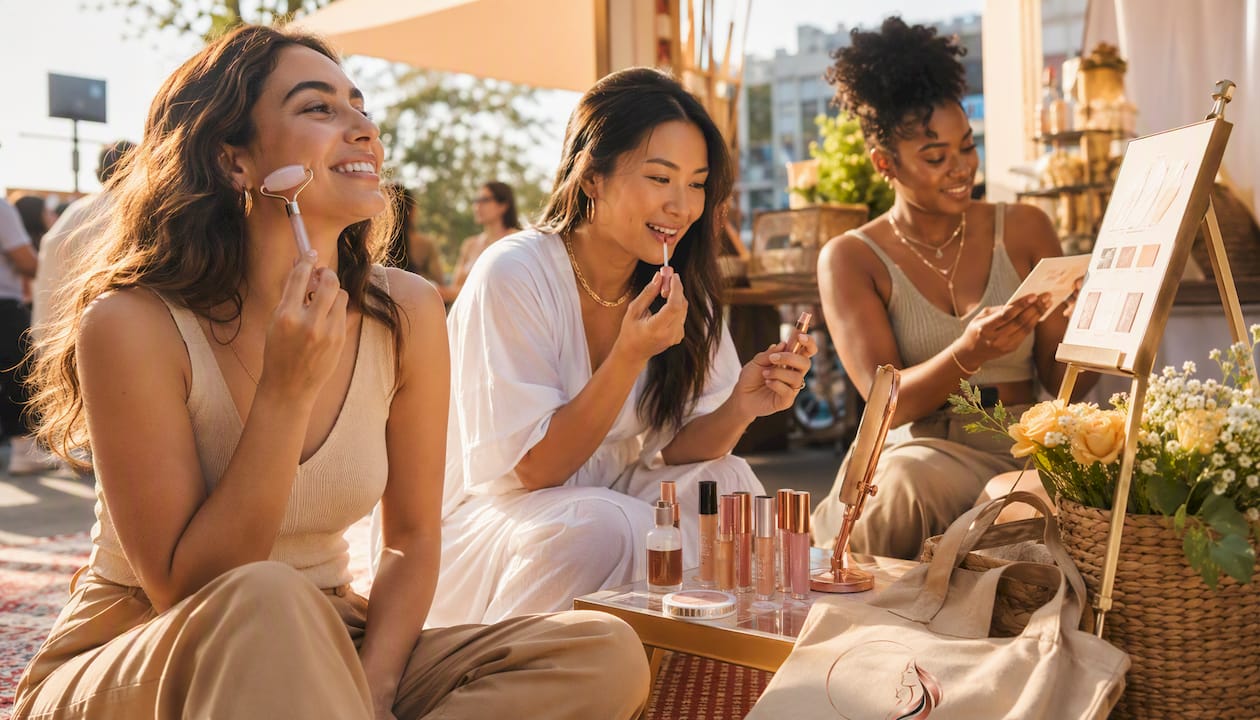
Social media economics reinforce the case. A single well-staged pop-up installation can generate thousands of organic posts, effectively turning your activation footprint into a content production studio. The cost per piece of UGC from a pop-up is often dramatically lower than commissioned content, and the authenticity reads differently to audiences. Keep an eye on beauty industry trends shaping these dynamics as the market continues to evolve.
Pro Tip: Timing your pop-up to coincide with a cultural moment, a product launch, or a seasonal gifting window multiplies its earned media value. Poorly timed activations, those that feel disconnected from what your audience is thinking about right now, underperform regardless of production quality.
What objectives should your beauty pop-up be designed to achieve?
Every pop-up needs a primary objective before a single design decision is made. Trying to optimize for all five goals simultaneously usually means achieving none of them fully.
| Objective | Primary Tactics | Key KPIs |
|---|---|---|
| Product trial & education | Sampling stations, shade-matching, ingredient workshops | Samples distributed, conversion rate, post-visit purchase rate |
| Community & loyalty | Masterclasses, influencer residencies, loyalty sign-ups | Email capture rate, repeat visit rate, NPS |
| Content & social amplification | Scenographic installations, UGC moments, branded hashtags | UGC volume, social reach, earned media value |
| Market testing & expansion | New city activations, limited SKU launches, demand surveys | Footfall, sell-through rate, waitlist sign-ups |
| Direct sales & conversion | Limited drops, exclusive bundles, on-site POS | Revenue, AOV, units per transaction |
The most durable pop-ups treat community as the primary output, with sales and content as natural byproducts. When a customer leaves having learned something, met someone, or felt genuinely seen by a brand, the commercial relationship that follows is stickier than anything a discount code can create.
Which pop-up format fits your brand's goals?
Format selection is where most brands make their first strategic mistake: they choose a location based on prestige or availability rather than audience fit. Match the format to the objective first, then find the location.
| Format | Best for | Duration | Reach vs. Cost | Depth of engagement |
|---|---|---|---|---|
| Mall kiosk | Mass trial, impulse purchase | 1–4 weeks | High reach, moderate cost | Low to moderate |
| Airport activation | High AOV, captive audience, travel retail | 1–2 weeks | Moderate reach, high cost | Moderate |
| Shop-in-shop | Brand education, retail partnership | 2–8 weeks | Moderate reach, moderate cost | Moderate to high |
| Temporary flagship | Full brand immersion, launch moments | 2–4 weeks | Lower reach, high cost | Very high |
| Event/seasonal | Community, gifting, cultural moments | 3–7 days | Variable, often low cost | High |
| Virtual/hybrid | Extended reach, online community | Ongoing | Very high reach, low cost | Low to moderate |
Airport pop-ups deserve special attention: captive travelers with dwell time and a gifting mindset translate idle minutes into purchases, and average order values in travel retail consistently run higher than in standard mall environments. The tradeoff is permitting complexity and higher space costs.
Pop-up durations typically range from 3 days to 4 weeks, with short formats (3–7 days) working well for limited drops and month-long activations better suited to experiential market tests or new-city launches. Virtual and hybrid formats extend the window indefinitely but require a different kind of programming discipline to sustain engagement.
For brands targeting a specific niche, niche targeting strategy should inform location selection as much as footfall data does.
What experience design elements actually drive conversion and shareability?
The physical environment is your most powerful conversion tool. Every design decision either supports trial and purchase or it doesn't.
High-impact experience elements to prioritize:
- Sampling stations with hygienic protocols: Individual applicators, disposable tools, and visible sanitation build trust and remove the hesitation that shared testers create.
- Shade-matching lighting: Daylight-balanced lighting at try-on stations eliminates the "it looked different in the store" complaint and increases purchase confidence.
- Personalization and diagnostics: Skin analysis tools, shade-matching consultations, and fragrance profiling create a one-to-one moment that customers remember and share.
- Workshop and masterclass programming: Scheduled sessions give customers a reason to arrive at a specific time, increasing dwell time and deepening product knowledge.
- Influencer moments and residencies: A creator in-residence for a weekend generates content, draws their audience, and adds social proof in real time. Micro-influencer partnerships are particularly effective here because their audiences tend to be locally concentrated and highly engaged.
- Scenography for UGC: Design at least one wall, corner, or installation specifically for photography. If it isn't shareable, you are leaving earned media on the table.
- AR try-on and tech integrations: Virtual try-on stations extend the experience to visitors who are hesitant to apply product and give digital-native shoppers a familiar interaction mode.
For hybrid pop-ups that pair livestreamed drops with walk-in experiences, keep separate inventory pools for online and in-person sales. Overselling a limited drop because you didn't separate channels is one of the fastest ways to damage trust with both audiences simultaneously.
Pro Tip: Stage your most photogenic moment near the entrance, not the back. Visitors who photograph on the way in share before they leave, which drives real-time foot traffic from their networks.

Your brand visual identity should translate directly into the pop-up's color palette, typography, and spatial hierarchy. Consistency between your digital presence and physical environment is what makes the experience feel intentional rather than improvised.
How do you plan and budget a beauty pop-up from concept to teardown?
Planning timeline
Start earlier than feels necessary. Most teams underestimate permitting lead times and vendor availability.
- 12–16 weeks out: Define objective, format, and location. Secure space contract and begin permit research.
- 10–12 weeks out: Finalize design concept, hire build contractor, begin staffing recruitment.
- 8–10 weeks out: Submit permit applications (business license, temporary use permit, health department if sampling food/beverages). Confirm insurance coverage.
- 6–8 weeks out: Finalize inventory plan, set up POS system, confirm payment processing.
- 4–6 weeks out: Staff training, soft launch of pre-event marketing, influencer briefings.
- 1–2 weeks out: Full build, tech testing, inventory receiving, staff dress rehearsal.
- During activation: Daily footfall and sales tracking, social monitoring, email capture review.
- 48 hours post-close: Launch post-event email sequence, compile UGC, begin data analysis.
Budget buckets
| Cost Category | Typical Range | Notes |
|---|---|---|
| Space/lease | — | Varies widely by market, duration, and format |
| Build/fit-out | — | Modular builds reduce cost for repeat activations |
| Staffing | — | Brand ambassadors, beauty advisors, event manager |
| Inventory | Variable | Separate pools for in-store and online/livestream |
| Marketing & PR | — | Pre-event, during, and post-event amplification |
| Insurance & permits | $500–$1,000 | General liability, product liability, local permits |
| POS & tech | $500–$1,000 | Square, Shopify POS, or equivalent; AR stations extra |
Operational checklist
- Temporary use or special event permit from local municipality
- Business license valid for the activation address
- General liability insurance (minimum $1M per occurrence is standard for most venues)
- Product liability coverage if sampling skincare or ingestibles
- ADA-compliant layout (accessible pathways, reachable product displays)
- Sales tax registration for the state if you don't already collect there
- Inventory reconciliation process (daily counts, shrinkage protocol)
- Contingency budget of 10–15% for unexpected costs
- Emergency contact list for venue, vendors, and insurance broker
How do you measure pop-up success with real KPIs?
Measurement starts before the doors open. If you haven't defined what success looks like, you can't prove it afterward.
Primary KPIs to track:
- Footfall: Total visitors counted via door counter or staff tally; the baseline for all conversion calculations.
- Conversion rate: Walk-ins who make a purchase. Beauty categories can target 5–8% with the right offer and experience design.
- Average order value (AOV): Total revenue divided by number of transactions; a key indicator of upsell effectiveness.
- Email capture rate: Percentage of visitors who opt into your list; a direct measure of future LTV potential.
- UGC volume and social reach: Tagged posts, story mentions, and hashtag usage during and after the activation.
- Post-event retention: 30-, 60-, and 90-day repurchase rates from visitors who were captured in your CRM.
Attribution in practice
Combine your POS data with a pop-up-specific promo code, a QR code that routes to a tagged landing page, and your email lifecycle data. That combination lets you attribute post-event online purchases to the physical activation with reasonable confidence. For livestream components, click-to-buy links with UTM parameters close the attribution loop on the digital side.
Pro Tip: Launch your post-event email sequence within 48 hours of closing. Visitors are most emotionally engaged in that window, and a well-timed follow-up with a personalized product recommendation based on what they tried converts at a meaningfully higher rate than a generic blast sent a week later.
What can you learn from Huda Beauty, Clarins, Glossier, and Deciem?
These four brands represent four distinct pop-up philosophies, each worth studying for its own reasons.
Huda Beauty: Awareness through spectacle. Huda Beauty's pop-up activations lean into theatrical, high-production installations designed primarily for social amplification. The objective is awareness at scale, and the format delivers: immersive environments with branded photo moments generate UGC volumes that dwarf what a comparable paid social budget would produce. The repeatable playbook element here is designing the space as a content studio first and a retail environment second.
Clarins: Education as the conversion engine. Clarins uses pop-ups to teach. Skincare diagnostics, personalized consultations, and ingredient storytelling sessions position the brand as an authority rather than just a product. Customers who leave understanding why a product works for their specific skin concern are dramatically more likely to repurchase. The lesson: invest in trained beauty advisors, not just attractive fixtures.
Glossier: Community as the product. Glossier built its brand on the idea that its customers are its best marketers, and its pop-ups operationalize that belief. Temporary activations in new cities function as community gatherings as much as retail events, with programming that rewards existing fans and converts curious newcomers. The format prioritizes depth of engagement over raw footfall, which is why Glossier's pop-ups generate loyalty that outlasts the activation itself.
Deciem (The Ordinary): Disruption as education. The Ordinary's Markup Marché concept used store-like installations to educate consumers on ingredient pricing and industry markup, with some locations focused on gifting rather than direct sales. It's a bold choice that reinforces the brand's transparency positioning and turns the pop-up into a proof point for its core values. The strategy behind The Ordinary's pop-up push consistently emphasizes community and education over transactional volume.
Repeatable playbook elements from all four:
- Lead with a clear, single objective (awareness, education, community, or disruption).
- Design the physical environment to express that objective, not to do everything at once.
- Build in a social-first moment that works even for visitors who don't purchase.
- Train staff to deliver the brand's core narrative, not just product features.
Is a pop-up the right move for your brand right now?
Not every brand is ready for a pop-up, and launching one without the right conditions in place wastes budget and can actually harm brand perception.
Conditions that favor a pop-up:
- You have a clear, single primary objective (not "awareness and sales and community").
- Your target audience is reachable and concentrated in the chosen location.
- You have the staffing capacity to deliver a consistent brand experience across all operating hours.
- Your inventory strategy accounts for both in-store and any online/livestream demand.
- You have a pre-event marketing plan that will drive traffic before the doors open.
- You have a post-event follow-up plan ready to activate within 48 hours of closing.
Red flags that argue against proceeding:
- No coherent goal beyond "we should do a pop-up."
- Insufficient amplification plan (expecting walk-in traffic to carry the activation).
- High-risk timing (launching during a major competing event or a slow retail period with no cultural hook).
- Permits and insurance not yet confirmed.
- No mechanism for capturing visitor data.
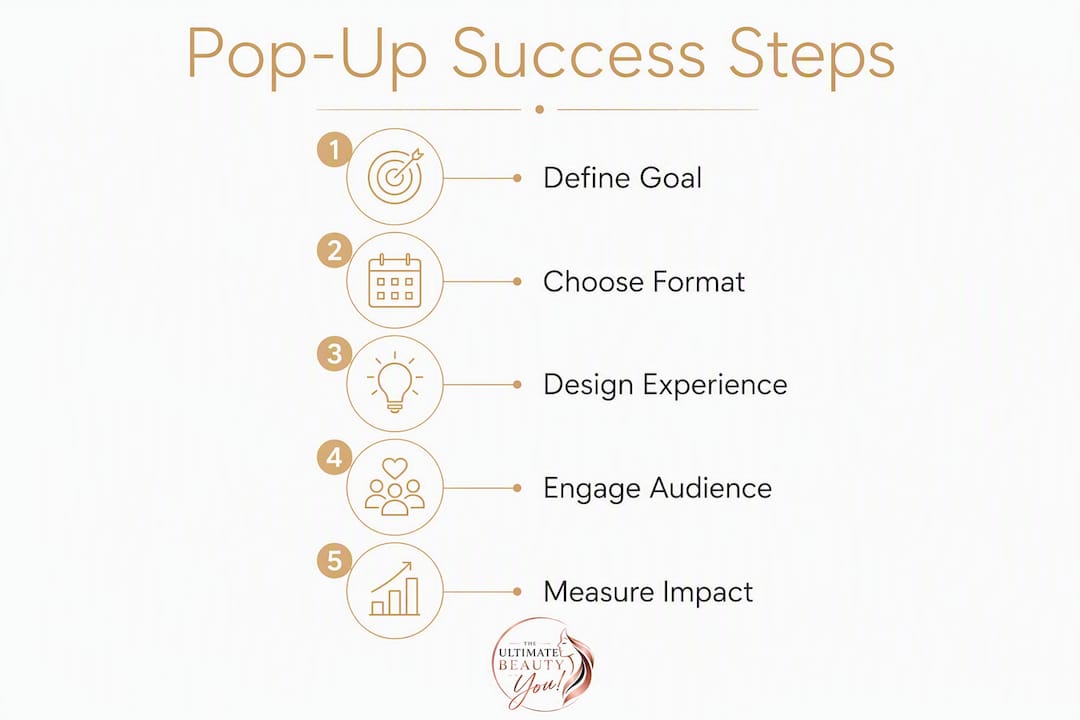
A simple decision path: Define your objective → choose the format that best serves it → run a budget check against the cost buckets above → confirm staffing and permitting are achievable → go. If any step fails the check, resolve it before committing to a space.
Pro Tip: Location fit beats raw footfall every time. A pop-up in a community-centered venue that perfectly matches your audience will outperform a high-traffic mall location where your brand feels out of place.
What do practitioners say about execution, timing, and long-term value?
The brands that get the most from pop-ups share one consistent trait: they treat execution quality as a non-negotiable, not a nice-to-have. A beautiful concept executed poorly, with undertrained staff, a chaotic layout, or a broken POS system, damages brand perception more than no pop-up at all.
"Successful pop-ups act as community hubs. Masterclasses, influencer residencies, and educational programs drive loyalty and turn curious shoppers into confident advocates. The goal is not just a sale — it's a relationship that continues long after the activation closes."
Practitioner guidance from Storefront and Inside Retail
Hybrid activations that synchronize livestreams with walk-in experiences increase reach and create multiple revenue touchpoints, but only when inventory and fulfillment are separated by channel. The 48-hour post-event sequence is not optional for brands that want to capture the LTV gains from emotionally engaged visitors.
Timing and execution quality are the primary determinants of pop-up ROI. Behaviorally triggered experiences and contextually relevant activations consistently outperform intrusive or poorly timed ones, whether you're talking about a physical pop-up or a digital overlay.
Pro Tip: Run a full staff dress rehearsal 24–48 hours before opening. Walk through every customer scenario: a shade-matching consultation, a workshop registration, a return, a payment failure. The scenarios that feel unlikely are exactly the ones that happen on day one.
How do you manage risk and plan for operational challenges?
Every pop-up carries operational risk. The brands that handle it best don't avoid problems; they plan for them.
Build a contingency budget of 10–15% above your projected total. Vendor delays, weather events for outdoor activations, and last-minute permit complications are common enough to treat as expected rather than exceptional. Identify a backup vendor for your most critical build elements before you need one.
For staffing, always schedule one more person than you think you need for peak hours. A single understaffed shift during a high-traffic period can undo weeks of pre-event marketing. Cross-train at least two staff members on POS operations so a single absence doesn't create a checkout bottleneck.
Data security matters at pop-ups too. If you're capturing email addresses or processing payments, confirm that your POS system is PCI-compliant and that any paper sign-up sheets are stored securely and transferred to your CRM within 24 hours. Leaving customer data on a clipboard in an open venue is a liability you don't need.
For outdoor or semi-outdoor activations, have a weather contingency plan in writing before the activation date. Know your venue's policy on weather-related closures and confirm whether your insurance covers lost revenue from weather events.
How do you connect your pop-up to your broader omnichannel strategy?
A pop-up that operates as a standalone event leaves most of its value on the table. The real return comes from treating the physical activation as one node in a connected customer journey.
Before the pop-up opens, build a pre-event landing page with an email capture form. Drive traffic to it through your owned social channels, email list, and any influencer partnerships. Every email address collected before the event is a warm lead who has already expressed intent.
During the activation, use QR codes at every touchpoint: product displays, sampling stations, the checkout area. Each code should route to a tagged page that captures the source so you can measure which in-store moments drove the most digital engagement. If you're running a livestream component, promote it to your existing online community so your in-store and digital audiences experience the activation simultaneously.
After the pop-up closes, the email list you built becomes your primary retention asset. Segment visitors by what they tried, what they purchased, and whether they attended a workshop. Personalized follow-up sequences based on those segments consistently outperform generic post-event blasts. Connect your social media growth strategy to the UGC generated during the activation by resharing, reposting, and building content series from the best visitor-created content.
How do you sustain customer engagement after the pop-up ends?
The activation closes, but the relationship shouldn't. The 48-hour post-event window is your highest-leverage moment for converting trial into loyalty.
Send a personalized email within 48 hours that references what the visitor experienced, includes a product recommendation based on their trial, and offers a time-limited incentive to purchase online. Keep the incentive modest: a gift-with-purchase or free shipping outperforms a deep discount for prestige and mid-market beauty brands because it preserves perceived value.
At 30 days, send a replenishment or "how is it working for you?" check-in. At 60 days, introduce a complementary product from the same category. These sequences, when built on actual trial data from the pop-up, feel personal rather than automated, and that distinction drives meaningfully higher open and click rates.
Invite your most engaged pop-up visitors into a community space, whether that's a private social group, a loyalty program tier, or a platform like Theultimatebeauty-you where they can connect with other beauty enthusiasts and access expert content. The pop-up gave them a reason to care about your brand. Community gives them a reason to stay.
What are the most common pitfalls in beauty pop-up campaigns?
The mistakes that sink beauty pop-ups are almost always predictable, which means they're almost always avoidable.
Unclear objective. "We want to do something experiential" is not a brief. Without a primary objective, every design decision becomes a negotiation with no clear winner, and the result is a space that tries to do everything and excels at nothing.
Underinvesting in staff. The physical environment can be stunning, but if the people inside it can't articulate the brand story or guide a customer through a shade match, the experience falls flat. Staff training is not a line item to cut.
No pre-event marketing. Assuming that foot traffic will find you is the most common and most expensive mistake in pop-up planning. Your pre-event marketing budget should be treated as essential infrastructure, not optional amplification.
Ignoring mobile UX for digital touchpoints. Mobile full-screen overlays that cover content and non-dismissible digital pop-ups are associated with higher bounce rates and can trigger search ranking penalties. Any digital component of your pop-up, from a landing page to a livestream overlay, must be mobile-first and easy to dismiss.
No post-event plan. Collecting 500 email addresses and then sending a generic newsletter two weeks later is a missed opportunity. The post-event sequence is where the commercial return on your investment is actually realized.
Poor timing. Launching during a competing cultural event, a slow retail week with no hook, or a period when your target audience is traveling or distracted will depress footfall regardless of how good the experience is. Timing is strategy.
Key Takeaways
Beauty pop-ups deliver their highest return when they are built around a single clear objective, executed with precision, and connected to a post-event follow-up strategy that converts trial into lasting loyalty.
| Point | Details |
|---|---|
| Objective first, format second | Define one primary goal before choosing a location or format; misaligned formats waste budget. |
| Conversion benchmarks | Beauty pop-ups can target 5–8% conversion with the right offer and experience design. |
| Separate inventory channels | Keep distinct inventory pools for in-store and online/livestream sales to avoid overselling. |
| 48-hour follow-up is non-negotiable | Post-event email sequences launched within 48 hours capture visitors at peak emotional engagement. |
| Theultimatebeauty-you as a partner | Brands seeking community exposure and content amplification without full pop-up operations can connect with audiences through the Theultimatebeauty-you platform. |
The pop-up as a relationship, not just a retail moment
There's a version of the pop-up conversation that focuses almost entirely on square footage, build costs, and conversion rates. Those things matter. But the brands that get the most out of temporary retail experiences are the ones that understand something deeper: a pop-up is an invitation.
It's an invitation for a customer to step into your world, feel what your brand actually stands for, and decide whether they want to belong to it. The transaction, if it happens, is almost secondary to that moment of recognition.
What I find underestimated in most pop-up planning conversations is the role of programming. The physical space is a container. What you put inside it, the workshops, the conversations, the moments of genuine connection between a beauty advisor and a customer who has never found her shade before, that's where loyalty is actually built. Brands that treat programming as an afterthought and spend 90% of their budget on the build are optimizing for Instagram, not for the relationship.
The most effective beauty pop-ups I've seen documented are the ones where the brand's values are legible in every detail: the lighting, the staff language, the products chosen for sampling, the way the space handles accessibility. That coherence is what makes a visitor feel seen. And feeling seen is what makes her come back.
How Theultimatebeauty-you helps brands reach beauty communities without running their own pop-up
Not every brand has the budget, timeline, or operational capacity for a standalone pop-up. That's where Theultimatebeauty-you offers something genuinely different.
Theultimatebeauty-you is a women-centered beauty and wellness platform built around real community: trusted experts, brand partnerships, and a growing audience of women who are actively invested in their beauty evolution. For brands that want the community-building and content amplification benefits of a pop-up without the logistics of a physical activation, the platform offers sponsored partnerships, expert listings, and co-created content that reach an engaged, beauty-forward audience.
Think of it as the community hub your pop-up was trying to build, already assembled and ready for your brand to step into. Whether you're planning a physical activation and want to amplify it digitally, or you're looking for a lower-friction entry point into experiential community marketing, explore what's possible at Theultimatebeauty-you and see how your brand fits into the conversation.
Useful sources and further reading
- Beauty Pop-Up Shops: Strategy and Examples | Storefront — Covers the core case for experiential beauty retail with named brand examples including Huda Beauty, Clarins, Glossier, and The Ordinary; useful for format selection and objective-setting.
- Experiential Retail Trends in Beauty | Mintel — Authoritative category analysis of how immersive retail is reshaping beauty brand strategy in the U.S. and globally.
- The Ordinary's Markup Marché Pop-Up | WWD — Trade coverage of Deciem's community-education pop-up concept; a strong case study for ingredient storytelling and transparency-first brand positioning.