
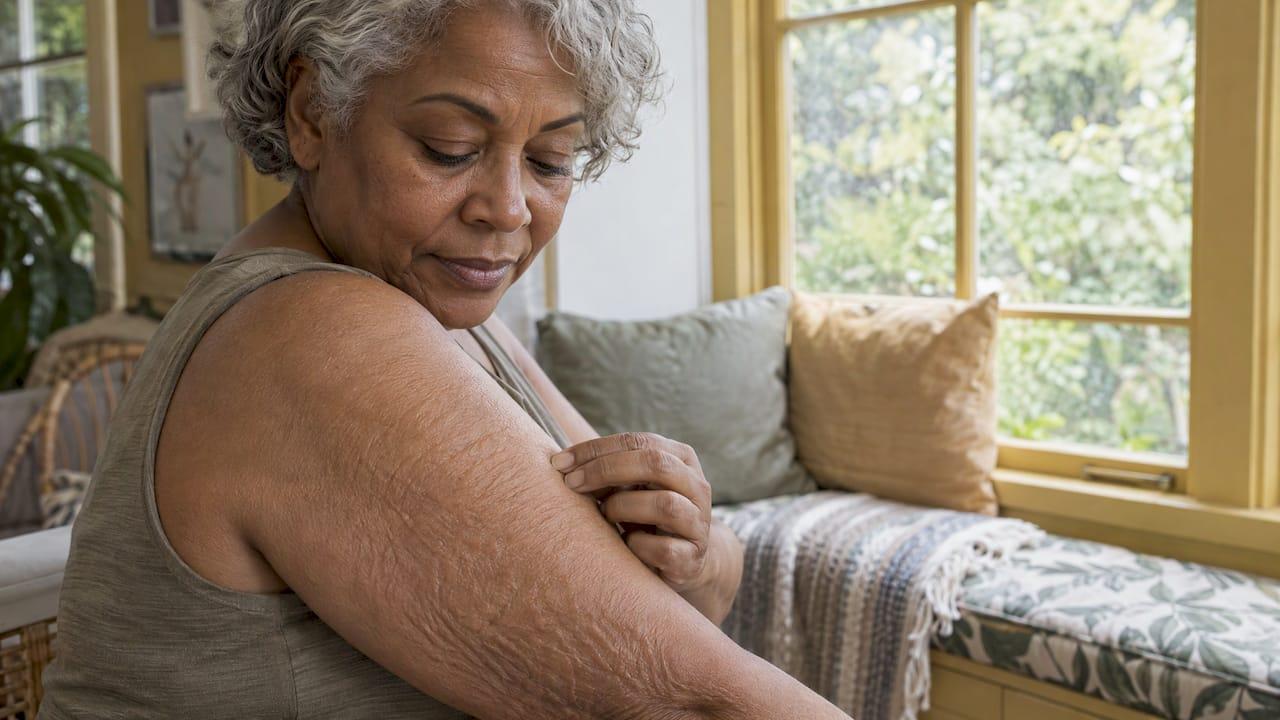
Crepey arm skin is thin, finely lined skin that looks like crinkled tissue paper. It is common, it is not a flaw, and you can improve how it looks. The core plan is daily sunscreen, a good moisturizer and a retinoid. If you want more, a board-certified dermatologist can talk you through in-office options.
Beauty Is Not Perfection. Beauty Is a Verb. Beauty Is Becoming. That includes the skin you have right now, at every age and stage. Here is what is actually happening in your arms, what helps, and what to expect.
TL;DR
- Crepey arm skin is mostly the result of sun damage and natural aging, which break down collagen and elastin. Weight changes, dryness and some medications can add to it.
- Daily broad-spectrum sunscreen of SPF 30 or higher protects what you have. A moisturizer plus a retinoid is the most supported at-home combination.
- Drinking extra water will not reverse crepey skin unless you are truly dehydrated.
- At-home care can smooth and plump. Deeper changes call for professional treatment, and the right choice starts with a board-certified dermatologist.
Table of Contents
- What crepey skin on the arms actually is
- Why the arms, and why now
- Our perspective
- An at-home routine that works with your skin
- Does water, a vitamin or a supplement fix it?
- Professional treatments for crepey arm skin
- Match the approach to what you see
- A realistic timeline and mindset
- Find your people and your experts
- FAQ
- Sources
What crepey skin on the arms actually is
Crepey skin is skin that has lost some of its thickness and bounce. It looks fine-lined and crinkled, and it can look a little loose. You may notice it most on the upper arms, where the skin is thin and gets a lot of daylight.
The main driver is structural. Cleveland Clinic traces crepey skin to sun damage, which breaks down elastin, and to natural aging. Collagen gives skin its firmness. Elastin lets it spring back. When both decline, skin thins and the surface starts to crinkle.
Moisture matters too. Dermatologist Joshua Zimm, MD, explained to WebMD that as skin ages it loses density through collagen and elastin breakdown, and it also can't hold moisture as well. Thinner, drier skin shows lines more easily.

Why the arms, and why now
Your arms have a lot of history. Years of driving, walking, summer dresses and sleeveless tops add up. Vogue reports that dermatologist Dr. Karcher says the upper arms naturally lose collagen and elastin with age and have also had years of sun exposure.
Several other factors can make the look stronger:
- Age. Collagen production declines over time. Many women notice crepiness first in their 40s and 50s, but it can appear earlier with heavy sun exposure.
- Weight changes. When weight goes down, skin may not tighten back fully. Cleveland Clinic lists weight changes among the common causes, along with dry skin.
- Medications. Long-term use of some medicines, such as prednisone, is linked to crepey skin. If you take a steroid, talk to your prescriber before changing anything. Never stop a prescription on your own.
- Hormonal shifts. Skin changes through midlife. Our guide to menopause skincare covers hydration, repair and SPF for that stage.
It also helps to understand that skin is part of a bigger system. Collagen is a structural protein found throughout the body, including in bone, and this overview of collagen and bone health shows how widely it matters as we age.
Our perspective
We hear the same thing from women of every age: "My arms look different than they used to, and I don't know what to do about it." Often there is a little grief in that sentence. We want to meet it with facts and kindness.
Here is our view. Crepey skin is not a failure of self-care. It is the record of a life lived in the sun, through changing bodies, seasons and stages. Beauty Is Becoming, and your skin is allowed to become along with you.
We also believe in the inside-out, head-to-toe, 360-degree approach. Arms are not a separate problem. Sun habits, sleep, nutrition, stress and the products you choose all work together. Advice online is scattered and often contradictory, so we built our community to bring trusted experts, brands and real women into one place.
Our advice is simple. Protect your skin every day. Build a routine you can keep. Ask a qualified professional when you want more. And speak to your arms the way you would speak to a friend.
Ava
An at-home routine that works with your skin
At-home care will not turn back the clock. Health.com notes that products can temporarily plump skin and subtly improve its appearance, but they are not a permanent fix. Used consistently, though, they can make arms look smoother and healthier. Here is the order we suggest.
1. Sunscreen every morning
This comes first because it is the one step that stops more damage. Cleveland Clinic recommends a daily broad-spectrum sunscreen of at least SPF 30. Dr. Rosenthal of Cedars-Sinai goes further and says sun protection is the most important part of an anti-aging routine.
Apply it to your arms, not just your face. Reapply when you are outdoors. Long sleeves and shade help on bright days. If your skin has had too much sun, a soothing skin recovery ointment can be part of how you care for it afterward, alongside sun protection.

2. A moisturizer you enjoy using
Moisturizer will not rebuild collagen, but it holds water in the skin and softens the crinkled look. Choose a basic, fragrance-free cream if your skin is sensitive. Apply it to damp skin after your shower, when it helps seal in moisture.
Our body skincare routine walks through five dermatologist-backed steps for barrier care from neck to toe. It is a good base for your arms.
3. A retinoid at night
Retinoids are skincare made from vitamin A. Health.com explains that they boost collagen and speed up skin turnover, which may help reduce the look of mildly crepey skin. Dr. Rosenthal says retinoid use has been shown to improve collagen synthesis in the dermis.
A few ways to use one well:
- Start slowly, two or three nights a week, and build up as your skin allows.
- Use a pea-sized amount per arm area, then moisturize.
- Expect some dryness at first. A 2025 review of cosmetic retinoids notes that topical use can cause irritation, so tolerability is part of the plan.
- Wear sunscreen in the morning. Retinoids are a nighttime step.
- If you are pregnant, planning a pregnancy or breastfeeding, ask your doctor first. Our guide to pregnancy-safe skincare explains which ingredients to review.
If you want a rhythm that gives your skin time to recover, try skin cycling, a four-night routine that spaces out active ingredients.
4. Gentle exfoliation and smoothing acids
Vogue reports that dermatologists recommend products with retinol, peptides, growth factors or exfoliating acids like lactic acid to help rebuild collagen and smooth arm skin. Cleveland Clinic also lists hydroxy acid cleansers among helpful at-home options.
More is not better here. Thin skin can get irritated quickly. Our 30-second body exfoliation steps show a gentle approach, and you should not exfoliate on the same night you use a retinoid.
5. Vitamin C in the morning
Vitamin C is an antioxidant. Dr. Rosenthal calls it a potent antioxidant that helps protect skin from UV damage, with some evidence that it can improve existing collagen and increase collagen synthesis. Use it under sunscreen, not instead of it.
Does water, a vitamin or a supplement fix it?
These are the questions women ask most. The honest answers are helpful, and they may save you money.
Drinking water
Staying hydrated is good for your health. But it does not rebuild skin structure. Dermatologist Elizabeth Damstetter, MD, told WebMD that extra water is unlikely to plump skin or noticeably reduce wrinkles unless you are extremely dehydrated. A systematic review found the evidence for skin benefits from more water is weak, with a slight hydration increase mainly in people who drank little to begin with.
So drink enough for your body, and put your effort into sunscreen, moisturizer and a retinoid.
Vitamins
The American Academy of Dermatology says that healthy adults should try to meet nutrient needs through diet. It notes vitamin A helps reduce signs of aging, and vitamin C is an antioxidant that helps prevent sun damage and supports collagen formation.
For the arms specifically, the best-supported evidence is for vitamin C applied to the skin. In a 2017 randomized, placebo-controlled trial, 18 patients over 60 used 5% topical vitamin C twice daily for 12 weeks on the forearm or leg. Researchers saw clinically apparent improvement, with benefits for skin elasticity and thickness. It was a small study, so think of it as encouraging, not a promise.
Collagen supplements
Dr. Rosenthal says there is some science behind oral collagen, but no definitive literature proves that eating collagen reverses signs of aging. If you are curious, talk with your doctor or a registered dietitian. Our piece on common beauty myths looks at more claims like this one.
Professional treatments for crepey arm skin
When at-home care has taken you as far as it can, professional options exist. Cleveland Clinic lists fillers, fractionated lasers, ultrasound and radiofrequency. Health.com says more prominent crepey skin will require in-office dermatological treatment. When there is a large amount of excess skin after major weight loss, surgery may be the option to discuss.
Some clinics also talk about peptide-based approaches. If you want to read about that area, this explainer on peptide therapy and skin is a place to begin. Take any plan that involves prescriptions to a licensed clinician.
What to know before you book
The American Academy of Dermatology says many people can safely have skin-tightening procedures. Non-invasive options usually cause temporary redness and swelling, and depending on the procedure, rarer risks such as scarring exist. That is why it matters to see a board-certified dermatologist, who can recommend what suits your skin, your goals and your health history.
Good questions to bring to the consultation:
- Which option fits my level of crepiness: mild, moderate or significant looseness?
- How many sessions will I need, and how long do results usually last?
- What downtime and side effects should I plan for?
- Is my skin tone a factor in choosing a device or laser? (Our guide to skincare for women of color covers why this matters.)
- What should I do at home before and after treatment?
Match the approach to what you see
Use this as a guide for your conversation with a dermatologist, not a diagnosis.
| What you notice | A reasonable starting point |
|---|---|
| Mild fine lines, dryness, a slightly crinkled look | Daily SPF, moisturizer, gentle exfoliation, a retinoid at night |
| Visible crepiness that stays after steady home care | Add vitamin C by day, then ask a board-certified dermatologist about in-office options |
| Looseness after weight loss | Book a consultation to discuss procedures, including surgery for large amounts of excess skin |
| Thin, bruising skin while on a long-term steroid | Speak to your prescriber before changing anything |
A realistic timeline and mindset
Skin turns over slowly. Give a new routine at least a few months before you judge it. Take a photo in the same light every few weeks, because daily mirror checks can fool you.
Also keep this in mind: the goal is healthier, smoother, better-protected skin. It is not the skin you had at 22. Your life is written in your skin, and caring for it is an act of respect.
If you want habits that fit your stage of life, our guide to beauty routines by age group goes from the teen years through the 60s.
Find your people and your experts
You do not have to figure this out alone. The Ultimate Beauty - You! brings together trusted experts, brands and resources for women at every age and stage, with an inside-out, head-to-toe approach to beauty and becoming. Our app is on the way, and our community is already growing.

Explore The Ultimate Beauty - You! to meet the community, or visit our product page to see what we have to offer.
FAQ
What is the best way to treat crepey skin on the arms?
Start with daily broad-spectrum sunscreen of SPF 30 or higher, a moisturizer and a nighttime retinoid. These steps protect the skin and may improve the look of mild crepiness. For more visible changes, a board-certified dermatologist can discuss options such as radiofrequency, ultrasound, lasers or fillers.
Does drinking a lot of water help crepey skin?
Not much. Drinking more water does not restore collagen, elastin or skin thickness. It may help if you are chronically dehydrated, so drink enough for your overall health and rely on skincare for the skin itself.
What vitamin is good for crepey skin on the arms?
Vitamin C and vitamin A are the best-supported. Vitamin C protects against sun damage and supports collagen, and a small trial found improvements in elasticity and thickness with 5% topical vitamin C. Retinoids are the form of vitamin A used on skin. The American Academy of Dermatology suggests healthy adults get nutrients from food first.
Can crepey skin on the arms go away completely?
At-home products can temporarily plump skin and subtly improve its appearance, but they are not a permanent fix. Professional treatments can offer more noticeable change, depending on the person and the procedure. A dermatologist can tell you what is realistic for your skin.
Sources
- Crepey Skin: Causes and Treatment, Cleveland Clinic
- Crepey Skin: Causes, Treatment, Prevention, Health.com
- An Expert's Guide to Crepey Skin and How to Treat it, Vogue
- Drinking Water: Does It Help Your Skin?, WebMD
- Does dietary fluid intake affect skin hydration in healthy humans?, PubMed
- Cosmetic retinoid use in photoaged skin, PubMed Central
- Can Collagen Supplements Keep Your Skin Looking Young?, Cedars-Sinai
- Should I take vitamins or supplements for my skin?, American Academy of Dermatology
- Bateman purpura (dermatoporosis) and topical vitamin C trial, PubMed
- Many ways to firm sagging skin, American Academy of Dermatology
- Skin recovery and sunburn relief
- Skin health benefits of peptide therapy
- Collagen for bone health