
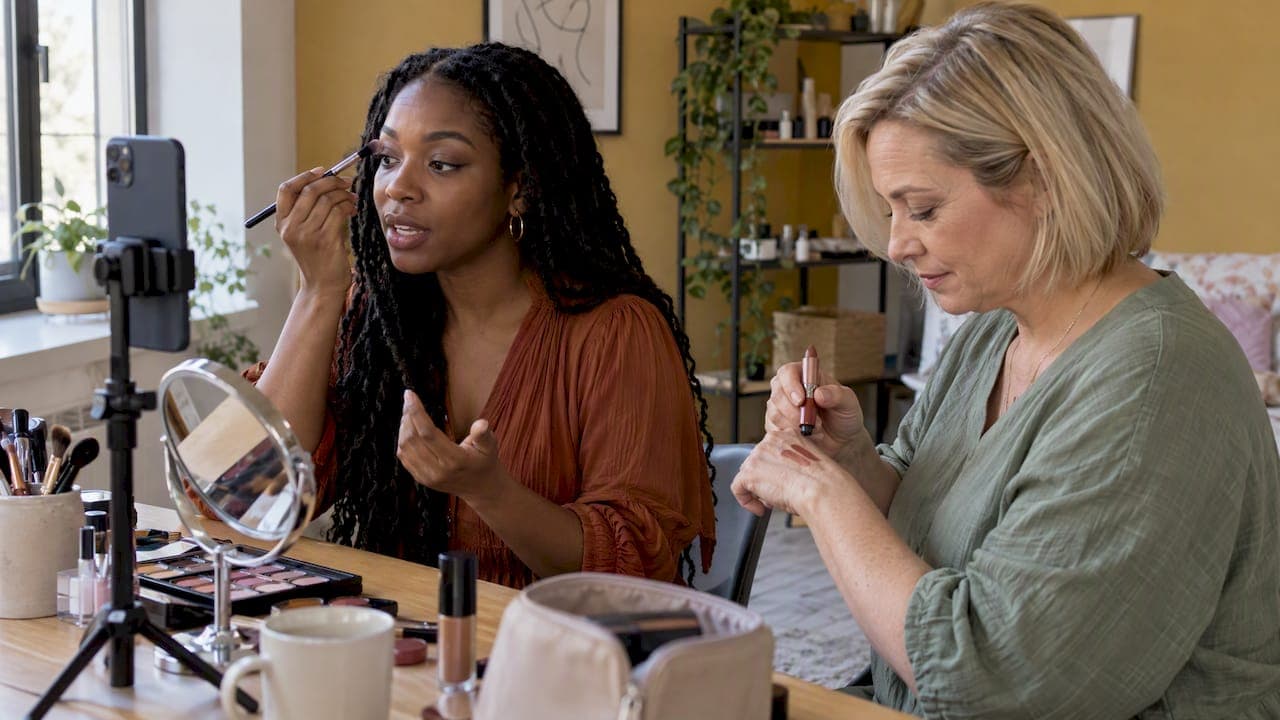
A beauty brand partnership is a deliberate, two-way collaboration in which brands, creators, experts or retailers combine what each does best to reach a shared goal. Done well, it puts your product in front of an audience that already trusts someone else. Done badly, it is a logo swap that nobody remembers. This guide shows the main types, how each one works, what to agree on before you start, the U.S. rules you must follow, and how to choose a first partner.
Beauty Is Not Perfection. Beauty Is a Verb. Beauty Is Becoming. The best partnerships work the same way: they are active, ongoing and built on trust.
TL;DR
- Beauty partnerships come in five common forms: influencer, affiliate, co-branded product, retailer and expert or content collaborations.
- Put the basics in writing before launch: who owns the content, what each side delivers, how and when payment happens, and how the deal ends.
- In the U.S., the FTC expects clear disclosure of any payment or free product, placed right next to the endorsement.
- Product claims matter. Language that sounds like treating a condition can push a cosmetic into FDA drug territory.
- Start with one partner whose audience matches yours, set one goal, and measure it from day one.
Table of Contents
- What a beauty brand partnership really is
- The main types of beauty partnerships
- Which type fits your goal
- What brands gain, and what everyone else gains
- How to choose the right partner
- What to agree on before you launch
- The U.S. rules every partnership must follow
- How to measure whether it worked
- A simple first-partnership plan
- Our perspective
- Meet your audience with us
- FAQ
- Sources
What a beauty brand partnership really is
One industry guide describes a brand partnership as a reciprocal collaboration designed to reach a commercial outcome, with each side contributing something the other lacks: audience access, product, distribution, credibility or creative skill.
That last word, reciprocal, is the whole point. A partnership is not an ad purchase. Both sides give, and both sides gain.
The partner can be:
- Another brand, in beauty or beyond it.
- A creator or micro-influencer.
- A retailer or retail platform.
- An expert, such as a dermatologist, makeup artist, stylist, wellness coach or esthetician.
- An event, summit or community.
The main types of beauty partnerships
Influencer partnerships
This is the most familiar form. A creator makes sponsored content that promotes your product or service. Constant Contact's beauty guide lists the common formats: sponsored tutorials or reviews, photos and stories, product hauls, giveaways, discount codes and event appearances.
Smaller creators often bring tighter, more loyal audiences. We look at that trade-off in the role of micro-influencers in beauty marketing.
Affiliate partnerships
Here a creator or publisher earns a commission when someone buys through a tracked link or code. It suits brands that want to pay for results and creators who prefer to build long-term income around products they genuinely use. The same disclosure rules apply as for any other paid endorsement (more on that below).
Co-branded and limited-edition products
Two brands create something together. A well-known example is the e.l.f. Cosmetics and Liquid Death pairing: after a 2024 makeup collection, the brands launched a second limited-edition collaboration in January 2026, a lip balm line sold on the brand's own site and TikTok Shop.
The lesson is not that you need a famous partner. It is that the two audiences should have a believable reason to meet. Selfnamed notes that brands use collaborations for repositioning a lifestyle image or winning premium retail placement through limited drops.

Retailer partnerships
Retailers want exclusive products and fast responses to trends. Brands want distribution and shelf credibility. One retail-focused article points out that loyalty program integrations let brands borrow a retailer's retention infrastructure to raise customer lifetime value. Physical activations can extend this, as covered in our guide to pop-ups in beauty retail.
Expert and content collaborations
A trusted expert lends authority; the brand lends product, platform and reach. Think of a licensed esthetician explaining a routine, or a wellness coach hosting a live session with a skincare brand. These partnerships build credibility slowly and tend to last. Our article on the real benefits of expert brand collaborations goes deeper.
Which type fits your goal
| Your goal | Best-fit partnership | What to watch |
|---|---|---|
| Be seen by new people | Influencer or micro-influencer | Audience match matters more than follower count |
| Pay only for sales | Affiliate | Clear tracking and disclosure |
| Create buzz and press | Co-branded limited edition | Both brands must feel authentic together |
| Gain shelf space and loyalty reach | Retailer partnership | Exclusivity terms and timelines |
| Build trust and authority | Expert or content collaboration | Credentials and honest claims |
Most brands do best by choosing one row, learning from it, then adding a second.
What brands gain, and what everyone else gains
Launchmetrics reports that benefits for brands include visibility, audience expansion, credibility by association and shared data. Creators and experts gain income, product access and a stronger portfolio. Retailers gain fresh reasons for customers to return. Women in the audience gain something too: recommendations from people and brands whose values they can judge for themselves.
That last benefit is easy to forget, and it is the one that makes a partnership last. If the audience does not benefit, the partnership is just noise.
How to choose the right partner
Run every candidate through five questions.
- Is the audience yours? Look at who actually engages, not just who follows. Ages, life stages and interests should overlap with your customers.
- Are the values aligned? Does the partner talk about beauty in a way you are proud to be next to? Inclusive, honest and age-aware messaging travels well. See inclusive beauty brand marketing for how to check this.
- Do you bring something different? The best matches fill a gap: reach for one side, credibility for the other.
- Can you tell a story together? If the pairing needs a long explanation, the audience will not follow. Our beauty brand storytelling guide can help you shape it.
- Will you both still want this in six months? One-off posts fade. Ongoing relationships build recognition.
What to agree on before you launch
Excitement is not a contract. A U.S.-focused legal explainer says partners should settle IP ownership, deliverables, payment terms and what happens on breach or termination. In practice, put these in writing:
- Deliverables: number of posts, videos or products, formats, and deadlines.
- Content rights: who owns the content, where it may be reused, and for how long.
- Approval: who signs off on copy and images, and how fast.
- Payment: amount, timing, commission rate, and whether product is gifted or paid.
- Exclusivity: whether either side may work with competing brands during the term.
- Exit: how either party can end the agreement, and what happens to content already published.
For anything beyond a simple gifting arrangement, have a lawyer review the agreement. It costs far less than a dispute.
The U.S. rules every partnership must follow
Disclosure
The FTC's guide for influencers says anyone endorsing a product should clearly disclose a connection to the brand, including payment, free or discounted products, and employment or family ties. The disclosure should be hard to miss and appear with the endorsement itself. The same FTC guide says a disclosure only on a profile, behind a "more" link, or buried in a video description may not be enough.
The guide also says U.S. law can reach posts made abroad when it is reasonably foreseeable that they will affect U.S. consumers. If you work with international creators, brief them on this.
Practical habits that help:
- Put the disclosure in the first line of the caption and, for video, say it aloud and show it on screen.
- Give every creator the same written guidelines.
- Check posts after they go live, and ask for fixes quickly.
Claims about what a product does
Creative freedom ends where health claims begin. The FDA has said that claims and internet promotion can lead to a cosmetic being treated as an unapproved drug. A good rule: let creators describe how a product feels, looks and fits into a routine. Keep language about treating, curing or preventing conditions out of scripts unless the product is legally positioned that way and you can support it.
How to measure whether it worked
Pick the goal before the first post goes live, then choose the numbers that match it.
- Awareness: reach, video views, new followers, branded search.
- Consideration: saves, shares, comments that ask questions, link clicks.
- Sales: tracked codes, affiliate links, retailer sell-through.
- Relationship: content quality, partner responsiveness, whether the partner wants to continue.
Give each partner a unique code or link so results do not blur together. Review after a set period and decide: renew, adjust or stop. The content itself can keep working too. See our UGC strategy playbook for ways to reuse partner and customer content, and our beauty brand SEO guide for turning a campaign into lasting search visibility.
A simple first-partnership plan
- Define one goal and one number that proves it.
- List ten possible partners and score them on the five questions above.
- Reach out personally. Say what you admire, what you propose and what they gain.
- Start small. A single campaign or a short pilot teaches you more than a year-long contract.
- Write it down, including disclosure expectations.
- Review openly. Share results with your partner and ask for their view.
Events can speed up step three. Beauty summits put brands, experts and retailers in one room, and many partnerships begin with a conversation there.
Our perspective
We built The Ultimate Beauty - You! because beauty advice is scattered. A woman might get skincare tips in one place, confidence support in another and wellness guidance somewhere else. Brands and experts face the mirror image: great work, but no single place to meet the women who need it.
We believe the strongest partnerships are the ones that serve the woman first. When a brand and an expert show up together with honest advice, real expertise and respect for every age and stage, the audience feels it. That is what we mean by an inside-out, head-to-toe, 360-degree approach.
So we do not treat partnerships as ad space. We treat them as introductions. Our platform and upcoming app are designed to connect trusted experts, brands and organizations with a community of women who are actively growing, learning and becoming. If your work helps a woman feel more like herself, we want to help her find you.
Ava
Meet your audience with us
If you are a brand, expert, retailer or organization with something to offer women, we would love to talk. Our platform brings together beauty, wellness, confidence and personal growth in one community, and we offer sponsored partnerships and listings designed to put your work in front of the women it serves.
See what we offer on our products page, explore the platform, or get in touch to join. Experts who want to grow their audience can also start with social media for beauty experts.
FAQ
How do beauty brands find partners?
Most start with people their customers already follow, then widen to retailers, experts and complementary brands. Industry events, creator communities and platforms that connect brands with audiences also help. Reach out with a clear idea of what both sides gain.
Do I need a big budget?
No. Many partnerships begin with gifted product, affiliate commissions or content swaps, and micro-creators often cost less than large names. Payment of any kind, including free product, must still be disclosed to the audience under FTC guidance.
Do partnerships need a written agreement?
Yes, even small ones. Put deliverables, content ownership, payment, approvals and termination in writing so both sides know what to expect. For larger or exclusive deals, ask a lawyer to review it.
What is the difference between a collaboration and a sponsorship?
A sponsorship is usually one side paying for exposure. A collaboration shares creative input and outcomes, such as a co-developed product or a joint campaign. The two overlap, and both need clear disclosure when money or product changes hands.
How long should a partnership last?
Start with a short pilot, then extend what works. Long-term relationships tend to build more recognition than single posts, but only if results and values still line up for both partners.
Sources
- Brand Partnerships & Collaborations Guide, Influship
- Beauty Influencer Program Guide, Constant Contact
- e.l.f. Cosmetics, Liquid Death Launch Second Limited-Edition Collaboration, License Global
- Popular Beauty Brand Collaborations in 2026, Selfnamed
- How Beauty Brands and Retail Platforms Achieve Mutual Benefits
- Retail x Brand Partnerships: Real-World Success Stories, Launchmetrics
- Brand Partnership Agreements For US Campaigns, Sprintlaw US
- Disclosures 101 for Social Media Influencers, FTC
- Matte Beauty warning letter, FDA