
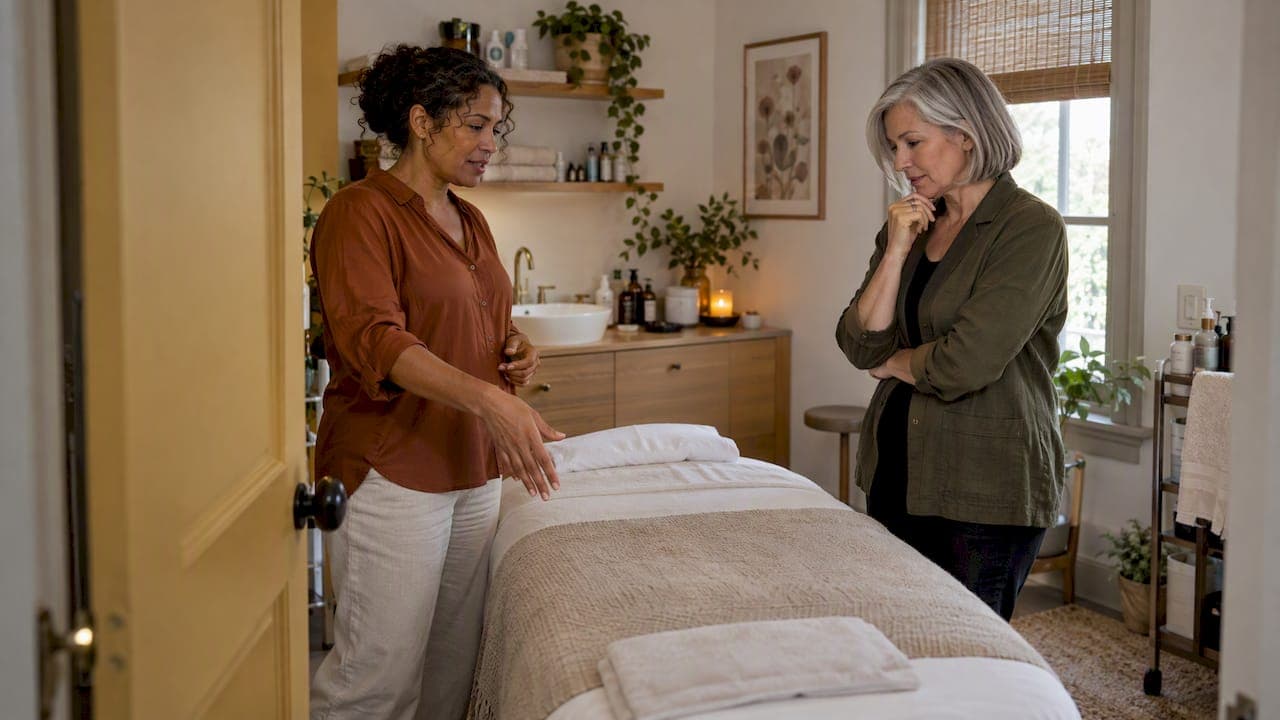
A good wellness brand collaboration puts two trusted names in front of the same woman, at the right moment, with a reason that makes sense to her. A bad one is a logo swap that nobody believes. The difference is rarely budget. It comes down to fit, honesty and follow-through.
This guide is for brand founders, marketers, wellness experts and service providers who want to partner well. We cover how to pick partners, which formats work, what the law requires, and how to measure results.
Beauty Is Not Perfection. Beauty Is a Verb. Beauty Is Becoming. Partnerships work the same way: they are not a one-time announcement. They are something you keep doing.
TL;DR
- Choose partners for audience trust and shared values, not follower counts. An engaged audience of 15,000 can outperform 150,000 passive followers.
- Pick the format to match the goal: product collaborations, co-hosted events, expert partnerships, influencer programs or in-location retail pilots.
- Put compliance in the contract: FTC disclosures, usage rights, exclusivity windows and approved health-claims language.
- Start small, test for several weeks, then scale what works.
- Measure bookings, sales and repeat engagement, not only impressions.
Table of Contents
- What wellness brand collaborations actually are
- Six collaboration formats and when to use each
- How to choose the right partner
- Build credibility before you build reach
- Turn organic love into a partnership
- The legal side: protect the partnership
- Our perspective: collaborate like a companion, not a billboard
- A simple framework for your first collaboration
- Common mistakes to avoid
- Reach women who are ready to listen
- FAQ
- Sources
What wellness brand collaborations actually are
A wellness brand collaboration is a structured partnership between two or more parties in the health, beauty and lifestyle space. They combine audiences, products, expertise or platforms to reach women neither could reach as well alone.
The partners can be very different:
- A skincare brand and a day spa.
- A supplement company and a registered dietitian.
- A fitness apparel label and a pilates studio.
- A mental wellness organization and a lifestyle brand.
- A retailer and dozens of niche creators.
What they share is a simple promise to the customer: this pairing makes your life better in a way neither could alone.
Women increasingly see beauty and wellness as one subject. Skin, sleep, movement, stress, confidence and community all feed each other. That is the idea behind our inside-out, head-to-toe, 360-degree approach, and it is why partnerships that cross categories often feel natural to her.
Six collaboration formats and when to use each
Not every format suits every goal. Match the structure to what you need.
| Format | Best for | Typical risk |
|---|---|---|
| Co-created product or limited edition | Awareness and press | Weak fit feels like a gimmick |
| In-location or retail pilot (spa, studio, store) | Direct sales and trial | Staff training and consistency |
| Expert partnership (physician, trainer, esthetician) | Credibility | Claims and credential vetting |
| Influencer or creator program | Reach and social proof | Disclosure and authenticity |
| Co-hosted event or gifting suite | Community and sampling | Cost per attendee |
| Affiliate or referral program | Scalable acquisition | Quality control of content |
In-location pilots show real numbers
The clearest evidence comes from partnerships that measure sales, not buzz. When Image Skincare piloted facials with a national spa chain, participating locations saw facial bookings rise 17 to 18 percent and service sales rise 18 to 19 percent compared with locations that did not take part.

The lesson is not to copy the facial menu. It is to design a pilot with a control group, so you know what the partnership changed.
Scaling through more partners
Breadth can work too. A published case study shows Ulta Beauty recruiting 88 new partners and growing program revenue by 8 percent. More partners means more voices, but also more to monitor. Scale only after your process is solid.
Retail ideas for service businesses
If you run a spa or studio, collaborations can also add revenue on every visit. These spa retail ideas for owners show how curated products can sit alongside treatments in a way that feels like care, not a sales pitch.
How to choose the right partner
Most failed collaborations were doomed at the first meeting. The partners looked good together on a mood board and never tested the fit.
1. Start with audience, not aesthetics
Wellness marketing specialists name the biggest mistake as choosing partners on looks and scale alone. Ask instead:
- Who follows this person or brand, and why?
- Do they comment, ask questions and answer each other?
- Does the tone stay consistent from post to post?
The same guidance suggests looking at the last 20 posts for consistency and aiming for engagement of at least 2 percent. Treat that as a starting filter, not a law.
2. Check for red flags
Watch for sudden follower spikes, which can signal bought followers. Watch for partners who promote your direct competitors at the same time. Also be wary of anyone with a history of promoting crash diets or health misinformation. In wellness, one wrong association can cost more than a good one earns.
3. Test values alignment
Ask the questions that don't show up in a media kit:
- Would she use this product herself?
- Does the partner speak to women at every age and stage, or only one narrow image?
- Do their claims rest on evidence?
Inclusion is a business advantage as well as a value. Our guide to inclusive beauty brand marketing covers how to reflect the full range of women you want to serve.
4. Consider the smaller voice
Micro-creators often bring tighter communities and higher trust. We explore why in the role of micro-influencers in beauty marketing.
Build credibility before you build reach
If you are entering a new market, sequence matters. Agency case studies on the Luna Daily and Trilogy launches describe an integrated approach of PR placements, experiential events and influencer gifting. Winning over editors and industry experts first creates a halo effect. When creator campaigns launch afterward, they land with more weight.
For most brands, this means:
- Secure a few expert voices who can speak to the science or craft.
- Host something small and real: a workshop, a tasting, a class.
- Gift thoughtfully to people who fit.
- Only then scale paid creator work.
It is slower. It is also much harder to dismiss.
Turn organic love into a partnership
Sometimes the best collaborator is already talking about you. When a creator posts about your brand unprompted, the smart move is often to reach out and formalize the relationship before pushing for more. Pay for the moment that already worked rather than demanding scripted content.
That respects her voice and her audience. It also keeps what made the post work in the first place.
For a deeper look at running creator programs, read our wellness influencer marketing guide with a 3 to 4 week trial. To bring customers into the story, see our beauty brand UGC strategy.
The legal side: protect the partnership
This is where wellness differs from fashion. Health claims draw attention from regulators. The notes below are general information, not legal advice. For your contracts and claims, talk to an attorney who handles advertising and FDA or FTC matters.
Disclosure is not optional
The FTC's guidance says any material connection, including cash, commissions or free products, must be disclosed clearly and conspicuously. Think of a disclosure as something a viewer would notice before judging the recommendation. A platform's built-in label alone may not be enough if audiences don't notice it.
Enforcement is real. In 2025, the National Advertising Division recommended that Dr. Squatch ensure its paid affiliates clearly disclose their relationship, and reviewed a celebrity influencer campaign for Skims. The Skims case is a reminder that tagged images and styled content can imply a paid relationship even when the caption is quiet.
This means monitoring is ongoing work. A contract clause is the start, not the finish.
What your contract should cover
An attorney's overview of influencer deals notes that agreements should spell out usage rights and exclusivity periods so that audiences are not confused and brand assets are protected. Exclusivity of 90 days or more is common in these deals. It should also place responsibility for FTC disclosure and prohibited claims on the creator, with the brand still checking compliance.
A solid checklist:
- Deliverables, dates and platforms.
- Usage rights: where and how long you may reuse content.
- Exclusivity window and what counts as a competitor.
- Disclosure wording and placement.
- Approval steps for health-related content.
- Termination terms if the partner behaves badly.
Watch your health-claims language
Wellness marketers recommend that contracts prohibit words such as "cures," "treats" or "prevents" and steer creators to softer wording such as "supports" or "helps maintain." This protects you with the FTC and FDA, and it protects her from promises no product can keep. If a partner is a physician or other licensed professional, verify their credentials yourself.
Our perspective: collaborate like a companion, not a billboard
We built The Ultimate Beauty - You! as a women-centered platform for beauty, confidence, wellness and community. Experts, brands and the women they serve share one space. That gives us a front-row view of what makes partnerships feel good to her, and what makes them feel hollow.
Here is what we believe.
She can tell when it is real. Women have heard every promise. A collaboration earns attention when the partners truly belong together and say something true.
Beauty is bigger than appearance. The strongest wellness partnerships speak to confidence, rest, movement, belonging and growth, not only to what she sees in the mirror.
Every age and stage counts. A partnership that speaks only to one narrow group leaves most women out. Build for the woman at twenty, forty-five and seventy.
Start small. Learn. Grow. A few weeks of honest testing teaches more than a big launch.

Community is the multiplier. When women can meet, ask questions and share, one good collaboration becomes many conversations.
We don't think collaboration is about borrowing someone else's audience. It is about earning a place in hers.
— Ava
A simple framework for your first collaboration
Use this 6-step plan whether you are a solo expert or a growing brand.
- Define one goal. Trial, bookings, email signups or press. Pick one.
- Define her. Who is the woman you both want to reach? Write her down in a sentence.
- Shortlist five partners. Vet each using the audience and red-flag checks above.
- Offer something specific. A co-hosted class, a bundled routine or a gifting kit is easier to say yes to than "let's partner."
- Sign the basics. Deliverables, disclosure, usage, exclusivity and claims language.
- Measure and review. Look at bookings, sales, comments and saves at the end of the test period, then decide whether to extend.
Storytelling helps every step, because partners want to know what you stand for. Our beauty brand storytelling guide and niche targeting in beauty can sharpen your pitch before you reach out.
What to measure
- Sales and bookings tied to a code, link or location.
- Audience quality: comments that ask real questions, not only emojis.
- Repeat purchase among customers who came through the partnership.
- Content you can reuse within your agreed rights.
- Search and discovery lift over time. Our beauty brand SEO strategy explains how partner content can support it.
If your aim is sustained growth, see how collaborations fit into growing beauty brand revenue.
Common mistakes to avoid
- Chasing size. Big and passive loses to small and engaged.
- Scripting everything. Over-controlled content reads as an ad, and audiences scroll past.
- Skipping the contract because the partner is a friend.
- Ignoring disclosure because "everyone does it."
- Making health promises. Use supportive language and keep claims modest.
- One-and-done thinking. Trust compounds when partners show up repeatedly.
- Forgetting the visual story. Partners should look like they belong together. See our beauty brand visual identity guide.
Reach women who are ready to listen
If you are an expert, brand or organization that serves women, The Ultimate Beauty - You! is built to connect you with them. Our platform brings together trusted experts, brands, resources and a community of women of every age and stage, with an app on the way.
See how listings and partnerships work on our Experts & Partners page, or explore the full platform to see what we are building. We don't promise a quick fix. We offer an audience that cares about authenticity and a place to earn her trust.
FAQ
What are examples of wellness brand collaborations?
Common examples include a skincare brand piloting treatments at spa locations, a retailer building a large network of partner creators, and a supplement or apparel brand working with a trainer or physician. The Image Skincare spa pilot is a well-documented example with measured results. Events and gifting suites are also popular for sampling.
How do I get wellness brands to collaborate with me?
Start with proof of an engaged audience: real comments, consistent content and a clear niche. Then pitch something specific, such as a four-week series, rather than a vague partnership. If a brand already knows you, reach out about what you are already doing together.
Do I have to disclose a free product?
Yes, in most cases. The FTC says free products count as a material connection that should be disclosed clearly. If you are unsure about a specific deal, ask an advertising attorney.
Is a bigger following always better?
No. Guidance from wellness marketers suggests that an engaged 15,000 beats 150,000 passive followers. Look at comments, consistency and fit before follower totals.
How long should I test a collaboration?
A few weeks is a sensible first window. Our trial approach for wellness influencer work runs 3 to 4 weeks, which is long enough to see patterns and short enough to adjust.
Sources
- Endorsements, Influencers, and Reviews, Federal Trade Commission
- A Lawyer's Guide to Influencer Marketing, American Bar Association
- Collaboration Guidelines for Wellness Brands, Winsome Marketing
- How Image Skincare boosted its spa partner's facial bookings, Glossy
- Ulta Beauty case study, impact.com
- Luna Daily case study, Ogaki Digital
- How MommaCusses and MedCline went viral, MedCline
- Dr. Squatch NAD decision, BBB National Programs
- Skims Body NAD decision, BBB National Programs